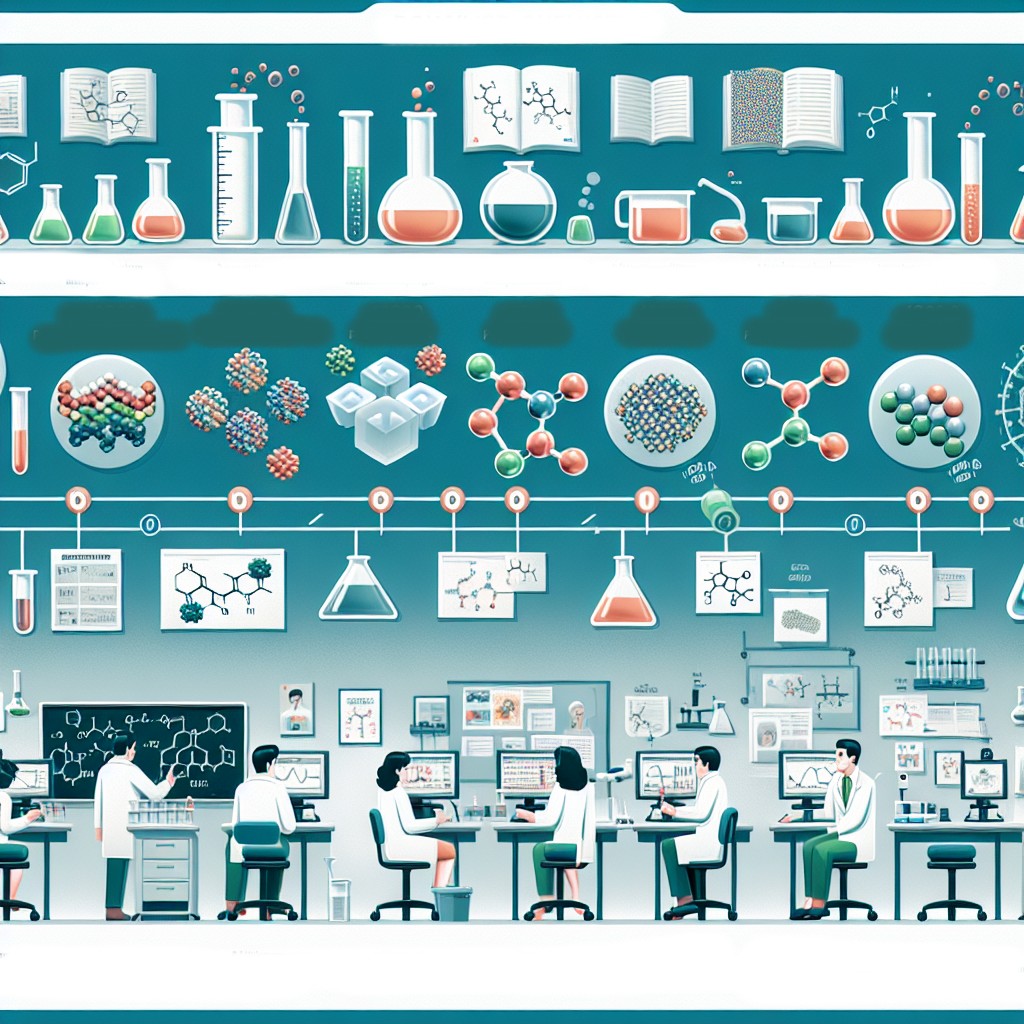
The field of polymer research and development (R&D) holds significant potential for groundbreaking innovations that can shape the future of myriad industries. As global challenges, including environmental issues and resource scarcity, become more prominent, collaborative efforts in polymer R&D are gaining traction. The fusion of expertise across disciplines and organizations can lead to advancements in materials that are not only more efficient and functional but also sustainable. Collaborative efforts in this realm are driven by a necessity to push the boundaries of current materials and to develop polymers that meet ever-evolving demands. This article explores the potential and challenges of collaborative R&D in polymers, examining its influence across sectors and how it can be a pivotal force in the future of materials science.
Over the past few years, the trend towards collaboration in polymer R&D has intensified, with companies, universities, and governments recognizing the value of pooling resources and knowledge. In today’s complex technological landscape, where single entities often lack the breadth of expertise needed to tackle multifaceted challenges alone, collaborative approaches can lead to enhanced innovation. Moreover, such partnerships enable the sharing of risk and investment, while also accelerating the time-to-market for new polymer technologies. With the convergence of advanced computing, innovative experimental methods, and robust data analysis techniques, the future of collaborative R&D in polymers seems promising. This article will delve into these promising avenues, outlining the opportunities they present, as well as the hurdles they must overcome.
Opportunities and Innovations in Collaborative R&D
As we look to the future, one of the most promising aspects of collaborative R&D in polymers is the potential for innovation. By leveraging the collective expertise of chemists, engineers, and material scientists, collaboration can lead to the creation of novel polymer structures with unprecedented properties. These can include polymers with enhanced strength-to-weight ratios, improved thermal stability, or increased resistance to chemical degradation. Such materials have potential applications in industries ranging from aerospace and automotive to healthcare and consumer goods.
One significant area of opportunity is the development of sustainable polymers. As environmental concerns grow, the pressure to move away from fossil-fuel-derived polymers towards bio-based alternatives intensifies. Collaborations in R&D can facilitate the development of renewable polymers derived from natural sources like plants or microorganisms. Such efforts not only address sustainability but can also reduce carbon footprints, an increasingly important consideration for industries worldwide.
The integration of digital technology into polymer R&D is another exciting frontier. Machine learning and advanced computational tools allow researchers to simulate the behavior of new polymer formulations before they are physically produced. This approach not only speeds up the development process but also reduces costs, facilitating more extensive exploration of potential polymer structures. In collaborative settings, these technologies can be particularly powerful, as they allow for the rapid exchange of data and insights, ensuring that all partners in the collaboration can contribute effectively to the research.
Furthermore, the Internet of Things (IoT) and connected devices offer novel opportunities for innovation in polymer applications. Polymers that can interact with digital systems and alter their properties in response to environmental changes can have transformative impacts. Through collaboration, researchers can develop smart polymers able to perform specific functions in electronics, medical devices, and even textiles.
Challenges Faced in Collaborative Polymer R&D
Despite its potential, collaborative R&D in polymers faces several challenges. One significant barrier is the complexity of coordinating efforts across different organizations, each with its unique culture, priorities, and technological focuses. Effective collaboration requires clear communication, mutual goals, and the ability to navigate varied interests to ensure that the research objectives align.
Intellectual property (IP) rights present another challenge. In collaborative settings, determining IP ownership can be complex, with multiple partners contributing expertise and resources. Developing a transparent framework for IP sharing is crucial to protect the interests of all parties involved and to foster an environment that encourages open innovation without fear of exploitation.
Furthermore, the technical challenge of developing novel polymers cannot be underestimated. Polymers are complex materials, and their development requires a detailed understanding of molecular chemistry, physics, and engineering principles. This necessitates significant time and resources, as developing a new polymer from concept to commercial product often involves extensive experimentation, testing, and validation processes.
Additionally, regulatory challenges can impede collaborative R&D efforts. Different regions have distinct regulatory standards for new materials, which can complicate the global development and commercialization of new polymers. Collaborators must navigate these regulatory landscapes carefully, ensuring compliance while striving to innovate.
The Role of Academia, Industry, and Government in Polymer R&D
The future success of collaborative R&D in polymers hinges on the synergistic roles of academia, industry, and government. Each plays a crucial part in driving innovation and development.
Academia serves as a breeding ground for innovative ideas and cutting-edge research. Universities offer the foundational research that can later be leveraged by industrial partners. By maintaining an environment of exploration and learning, academic institutions can push the boundaries of what is possible with polymers, discovering new avenues of application and potential uses. Collaborating with industry can help bridge the gap between theoretical research and practical application.
For the industry, collaboration offers an opportunity to access new technologies and innovations that can enhance competitiveness. By partnering with academic institutions and other companies, industries can bring innovations to market faster, driving economic growth and technological advancement. Industries often have the resources needed to bring new polymers from the research stage to a practical application, acting as a vital link in the development chain.
Governments, on the other hand, provide essential funding and regulatory support. By investing in collaborative R&D initiatives, governments can stimulate innovation, drive sustainability efforts, and ensure that their countries remain at the forefront of technological advancement. Furthermore, governments can facilitate the creation of standards and regulations that encourage innovation while ensuring safety and environmental responsibility.
Case Studies of Successful Collaborative R&D Efforts
Examining successful case studies can illuminate how collaborative R&D in polymers can yield impactful results. A prime example is the partnership between institutions in Europe under the Horizon 2020 initiative, which brought together research centers, industries, and educational institutions to tackle complex challenges in polymer development. These initiatives led to the creation of polymers with enhanced performance characteristics suitable for high-impact applications such as in renewable energy technologies and high-performance automobiles.
In another case, collaborative efforts between prominent chemical companies and tech firms have led to the development of polymers used in semiconductors and electronic components. These collaborations leverage the deep understanding of polymer chemistry held by chemical companies with the technological expertise of tech industry leaders, leading to groundbreaking innovations in material science.
Impact on Future Technologies and Industries
The impact of collaborative R&D in polymers on future technologies and industries cannot be overstated. Polymers play an essential role in many of today’s technologies, and advancements in this field are set to revolutionize numerous industries.
For example, in the medical field, innovating new polymers for use in drug delivery systems and medical implants can vastly improve patient outcomes. Polymers that can be designed to degrade over time or release medication at a controlled rate hold significant potential to transform treatment protocols.
In the energy sector, polymers designed through collaborative research can contribute to the development of more efficient solar panels, wind turbines, and energy storage systems. These materials can help mitigate climate change impact by promoting sustainable energy solutions.
In automotive and aerospace industries, advancements in polymer technology can result in lighter, stronger materials that enhance fuel efficiency and performance. This has significant implications for reducing emissions and achieving sustainability targets in transportation sectors.
Conclusion
The future of collaborative R&D in polymers is a promising landscape full of opportunities and challenges. By bringing together diverse expertise from academia, industry, and government, collaborative efforts can drive innovation that meets the complex demands of modern society. The potential for developing sustainable, smart, and efficient polymers is immense, with applications that span numerous industries and technologies.
However, to realize this potential, stakeholders must navigate challenges, including intellectual property management, regulatory compliance, and the inherent complexity of polymer research. Building effective communication channels and establishing clear, mutually beneficial objectives are imperative for the success of these collaborations.
As we advance, the role of collaborative R&D in shapeshifting the polymer landscape grows in significance. By fostering strong partnerships and capitalizing on the collective intelligence of multiple entities, the future of polymer R&D holds the potential to create materials that will not only advance industries but also contribute to a sustainable and innovative global economy.
Thus, while collaborative R&D in polymers faces challenges, the benefits in innovation and applications suggest a bright future. The confluence of scientific inquiry, technological capability, and collaborative synergy will likely drive tremendous advancements in this field, addressing critical global challenges and fostering an era of responsible and innovative materials science.