Polymers play a central role in modern chemical storage and handling because they combine chemical resistance, low weight, formability, and cost efficiency in ways metals, glass, and ceramics often cannot. In industrial settings, “chemical storage and handling” covers the full chain of containment and movement: tanks, drums, liners, pipes, hoses, valves, gaskets, pumps, lab bottles, intermediate bulk containers, spill pallets, and secondary containment systems. “Chemical properties” in this context means how a material responds when exposed to acids, alkalis, solvents, oxidizers, salts, oils, fuels, temperature swings, pressure, ultraviolet light, and mechanical stress over time. As someone who has specified storage materials for corrosive service, I have seen polymer selection determine whether a system runs safely for years or fails early through swelling, stress cracking, permeation, or embrittlement. That is why this subject matters: the right polymer protects workers, preserves product purity, reduces maintenance, and lowers total life-cycle cost, while the wrong choice can trigger contamination, leaks, regulatory violations, and unplanned shutdowns. This article serves as the hub for chemical properties within materials and properties, explaining how polymers improve chemical storage and handling, which polymer families are used most often, how compatibility is evaluated, where polymers outperform traditional materials, and where their limits must be respected. It also provides the practical framework needed to connect this topic to related discussions on barrier performance, mechanical properties, temperature resistance, and compliance in broader material selection work.
Why polymer chemistry matters in storage systems
Polymer performance starts with molecular structure. A polymer is a long-chain material built from repeating units, and its chemical resistance depends on chain polarity, crystallinity, crosslink density, additives, and processing history. Polyethylene, polypropylene, polyvinylidene fluoride, polytetrafluoroethylene, polyvinyl chloride, and nylon all behave differently because their backbones and side groups interact differently with stored chemicals. The practical rule is simple: chemicals attack materials they can penetrate, dissolve, oxidize, or stress under load. Nonpolar polymers such as high-density polyethylene generally resist many aqueous acids and caustics well, while fluoropolymers resist a wider range of aggressive solvents and oxidizers because carbon-fluorine bonds are exceptionally strong.
In storage and handling, chemical resistance is never just about whether the polymer survives brief contact. It is about sustained service. A tank wall that remains intact after a one-hour splash test may still fail after six months if a solvent diffuses into it, lowers stiffness, and accelerates creep around a nozzle. I have seen this with improperly selected liners in solvent transfer applications: the material did not “dissolve,” but it softened enough to lose dimensional stability. That distinction is critical for procurement teams and engineers. Compatibility must account for concentration, exposure time, temperature, internal pressure, and whether the load is static, cyclic, or impact driven.
Another reason polymer chemistry matters is purity. In water treatment, semiconductor chemical delivery, food processing, and pharmaceutical operations, the storage material must not leach extractables that alter product composition. Polymers can be formulated for very low contamination, but additives such as plasticizers, stabilizers, flame retardants, and processing aids can change suitability. This is why engineers rely on supplier data, immersion testing, ASTM methods, and application-specific compliance requirements rather than generic assumptions about “plastic” performance.
Key polymer families used for chemical storage and handling
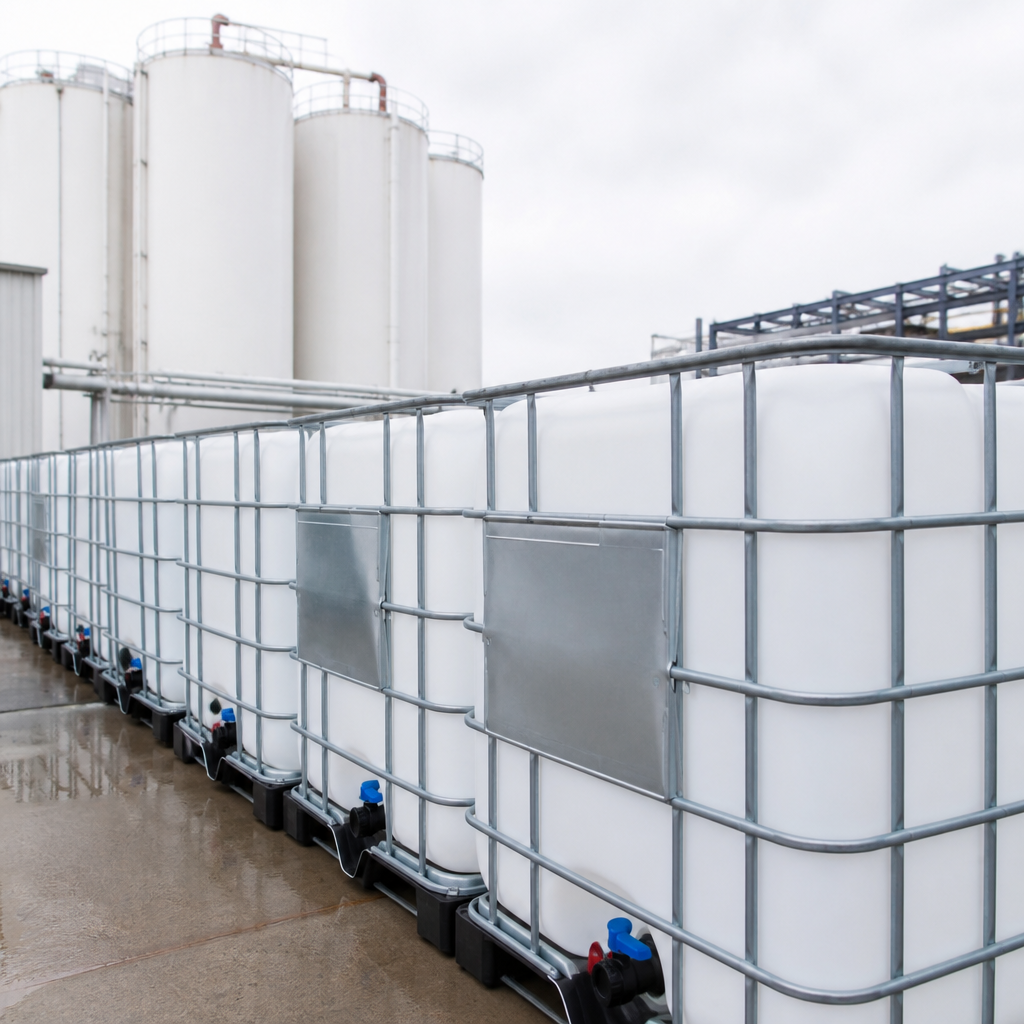
Several polymer families dominate chemical storage because they solve different parts of the compatibility problem. High-density polyethylene, or HDPE, is one of the most common materials for drums, carboys, IBCs, and chemical tanks. It offers strong resistance to many inorganic acids, bases, and salt solutions, has good impact strength, and remains economical at scale. Crosslinked polyethylene, often used in larger storage tanks, improves environmental stress crack resistance and can perform better in demanding services where conventional HDPE may be marginal. Polypropylene is valued for higher temperature capability than polyethylene in many applications and for good resistance to caustics and many acids, which is why it appears in pipework, fittings, and process equipment.
PVC and CPVC are widely used in chemical piping and ducting. PVC handles many acids, alkalis, and aqueous salt solutions effectively, while chlorinated PVC extends temperature performance. Fluoropolymers such as PTFE, PVDF, FEP, and PFA occupy the premium end of the market. They are selected for highly aggressive chemicals, high-purity duty, or elevated temperatures because they resist attack from a broad chemical spectrum. PTFE-lined hoses and gaskets, for example, are standard choices when facilities transfer mixed solvents or strong acids that would rapidly degrade elastomers or commodity plastics. PVDF is common in ultrapure water and corrosive fluid systems because it balances chemical resistance, mechanical properties, and cleanliness.
Engineering polymers also have targeted roles. Nylon can work well in some fuel and oil services but is unsuitable for certain aqueous or strongly acidic conditions because it can absorb moisture and hydrolyze. Polycarbonate offers toughness and transparency but is vulnerable to stress cracking from many solvents, making it a poor choice for broad chemical exposure despite its strength. Epoxy, vinyl ester, and polyester resins, often reinforced with glass fiber, form composite tanks and process vessels that combine structural capacity with tailored corrosion barriers. Elastomeric polymers such as EPDM, FKM, nitrile, and PTFE-encapsulated seals matter just as much as structural polymers because a compatible tank can still leak through an incompatible gasket. The lesson is that no polymer is universally resistant; selection depends on the exact chemical duty.
How polymers improve safety, reliability, and cost control
Polymers improve chemical storage and handling first by reducing corrosion risk. Metals corrode through electrochemical reactions; even stainless steel has clear limits, especially in chloride-rich or strongly acidic service. Polymers do not rust, and many are inherently resistant to the corrosive mechanisms that attack steel, aluminum, and cast iron. This makes them especially valuable in bleach storage, acid dosing, wastewater treatment, plating lines, and agricultural chemical systems. A properly selected polymer tank can avoid the coating failures, underfilm corrosion, and wall thinning that make metal assets expensive to inspect and maintain.
Weight is another major advantage. Polymer tanks, drums, and transfer components are far lighter than steel alternatives, which lowers transportation cost, simplifies installation, and reduces manual handling risk. In plant retrofits, lighter materials also reduce structural loading on mezzanines, skids, and secondary containment pads. Fabrication flexibility matters as well. Rotational molding, blow molding, injection molding, extrusion, and thermoforming allow manufacturers to create seamless containers, integrated fittings, and complex geometries that would be costly in metal or glass. Seamless rotomolded tanks are especially useful because they remove weld lines that can become corrosion or leak initiation points.
Cost control extends beyond purchase price. Over the service life, polymers can reduce downtime, inspection frequency, and the need for protective linings or cathodic systems. They also improve handling ergonomics. Chemical transfer using flexible PTFE-lined hose assemblies or corrosion-resistant polypropylene pumps is typically easier than managing rigid metal systems that require more support and maintenance. The table below summarizes common strengths and limitations of widely used polymers in chemical service.
| Polymer | Typical strengths | Common applications | Key limitations |
|---|---|---|---|
| HDPE | Excellent resistance to many acids, bases, and salts; low cost; good impact strength | Drums, IBCs, tanks, liners | Limited resistance to some solvents; creep at higher temperatures |
| PP | Good chemical resistance with better heat tolerance than PE | Piping, fittings, process tanks | Can become brittle at low temperatures; solvent limits remain |
| PVC/CPVC | Broad resistance in aqueous chemical service; easy fabrication | Pipe, ducts, scrubber systems | Temperature and solvent restrictions |
| PVDF/PTFE | Very broad resistance; high purity; strong barrier performance | Liners, hoses, valves, semiconductor and aggressive chemical systems | Higher material and fabrication cost |
Compatibility, permeation, and environmental stress cracking
The most important question in chemical storage is not “Is this polymer resistant?” but “Resistant under what exact conditions?” Compatibility data must be read carefully. Chemical concentration changes outcomes dramatically. Sulfuric acid, sodium hydroxide, nitric acid, xylene, acetone, and hydrogen peroxide each interact differently with the same polymer depending on purity, water content, and temperature. Published resistance charts are useful starting points, but they are not final design approvals. Good engineering practice confirms compatibility with manufacturer recommendations and, for critical duty, with laboratory testing or documented field history.
Permeation is often misunderstood. A polymer can remain structurally sound while still allowing molecules to diffuse through it slowly. That matters for odor control, worker exposure, product loss, and fire safety. Hydrocarbon fuels, chlorinated solvents, and aroma compounds can permeate certain plastics enough to create operational issues even when the container does not visibly degrade. Multilayer packaging, fluorination treatments, or fluoropolymer liners are common responses. In regulated packaging, permeation can determine whether a container passes performance requirements for hazardous materials transport.
Environmental stress cracking is one of the most common polymer failure modes in chemical handling. It occurs when a polymer under stress encounters a chemical that promotes crack initiation and growth at stresses lower than expected. Detergents, surfactants, alcohols, and some organic chemicals can trigger cracking in polyethylene and other polymers, especially near molded-in stress points or threaded connections. I have investigated tanks where the root cause was not bulk chemical incompatibility but local stress concentration around a fitting combined with a cleaning agent. The corrective action was not just changing chemistry; it involved redesigning support conditions, reducing installation stress, and upgrading resin grade.
Temperature compounds every chemical effect. As temperature rises, diffusion rates increase, mechanical strength falls, and oxidation or hydrolysis can accelerate. A polymer rated “A-excellent” at room temperature may become unsuitable at 50 or 60 degrees Celsius. This is why careful specifications always tie compatibility to a temperature range, fill level, and service duration instead of using a single generalized rating.
Applications across tanks, piping, packaging, and containment
In bulk storage tanks, polymers excel in corrosive liquid service. Municipal water treatment facilities routinely use polyethylene or fiberglass-reinforced plastic tanks for sodium hypochlorite, ferric chloride, and caustic soda because these materials avoid rapid corrosion seen in unprotected metals. Tank design still requires attention to venting, seismic anchoring, hoop stress, and chemical-specific fittings, but polymer construction provides a practical corrosion barrier. For larger industrial assets, dual-laminate systems pair a thermoplastic corrosion liner with structural fiberglass backing, allowing engineers to combine chemical resistance with mechanical strength.
Piping and fluid transfer systems are another major application area. PVC, CPVC, PP, PVDF, and PTFE-lined hose assemblies are used in dosing skids, acid transfer lines, scrubbers, plating shops, and bulk unloading stations. Compared with carbon steel, these materials reduce corrosion product contamination and can simplify maintenance. In laboratories and small-batch production, polymer bottles and carboys are preferred because they are lighter than glass and less likely to shatter during handling. HDPE and fluorinated containers are common for acids, detergents, and reagents, while PTFE bottles are chosen for highly reactive or high-purity chemicals.
Secondary containment also benefits from polymers. Spill pallets, sump liners, trench liners, and containment coatings often use polyethylene, polypropylene, or chemically resistant geomembranes. Here the polymer does not just store the primary chemical; it protects the site from accidental release. Packaging for transport follows the same logic. UN-rated polymer drums and IBCs are designed to survive stacking, drop tests, and chemical exposure while maintaining closure integrity. Their widespread adoption across industrial chemicals, agriculture, and specialty manufacturing reflects a simple truth: when selected correctly, polymers improve both performance and operational practicality.
Design limits, standards, and best practices for material selection
Polymers are powerful materials, but they are not universal solutions. They can creep under sustained load, degrade under ultraviolet exposure, soften at elevated temperature, and lose impact resistance in cold conditions depending on grade. Oxidizing chemicals, mixed solvent streams, or pressure-vacuum cycling can push a polymer beyond its safe envelope even when a basic compatibility chart looks favorable. That is why serious material selection follows standards and disciplined review. ASTM test methods, ISO packaging standards, and chemical resistance data from resin and equipment manufacturers provide the baseline. For tanks and process vessels, designers also consider wall thickness, specific gravity rating, nozzle reinforcement, and vent sizing, not just resin name.
Best practice starts with a clear service description: chemical identity, concentration range, impurities, operating and upset temperature, pressure, fill cycle, outdoor exposure, cleaning regime, and expected design life. Next comes screening of candidate materials using trusted compatibility data, followed by review of mechanical demands such as vacuum loading, impact, and support conditions. For critical applications, request immersion data, permeation data, and examples from comparable installations. Pay close attention to closures, gaskets, and fittings because system reliability is set by the weakest wetted component. Finally, inspect and maintain polymer assets intelligently. Look for discoloration, blistering, softening, crazing, swelling, and cracking around high-stress features. Those visual signals often appear long before catastrophic failure.
The main benefit of polymers in chemical storage and handling is not simply that they are “resistant plastics.” It is that they let engineers tailor containment systems to specific chemical environments with a balance of corrosion resistance, purity, weight, manufacturability, and cost that few other material classes can match. For anyone building a material selection framework under chemical properties, this hub topic is the foundation: understand polymer families, verify compatibility under real conditions, design for permeation and stress cracking, and respect temperature and mechanical limits. Use these principles as the starting point for deeper pages on barrier properties, chemical compatibility testing, tank design, polymer degradation, and seal selection, and you will make safer, longer-lasting storage decisions.
Frequently Asked Questions
Why are polymers so widely used in chemical storage and handling systems?
Polymers are widely used because they offer a practical combination of chemical resistance, low weight, design flexibility, and cost efficiency that many traditional materials struggle to match at the same time. In chemical storage and handling, equipment must do more than simply hold a liquid. It has to resist attack from acids, bases, salts, solvents, oxidizers, and process chemicals while also tolerating temperature changes, pressure, mechanical stress, impact, and repeated handling. Many polymers perform very well across this full set of demands.
Compared with metals, polymers are generally far less vulnerable to corrosion in many chemical environments. Unlike steel, they do not rust, and unlike some alloys, they can often handle aggressive media without requiring expensive coatings or linings. Compared with glass and ceramics, polymers are much lighter and less brittle, which makes them easier to transport, install, and use safely in busy industrial settings. This matters across the entire handling chain, including tanks, drums, pipes, hoses, valves, gaskets, intermediate bulk containers, spill pallets, and lab bottles.
Another major advantage is processability. Polymers can be molded, extruded, welded, rotationally molded, or formed into films and liners, allowing manufacturers to create highly specialized storage and transfer solutions. That flexibility supports everything from seamless tanks to multilayer hoses and precision-sealed valve components. In many applications, this translates into longer service life, lower maintenance, improved worker safety, and reduced total operating cost. That is why polymers have become foundational materials in modern chemical containment and movement systems.
What polymer properties matter most when selecting materials for chemical storage and handling?
The most important properties depend on the specific chemical and operating conditions, but several factors consistently guide material selection. Chemical resistance is usually the first priority. The polymer must remain stable when exposed to the stored substance, meaning it should not crack, soften, swell excessively, dissolve, or lose strength over time. Different polymers behave very differently depending on whether they are exposed to acids, alkalis, hydrocarbons, chlorinated solvents, alcohols, or oxidizing chemicals, so compatibility testing and chemical resistance charts are essential.
Temperature resistance is equally important. A polymer that performs well at room temperature may fail if the chemical is stored hot, transferred in a warm environment, or exposed to outdoor temperature swings. Mechanical properties also matter, including tensile strength, impact resistance, abrasion resistance, creep resistance, and flexibility. For example, a rigid tank wall and a flexible hose face very different stress profiles, even if they carry the same chemical.
Permeation is another critical consideration. Some chemicals can slowly migrate through certain plastics, even when the material appears intact. This can affect product purity, safety, odor control, and regulatory compliance. In addition, engineers often evaluate UV resistance, flame behavior, sealing performance, pressure tolerance, and ease of fabrication or repair. For gaskets and seals, compression set and elasticity may matter most. For large tanks and secondary containment, structural integrity and environmental durability become especially important. In short, the best polymer is not simply the one with the strongest chemical resistance on paper, but the one that delivers the right balance of chemical, thermal, mechanical, and operational performance for the full storage and handling system.
Which polymers are commonly used for tanks, pipes, liners, and containers in chemical applications?
Several polymer families are commonly used, each with strengths that fit particular roles in chemical storage and handling. High-density polyethylene, or HDPE, is one of the most widely used materials for tanks, drums, bottles, and liners because it offers good chemical resistance, low cost, light weight, and excellent processability. It is especially common for many acids, bases, and water-based chemicals. Polypropylene is another important material, often selected for its good resistance to a broad range of corrosive substances and its ability to handle somewhat higher temperatures than polyethylene in many applications.
For more demanding environments, fluoropolymers such as PTFE, PVDF, and related materials are often chosen. These polymers are known for exceptional chemical inertness and are frequently used in high-purity systems, aggressive chemical transfer lines, valve seats, gaskets, pump components, and specialty liners. PVC and CPVC are also widely used in piping, fittings, and tanks, particularly where corrosion resistance and affordability are priorities. CPVC is often preferred over standard PVC when higher temperature capability is needed.
Other materials play specialized roles. Nylon, acetal, and engineered thermoplastics may appear in fittings and mechanical components, although their compatibility must be checked carefully. Elastomeric polymers such as EPDM, Viton, nitrile, and silicone are critical in seals, hoses, gaskets, and diaphragms, where flexibility and sealing reliability are essential. In composite equipment, fiberglass-reinforced plastic systems combine polymer chemistry with reinforcement to create large corrosion-resistant tanks, ducts, and scrubber components. The key point is that there is no single best polymer for all chemicals. Selection depends on the stored media, concentration, temperature, pressure, exposure duration, and whether the material is being used in a tank wall, transfer hose, gasket, pump housing, or secondary containment structure.
How do polymers improve safety and efficiency in chemical handling operations?
Polymers improve safety by reducing the likelihood of corrosion-related leaks, lowering manual handling strain, and enabling better containment design. In many chemical environments, corrosion is one of the main causes of equipment degradation. Because many polymers naturally resist chemical attack, they help preserve wall thickness, seal integrity, and overall containment performance over time. That can reduce the risk of spills, product loss, environmental releases, and worker exposure.
Their low weight also creates a major efficiency benefit. Polymer containers, hoses, and components are often much easier to move, install, and replace than metal or glass alternatives. This simplifies logistics, lowers transportation costs, and can reduce ergonomic risks for operators. In laboratories and production facilities alike, lighter containers and transfer components support faster, safer handling. At the same time, polymers can be engineered into shapes and configurations that improve usability, such as integrated spill lips, molded graduations, stackable container forms, smooth-flow interiors, and custom fittings.
Polymers also support system reliability. Flexible polymer hoses can absorb movement and vibration, polymer linings can protect support structures, and high-performance seals can maintain tight closure under repeated cycling. In secondary containment, polymer pallets, berms, and liners add another safety layer by capturing accidental releases before they spread. From an operational perspective, these materials can reduce downtime, simplify maintenance, and extend replacement intervals when properly selected. The result is a chemical handling system that is not only more corrosion resistant, but often safer, cleaner, and more efficient from receiving and storage through transfer, dispensing, and waste management.
What are the main limitations of polymers in chemical storage and handling, and how can they be managed?
Although polymers offer major advantages, they are not universally suitable for every chemical service condition. One important limitation is temperature sensitivity. Many polymers soften, deform, or lose mechanical strength at elevated temperatures, and some become brittle in very cold environments. Pressure capability can also be lower than that of metal systems, particularly in large vessels or demanding transfer applications. In addition, some chemicals cause stress cracking, swelling, permeation, or long-term degradation that may not be obvious at first glance.
Mechanical limitations must also be considered. Certain polymers can creep under sustained load, which matters in tanks, stacked containers, and bolted flange systems. UV exposure can degrade some materials if they are used outdoors without stabilization. Solvent service can be especially challenging, since some solvents can penetrate or weaken plastic structures even when short-term exposure seems acceptable. Electrostatic buildup may also be a concern in some handling environments involving flammable liquids or powders, making conductive or specially designed systems necessary.
These limitations are manageable with good engineering and material selection. The first step is always chemical compatibility review based on concentration, temperature, and exposure duration. From there, designers can choose the right grade of polymer, increase wall thickness, add UV stabilizers, use reinforcement, specify barrier liners, or switch to fluoropolymers or composite systems where needed. Regular inspection, proper support design, controlled operating conditions, and adherence to manufacturer guidance further improve reliability. In many cases, the best solution is not to avoid polymers, but to use them strategically where their strengths align with the chemical, thermal, and mechanical demands of the application.