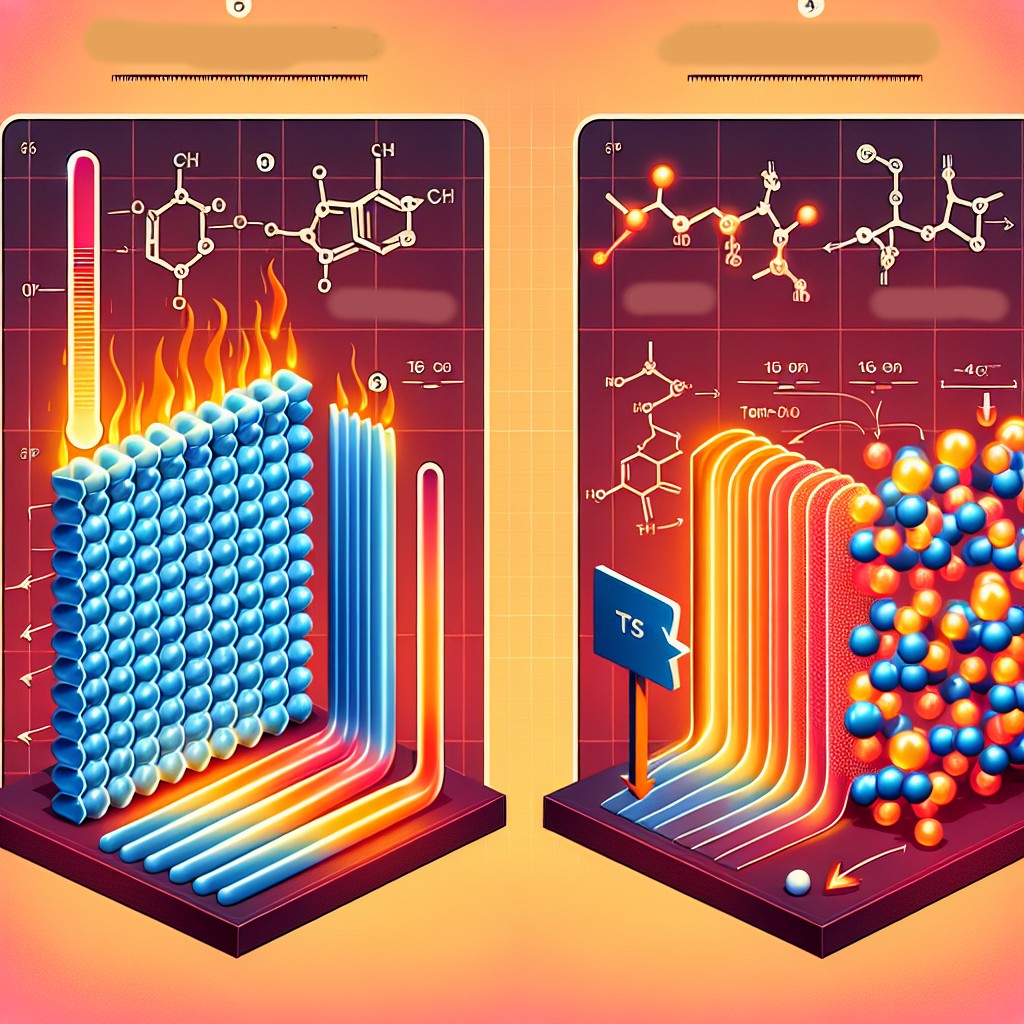
The field of high-strength polymers has seen tremendous advancements over the past decade. Originally utilized in limited applications due to their mechanical shortcomings, modern polymer materials now boast remarkable properties that enable them to compete with traditional metals and ceramics in various industrial and consumer sectors. Innovations in material science have driven the evolution of these polymers, allowing for not only improved mechanical performance but also greater versatility and efficiency in their use. From aerospace engineering to everyday consumer goods, high-strength polymer materials are becoming increasingly pivotal, promising enhancements in durability, weight reduction, and cost-effectiveness.
In traditional industries, materials like steel and aluminum have long dominated due to their superior strength and reliability. However, these metals are often heavy, prone to corrosion, and require significant energy for production and shaping. High-strength polymers, on the other hand, offer a solution to these drawbacks by providing comparable, if not superior, mechanical properties in a much lighter and more easily producible form. As manufacturing techniques and polymer composite technology continue to advance, the potential applications for these materials are expanding rapidly.
Key Mechanisms in Polymer Strength
Understanding the fundamental mechanisms that contribute to the strength of polymers is crucial for developing materials that can meet the rigorous demands of modern applications. The strength of a polymer is influenced by several factors, including molecular weight, degree of crystallinity, and the presence of crosslinking within the polymer matrix.
Molecular weight refers to the length of the polymer chains. Generally, higher molecular weight polymers exhibit greater mechanical strength due to the enhanced intermolecular interactions that result from longer chain lengths. These interactions create a more robust and interconnected network within the material, which resists deformation and failure under stress.
Crystallinity, on the other hand, pertains to the organization of polymer chains within the material. Polymers that have a higher degree of crystallinity tend to be stronger and more rigid, as the orderly arrangement of chains forms a dense and compact structure. This density improves the material’s ability to bear loads and resist wear.
Crosslinking introduces additional bonds between polymer chains, further enhancing their mechanical properties. Crosslinked polymers are characterized by a three-dimensional network that can absorb and distribute stresses more effectively than their non-crosslinked counterparts. This makes them particularly valuable in applications where extreme durability and thermal stability are required.
Innovations in Polymer Synthesis
Recent advancements in polymer synthesis have opened new doors for the development of high-strength materials. Techniques such as controlled radical polymerization (CRP) and ring-opening polymerization (ROP) have enabled the production of polymers with precisely tailored properties.
Controlled radical polymerization allows for the fine-tuning of molecular weight and distribution, resulting in polymers with highly uniform and predictable mechanical characteristics. This method has been instrumental in creating materials for specific applications where customized performance is a prerequisite.
Ring-opening polymerization offers another avenue for enhancing polymer strength. This technique involves the polymerization of cyclic monomers, which leads to the formation of linear or network polymers with distinct structural features. These structures can exhibit enhanced mechanical properties, including superior tensile strength and toughness, making them suitable for high-performance applications.
Furthermore, advancements in copolymerization—where two or more different monomers are combined to form a single polymer chain—have produced materials with bespoke properties. By carefully selecting and combining monomers with complementary characteristics, researchers can create polymers that offer a balance of strength, flexibility, and resistance to environmental factors.

High-Strength Polymer Composites
High-strength polymer composites are becoming increasingly crucial in industries such as aerospace, automotive, and construction. These composites combine polymers with reinforcing materials like glass fibers, carbon fibers, or aramid fibers to produce superior mechanical properties that neither constituent material could achieve alone.
Glass fiber-reinforced polymers (GFRPs) are among the most widely used composites due to their exceptional mechanical properties, lightweight nature, and cost-effectiveness. GFRPs exhibit high tensile strength and resistance to environmental degradation, making them ideal for applications ranging from wind turbine blades to sporting goods.
Carbon fiber-reinforced polymers (CFRPs) offer even greater mechanical performance, including superior stiffness, tensile strength, and fatigue resistance. The lightweight nature of CFRPs, combined with their exceptional structural integrity, makes them indispensable in aerospace engineering, where weight reduction is critical for fuel efficiency and performance.
Aramid fiber-reinforced polymers, such as those utilizing Kevlar, provide exceptional toughness and impact resistance. These materials are often employed in ballistic protection, personal armor, and high-impact sports equipment due to their ability to absorb and dissipate energy effectively.
Applications of High-Strength Polymers
The versatility of high-strength polymers has led to their adoption across a broad spectrum of industries, each benefiting from the material’s unique properties.
In the medical field, high-strength polymers are used to create durable and lightweight prosthetics, implants, and surgical instruments. Their biocompatibility and resistance to wear make them especially suited for long-term applications within the human body.
The automotive industry is another major consumer of these advanced materials. High-strength polymers contribute to vehicle weight reduction, which improves fuel efficiency and reduces emissions. Additionally, the crashworthiness of polymer composites enhances safety features in automobile design, providing better protection to passengers.
In aerospace, high-strength polymers and composites are fundamental to the construction of airframes, engine components, and interior structures. Their lightweight yet durable nature allows aircraft to achieve higher performance and fuel efficiency while maintaining stringent safety standards.
Beyond these industries, high-strength polymers also find applications in consumer electronics, sporting goods, and construction materials, demonstrating their adaptability and widespread impact.
Environmental Impact and Sustainability
As the demand for high-strength polymers continues to grow, addressing the environmental impact and ensuring the sustainability of these materials becomes increasingly important.
One of the significant challenges is the recyclability of polymer materials. Traditional polymers often present difficulties in recycling due to their complex chemical structures and the presence of additives. However, new developments in polymer chemistry are paving the way for more recyclable and environmentally friendly options.
Biodegradable and bio-based polymers are gaining traction as sustainable alternatives to conventional materials. These polymers are derived from renewable resources such as plant-based feedstocks and are designed to decompose under specific conditions, reducing the environmental footprint.
Furthermore, advancements in polymer recycling techniques are enhancing the ability to recover and reprocess high-strength polymer materials. Methods such as chemical recycling, where polymers are broken down to their monomers and then repolymerized, offer promising solutions for creating a circular economy in the polymer industry.
Sustainability initiatives within the industry also focus on reducing energy consumption during production and minimizing waste. By optimizing manufacturing processes and incorporating more efficient techniques, manufacturers can lessen the environmental impact of high-strength polymers.
Conclusion: Future Perspectives
The advances in high-strength polymer materials are paving the way for a new era of innovation across various industries. These materials offer a remarkable combination of mechanical properties, lightweight nature, and versatility, making them invaluable in applications ranging from aerospace to consumer goods. As the demand for stronger, lighter, and more sustainable materials grows, the polymer industry is poised to continue its rapid evolution.
Further research and development in polymer synthesis, composite materials, and sustainable practices will undoubtedly lead to even more groundbreaking discoveries. By focusing on these areas, the industry can address current limitations and push the boundaries of what high-strength polymers can achieve.
Collaboration between academia, industry, and government entities will be crucial in driving this innovation forward. By working together to develop new materials, optimize manufacturing techniques, and implement sustainable practices, stakeholders can ensure that high-strength polymers contribute to a more efficient and environmentally friendly future.
In conclusion, the advances in high-strength polymer materials represent a significant leap forward in material science. With continued research and development, these materials have the potential to revolutionize a wide range of industries, offering unparalleled performance and sustainability. As we look to the future, the continued exploration and application of high-strength polymers will undoubtedly lead to exciting new possibilities and transformative impacts on our world.