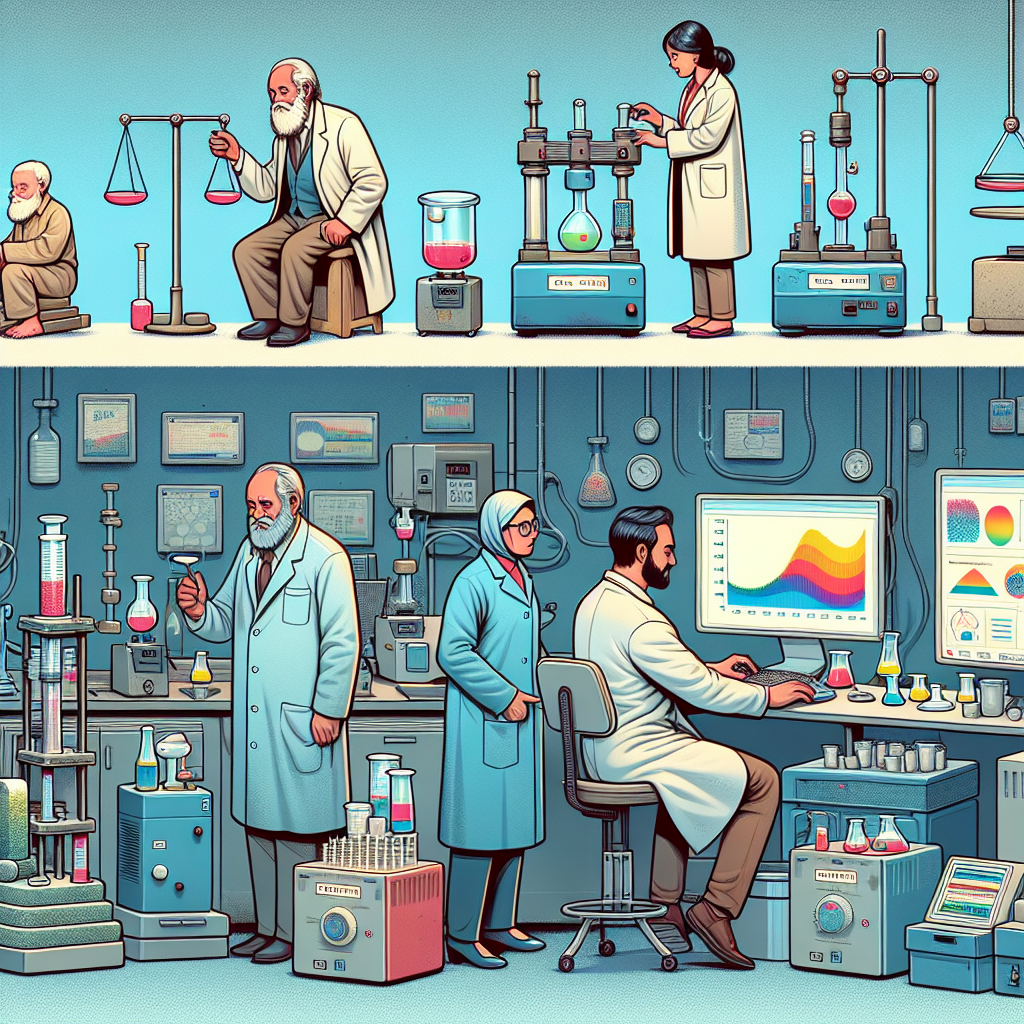
The polymer industry has come a long way since the early days when natural substances like rubber were the main focus. The journey from rudimentary materials to today’s highly specialized polymers is nothing short of remarkable. One critical aspect that has paralleled this evolution is the testing and quality control of polymers. These processes have become more intricate and essential due to the increasing complexity and variety of polymer applications. Understanding the history and development of polymer testing methods can provide invaluable insights into how the industry has achieved its current state and where it may be heading in the future.
In the early days, polymer testing was rudimentary at best, relying on basic physical observations and mechanical testing. As polymers grew in importance, so did the need for more sophisticated methods to evaluate their properties and performance. The advent of new testing technologies and the development of international standards helped push the industry forward, enhancing both the quality and reliability of polymer products. Today, quality control and testing play a critical role in ensuring that polymers meet stringent performance requirements across a myriad of applications, from everyday consumer goods to high-stakes aerospace components.
The Early Days of Polymer Testing
When natural rubber and the first synthetic polymers were discovered, the testing methods were primarily basic mechanical evaluations. The tensile strength, elasticity, and other physical properties were examined using straightforward techniques. Natural rubber, for instance, was primarily tested for its ability to stretch and return to its original shape, a crucial aspect for many of its applications at the time.
These early methods provided a foundation, but they lacked the precision and depth needed as polymers became more complex. Manual testing was labor-intensive and subjective, often influenced by the operator’s experience and skill level. Small deviations in testing conditions could lead to significant variations in results, which was particularly problematic for ensuring the consistency of polymer-based products.
In essence, while these early testing methods were adequate for simple applications, they fell short as the demand for more sophisticated and reliable polymer materials began to grow. It wasn’t long before the industry recognized the urgent need for better testing methodologies that could provide more consistent and reliable results. This spurred innovations and advancements in the field of polymer testing.
Advent of Instrumental Testing
The introduction of instrumental testing marked a significant leap forward in polymer testing and quality control. Analytical instruments like spectrometers, chromatographs, and thermal analyzers opened up new possibilities for understanding the properties of polymers at a molecular level. Techniques such as Differential Scanning Calorimetry (DSC) and Fourier-transform infrared spectroscopy (FTIR) began to provide insights not previously possible with manual methods.
These advanced techniques allowed for precise determination of characteristics like thermal transitions, chemical compositions, and molecular weights. For instance, DSC could determine the melting points and glass transition temperatures of polymers, essential for applications where thermal stability was critical. Similarly, FTIR offered a way to identify functional groups within polymers, providing a deeper understanding of their chemical structures.
The development and adoption of these testing instruments rapidly increased the accuracy and reliability of polymer quality control processes. With objective, quantifiable data, manufacturers could better ensure consistency and performance across their products. As instrumental testing grew more sophisticated, it also became more accessible, gradually becoming an industry standard for polymer testing and quality control.
Development of Global Standards
Parallel to the advancements in testing instruments, the development of global standards has played a crucial role in enhancing polymer testing and quality control. Organizations like ASTM International and ISO (International Organization for Standardization) have developed a wide array of standardized testing methods for different types of polymers and their applications. These standards provide a common language and a set of best practices that manufacturers and testers can follow to ensure consistency, reliability, and safety.
For instance, ASTM D882 outlines the standard test method for tensile properties of thin plastic sheeting, while ISO 11357 details the procedures for DSC measurements. These standards help ensure that test results are reproducible and comparable, no matter where or by whom the tests are conducted. This consistency is vital for industries that rely on polymers to meet stringent quality and performance criteria, such as the automotive, aerospace, and medical sectors.
Adherence to global standards not only boosts the credibility and reliability of polymer testing but also facilitates international trade. By following standardized methods, companies worldwide can assure their customers of the quality and performance of their polymer products. This harmonization has significantly contributed to the global growth and acceptance of polymer materials in various applications.
Role of Computational Methods
Advancements in computational methods have added another dimension to polymer testing and quality control. Techniques such as molecular modeling and computer simulations allow researchers to predict the properties and behaviors of polymers before they are physically synthesized. Computational chemistry offers insights into molecular interactions and can help design polymers with specific properties tailored to particular applications.
These virtual testing methods can significantly reduce the time and cost associated with developing new polymers. For instance, computer-aided design (CAD) tools can simulate how a polymer will perform under various conditions, identifying potential issues early in the development process. This preemptive testing allows for adjustments to be made before expensive and time-consuming physical testing and prototyping begin.
Moreover, machine learning and artificial intelligence (AI) are beginning to play a role in polymer testing and quality control. Algorithms can analyze vast amounts of test data to identify patterns and correlations that may not be immediately apparent to human analysts. These insights can lead to more efficient testing procedures, improved material formulations, and enhanced quality control protocols.
Challenges and Future Directions
Despite the significant advancements in polymer testing and quality control, challenges remain. As polymers become more complex and their applications more demanding, the need for even more sophisticated and accurate testing methods continues to grow. Emerging fields like nanotechnology and biopolymers present unique challenges that current testing methods may not fully address.
Furthermore, the integration of sustainability into the polymer industry is driving the development of eco-friendly polymers and recycling methods. Testing these new materials for performance and environmental impact poses additional challenges. Ensuring that sustainable polymers meet the same rigorous quality standards as traditional materials is critical for their widespread adoption.
Looking ahead, the future of polymer testing and quality control is likely to see increased integration of advanced technologies. Innovations such as real-time monitoring during manufacturing processes, the use of blockchain for traceability in supply chains, and the continued development of AI-driven testing protocols are on the horizon. These advancements promise to further enhance the reliability, efficiency, and environmental sustainability of polymer products.
Conclusion
The evolution of polymer testing and quality control reflects the broader advancements within the polymer industry itself. From the basic mechanical tests of the early days to the sophisticated instrumental analyses and computational methods of today, the journey has been one of continuous improvement and innovation. Each leap forward has been driven by the ever-growing complexity and demands of polymer applications across various industries.
The establishment of global standards has provided a framework for consistency and reliability in polymer testing, facilitating international trade and cooperation. The incorporation of computational methods and emerging technologies like AI and machine learning are pushing the boundaries of what is possible, promising even greater advancements in the future.
However, challenges remain, particularly as the industry moves towards more complex materials and sustainable practices. Addressing these challenges will require ongoing innovation and collaboration across the global polymer community. As we look to the future, the role of testing and quality control will remain central to the development and success of new polymer materials and applications.
In summary, the history of polymer testing and quality control is a testament to the industry’s adaptability and commitment to excellence. By continuing to advance our testing methods and maintain rigorous quality standards, we can ensure that polymers continue to meet the diverse and evolving needs of the modern world.