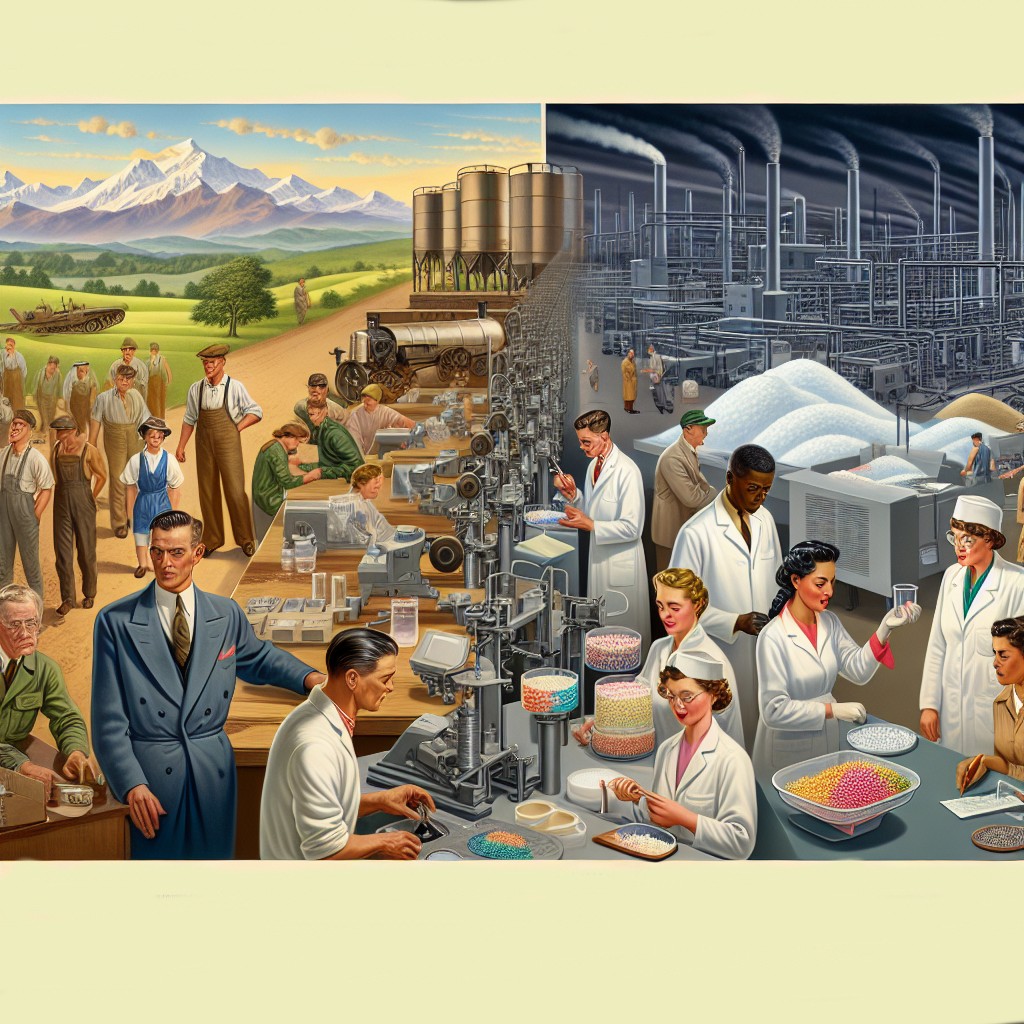
The history of polymer science and technology is closely interwoven with the events of World War II. Known for their remarkable versatility and utility, polymers have become an indispensable part of the modern industrial landscape. While the creation and use of polymers can be traced back to ancient civilizations that used natural materials like rubber, it wasn’t until the 20th century that synthetic polymers entered the scene. This article delves into how the pressures of World War II served as a catalyst for burgeoning polymer technology, shaping the industry in ways that resonate even today.
Before the advent of synthetic polymers, natural polymers such as cellulose, natural rubber, and proteins dominated material science. However, limitations in their supply and properties restricted their applications. With the onset of World War II, the demand for materials that could meet diverse and extreme conditions surged. The natural materials at hand could not fulfill these needs, thus propelling an exploration into synthetic alternatives. This exploration was not purely academic; it was driven by urgent necessity as the war effort demanded more resilient, durable, and adaptable materials.
The urgency brought on by World War II acted as a crucible for the polymer industry, spurring rapid advancements and innovation. Scientists and engineers were called upon to solve practical problems under stringent time constraints. The result was a leap in polymer science that would democratize these materials and integrate them deeply into the fabric of modern industrial society.
The Rise of Synthetic Polymers
The early 1940s marked a watershed moment for synthetic polymers. With natural resources like rubber being scarce and heavily rationed, the Allied forces had to come up with alternative materials. This led to the development and mass production of several key synthetic polymers. One of the most significant breakthroughs was the creation of synthetic rubber, often called Buna-S or SBR (Styrene-Butadiene Rubber).
Developed in Germany and later perfected in the United States, SBR became crucial for producing tires, boots, and other essential wartime supplies. The production of SBR reached unprecedented levels, and by the end of the war, over a billion pounds of synthetic rubber had been produced.
Another notable advancement was the development of nylon, the first commercially successful synthetic thermoplastic polymer. Created by Wallace Carothers at DuPont, nylon was initially touted for its potential in fabrics and textiles. However, its application expanded rapidly during the war, being used in parachutes, ropes, and even parts for military vehicles. The success of nylon during the war bolstered its reputation, leading to its widespread adoption in consumer products in the post-war era.
Polyethylene, another essential polymer, saw advancements during World War II. Initially discovered by accident in the 1930s, its properties of flexibility and electrical insulation became vital for radar technology during the war. These early experiences laid the foundation for polyethylene’s future as a staple in packaging and various industrial applications.
Polymer Innovations Driven By Necessity
As the war progressed, the demand for more specialized materials grew, prompting further innovations in the polymer industry. One such innovation was the development of polyvinyl chloride (PVC). Initially overlooked, PVC’s qualities of durability, resistance to acids, and water resistance made it invaluable for the war effort. It quickly found applications in the production of wire insulation, raincoats, and gas masks.
Similarly, the need for lightweight, high-performance materials spurred the development of polystyrene and polyester. Polystyrene, especially in its expanded form (Styrofoam), became critical for insulation, packaging, and even as a buoyancy aid. Polyester’s use in fabrics provided durable, fire-resistant clothing, supporting the overall wartime logistics efforts.
Polyurethanes also saw substantial development during this time. Initially discovered in Germany, polyurethane’s versatility allowed it to be used in a range of products from coatings and adhesives to foams and plastics. Its ability to be customized for specific needs made it particularly valuable, leading to widespread use in various military and industrial applications.
The urgency of wartime demands also led to rapid improvements in polymer production techniques. New methods for polymerization, such as emulsion and suspension polymerization, were developed to increase efficiency and scalability. These advances were instrumental in meeting the colossal material demands of World War II and set the stage for future developments in polymer chemistry.

Post-War Transformation and Commercialization
Post-World War II, the innovations and advancements in polymer science readily transitioned to civilian applications. The infrastructure and knowledge developed during the war were repurposed, leading to an explosion in the production and application of synthetic polymers.
The consumer market eagerly adopted products made from these new materials. Nylon, once a wartime essential, became a household name with its use in apparel and various domestic items. The mass production techniques honed during the war paved the way for affordable consumer goods, democratizing access to previously inaccessible materials.
The availability of robust, cost-effective materials like polyethylene and PVC revolutionized industries such as construction, packaging, and electronics. PVC pipe, for example, became a staple in building and infrastructure projects due to its durability and cost-efficiency. Polyethylene’s flexibility and resilience led to ubiquitous use in packaging, contributing to the rise of the modern consumer goods industry.
The impact extended to other sectors as well, including automotive, aerospace, and healthcare. Innovations like car parts made from ABS (Acrylonitrile Butadiene Styrene) exemplify the broader industrial shift toward synthetic materials, driven by their superior performance and adaptability.
Environmental Considerations and Challenges
While the development of synthetic polymers revolutionized numerous industries and positively impacted economies worldwide, it also introduced environmental considerations that persist to this day. As the use of synthetic polymers surged, so did concerns over their environmental footprint.
Many synthetic polymers, being non-biodegradable, began to accumulate in landfills and the natural environment. This led to growing awareness and criticism regarding the sustainability of widespread polymer use. Incidents of pollution, such as the Great Pacific Garbage Patch, highlighted the severe ecological impact of improper disposal of plastic waste.
These environmental challenges have spurred continuous innovation in the field of polymer science. Researchers are now focusing on developing biodegradable polymers, recycling technologies, and sustainable production methods. Efforts are underway to engineer polymers that retain their useful properties but are designed for easier recycling or degradation at the end of their life cycles.
Despite these challenges, the importance of synthetic polymers in modern life cannot be overstated. The ongoing efforts to balance the benefits of polymer technology with environmental sustainability are paving the way for the next generation of safer, greener polymers.
Future Prospects and Innovations
The future of the polymer industry looks promising, with numerous exciting developments on the horizon. The advancement of nanotechnology, for example, is opening up new avenues for creating polymers with enhanced functionalities. Nanocomposites, which incorporate nanoparticles into polymer matrices, offer improved strength, conductivity, and thermal properties.
Another area of innovation is the development of smart polymers. These materials can respond to external stimuli, such as temperature, pH, or light, making them suitable for a variety of advanced applications, including drug delivery systems, sensors, and adaptive materials.
Moreover, the push towards sustainability is driving research into bio-based polymers derived from renewable resources. Polymers like polylactic acid (PLA) and polyhydroxyalkanoates (PHA) are being explored as eco-friendly alternatives to traditional petroleum-based plastics. Advances in biotechnology and polymer chemistry are aiding in the efficient production and processing of these materials.
Recycling technology is also witnessing significant progress. Innovations such as chemical recycling, which breaks down polymers into their monomeric components for reuse, hold the potential to transform waste management and material reuse practices.
The integration of digital technology and automation in polymer production processes is enhancing efficiency and precision. Smart manufacturing techniques, such as 3D printing and advanced molding technologies, are enabling the creation of complex, customized polymer products with reduced waste and faster turnaround times.
Conclusion
The impact of World War II on the polymer industry is a testament to how necessity can drive innovation and advancement in technology. The war created an urgent demand for new materials, leading to the rapid development and commercialization of synthetic polymers. This period of intense research and production laid the foundation for the ubiquitous presence of polymers in modern society.
From applications in everyday consumer goods to advanced industrial uses, synthetic polymers have transformed how we live and work. However, this transformation has not been without its challenges, particularly regarding environmental sustainability. The ongoing efforts to address these challenges demonstrate the dynamic and evolving nature of polymer science.
Looking ahead, the future of the polymer industry is filled with potential. The continuous quest for better, smarter, and more sustainable materials promises to keep the field at the forefront of scientific and technological innovation. As we navigate the complexities of the 21st century, the lessons learned and advancements achieved during World War II will continue to guide the evolution of polymer technology.