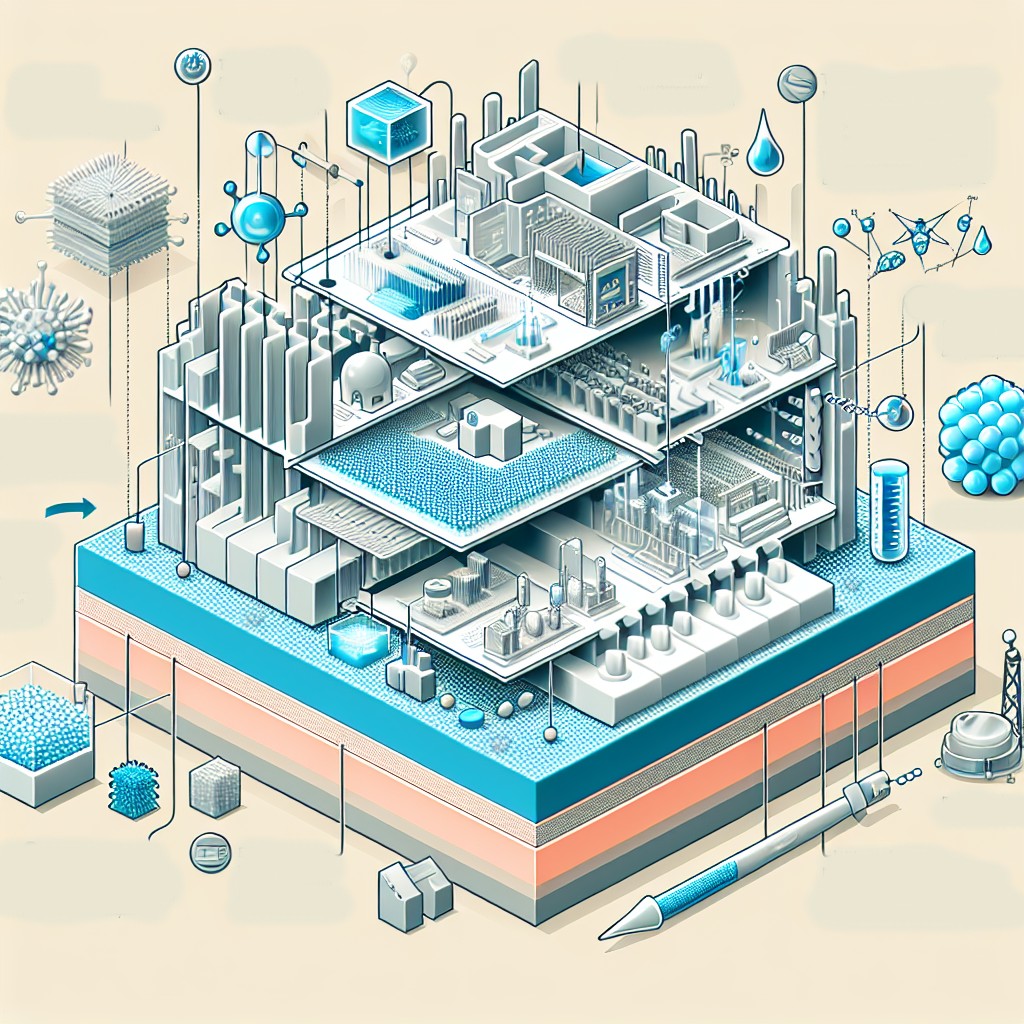
Polymers have become a fundamental component in numerous industries due to their diverse properties and applications. Despite their versatility, polymers often face challenges related to their thermal properties, including thermal degradation, poor heat resistance, and low thermal stability. These limitations can affect the durability and performance of polymer-based products, particularly when exposed to high temperatures.
Overcoming these thermal challenges is crucial for extending the operational lifespan and enhancing the performance of polymers in various applications. One effective approach to improve the thermal properties of polymers is the incorporation of additives. Additives are substances that, when mixed with polymers, can significantly alter their characteristics and enhance their thermal stability and performance.
This article delves into the role of additives in enhancing the thermal properties of polymers. We will explore various types of additives, their mechanisms of action, and how they contribute to the improved thermal performance of polymers. By understanding these additives and their effects, industry professionals can make informed decisions to optimize polymer applications in environments with demanding thermal requirements.
The Importance of Thermal Properties in Polymers
The thermal properties of polymers are critical determinants of their suitability for different applications. Key thermal properties include thermal stability, heat resistance, and thermal conductivity. These properties influence how a polymer behaves under different thermal conditions, including exposure to heat, cold, and thermal cycling.
Thermal stability refers to a polymer’s ability to maintain its structure and performance at elevated temperatures. Polymers with poor thermal stability can degrade, losing their mechanical properties and becoming brittle. This can lead to product failure, particularly in applications where consistent performance at high temperatures is required, such as in automotive, aerospace, and electronic industries.
Heat resistance, on the other hand, describes a polymer’s capacity to withstand high temperatures without deforming or melting. Polymers with high heat resistance are essential in applications where exposure to intense heat is inevitable, such as in cooking appliances, industrial machinery, and protective coatings.
Moreover, thermal conductivity is a measure of how effectively a polymer can transfer heat. While many polymers have low thermal conductivity, certain applications require materials that can efficiently dissipate heat to prevent overheating and maintain performance.
Types of Additives Enhancing Thermal Properties
Various additives can be incorporated into polymers to enhance their thermal properties. These additives can be broadly categorized into stabilizers, flame retardants, and thermal conductors.
Thermal Stabilizers
Thermal stabilizers are used to prevent thermal degradation of polymers. These stabilizers work by inhibiting the chemical reactions that lead to degradation, such as oxidation and depolymerization. Common thermal stabilizers include hindered phenols, phosphites, and thioesters.
Flame Retardants
Flame retardants are additives that improve the fire resistance of polymers. They function by inhibiting or delaying the ignition and spread of fire. Common flame retardants include halogenated compounds, phosphorus-based compounds, and mineral flame retardants like antimony trioxide and aluminum hydroxide.
Thermal Conductive Additives
Thermal conductive additives enhance the thermal conductivity of polymers, allowing them to dissipate heat more effectively. These additives include metal powders, carbon-based materials like graphene and carbon nanotubes, and ceramic fillers such as boron nitride and alumina.
Mechanisms of Additive Action
The effectiveness of additives in enhancing thermal properties is rooted in their mechanisms of action. Understanding these mechanisms provides insights into how these additives improve polymer performance.
Thermal Stabilizers
Thermal stabilizers often work by scavenging free radicals produced during thermal degradation. By neutralizing these radicals, stabilizers prevent further degradation reactions, thereby extending the polymer’s thermal stability.
Flame Retardants
Flame retardants can function through various mechanisms, including forming a protective char layer, releasing non-combustible gases to dilute flammable gases, and disrupting the combustion process at the molecular level. These mechanisms collectively reduce the flammability of polymers.
Thermal Conductive Additives
Thermal conductive additives enhance heat transfer through the polymer matrix by creating continuous pathways for heat flow. The dispersion and alignment of these additives within the polymer are crucial for maximizing thermal conductivity.
Case Studies and Applications
Several case studies demonstrate the successful application of additives in enhancing the thermal properties of polymers in real-world scenarios.
Automotive Industry
In the automotive industry, polymers with improved thermal stability and heat resistance are essential for components exposed to high engine temperatures. For example, polyamide (PA) with added thermal stabilizers is used in under-the-hood applications where heat resistance is critical.
Electronic Industry
In electronics, thermal management is crucial to ensure device reliability and longevity. The incorporation of thermal conductive additives in polymeric materials used in electronic housings helps dissipate heat efficiently, preventing overheating and improving device performance.
Construction Industry
In the construction industry, flame retardant polymers are crucial for enhancing the safety of building materials. Additives such as halogenated flame retardants and phosphorus-based compounds are used in insulation materials and structural components to enhance fire resistance.
Challenges and Future Directions
While the use of additives has proven to be effective in enhancing the thermal properties of polymers, several challenges need to be addressed to optimize their performance.
Environmental Concerns
Many additives, particularly certain flame retardants, pose environmental and health risks due to their persistence and potential toxicity. Transitioning to eco-friendly additives is a critical area of ongoing research.
Compatibility Issues
Achieving uniform dispersion and compatibility of additives within the polymer matrix is essential for optimal performance. Innovative approaches to surface modification and functionalization of additives are being explored to address these issues.
Cost Considerations
The cost of additives can be a limiting factor in their widespread adoption. Developing cost-effective additive solutions without compromising performance remains a key focus for the industry.
Conclusion
The incorporation of additives into polymers offers a powerful strategy to enhance their thermal properties, including thermal stability, heat resistance, and thermal conductivity. By leveraging the benefits of various additives such as thermal stabilizers, flame retardants, and thermal conductive materials, industries can overcome the limitations of conventional polymers and expand the scope of their applications in thermally demanding environments.
Through understanding the mechanisms by which these additives function and considering real-world applications, industry professionals can make informed decisions to optimize polymer performance for specific uses. As research progresses, advances in additive technology will likely yield new solutions to current challenges, paving the way for more efficient, environmentally friendly, and cost-effective methods to enhance polymer thermal properties.
Ultimately, the continuous evolution of additive formulations and their integration into polymer systems will play a critical role in shaping the future of the polymer industry, driving innovation, and improving product performance across various sectors.