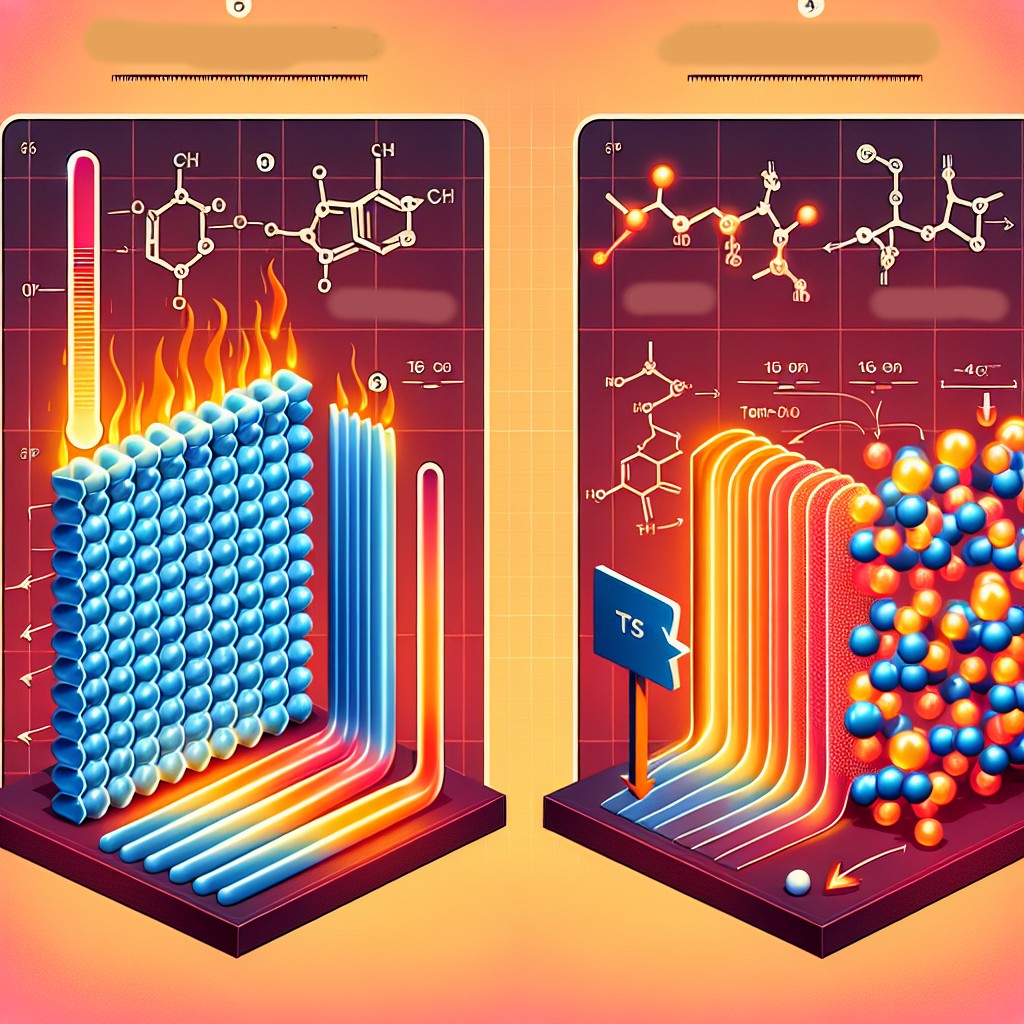
The polymer industry has seen rapid advancements, making polymers a critical material across various industries—from automotive to electronics, packaging to healthcare. One key factor that dictates the suitability of a polymer for a specific application is its thermal properties, particularly its Heat Deflection Temperature (HDT). HDT is a measure of a polymer’s ability to withstand heat and maintain its shape under pressure. Understanding HDT is crucial for engineers and material scientists when selecting polymers for applications that will expose them to high temperatures. This article delves into the significance of HDT, the factors influencing it, and its role in polymer selection.
Understanding Heat Deflection Temperature
Heat Deflection Temperature (HDT) is the temperature at which a polymer deforms under a specified load. It is a critical parameter because it gives an indication of the polymer’s ability to function and maintain structural integrity at elevated temperatures. HDT is determined using a standardized test, usually the ASTM D648 method, which involves applying a flexural load to a specimen and measuring the temperature at which it starts to deform. HDT is expressed in degrees Celsius (°C) or Fahrenheit (°F).
The importance of HDT lies in its ability to predict the performance of polymer components in real-world applications. For instance, in the automotive industry, materials used in engine compartments must resist deformation at high temperatures. Similarly, in electronics, polymers must maintain their properties under the heat generated by electronic components to ensure long-term reliability.
Factors Influencing Heat Deflection Temperature
Several factors influence the HDT of a polymer. These factors can be intrinsic to the polymer’s molecular structure or extrinsic, such as the presence of additives or fillers. Here are some key factors:
- Molecular Structure: Polymers with a higher degree of crystallinity generally have higher HDTs because their ordered structure provides better resistance to thermal deformation.
- Cross-linking: Highly cross-linked polymers possess higher HDTs due to the strong covalent bonds between polymer chains, which prevent them from moving easily under heat.
- Additives and Fillers: Additives like stabilizers, plasticizers, and fillers can significantly affect the HDT. For example, adding glass fibers to a polymer can increase its HDT by providing additional structural support.
- Processing Conditions: The method used to process the polymer, such as injection molding or extrusion, can also impact its HDT. Proper processing ensures a uniform molecular structure, thereby enhancing thermal properties.

Common Polymers and Their HDTs
Understanding the HDT of common polymers helps in selecting the right material for specific applications. Here is a brief overview of the HDTs of some widely used polymers:
- Polyethylene (PE): HDT ranges from 40°C to 80°C, making it suitable for low-temperature applications like packaging.
- Polypropylene (PP): With an HDT of around 100°C, PP is used in automotive parts and household items that require moderate heat resistance.
- Polycarbonate (PC): Known for its high HDT of around 140°C, PC is ideal for applications like electronic housings and optical disks.
- Polyethylene Terephthalate (PET): With an HDT ranging from 75°C to 180°C, PET is versatile and used in bottles and food containers.
- Polytetrafluoroethylene (PTFE): With an exceptional HDT of over 250°C, PTFE is used in high-heat applications like non-stick coatings and gaskets.
Applications and Industry Standards
The HDT of a polymer is critical in determining its suitability for various applications. Industries have set specific standards and requirements for HDT to ensure the safety and performance of the final product.
- Automotive Industry: Polymers used in engine compartments, under-the-hood components, and interior parts must meet specific HDT criteria to ensure they do not warp or fail under high temperatures.
- Electronics Industry: Components like connectors, housing, and insulation materials must maintain their properties at elevated temperatures to ensure device reliability.
- Construction Industry: Polymers used in building materials, piping, and insulation must have adequate HDT to withstand environmental and operational heat.
- Medical Industry: High-performance polymers used in medical devices and equipment must meet stringent HDT requirements to ensure safety and performance during sterilization and usage.
Testing Methods and Standardization
The measurement of HDT is standardized to ensure consistency and reliability across different applications and industries. The most common method is the ASTM D648 standard, which involves heating a polymer specimen under a specific load and recording the temperature at which it deforms.
This method involves a few critical steps:
- Pre-conditioning: The polymer specimen is pre-conditioned to a standardized environment to ensure uniformity.
- Loading: A specified flexural load is applied to the specimen. The load is usually 0.455 MPa or 1.82 MPa, depending on the test requirements.
- Heating: The specimen is heated at a uniform rate, typically 2°C per minute.
- Deformation Measurement: The temperature at which the specimen deforms by a specified amount (usually 0.25 mm) is recorded as the HDT.
This standardized method ensures that HDT values are comparable across different types of polymers and applications, providing a reliable basis for material selection.
The Future of Polymers and HDT
With advancements in polymer science, the future holds promising developments in enhancing HDT and other thermal properties of polymers. Researchers are exploring new polymer blends, nanocomposites, and advanced processing techniques to create materials with superior thermal performance. These innovations aim to extend the application range of polymers, making them suitable for more demanding environments and thereby expanding their utility.
For example, nanocomposites that incorporate nano-sized fillers can significantly enhance the thermal properties of conventional polymers, providing higher HDT and better heat resistance. Additionally, the development of new polymer blends and alloys can create materials that combine the benefits of multiple polymers, offering improved performance without compromising on other essential properties.
Conclusion
Heat Deflection Temperature (HDT) is a crucial parameter in the selection and application of polymers across various industries. Understanding the HDT of different polymers helps engineers and material scientists make informed decisions, ensuring that the selected material can withstand the thermal stresses of its intended application. Factors such as molecular structure, cross-linking, additives, fillers, and processing conditions all play a significant role in determining HDT.
Adhering to industry standards and testing methods, such as ASTM D648, ensures the reliability of HDT measurements, providing a robust foundation for material selection. As the polymer industry continues to evolve, advancements in polymer science are expected to yield materials with enhanced thermal properties, further expanding the horizons of polymer applications.
The polymer industry stands at the forefront of innovation, continually pushing the boundaries of what is possible with these versatile materials. As we move forward, a deep understanding of HDT and its implications will remain an essential component of material science, driving advancements and ensuring the creation of safer, more efficient, and more reliable products across all sectors.