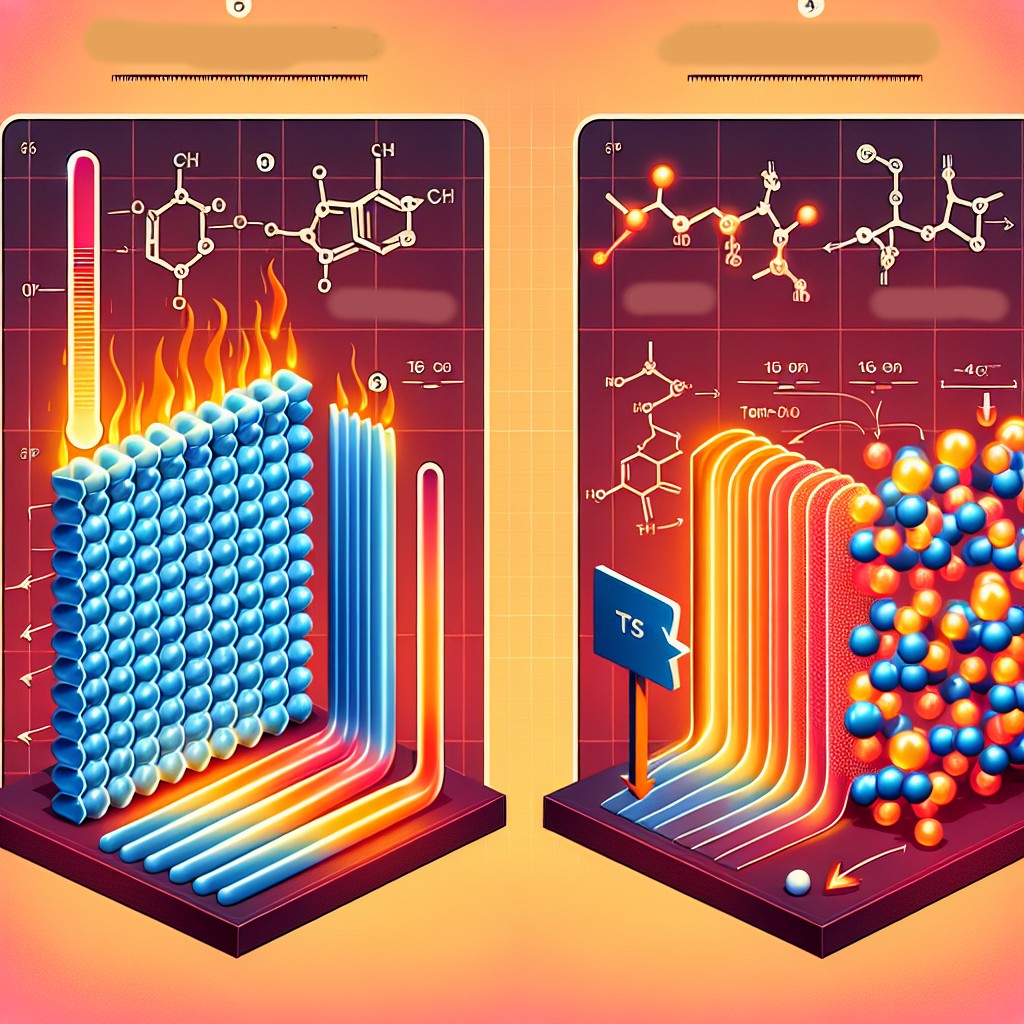
The polymer industry plays a pivotal role in various sectors, including automotive, construction, packaging, and medical devices. Polymers, due to their diverse properties, have revolutionized modern technology and engineered materials. One of the critical aspects of polymer performance that significantly affects its application is its thermal properties, particularly thermal expansion. Understanding thermal expansion in polymers is crucial for designing and manufacturing reliable products, ensuring their performance and durability under different thermal conditions.
Thermal expansion refers to the tendency of a material to change its dimensions in response to temperature fluctuations. In polymers, this phenomenon is largely influenced by their molecular structure and the nature of the polymer chains. When exposed to heat, polymer chains may either expand or contract, leading to potential changes in shape, size, and overall mechanical properties. This article delves into the role of thermal expansion in polymer applications, highlighting its significance, implications, and the various factors influencing it.
In the subsequent sections, we will explore the basics of thermal expansion in polymers, the factors affecting thermal expansion, the implications of thermal expansion in various applications, and the techniques used to measure and control thermal expansion in polymers. Understanding these aspects is crucial for engineers, designers, and researchers working with polymers to ensure the development of high-performance materials tailored to specific needs.
The Basics of Thermal Expansion in Polymers
Thermal expansion in polymers is a result of the molecular vibrations caused by heat energy. When a polymer is heated, its molecules gain kinetic energy and begin to vibrate more vigorously. This increased molecular motion leads to an increase in the average spacing between the polymer chains, causing the material to expand. Conversely, cooling the polymer reduces molecular vibrations, resulting in contraction.
The degree of thermal expansion in polymers is quantified by the coefficient of thermal expansion (CTE), which is expressed as a change in length per unit length per degree of temperature change (usually in the units of ppm/°C or ×10⁻⁶/°C). Polymers typically possess a higher CTE compared to metals or ceramics, making them more sensitive to temperature variations.
The CTE of a polymer is influenced by its molecular structure, the nature of the polymer chains, and the presence of any additives or fillers. For example, amorphous polymers, which lack a well-defined crystalline structure, generally exhibit higher thermal expansion compared to semi-crystalline polymers. Additionally, the presence of fillers such as glass fibers or carbon nanotubes can reduce the overall thermal expansion by restricting the mobility of the polymer chains.
Understanding the CTE of a polymer is crucial for designing materials that can withstand thermal cycling and thermal shock, ensuring their reliability and longevity in various applications. In the following sections, we will delve into the factors affecting thermal expansion in polymers and discuss the implications of these properties in different industries.
Factors Influencing Thermal Expansion in Polymers
Several factors can influence the thermal expansion behavior of polymers. These factors are primarily related to the polymer’s molecular structure, composition, and processing conditions. Understanding these factors is essential for predicting and controlling the thermal expansion characteristics of polymer-based materials.
1. Molecular Structure: The intrinsic molecular structure of a polymer, such as its degree of crystallinity, plays a significant role in determining its thermal expansion behavior. Amorphous polymers, with their random and disordered polymer chains, generally exhibit higher CTE values compared to semi-crystalline polymers, which have more ordered regions. The crystalline regions in semi-crystalline polymers restrict chain movement, resulting in reduced thermal expansion.
2. Polymer Chain Length: The length of the polymer chains, also known as the molecular weight, can impact thermal expansion. Longer polymer chains have more entanglements and interactions, which can hinder molecular mobility and reduce thermal expansion.
3. Cross-Linking Density: Cross-linking involves the formation of covalent bonds between polymer chains, creating a three-dimensional network. Higher cross-linking density restricts the movement of polymer chains, leading to lower thermal expansion. Cross-linked polymers, such as thermosetting plastics, typically exhibit lower CTE values compared to their thermoplastic counterparts.
4. Fillers and Reinforcements: Incorporating fillers and reinforcements, such as glass fibers, carbon fibers, or nanoparticles, can significantly influence the thermal expansion properties of polymers. These additives restrict the movement of polymer chains and reduce the overall thermal expansion coefficient. For example, adding glass fibers to a polymer matrix can enhance its dimensional stability under thermal stress.
5. Processing Conditions: The methods used to process and fabricate polymer products can also impact their thermal expansion behavior. Factors such as cooling rate, annealing, and orientation during processing can affect the degree of crystallinity and the alignment of polymer chains, subsequently influencing thermal expansion. Rapid cooling or quenching can result in higher amorphous content, leading to increased thermal expansion.
By understanding and manipulating these factors, materials scientists and engineers can develop polymer-based materials with tailored thermal expansion properties, suitable for specific applications. In the subsequent sections, we will explore the implications of thermal expansion in various industries and the techniques used to measure and control this property in polymers.

Implications of Thermal Expansion in Polymer Applications
The thermal expansion properties of polymers have significant implications across various industries. Understanding and managing thermal expansion is vital to ensure the performance, reliability, and longevity of polymer-based products. Below are some key applications and how thermal expansion impacts each:
1. Automotive Industry: In the automotive sector, polymers are extensively used in under-the-hood components, interior parts, and lightweight structural components. The thermal expansion of polymers plays a critical role in the design of engine components, such as intake manifolds and radiator tanks, which undergo significant temperature variations. Correctly managing thermal expansion helps prevent issues such as warping, cracking, and sealing failures.
2. Electronics and Electrical Engineering: Polymers are used in various electronic device components, including connectors, insulators, and encapsulants. Thermal expansion must be carefully controlled to avoid thermal stresses that can lead to component failure or poor electrical performance. For instance, in printed circuit boards (PCBs), mismatched thermal expansion between polymer substrates and metallic conductors can cause delamination and open circuits.
3. Packaging Industry: In packaging, polymers are essential for creating flexible and rigid containers, films, and coatings. Thermal expansion properties influence the sealing integrity and dimensional stability of these packaging materials. For instance, food packaging films must maintain their barrier properties during thermal processing to ensure product safety and shelf life.
4. Construction and Building Materials: Polymers such as PVC, HDPE, and PEX are widely used in pipes, insulation, and other construction materials. Thermal expansion considerations are crucial in applications like piping systems, where temperature variations can cause expansion or contraction, affecting joint integrity and leakage. Proper design and installation practices account for these movements to ensure long-term performance.
5. Medical Devices and Healthcare: In the medical field, polymers are used in various devices and implants, such as catheters, prosthetics, and drug delivery systems. Thermal expansion properties must be considered to ensure that these devices maintain their functionality and biocompatibility under body temperature variations. For instance, implantable devices must remain dimensionally stable to avoid adverse reactions or mechanical failures.
These examples highlight the importance of understanding and controlling thermal expansion in polymer applications. Engineers and designers must consider thermal properties during material selection and product development to ensure optimal performance. In the following section, we will discuss techniques used to measure and control thermal expansion in polymers.
Techniques to Measure and Control Thermal Expansion in Polymers
Accurate measurement and control of thermal expansion in polymers are essential for ensuring the reliability and performance of polymer-based materials and products. Various techniques and methods are used to characterize thermal expansion and manage it effectively. Here are some commonly employed techniques:
1. Thermomechanical Analysis (TMA): TMA is a widely used technique for measuring the dimensional changes in a polymer sample as a function of temperature. A sample is subjected to a controlled temperature program, and its expansion or contraction is measured using a probe. TMA provides precise data on the coefficient of thermal expansion (CTE) and helps in understanding the material’s behavior under thermal stress.
2. Dynamic Mechanical Analysis (DMA): DMA measures the mechanical properties of a polymer, such as modulus and damping behavior, as a function of temperature. This technique helps in understanding the viscoelastic properties of polymers and how they change with temperature. DMA data can provide insights into thermal expansion behavior, especially in relation to the material’s glass transition temperature (Tg).
3. Dilatometry: Dilatometry is a technique used to measure the volumetric changes in a polymer sample as it is heated or cooled. The changes in volume are recorded, and the coefficient of thermal expansion is determined. Dilatometry is particularly useful for studying the expansion behavior of bulk polymers and composite materials.
4. Interferometry: Interferometric methods use light interference to measure minute changes in the dimensions of a polymer sample due to thermal expansion. These techniques offer high precision and are suitable for studying thin films and coatings. Interferometry provides valuable data on the dimensional stability of polymeric materials under thermal cycling conditions.
5. Control Strategies: To control thermal expansion, various strategies can be employed, such as:
- Incorporating fillers and reinforcements: Adding materials with low CTE, such as glass fibers or carbon nanotubes, can restrict polymer chain mobility and reduce overall thermal expansion.
- Optimizing polymer blends: Combining different polymers with complementary thermal expansion properties can create materials with tailored CTE values.
- Cross-linking: Increasing the cross-linking density in polymers can reduce their thermal expansion by restricting chain movement.
- Adjusting processing conditions: Careful control of processing parameters, such as cooling rate and annealing, can influence the degree of crystallinity and orientation of polymer chains, affecting thermal expansion behavior.
By utilizing these measurement techniques and control strategies, materials scientists and engineers can accurately characterize thermal expansion properties and design polymer-based materials with improved thermal stability for a wide range of applications. In the following conclusion, we will summarize the key points discussed and highlight the importance of continued research in this field.
Thermal expansion in polymers is a critical property that significantly impacts their performance, durability, and reliability in various applications. Understanding the fundamentals of thermal expansion, as well as the factors influencing it, is essential for designing polymer-based materials that can withstand thermal cycling and thermal stress. The coefficient of thermal expansion (CTE) serves as a key parameter in evaluating the thermal behavior of polymers and is influenced by molecular structure, chain length, cross-linking density, fillers, and processing conditions. Properly managing thermal expansion is vital in industries such as automotive, electronics, packaging, construction, and healthcare, where polymers play a crucial role in product performance. Accurate measurement techniques, such as Thermomechanical Analysis (TMA), Dynamic Mechanical Analysis (DMA), dilatometry, and interferometry, provide valuable insights into the thermal expansion behavior of polymers. Additionally, various control strategies, including the incorporation of fillers, optimizing polymer blends, cross-linking, and adjusting processing conditions, enable the development of materials with tailored thermal expansion properties. Continued research and advancements in understanding thermal expansion in polymers will lead to the development of innovative materials capable of meeting the demanding requirements of modern applications. By leveraging knowledge of thermal expansion, engineers, designers, and researchers can create polymer-based products that are not only reliable but also capable of performing optimally under diverse thermal conditions.