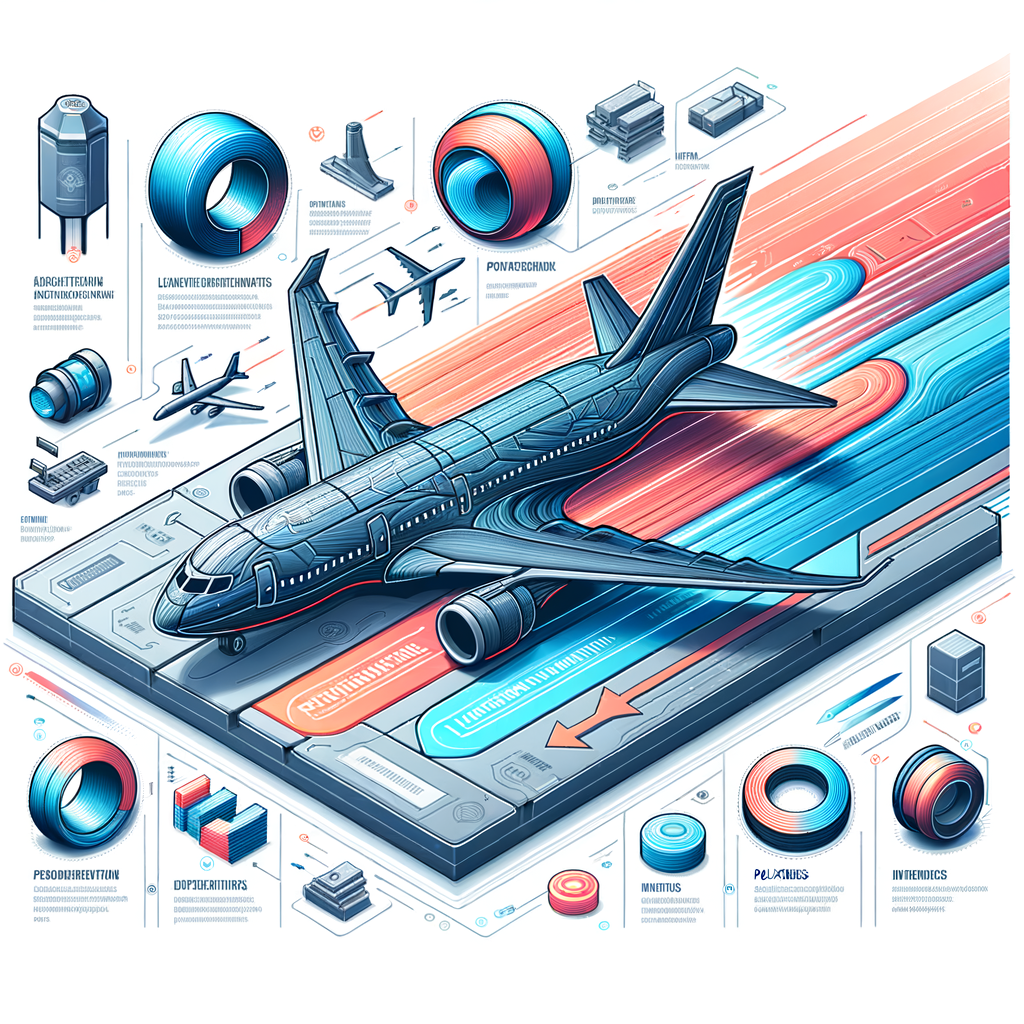
In the vast expanse of aerospace technology, where precision and resilience are crucial, thermal insulation plays an indispensable role. It’s here that polymers, with their multifaceted properties, have emerged as game-changers. Polymers are organic materials composed of long, repeating chains of molecules, offering versatility, lightweight characteristics, and thermal stability. These qualities have made them a popular choice for thermal insulation in modern aircraft, spacecraft, and satellites. As aerospace technologies continually push the boundaries of what is possible, the demand for advanced thermal management systems has grown. Efficiency in managing heat protects sensitive components, enhances the lifespan of the vehicle, and guarantees the safety of missions. In this context, the application of polymers is not only advantageous but essential. From their unique attributes to the challenges they help overcome, exploring the use of polymers in this realm offers an illuminating look at modern engineering’s marriage to cutting-edge material science.
At high altitudes and in space, extreme temperatures are commonplace. Crafting materials that can withstand the freeze of the upper atmosphere or the scorching heat upon re-entry demands innovation. Traditional materials like metal offer durability but lack the lightweight characteristics and fabrication flexibility that polymers provide. The versatility of polymers makes them ideal candidates for creating effective insulation solutions able to meet the rigorous demands encountered in aerospace applications. The intricacies of their molecular structure confer properties beneficial to aerospace demands, including high resistance to wear, chemical inertia, and the capacity to maintain integrity across a broad temperature range. Understanding how polymers work and their impact in insulation provides insight into aerospace technology’s continual evolution aimed at improving mission safety and effectiveness even in the harshest environments.
Unique Properties of Polymers in Aerospace
Polymers, with their unique structures, offer specific attributes tailored for aerospace insulation. High-temperature resistance is one of the primary requirements. Advanced polymers like Polyimide and Polyetheretherketone (PEEK) stand out due to their ability to perform under extreme heat conditions without decomposing or losing mechanical integrity. These high-performance polymers serve as a barrier against thermal extremes faced by spacecraft in orbit or atmospheric re-entry. The thermal stability of polymers ensures they do not become brittle or degrade over long periods exposed to high or low temperatures, which is crucial for the longevity and safety of aerospace operations.
Apart from their thermal stability, polymers are known for their low thermal conductivity. This property helps in maintaining the needed thermal barrier, preventing unwanted heat exchange with the external environment. Unlike metals, polymers do not conduct heat as effectively, making them proficient insulators. Lightweight construction is another key advantage of polymer materials. In aerospace applications, reducing weight translates directly into cost savings and improved energy efficiency. Polymers typically have a lower density than metals, contributing to overall weight reduction of aerospace vehicles, which supports higher velocity and better fuel efficiency.
Furthermore, the flexibility of polymers allows them to be molded into various shapes, fitting seamlessly into diverse structural profiles within aircraft and spacecraft. This adaptability means polymer-based insulation can be easily manufactured to fit bespoke designs, accommodating the complex architectures often found in advanced aerospace vehicles. By integrating easily into the multifaceted configurations of aircraft and spacecraft, polymers offer customized insulation solutions that improve thermal efficiency significantly.
Applications of Polymers in Aerospace Insulation
Polymers’ widespread use in thermal insulation is a testament to their multifaceted capabilities. In aerospace applications, one significant area is the protection of electronic components. Polymers provide a thermal shield, ensuring that electronic systems critical for navigation and control sequences are protected from temperature fluctuations. By insulating these components, polymers play a vital role in the reliability and precision of avionics systems under various operating conditions.
Another key application of polymers is within thermal blankets used on spacecraft. These multilayer insulation systems are vital for maintaining the delicate thermal balance necessary for spacecraft instrument operation. By reflecting heat and minimizing thermal conduction, polymer-based thermal blankets enable precise temperature control essential for optical instruments, battery packs, and delicate sensors. This insulation is crucial during the vacuum of space travel, where temperature management is vital for mission success.
Polymers are also integral to engine compartments and exhaust systems. High-performance polymers withstand not only high temperatures but also exposure to abrasive and corrosive elements typical in these components. By offering robust insulation in these regions, polymers enhance the safety and efficiency of the propulsion systems by controlling temperatures and preventing unwanted heat transfer that could lead to component failure.
In addition, the cabin interiors of commercial aircraft benefit significantly from polymeric insulation materials. Here, polymers maintain a stable and comfortable thermal environment for passengers and crew, crucial for long-haul flights. Such insulation reduces energy consumption by limiting the need for onboard heating or cooling solutions, which is particularly significant as airlines strive for greener, more environmentally friendly operations.
Advancements in Polymer Technology for Aerospace
Continuous innovation in polymer technology has led to the development of novel materials that further push the boundaries of what these remarkable substances can achieve. Nano-enhanced polymers, for instance, integrate nanomaterials into a polymer matrix, enhancing their mechanical and thermal properties. These advancements have produced materials with even lower thermal conductivity while maintaining high structural integrity and further reducing weight compared to traditional polymer composites.
Furthermore, polymers are being engineered with smart capabilities, allowing them to respond to environmental changes dynamically. These smart polymers can adjust their thermal conductivity based on temperature variations, offering superior thermal regulation. This capability is particularly beneficial in maintaining optimal operating temperatures, reducing the risk of overheating or freezing critical systems during flight. Advances in additive manufacturing processes also promise groundbreaking developments in how polymers are used. 3D printing technologies allow the creation of complex polymer structures that were not feasible with traditional manufacturing methods. Custom polymer parts tailored specifically for low-weight, high-strength, and optimal thermal performance can be rapidly prototyped and integrated into aerospace designs.
Challenges and Considerations
Even with their advantages, using polymers in aerospace thermal insulation comes with challenges. One significant consideration is the need for polymers to meet strict safety and performance standards set by aerospace regulatory bodies. These standards ensure materials can withstand the harshest conditions without degrading or contributing to hazards like fire risks. Therefore, polymers must not only meet thermal performance criteria but also adhere to stringent flammability and emission guidelines to ensure safety and reliability in aerospace applications.
Additionally, the cost of developing, testing, and implementing new polymer materials can be high. Aerospace typically requires long development cycles, and the cost for the meticulous testing needed to verify material performance can be considerable. Consequently, these high initial costs need to be outweighed by long-term performance benefits and lifecycle cost savings to be considered feasible in the aerospace market.
Finally, the environmental impact of polymers remains a topic under scrutiny. While polymers offer many benefits once they’re in use, the production and disposal of these materials can have environmental repercussions. Researchers are exploring bio-based polymers and sustainable practices to create more environmentally friendly solutions, which, while a promising avenue, still requires further development to meet the rigorous demands of aerospace usage.
Conclusion
The incorporation of polymers in aerospace thermal insulation marks a pivotal advancement in modern engineering materials. The versatility, lightweight properties, and robust thermal resistance of polymers have provided aerospace industries with the tools needed to develop cutting-edge technologies that push the limits of flight and space exploration. As technologies evolve, polymers’ applications in thermal insulation continue to expand, reflecting advancements in material science.
Effective thermal management remains crucial for successful aerospace operations, particularly as missions become more ambitious and traverse harsher environments. The role of polymers within this context is indispensable. Indisputably, the evolution of polymer technology demonstrates the potential for innovative materials to address even the most complex challenges faced by the aerospace industry. While hurdles related to cost, safety standards, and environment remain, ongoing research and development promise continued strides toward even more effective solutions.
As the aerospace field looks ahead to new frontiers, the collaboration of material science and industry expertise will invariably nurture further innovations, cementing polymers’ status as indispensable tools in the quest for safer, more efficient, and sustainable aerospace exploration. The continuous development of polymer technology assures an exciting future where explorations are not only more feasible but also safer and more environmentally conscious. The industry’s commitment to overcoming challenges paves the way for a future where polymers play an even more significant role in aerospace advancements.
“`htmlFrequently Asked Questions
1. What makes polymers a suitable choice for thermal insulation in aerospace technology?
Polymers stand out as an exceptional choice for thermal insulation in aerospace applications due to their distinctive properties. Primarily, their lightweight nature substantially reduces the overall weight of aircraft and spacecraft, contributing to increased fuel efficiency and payload capacity. In addition to this, polymers are known for their thermal stability, maintaining integrity under extreme temperature variations encountered in aerospace environments. Their versatility allows them to be engineered with specific properties tailored to particular needs, such as flexibility, strength, and resistance to harsh chemicals or UV radiation. These characteristics build a robust argument for the use of polymers as thermal insulators, conforming to the demanding conditions of aerospace technology.
2. How do polymers ensure reliability in aerospace thermal insulation compared to traditional materials?
Polymers provide a level of reliability in thermal insulation that traditional materials often struggle to match. In contrast to metal-based insulators, polymers do not conduct heat as efficiently, thereby offering superior resistance to thermal conduction. This trait allows for effective insulation, ensuring sensitive onboard components remain within operational temperatures. Moreover, polymers can be synthesized to be flame-retardant, reducing the risk of fire in the event of thermal runaway events. As such, they become robust barriers that guard against both heat transfer and the encroachment of potentially damaging heat sources. Furthermore, engineers can manipulate polymer chemistry to develop materials capable of undergoing minimal expansion or contraction with temperature shifts, maintaining consistent performance without compromising structural integrity.
3. What are the environmental benefits of using polymers in aerospace insulation?
The adoption of polymers in aerospace insulation offers several environmental advantages. Being lightweight, polymers contribute to a decrease in fuel consumption, as less energy is needed to propel the aircraft or spacecraft. This reduction in fuel usage leads to a corresponding decrease in carbon emissions, supporting efforts to tackle climate change. Additionally, polymers are increasingly being created from recyclable or renewable resources, lessening the reliance on petroleum-based materials and promoting sustainability. Innovative advancements in polymer technology are continuously driving toward the development of bio-based polymers, which further their eco-friendly credentials and facilitate closed-loop recycling systems, optimizing environmental performance.
4. Are there any challenges associated with using polymers for thermal insulation in aerospace, and how are they addressed?
While polymers offer numerous advantages, their application in aerospace thermal insulation is not devoid of challenges. One significant issue is their sensitivity to UV radiation, which can lead to material degradation over time. To address this, aerospace engineers often incorporate stabilizers and UV-resistant coatings to enhance polymer durability when exposed to sunlight, especially in high-altitude and space environments. Another challenge is the potential for outgassing in the vacuum of space — a process where trapped gases are released from the polymer, potentially contaminating sensitive equipment. This is mitigated by selecting low-outgassing polymers and conducting thorough pre-flight evaluations to ensure material compatibility. Despite these challenges, ongoing research and material innovations continually improve the performance and reliability of polymers as excellent thermal insulators.
5. How does the use of polymers in aerospace thermal insulation impact the design and performance of future spacecraft?
The integration of polymers in aerospace insulation heavily influences both the design and performance of upcoming spacecraft models. With polymers offering a lightweight solution, engineers enjoy more design freedom to optimize aircraft aerodynamics and improve fuel efficiency. This allows for more extensive and innovative spacecraft designs, potentially increasing space for passengers, cargo, or scientific instruments. Performance-wise, the superior thermal stability of polymers ensures that spacecraft can handle extended missions and extreme environmental conditions without the risk of insulation failure. Moreover, advancements in smart polymers — materials that respond to environmental stimuli — could pave the way for adaptive insulation systems, dynamically adjusting to varying temperatures, to optimize spacecraft performance in real-time. Such innovations position polymers at the forefront of the future of aerospace technology, enabling the development of lighter, safer, and more efficient expeditionary vehicles.
“`