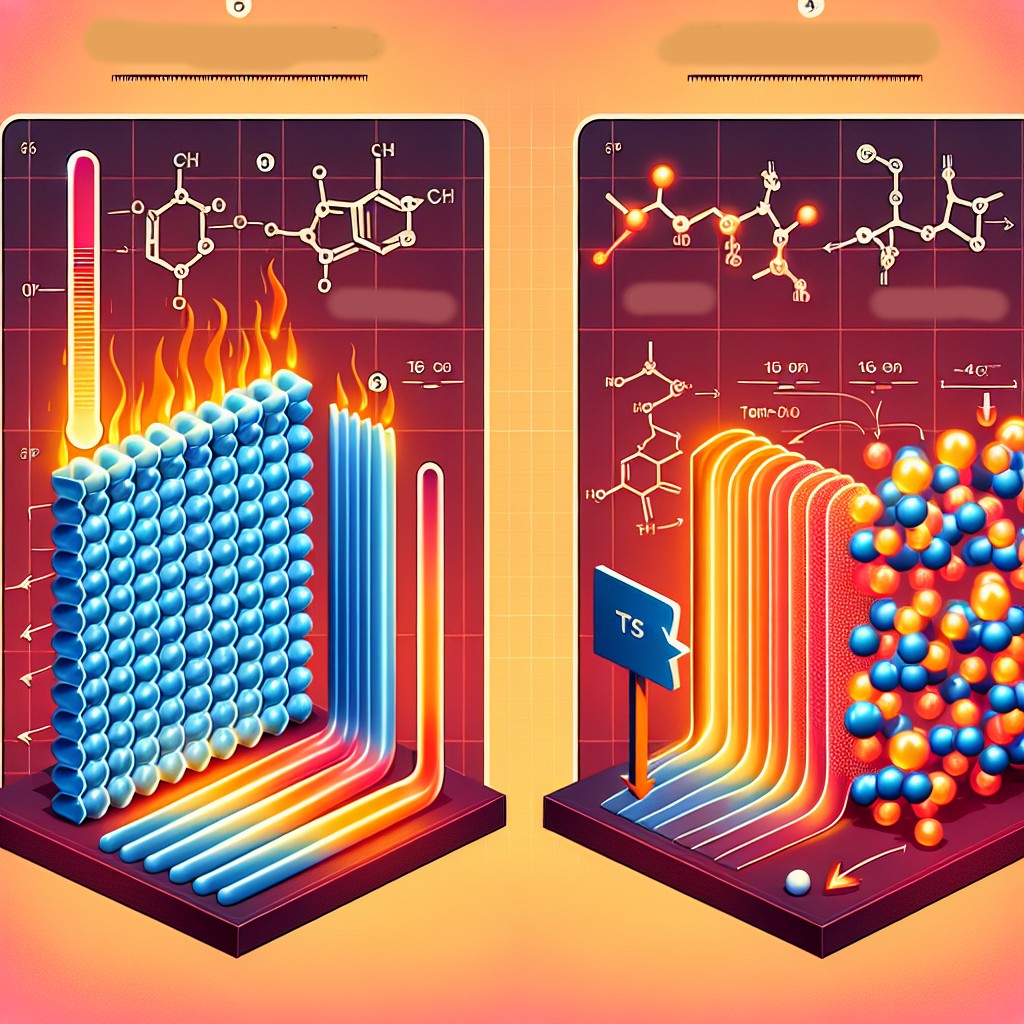
The polymer industry, a cornerstone of modern material science, encompasses a wide array of synthetic and naturally occurring compounds. Polymers are essential due to their versatility, proving indispensable in several applications ranging from packaging to aerospace technology. One of the critical aspects determining the suitability of a polymer for a given application is its thermal properties.
Thermal characteristics such as heat resistance, thermal conductivity, and thermal expansion play significant roles in how polymers behave under various conditions. Understanding these thermal properties helps engineers, scientists, and manufacturers to choose the right polymer material for specific applications. The thermal behavior of polymers can dictate their performance, durability, and safety in real-life use cases, making it a focal point in research and development within the polymer industry.
In this comprehensive article, we will delve into the fundamental thermal properties of polymers, how they are measured, and their implications on material performance. By examining the intricacies of thermal stability, heat capacity, thermal conductivity, and related properties, we aim to provide a rounded perspective that underscores the importance of these characteristics in polymer selection and application. Whether you are a professional in the material science field or an enthusiast looking to deepen your knowledge, this guide will offer valuable insights into the thermal aspects of polymers.
Thermal Stability
Thermal stability is a critical property describing a polymer’s ability to maintain its properties at elevated temperatures. It is a pivotal factor for materials used in high-temperature environments such as automotive engines, aerospace parts, and electronic devices. A polymer’s thermal stability is typically measured by Thermogravimetric Analysis (TGA) or Differential Scanning Calorimetry (DSC).
Thermogravimetric Analysis assesses the amount of weight loss as a polymer is heated, providing insight into the decomposition temperature and the overall thermal stability of the material. DSC, on the other hand, measures heat flow into or out of a polymer sample, revealing phase transitions such as melting or crystallization. Polymers like Polyimides and Polytetrafluoroethylene (PTFE) exhibit remarkable thermal stability and are often utilized in applications demanding high resistance to heat. These materials can withstand significant temperature fluctuations without compromising their structural integrity or other mechanical properties. Conversely, polymers with lower thermal stability might degrade, discolor, or lose their mechanical properties when exposed to high temperatures.
Understanding the thermal stability of a polymer is crucial not only for ensuring long-term performance but also for complying with safety standards and regulations. Products manufactured using thermally stable polymers tend to have longer lifespans and perform reliably under stress, making thermal stability a key consideration in material selection.
Heat Capacity
Heat capacity is a measure of the amount of heat energy required to raise the temperature of a material. In the context of polymers, heat capacity influences various practical aspects, including processing and thermal management in different applications. The specific heat capacity of a polymer gives insight into how it reacts to thermal energy, affecting its heating and cooling rates.
Materials with high heat capacities can absorb considerable amounts of thermal energy without a significant increase in temperature. This property is advantageous in applications requiring thermal insulation and energy absorption. For instance, polyethylene, commonly used in insulating materials, has a relatively high heat capacity, making it suitable for preventing heat transfer. Engineering thermoplastics like Polycarbonate (PC) and Polyetheretherketone (PEEK) exhibit high heat capacities, which provide stability and resistance in dynamic thermal environments found in automotive and aerospace applications.
During polymer processing, understanding heat capacity is vital for optimizing temperature settings in extrusion, molding, and other manufacturing processes. Proper management of thermal energy ensures efficient production, reduces waste, and improves the overall quality of polymer products.
Thermal Conductivity
Thermal conductivity is another fundamental property that defines how well a polymer can conduct heat. It is a crucial factor in applications where heat dissipation is necessary to prevent overheating or where thermal insulation is required to maintain temperature. Polymers typically have lower thermal conductivities compared to metals, making them excellent insulators. However, some applications demand polymers with enhanced thermal conductivity. By incorporating fillers like carbon fibers, graphene, or metal particles, the thermal conductivity of polymers can be significantly improved.
Polymers such as polyethylene and polystyrene are widely used in insulation due to their low thermal conductivity. On the other hand, thermally conductive polymers find applications in electronics where heat dissipation from components like CPUs and LEDs is critical for performance and longevity. These specially formulated polymers ensure efficient thermal management, contributing to the reliability of electronic devices.
Understanding the thermal conductivity of polymers and how it can adapt with additives is essential for engineers and designers. This knowledge allows the creation of materials that excel in specific thermal environments, balancing the need for insulation or heat dissipation effectively.
Thermal Expansion
Thermal expansion refers to the change in volume of a polymer material in response to temperature changes. It is an important property for ensuring dimensional stability in applications where polymers are exposed to varying temperatures. The coefficient of thermal expansion (CTE) quantifies how much a polymer will expand or contract with temperature changes.
Polymers with high thermal expansion coefficients, such as polypropylene, may experience significant dimensional changes that can affect the fit and function of components. Conversely, materials like Polyetheretherketone (PEEK) exhibit low thermal expansion, maintaining their dimensions more consistently across a broad temperature range. Thermal expansion is a critical consideration in the design of parts and assemblies, especially in applications involving tight tolerances and high precision. For example, in medical devices or aerospace components, even small changes in dimensions due to thermal expansion can lead to performance issues or failure.
Advanced composite materials often employ reinforcements to minimize thermal expansion, combining polymers with materials that have low expansion rates. Such composites are essential in industries where maintaining dimensional stability under thermal stress is paramount.
Glass Transition and Melting Point
The glass transition temperature (Tg) and melting point (Tm) are pivotal thermal properties defining the behavior of polymers. The Tg is the temperature at which a polymer transitions from a hard, glassy material to a soft, rubbery state. Conversely, the melting point is specific to crystalline polymers, indicating the temperature at which the crystalline regions melt. Both Tg and Tm are essential for understanding the thermal limits of polymer applications.
For amorphous polymers like Poly(methyl methacrylate) (PMMA), the Tg dictates the upper temperature limit for structural applications. Polymers must be used below their Tg to maintain their mechanical properties. For semi-crystalline polymers like Polyethylene, both Tg and Tm are considered to ensure material performance at elevated temperatures. Engineers and scientists use Tg and Tm to design polymers for specific environments. For instance, polymers with high Tg and Tm are suited for high-performance applications requiring significant thermal resistance, like high-temperature seals and gaskets.
Implications for Industry Applications
The thermal properties of polymers have broad implications across various industries, influencing material selection and product design. In automotive and aerospace industries, where materials face extreme temperatures, polymers with high thermal stability, specific heat, controlled thermal conductivity, and low thermal expansion are prized for their reliability and performance. In the electronics industry, managing heat dissipation is critical. Thermally conductive polymers play a pivotal role in ensuring electronic components like microchips and LED lights function efficiently and last longer. Packaging materials rely on insulation properties derived from polymers with low thermal conductivities and high specific heat capacities, ensuring the preservation and protection of contents under varying thermal conditions.
Understanding and leveraging the thermal properties of polymers allow for innovations in material science, leading to more efficient, durable, and high-performing products across several sectors.
Conclusion
The comprehensive understanding of the thermal properties of polymers is fundamental for advancing material science and enhancing the performance of polymer-based products. Thermal stability, heat capacity, thermal conductivity, thermal expansion, and key thermal transition points like glass transition and melting points are critical factors that influence the selection and application of polymers in diverse industries. By meticulously assessing these properties, professionals in the polymer industry can make informed decisions that lead to the development of superior materials tailored to specific applications. This intricate knowledge helps in designing products that not only meet but exceed performance and safety standards, fostering innovation and growth in the polymer industry. The dynamic interplay of thermal properties in polymers remains a field of ongoing research, promising to yield new materials that push the boundaries of what is possible. As technology evolves, so too will our understanding of these properties, ensuring that polymers continue to meet the ever-growing demands of modern industry.