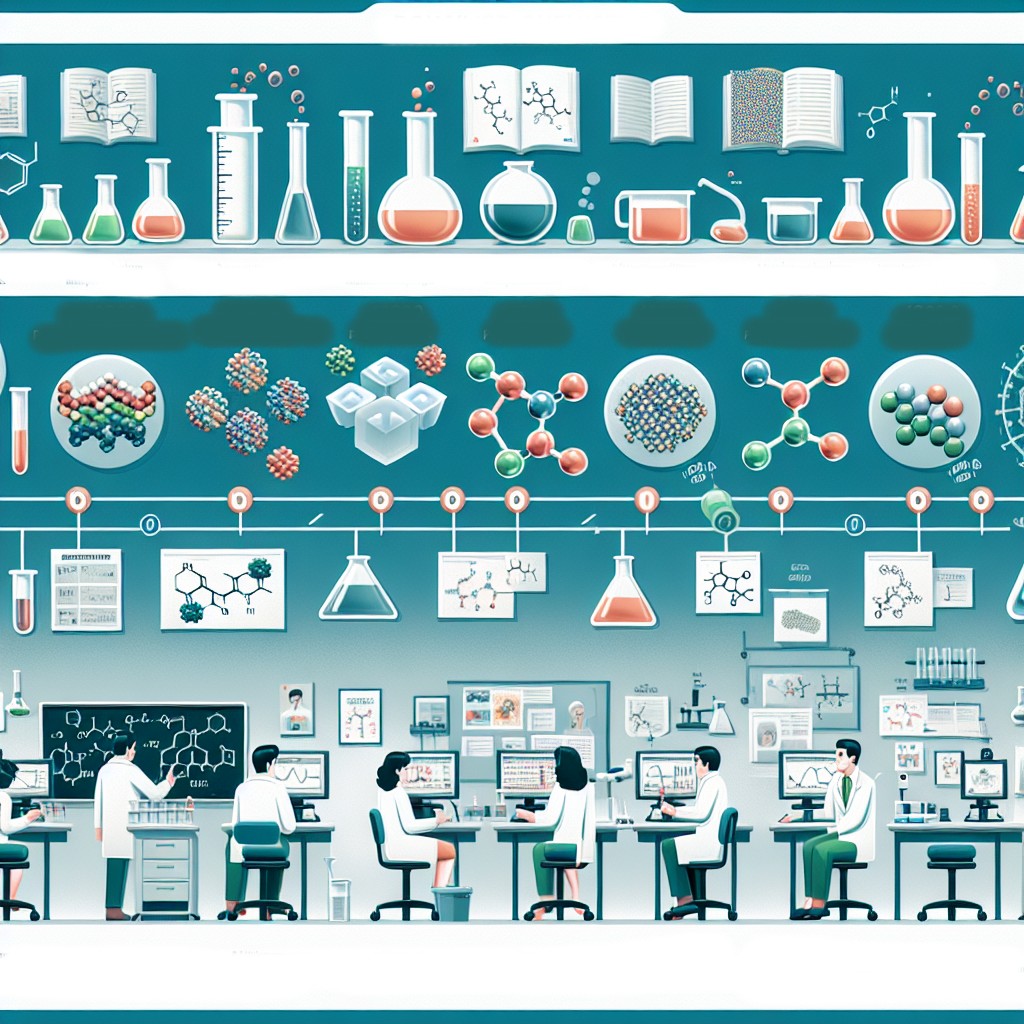
Nanotechnology has emerged as a groundbreaking field within modern science, bringing significant changes to several industries, including the extensive domain of polymer science. By definition, nanotechnology involves working with materials on the nanoscale, typically ranging from 1 to 100 nanometers. At this tiny scale, the properties of materials can show drastic transformations compared to their bulk counterparts, enabling innovations that were once unfathomable. In polymer science, the incorporation of nanotechnology has provided the ability to tailor materials with extraordinary properties, unlocking new potential in diverse applications. From enhancing mechanical strength to improving thermal stability and electrical conductivity, this technological synergy is redefining the boundaries of what’s possible with polymers. This article delves into how nanotechnology is reshaping the polymer industry, discussing its role, applications, and the future implications of this conjunction.
Understanding Nanotechnology in Polymer Science
In the realm of polymers, nanotechnology primarily involves embedding nanoparticles within polymer matrices to form nanocomposites. These nanoparticles can be of various natures, including metals, clay, carbon-based materials, or even biological structures. The fundamental idea is to enhance or modify the polymer’s properties by utilizing the unique functionalities offered by these nanoparticles. For instance, when nanoparticles are inserted into polymers, they can significantly improve physical properties without compromising the polymer’s weight or flexibility. This process often results in materials that exhibit a superior blend of properties such as increased strength, reduced permeability, and enhanced heat resistance.
Enhancing Mechanical Properties
One of the primary roles of nanotechnology in polymer science is enhancing the mechanical properties of polymer materials. Introducing nanoparticles into a polymer matrix can dramatically increase tensile strength, toughness, and elasticity. This enhancement is feasible because nanoparticles help in distributing stresses more evenly across the polymer, providing reinforcement where needed. Additionally, this process can prevent crack propagation through the matrix by effectively stopping crack advancement, thereby improving durability. In applications such as automotive and aerospace industries, these reinforced materials result in lighter, yet more robust components, contributing to efficiency improvements and fuel savings.
Thermal and Electrical Conductivity
Polymers are traditionally known as thermal and electrical insulators. However, incorporating nanotechnology can significantly modify these traits, imbibing polymers with impressive conductivity. Nanocomposites made using materials like carbon nanotubes or graphene become electrically conductive, making them ideal for applications in electronics and energy storage devices. Similarly, metal oxide nanoparticles can be used to improve thermal conductivity, facilitating their use in advanced thermal management systems. These versatile applications emphasize nanotechnology’s pivotal role in expanding the functional capacities of conventional polymers well beyond their intrinsic properties.
Barriers and Permeability Control
A significant advantage of using nanotechnology in polymer science is the ability to control the permeability properties of polymers. By embedding impermeable nanoparticles within a polymer matrix, one can drastically reduce the gas and water vapor permeability of the resulting material. This feature is crucial for packaging applications, where extending the shelf life of food products or preserving sensitive contents is necessary. Furthermore, by customizing the barrier properties, nanocomposites cater to specific industrial needs, showcasing a tailored approach to material design.
Biocompatibility and Environmental Sustainability
Another vital area where nanotechnology in polymer science offers promise is biocompatibility and sustainability. Researchers are developing innovative bio-nanocomposites that exhibit properties compatible with biological systems, promoting their utility in medical applications like drug delivery systems and tissue engineering. On the sustainability front, nanotechnology aids in developing biodegradable polymers that can break down naturally, reducing environmental footprint. Such advancements allow industries to align with the growing demand for greener technologies, offering a sustainable pathway for future developments.
Challenges and Considerations
Despite its numerous benefits, incorporating nanotechnology in polymers is not without challenges. One critical concern is the uniform dispersion of nanoparticles throughout the polymer matrix. Achieving an even distribution is crucial to unlocking the full potential of nanocomposite properties. Moreover, the interaction between nanoparticles and polymer matrices can raise issues of interfacial stress, possibly affecting the overall performance. Furthermore, limited understanding of long-term environmental and health impacts of nanoparticles is a concern. More extensive research and development efforts are necessary to overcome these challenges and ensure the safe use and manufacturing of nanotechnology-enhanced polymers.
Future Prospects and Innovations
Looking ahead, the future of nanotechnology in polymer science is promising. Ongoing research is continually uncovering new aspects of nanoparticle-polymer interactions, leading to novel applications and improvements. Advancements in nanotechnology are likely to result in smarter materials capable of self-healing, responding to environmental changes, and possessing adaptive functionalities. The integration of artificial intelligence with nanopolymer research holds the potential to revolutionize this space, offering predictive capabilities and optimizing material properties for specialized applications. As industries progressively adopt these advanced materials, the evolution of polymers as key components in complex technological solutions is expected to set new standards across various sectors.
Conclusion
In conclusion, nanotechnology’s role in polymer science cannot be overstated. The synergy between these two fields has led to the development of materials with unparalleled properties, suitable for a wide range of applications ranging from industrial manufacturing to cutting-edge biomedical innovations. By manipulating matter on the nanoscale, researchers have been able to transcend traditional limitations, bringing forth a class of materials that marry strength, flexibility, and functionality with efficiency and eco-friendliness. While challenges such as nanoparticle dispersion and potential health impacts remain, the potential benefits – from sturdier automotive components to sustainable packaging solutions – make the pursuit of nanotechnology in polymer science not only worthwhile but imperative for future progress. As the journey of exploration and innovation continues, the further fusion of these disciplines will undoubtedly lead to an exciting era of new material possibilities, influencing both present and future industrial landscapes.