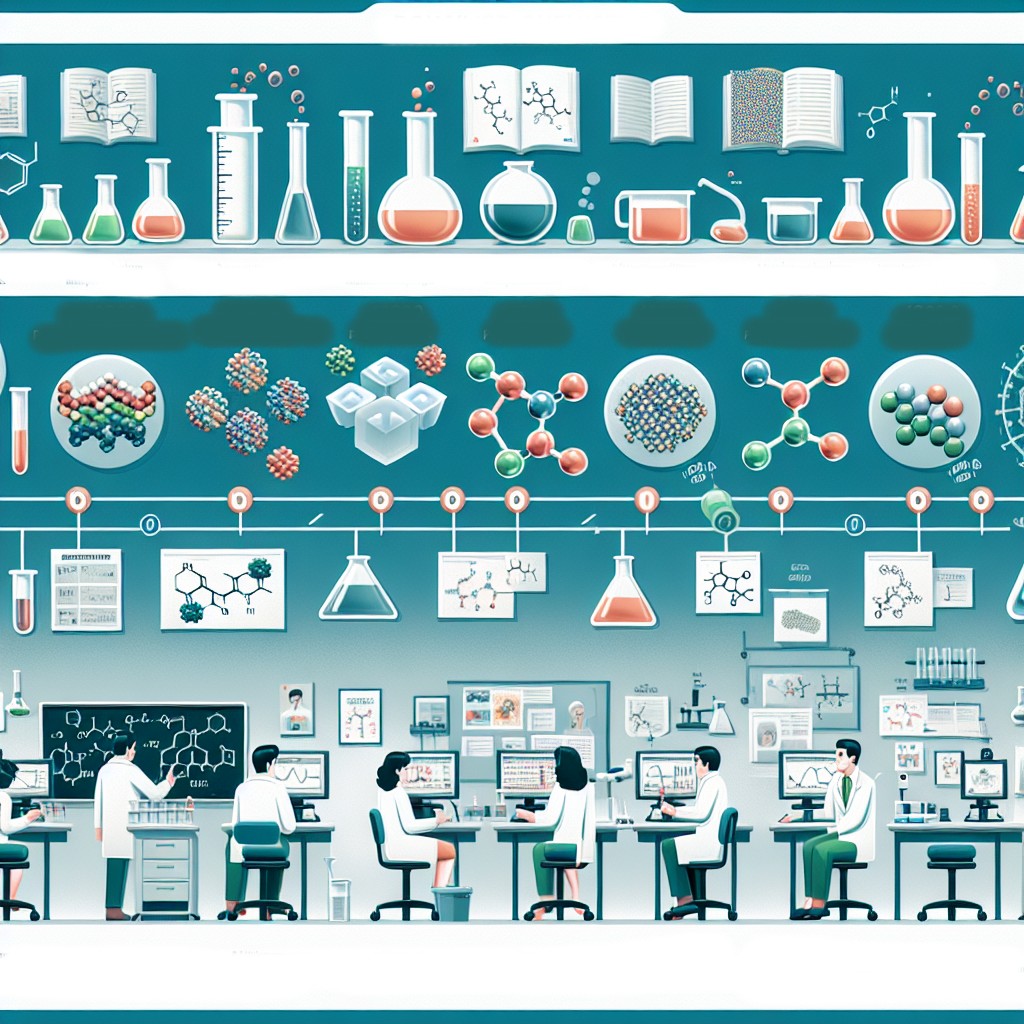
Conductive polymers are a class of polymeric materials with the unique capability to conduct electricity, bridging the gap between traditional insulating plastics and conductive metals or ceramics. From medical devices and wearable electronics to solar cells and sensors, these advanced materials are increasingly being investigated and utilized across various industries. The emergence and development of conductive polymers can be traced back to the discovery of polyacetylene, whose conductivity was dramatically enhanced through doping. This breakthrough in the late 1970s set off a surge of interest and research into various types of conductive polymers, each offering different properties and potentials. With the continuous progress in materials science and engineering, conductive polymers stand at the frontier of numerous technological advancements, promising to revolutionize how we harness and apply electrical properties in myriad applications. As the world steers towards more sustainable, cost-effective, and multifunctional technologies, the exploration and application of conductive polymers are poised to play a pivotal role in shaping future innovations. In this article, we delve into the current advancements, potential applications, and grand prospects of conductive polymers, a topic of immense relevance and transformative potential.
Advancements in Conductive Polymer Research
In recent years, considerable advancements have been made in the synthesis, characterization, and application of conductive polymers. These materials can be engineered at molecular levels to exhibit desirable electrical, mechanical, and thermal properties. Research has expanded the library of conductive polymers which include polyaniline, polypyrrole, and PEDOT:PSS, each with unique conductive properties driven by different chemical structures.
Innovation in nanotechnology has greatly enhanced the performance characteristics of conductive polymers. Nano-scale structuring allows for greater surface area, enhanced electron mobility, and better interaction with added dopants. Novel techniques such as electrochemical polymerization and vapor-phase polymerization have been developed to produce highly conductive and stable polymer thin films.
Moreover, progress in molecular engineering and functionalization has opened pathways to tailor the material properties of conductive polymers at an unprecedented scale. By manipulating the substituent groups and polymer backbone structures, scientists can now design polymers for specific applications that require precise conductivity, flexibility, or robustness. Additionally, the introduction of hybrid materials that combine organic and inorganic substances results in synergistic properties such as enhanced mechanical strength and environmental stability.
Applications in Electronics and Energy
The deployment of conductive polymers in the electronics industry has grown considerably, showcasing their versatility and performance. These polymers are now pivotal in the development of flexible electronics, a market that’s rapidly expanding. Their inherent flexibility, lightweight nature, and ease of fabrication allow them to be integrated into various forms such as wearable sensors, foldable displays, and organic thin-film transistors.
In energy applications, conductive polymers contribute significantly to the realm of solar energy. They serve as active materials in organic solar cells, where their solution processability aids in cost-efficient fabrications. Compared to traditional silicon-based solar cells, polymer-based photovoltaics allow for lightweight, flexible solar panels which can be seamlessly integrated into various surfaces and portable devices.
Batteries and supercapacitors also benefit from the use of conductive polymers. These materials serve as both binders and conductive additives, contributing to improved charge-discharge rates and cyclic stability. The integration of conductive polymers into the electrodes of lithium-ion batteries and supercapacitors enhances electrochemical performance by providing better conductivity and mechanical integrity.
Improvements in Biocompatibility and Medical Applications
The biocompatibility of conductive polymers has made them suitable candidates for myriad biomedical applications. Advances in surface modification and polymer synthesis have led to materials that can interface successfully with biological systems. Their ability to conduct electrical signals makes them attractive for use in neural interfaces, heart rate monitors, and other bioelectronic devices.
In drug delivery and tissue engineering, conductive polymers provide the dual benefits of electrical conductivity and biocompatibility. As scaffolds for tissue regeneration, these polymers can be electrically stimulated to promote cell growth and differentiation, particularly in nerve and muscle tissues. Furthermore, conductive polymers can be engineered to provide controlled drug release, enhancing the efficacy and precision of therapeutic interventions.
The promising area of electronic skins, or e-skins, is another field where conductive polymers show significant potential. These e-skins mimic the mechanical properties of human skin, enabling the development of advanced prosthetics and medical diagnostics tools. With the added capability of detecting pressure, temperature, and electrical signals, they stand to revolutionize the way humans interact with synthetic devices.
Environmental and Sustainability Considerations
One of the pressing challenges for modern technology is aligning with environmental sustainability. In this context, conductive polymers offer several benefits. Their ability to be processed in solution without requiring high-energy-intensive methods like traditional semiconductors do translates to lower carbon footprints in manufacturing.
Furthermore, the development of bio-based conductive polymers presents new possibilities for achieving environmentally friendly electronic components. These materials are designed from renewable resources, which are biodegradable and exhibit similar electronic properties to their synthetic counterparts. Such advancements contribute toward reducing electronic waste and promoting circular economy principles within the tech industry.
Innovation is also seen in the recycling and reuse of conductive polymers, facilitating more sustainable life cycles. Methods for efficient recovery of conductive materials enable the reduction of waste and ensure that conductive polymers can be reprocessed into new functional materials without significant degradation of properties.
Challenges and Limitations
Despite the exciting potential and diverse applications of conductive polymers, several challenges impede their widespread adoption. One of the main issues is the relatively lower conductivity compared to traditional metallic conductors. Although suitable for many applications, some high-performance areas demand enhanced electrical performance, posing a significant technical hurdle.
Another challenge is the processability and stability of conductive polymers. While they can be manufactured more easily than conventional conductors, the stability of their properties under varying environmental conditions is often inadequate. Long-term durability in adverse conditions like high moisture or harsh solvents remains a critical area needing improvement.
The scalability of conductive polymer production is also a noteworthy concern. Industrial-scale production while maintaining precise control over material properties requires further innovation in manufacturing methods and technologies. Ensuring that these materials can be economically viable compared to traditional materials without compromising performance is essential for their future impact.
Conclusion
Conductive polymers represent a transformative shift in material science, offering a blend of properties that cater to the needs of emerging technological fields. With advancements in conductive polymer technology, we witness groundbreaking solutions in electronics, energy, and biomedicine that may reshape our daily lives. The marriage of flexibility, conductivity, and processability in these polymers has provided fertile ground for innovation across numerous sectors.
However, while the future appears promising, the development of conductive polymers must navigate hurdles related to conductivity, stability, and scalability. Continued research and innovation are critical in overcoming these challenges, driving the adoption of these materials across new domains and applications. As the global emphasis on sustainability grows, conductive polymers offer a vision of electronic materials that align with environmental and economic goals.
The future of conductive polymers hinges on interdisciplinary collaboration, pushing boundaries in nanotechnology, chemistry, and engineering to fully exploit their potential. By addressing existing challenges and expanding the scope of their application, conductive polymers are poised not only to enhance existing technologies but to pave the way for revolutionary breakthroughs that align with tomorrow’s needs.