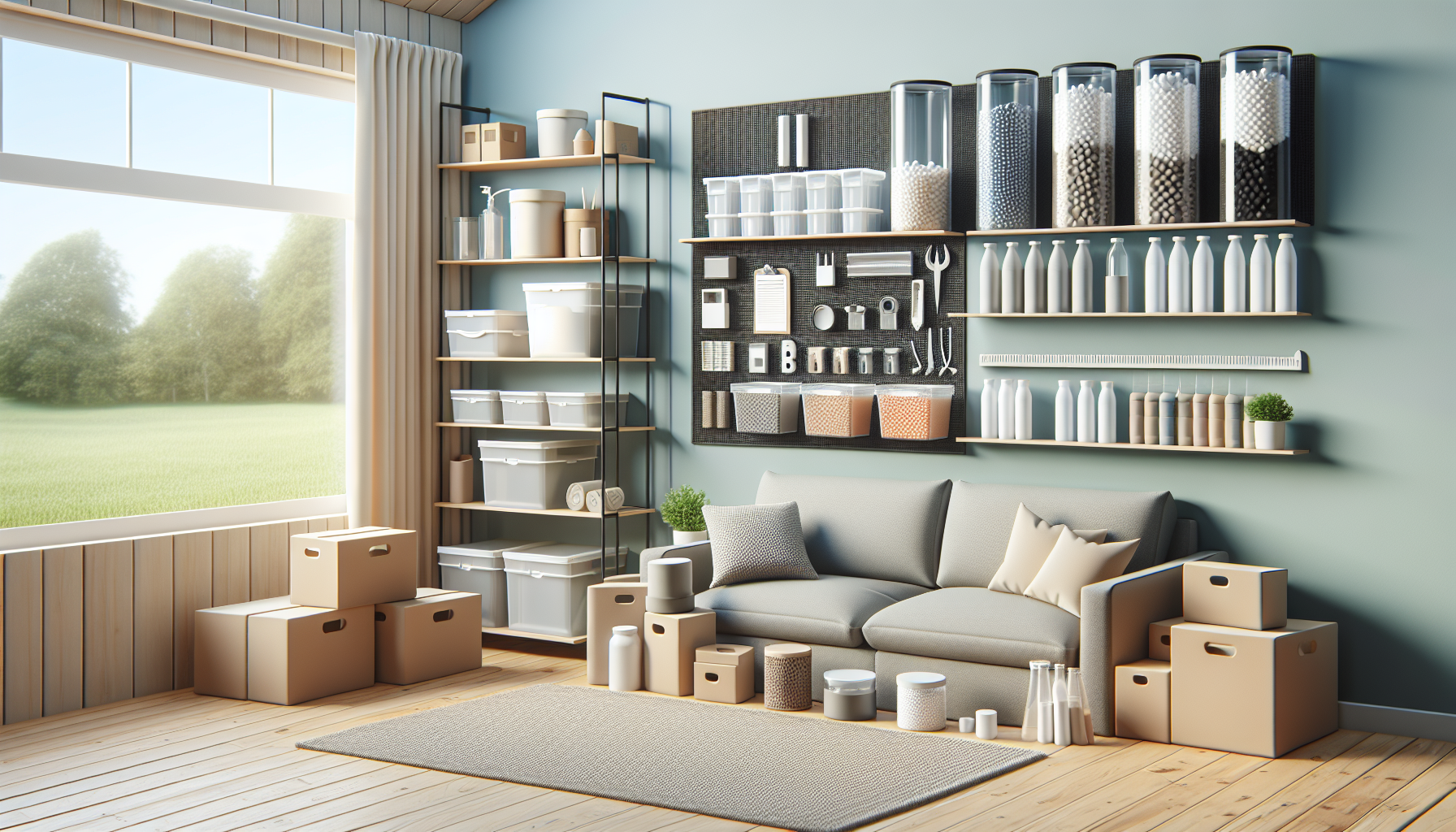
Polymers quietly shape almost every effective home storage product, from stackable kitchen bins to impact-resistant garage cabinets, because they combine light weight, durability, moldability, and cost control in ways wood, metal, glass, and paper rarely can. In consumer goods, polymers are long-chain materials engineered into plastics, elastomers, foams, fibers, and coatings, each tailored for specific storage needs such as moisture resistance, transparency, flexibility, load bearing, or chemical stability. I have worked with polymer-based packaging and household product teams long enough to see the same pattern repeatedly: when storage solutions fail, the cause is usually not the idea of storage itself, but a mismatch between material properties and real household conditions. Understanding how polymers enhance home storage solutions matters because consumers now expect more from every organizer, tote, drawer insert, laundry hamper, and pantry container. They want products that preserve food, reduce clutter, survive daily use, clean easily, and fit modern interiors without adding excessive cost or environmental burden.
That is why polymers dominate the consumer-goods side of home organization. Polypropylene bins resist fatigue at living hinges, polyethylene totes absorb knocks in garages, PET jars provide clarity for pantry visibility, PVC coatings protect wire shelving from corrosion, and polyurethane foams cushion stored valuables. Beyond convenience, the right polymer improves hygiene, safety, and usable space. A transparent storage box reduces search time. A gasketed polymer lid limits humidity intrusion. A modular resin drawer system can be injection molded to exact dimensions, allowing smaller tolerances and better stacking efficiency than many traditional materials. For a hub article on consumer goods, the central point is simple: polymers do not just make storage cheaper; they make storage smarter, more adaptable, and more practical across kitchens, closets, bathrooms, bedrooms, utility rooms, and garages.
Why polymers are foundational in modern home storage
The main reason polymers are foundational in modern home storage is their tunable performance. Material scientists can adjust molecular weight, crystallinity, additives, fillers, impact modifiers, UV stabilizers, colorants, and processing methods to achieve a very specific balance of stiffness, toughness, transparency, and thermal performance. In practical terms, that means one family of materials can serve many different functions inside the home. Polypropylene is common in food containers, drawer organizers, and woven storage bags because it is lightweight, chemically resistant, and economical. High-density polyethylene appears in larger bins, lids, and utility containers because it offers excellent impact resistance, especially in cooler environments. Acrylonitrile butadiene styrene, or ABS, is used for rigid baskets, cosmetic organizers, and appliance-adjacent storage because it provides a strong, glossy finish with good dimensional stability.
This versatility gives product designers freedom that older materials often limit. Wood swells with moisture, metal can corrode, cardboard loses strength, and glass adds weight and breakage risk. By contrast, a polymer storage tub can include integrated handles, snap-fit closures, label areas, stacking ribs, transparent windows, and textured feet in one manufacturing cycle. Injection molding, blow molding, thermoforming, and extrusion enable high-volume production with repeatable precision. That manufacturing efficiency keeps consumer prices accessible while supporting detailed features that improve daily use. I have seen a simple rib pattern under a tote lid prevent bowing under stack load, turning an ordinary bin into a stable closet system. Those design details are possible because polymers can be formed into complex geometries without expensive secondary assembly.
Polymers also support modularity, which is one of the most important trends in consumer storage. Homes are smaller, urban living is denser, and people want storage systems that adapt over time. Modular shoe boxes, cube organizers, nesting baskets, and under-bed containers depend on consistent dimensions and low unit weight. If a consumer buys six containers now and six more later, they expect compatibility. Polymer manufacturing can deliver that consistency at scale. This is especially important for sub-pillar consumer goods content because many related products connect through shared material logic: the same resin selection principles influence pantry storage, bathroom organization, laundry products, and garage systems.
How specific polymer types improve different storage products
Different polymer types solve different storage problems, and consumers benefit most when the material matches the use case. Polypropylene, often marked with resin identification code 5, is one of the most useful choices for household organization. It has low density, good fatigue resistance, and strong resistance to many acids, bases, and household cleaning chemicals. That is why it appears in flip-top containers, modular pantry boxes, storage baskets, and reusable food tubs. When a lid opens and closes hundreds of times through a living hinge, polypropylene is often the material making that durability possible.
Polyethylene comes in several forms. High-density polyethylene is tougher and stiffer than low-density grades, which makes it common in large totes, bulk storage bins, laundry baskets, and garage containers. Low-density polyethylene and linear low-density polyethylene are more flexible, so they are used in soft bins, protective liners, zipper storage bags, and squeeze dispensers. PET, or polyethylene terephthalate, is valued for clarity and gas barrier performance. In the home, PET works well for visible pantry jars, refrigerator organizers, and dry-goods containers because people want to see contents quickly. Clear visibility is not cosmetic alone; it reduces food waste by making ingredients easier to monitor and use before expiration.
ABS and polystyrene often appear in rigid desktop and vanity organizers where appearance matters, but they involve tradeoffs. ABS is tougher and more impact resistant, while general-purpose polystyrene is clearer and less expensive but more brittle. Polycarbonate offers exceptional toughness and transparency, making it useful for premium storage where shatter resistance matters, though cost is higher and stress cracking must be considered with certain cleaners. Flexible storage accessories rely on thermoplastic elastomers, silicone, EVA foam, and polyurethane foam for grip, sealing, cushioning, and collapsibility. A closet box with soft-touch handles, a seal around a bathroom canister, or a jewelry insert with cushioned compartments all depend on polymer diversity rather than one universal plastic.
| Polymer | Common home storage uses | Key benefit | Main limitation |
|---|---|---|---|
| Polypropylene | Food containers, baskets, drawer inserts | Fatigue and chemical resistance | Can become brittle at very low temperatures |
| HDPE | Totes, utility bins, laundry baskets | Impact toughness | Less clarity than PET or polycarbonate |
| PET | Pantry jars, fridge organizers | High transparency | Lower heat resistance than polypropylene |
| ABS | Cosmetic and desktop organizers | Rigid, premium finish | Higher cost than commodity resins |
| Polycarbonate | Premium clear bins | Excellent toughness | Cost and cleaner compatibility concerns |
Performance advantages consumers notice every day
The most visible advantage polymers bring to home storage is better everyday performance. Lightweight products are easier to lift onto shelves, carry between rooms, and move during cleaning or relocation. A family can stack several filled polypropylene bins in a closet without the awkward weight of glass or metal alternatives. Impact resistance is equally important. In garages, children’s rooms, and utility areas, storage products get dropped, kicked, and overloaded. HDPE and polypropylene survive this treatment far better than brittle materials, which lowers replacement frequency and improves value over time.
Moisture resistance is another major benefit. Bathrooms, laundry rooms, basements, and kitchens expose storage products to humidity, condensation, and occasional spills. Polymer containers do not rust like steel or warp like fiberboard. This property is especially valuable for under-sink storage, shower caddies, detergent bins, and basement totes used for seasonal clothing. Additives can further improve UV resistance for storage exposed to sunlight near windows or in semi-outdoor spaces. Without stabilizers, some plastics discolor or embrittle, so premium consumer goods often specify UV packages when long-term appearance matters.
Cleaning and hygiene matter more than many shoppers realize. Smooth polymer surfaces are easier to wipe down, sanitize, and maintain than woven natural materials or unfinished wood. In kitchens, nonporous containers help protect dry goods from moisture and pests when lids seal properly. In bathrooms, molded surfaces reduce crevices where residue collects. In children’s storage, rounded polymer edges improve safety. Some products also include antimicrobial additives, although these should be understood as supplementary rather than a substitute for routine cleaning. The practical takeaway is clear: polymers improve storage by combining resilience, cleanability, and smart product geometry in one material platform.
Applications across rooms: kitchen, closet, bathroom, laundry, and garage
In kitchens, polymers support visibility, portion control, and food preservation. Clear PET or polypropylene containers allow consumers to sort flour, rice, pasta, cereal, and snacks into stackable formats that maximize shelf height and simplify inventory checks. Snap lids, threaded closures, and silicone gaskets help maintain freshness. Refrigerator bins made from clear polymers group condiments, produce, or meal-prep items so that airflow remains manageable and contents stay accessible. The material choice matters because refrigerator temperatures can make some plastics brittle, while dishwasher heat can warp others. Well-designed kitchen storage states use conditions clearly and selects polymers accordingly.
Closet organization depends on polymers for low mass and efficient geometry. Shoe boxes, drawer dividers, slim hangers, vacuum storage bags, and modular cubes all rely on polymer performance. Vacuum bags typically use multilayer films engineered for puncture resistance and reduced gas permeability, allowing bulky bedding or seasonal clothing to compress dramatically. In drawers, polypropylene and polystyrene inserts create small compartments for socks, accessories, and cosmetics. In wardrobes, reinforced polymer hangers reduce slippage and can be thinner than wood, freeing up linear hanging space.
Bathrooms and laundry rooms demand water resistance and chemical compatibility. Storage towers, caddies, detergent dispensers, hamper shells, and shelf bins often use polypropylene, ABS, or coated steel with polymer interfaces. These materials tolerate surfactants, bleach splashes, lotion residue, and repeated washing better than many alternatives. In garages, heavy-duty polymer storage reaches another level. Large HDPE or polypropylene bins, resin shelving, parts organizers, and wall-mounted systems handle tools, sports gear, automotive supplies, and holiday decorations. Reinforced designs may incorporate glass fibers, metal inserts, or structural foam molding to increase stiffness. The result is a class of consumer goods that bridges household convenience and light-duty industrial performance.
Design, sustainability, and what to look for when choosing polymer storage
Choosing the best polymer storage solution requires looking beyond appearance. Start with the use environment: heat, humidity, UV exposure, weight load, and contact with foods or chemicals. For pantry and refrigerator use, choose food-contact compliant containers from reputable brands that follow relevant standards from agencies such as the U.S. Food and Drug Administration or comparable regional regulators. For stackable bins, examine lid geometry, sidewall ribbing, base nesting design, and stated load limits. A cheap container may look identical to a better one on the shelf but fail under long-term creep, where plastic slowly deforms under constant load. That issue is common in poorly designed shelves and overstacked boxes.
Sustainability is more nuanced than simply avoiding plastic. A durable polymer storage bin used for ten years can create less environmental burden than repeatedly replacing short-lived alternatives. Recyclability depends on resin type, color, additives, labels, and local collection systems. Polypropylene, HDPE, and PET generally have better recycling pathways than mixed-material products. Design for disassembly also matters. A clear bin made from one polymer with a removable silicone seal is easier to process than a permanently bonded multi-material part. Recycled content is increasingly common in storage totes and baskets, though mechanical properties and color consistency can vary.
From direct experience, the best buying strategy is to match material to task, favor products that publish resin information or care guidance, and treat storage as a system rather than a collection of random containers. Measure shelves before purchasing. Consider whether transparency or opacity better suits the space. Check hinge durability, latch strength, and whether replacement parts are available. Good polymer design improves order, protects belongings, and saves time every day. If you are building out a consumer-goods storage plan for your home, start with the highest-friction zones, choose materials deliberately, and use this hub as the foundation for exploring every room-specific storage application in greater detail.
Frequently Asked Questions
Why are polymers used so widely in home storage products?
Polymers are used so widely in home storage products because they offer a combination of properties that is difficult for other materials to match at the same price point. In practical terms, polymers can be engineered to be lightweight, strong, moisture resistant, transparent, flexible, impact resistant, or rigid depending on the application. That makes them ideal for everything from clear pantry canisters and stackable closet bins to garage shelving components and under-bed storage boxes. Unlike wood, many polymer-based materials do not swell, rot, or warp when exposed to humidity. Unlike metal, they do not rust and are often easier to move and clean. Unlike glass, they can provide transparency without the same risk of shattering.
Another major advantage is moldability. Manufacturers can shape polymers into complex designs with built-in handles, locking lids, nesting features, dividers, wheels, or reinforced corners without requiring as many separate parts. This improves performance while keeping costs under control. Because polymers include a broad family of materials such as plastics, foams, elastomers, fibers, and coatings, designers can tailor storage products for specific needs like food visibility, chemical resistance, cushioning, or load support. In short, polymers are so common in home storage because they let manufacturers balance durability, function, appearance, and affordability in a very efficient way.
What types of polymers are commonly found in home storage solutions?
Several different polymer types are commonly used in home storage, and each one serves a distinct purpose. Polypropylene is one of the most popular choices for bins, containers, baskets, and hinged-lid organizers because it is lightweight, fatigue resistant, and performs well in humid environments. Polyethylene, especially high-density polyethylene, is often used for tougher storage applications such as utility bins, garage containers, and heavy-duty totes because it resists impact and handles rougher treatment well. Polycarbonate and similar clear engineering plastics may be used when visibility and strength are both important, such as in transparent organizers that need to resist cracking.
Polystyrene and acrylic can appear in rigid clear storage accessories, drawer inserts, and display-style organizers where neat presentation matters. Foam polymers are often used inside storage products rather than as the outer structure, providing cushioning for delicate items, electronics, ornaments, or tools. Elastomers may be added as grips, seals, or anti-slip feet, helping lids close more securely or preventing organizers from shifting on shelves. Polymer fibers also play an important role in fabric bins, collapsible baskets, hanging closet systems, and storage cubes, where a textile look is preferred but durability still matters. Even surface coatings can be polymer based, adding scratch resistance, stain resistance, or easier cleaning. This broad material range is one of the reasons polymers are so effective across nearly every room in the home.
How do polymers improve durability and performance in storage products?
Polymers improve durability and performance by allowing storage products to be designed around specific real-world stresses. A kitchen bin, for example, may need to resist grease, moisture, repeated handling, and occasional drops. A garage cabinet may need to tolerate impact, temperature changes, and contact with household chemicals. A bathroom organizer must hold up in a humid environment without corroding or absorbing water. Because polymer formulations can be adjusted for rigidity, toughness, flexibility, UV resistance, and chemical resistance, manufacturers can match the material to the use case much more precisely than with many traditional materials.
Performance also improves through structural design. Polymer molding techniques make it possible to add reinforcing ribs, snap-fit closures, stackable rims, ergonomic handles, and interlocking shapes directly into the product. These features increase strength and usability without making the item excessively heavy. In many cases, polymers also reduce noise and surface damage compared with metal or glass, which is especially useful in busy kitchens, kids’ rooms, and laundry areas. Some polymer storage products are designed to stay clear for easy identification of contents, while others are opaque to protect stored items from light exposure. Others include soft-touch or flexible elements that improve comfort and sealing. The result is storage that not only lasts longer under normal household use, but also works better day to day because the material has been engineered around function rather than chosen for appearance alone.
Are polymer-based storage products safe for use in kitchens, bathrooms, and garages?
Yes, polymer-based storage products are generally safe for use in kitchens, bathrooms, and garages when they are designed and labeled for those environments. The key is choosing the right product for the right purpose. In kitchens, storage containers intended for food contact should be specifically made for that use and should come from reputable manufacturers that meet relevant safety standards. These polymers are selected to handle common kitchen conditions such as moisture, oils, refrigeration, and repeated washing. For pantry organization, polymers also offer the benefit of keeping contents visible, protected, and easier to portion or rotate.
In bathrooms, polymers are especially useful because they resist moisture better than many natural materials and do not rust like unprotected metal. That makes them a reliable choice for under-sink bins, shower caddies, drawer organizers, and medicine cabinet accessories. In garages, tougher polymers can hold tools, seasonal items, automotive supplies, and hardware while resisting dents, corrosion, and many household chemicals. However, not every polymer handles every substance equally well, so it is smart to check product guidance before storing solvents, fuels, or highly reactive chemicals. It is also important to avoid overloading bins beyond their rated capacity, especially when stacking. Overall, polymer storage is widely trusted across the home because it combines practical safety, environmental resistance, and ease of maintenance, provided consumers select products suited to the demands of each space.
What should homeowners look for when choosing high-quality polymer storage solutions?
Homeowners should look beyond appearance and focus on how the polymer storage product is engineered for its intended use. Start with material suitability. A lightweight decorative basket for linens does not need the same material performance as a heavy-duty tote for power tools or a sealed container for dry food. Check whether the product is described as impact resistant, food safe, stackable, moisture resistant, or chemical resistant depending on where it will be used. Wall thickness, reinforced corners, stable bases, secure lid design, and well-integrated handles are all signs that the product was built with durability in mind rather than simply molded to look appealing on a shelf.
It is also worth evaluating transparency, flexibility, and fit. Clear polymers are helpful when visibility matters, but in some cases opaque storage is better for protecting contents from light or reducing visual clutter. If a container will be opened often, look for hinges, latches, or snap features that feel sturdy and repeatable. If it will be stored in a garage, attic, or basement, consider temperature swings, dust protection, and load-bearing performance. For closet systems and fabric-style storage, inspect stitching, frame inserts, and fiber quality, since polymer-based textiles can vary widely. Finally, good design matters as much as raw material choice. Well-made polymer storage should be easy to clean, simple to lift, stable when stacked, and proportioned to standard shelves or drawers. The best products use polymer science to solve everyday storage problems efficiently, not just to create a low-cost container.