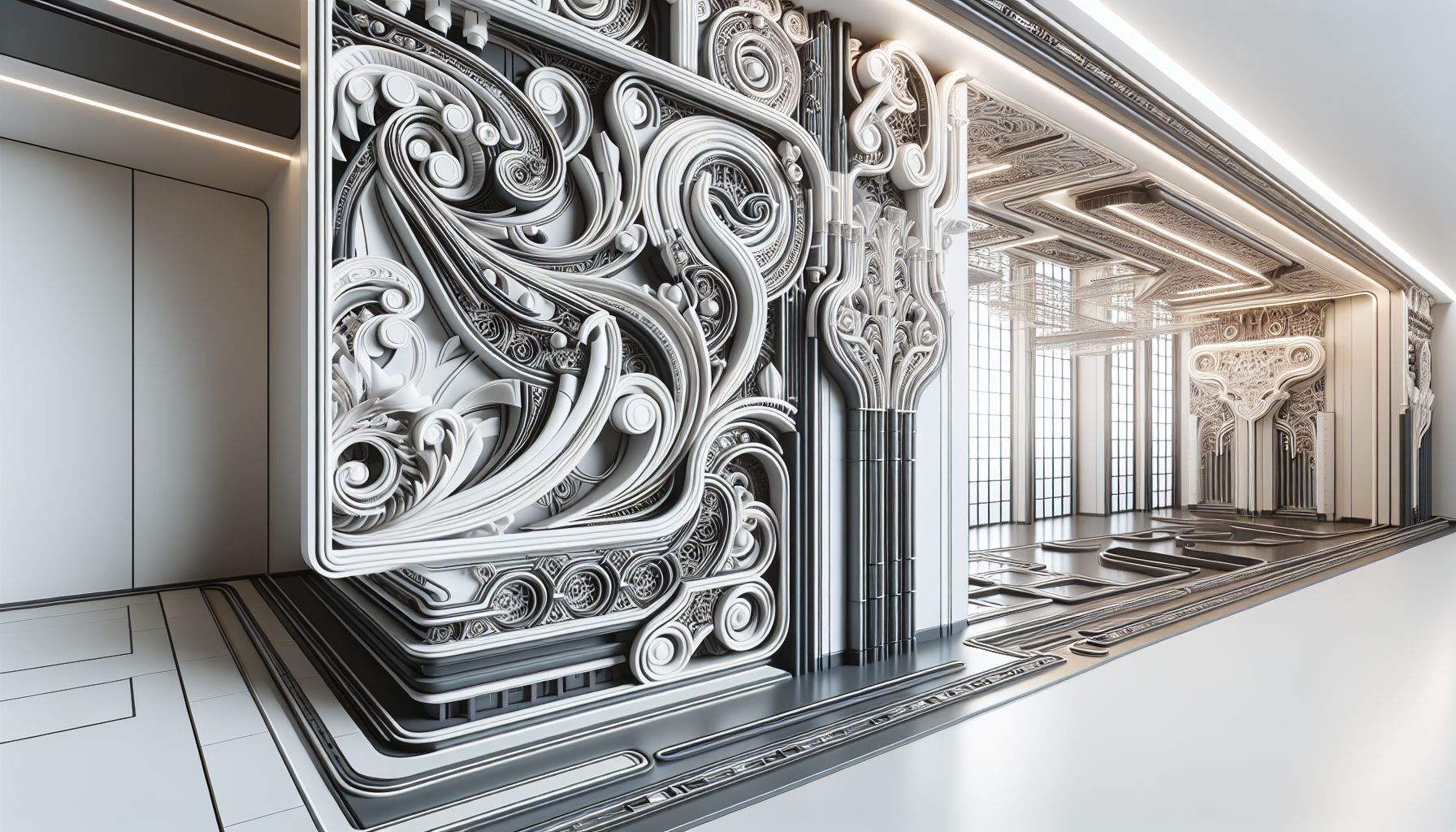
Polymers in decorative architectural elements have transformed how designers, builders, and restoration specialists create visually rich spaces without the cost, weight, and maintenance burden associated with carved stone, cast plaster, hardwood, or metal. In construction, decorative architectural elements include moldings, cornices, ceiling medallions, balusters, columns, wall panels, trim boards, brackets, shutters, rail components, and façade details intended to add style rather than primary structural capacity. Polymers are large molecules engineered into materials such as polyurethane, PVC, fiberglass-reinforced polymer, acrylic, ABS, HDPE, and composite blends that can be molded, extruded, cast, machined, textured, and finished for interior or exterior use. I have specified these materials on renovation, multifamily, hospitality, and retail projects because they solve practical problems: they ship lighter, install faster, resist moisture better than many traditional materials, and replicate ornate profiles with impressive accuracy. This matters across construction because decorative components sit at the intersection of aesthetics, durability, labor efficiency, and lifecycle cost. When chosen well, polymer-based architectural trim can preserve historical character, simplify new-build detailing, and reduce callbacks caused by cracking, rot, corrosion, or dimensional instability. When chosen poorly, it can fade, warp, chalk, telegraph joints, or look inauthentic. Understanding material types, performance criteria, fabrication methods, installation details, and design tradeoffs is essential for architects, contractors, developers, and property owners who want decorative architectural elements that look convincing and perform reliably over time.
Why polymers are used in decorative construction
Polymers are widely used in decorative construction because they deliver form freedom, repeatability, and weather resistance at a cost profile that often beats hand-shaped legacy materials. Urethane foam and rigid polyurethane are common for crown molding, corbels, ceiling medallions, and faux beams because they can capture fine detail from master molds while remaining light enough for adhesive and finish-nail installation. Cellular PVC dominates exterior trim boards, window surrounds, and soffits because it cuts like wood yet resists insects and moisture. Fiberglass-reinforced polymer, often abbreviated FRP, appears in columns, domes, cupolas, and custom façade pieces where higher stiffness and exterior durability are needed. Acrylic and polycarbonate serve transparent or translucent decorative roles in canopies, partitions, backlit panels, and feature walls. In practice, the biggest driver is labor. A three-piece built-up cornice in wood or plaster may require shop fabrication, blocking, and skilled finishing, while a polymer profile arrives ready to cut, cope, fasten, and paint. On occupied renovation projects, less dust, lower weight, and quicker installation can determine whether decorative upgrades are feasible at all. For developers, the appeal is consistency: every unit in a multifamily project can receive identical trim dimensions and crisp profiles without relying on scarce artisanal labor. That repeatability is especially valuable for brand standards in hospitality and retail.
Core polymer materials and where each performs best
Different polymers serve different decorative architectural functions, and material selection should start with exposure conditions, profile complexity, fire requirements, and expected maintenance. Polyurethane offers excellent mold detail and low weight, making it ideal for interior moldings and sheltered exterior accents, but it can dent more easily than denser substrates. Cellular PVC is dense, machinable, and highly moisture resistant, so it is a standard choice for exterior trim, column wraps, beadboard, pergola components, and porch details. FRP combines polymer resin with glass fibers to increase tensile strength and dimensional stability; it is commonly used for columns, louvers, domes, and custom cladding features that must span farther or tolerate harsher weather. ABS and impact-modified styrenics are useful in injection-molded decorative hardware covers and modular interior systems, though they are less common in exposed exterior trim. High-density polyethylene and wood-plastic composites appear in low-maintenance screens, shutters, and site furnishings, particularly where washability and color-through performance matter. Expanded polystyrene with hard coatings is used for exterior insulation and finish system ornamentation and large theatrical profiles because it is inexpensive and easy to shape, but the coating system becomes the real weathering surface. Acrylic is chosen when optical clarity or polished color is part of the design language, such as illuminated logos, decorative glazing inserts, or modern feature panels. The correct answer is never simply strongest or cheapest; it is the material whose failure mode, finish behavior, and installation method match the location.
How polymers are manufactured into architectural elements
Manufacturing method determines detail quality, dimensions, lead time, and cost. Cast polyurethane components are produced by pouring or injecting reactive material into molds taken from carved masters or digital prototypes, which is why they reproduce leaf patterns, egg-and-dart profiles, and classical ornament so well. Extrusion is used for PVC trim boards, panel systems, and linear profiles, creating long pieces with consistent cross-sections for fascias, corner boards, and casings. Pultrusion forms continuous FRP shapes by pulling fiber reinforcement through resin and a heated die, yielding strong, dimensionally stable members used in exterior trim and specialty framing. Hand lay-up, vacuum infusion, and resin transfer molding are common for custom FRP domes, column shells, and large sculptural façade parts. CNC machining expands design flexibility by cutting polymer boards and composite sheets into custom rosettes, screens, and layered feature walls with precise repeatability. Increasingly, large-format additive manufacturing is used to prototype or directly produce decorative molds and specialty components for short runs. I have seen project teams save weeks by combining CNC-cut masters with cast polymer production for hotel lobby features that would have been prohibitively expensive in carved wood. The practical lesson is simple: ask not only what material a manufacturer uses, but how the part is made, what tolerances are typical, how seams are handled, and whether production can support matching pieces years later.
Performance criteria architects and contractors should evaluate
Decorative architectural polymers should be evaluated like any other building product, with attention to code compliance, weathering, movement, finish compatibility, and substrate attachment. Fire performance matters indoors and on certain exterior assemblies; teams should verify flame-spread and smoke-developed values where required and understand whether a part is ornamental trim, an interior finish, or part of a wall assembly. Ultraviolet resistance is critical outdoors because some polymers become brittle, discolor, or chalk without protective coatings or capstock technology. Coefficient of thermal expansion deserves close review, especially for dark-colored PVC trim in sun-exposed conditions, since movement can telegraph joints or buckle if gaps and fastening schedules are wrong. Impact resistance matters in lobbies, schools, retail corridors, and porch rail systems where carts, furniture, or occupants may strike finished surfaces. Moisture behavior is another decisive factor. A material may be water resistant yet still trap water behind poorly detailed joints, leading to paint failure or concealed deterioration of adjacent substrates. Surface finish is not trivial either; some products accept standard acrylic latex paints, while others require specialty primers to ensure adhesion. Acoustic and tactile qualities also affect perception. Hollow polymer column wraps or thin panels can sound insubstantial compared with wood or plaster unless backing and anchorage are thoughtfully designed.
| Material | Typical decorative uses | Main advantages | Primary limitations |
|---|---|---|---|
| Polyurethane | Interior moldings, medallions, corbels, faux beams | Very light, sharp detail, fast installation | Can dent, usually needs coating outdoors |
| Cellular PVC | Exterior trim, soffits, surrounds, column wraps | Moisture resistant, machinable, paintable | Thermal movement, darker colors increase heat load |
| FRP | Columns, domes, louvers, custom façade features | High stiffness, good exterior durability, larger spans | Higher cost, more specialized fabrication |
| Acrylic or polycarbonate | Feature panels, canopies, illuminated elements | Transparency, light diffusion, modern appearance | Scratch sensitivity, detailing for expansion required |
Common applications across construction sectors
In residential construction, polymers appear in crown molding, wainscoting panels, entry surrounds, garage door trim, porch columns, pergola details, shutters, and gable ornaments because homeowners want high visual impact with limited maintenance. In multifamily projects, developers often use PVC and FRP for repeated exterior trim packages that maintain a traditional streetscape while controlling labor and replacement costs. Hospitality designers rely on cast urethane and composite millwork for lobby ceilings, themed restaurants, decorative beams, and corridor trim because weight restrictions and accelerated schedules favor prefabricated pieces. Healthcare and education settings use impact-resistant polymer wall protection systems with decorative profiles that balance appearance and cleanability. Retail construction frequently employs acrylic, PVC, and FRP in branded feature walls, illuminated displays, storefront trims, and kiosk cladding where a sharp finish and repeatable identity matter. Historic restoration is a particularly important application. When original wood, plaster, terra-cotta, or cast stone elements are damaged beyond economical repair, high-quality polymer replicas can preserve the building’s visual language while reducing dead load and maintenance exposure. On one courthouse renovation, FRP cornice sections replaced severely deteriorated wood at parapet level; from the street, the profiles read authentically, but the owner gained a more stable assembly with fewer future repainting cycles. The best applications are those where polymers support the design intent rather than advertise themselves as substitutes.
Installation, detailing, and maintenance best practices
Successful performance depends as much on detailing as on the polymer itself. Installers should follow manufacturer fastening schedules, adhesive recommendations, and movement-joint guidance rather than treating decorative trim as generic carpentry stock. For cellular PVC, predrilling near ends, using approved screws, allowing expansion gaps, and avoiding incompatible sealants are standard good practice. For urethane moldings, installers should use construction adhesive designed for the substrate, pin or mechanically fasten where required, and fill joints with compatible patching compounds before painting. FRP columns and large façade ornaments demand coordinated support design; many failures come from insufficient backing, poor alignment, or field modifications that expose reinforcement. Surface preparation matters because factory primers vary widely. I always advise mockups for any visible exterior assembly, especially when multiple materials meet, because sheen, joint visibility, and shadow lines decide whether the result looks premium or obviously synthetic. Maintenance is generally straightforward: periodic washing, inspection of sealant joints, repainting according to exposure, and prompt repair of impact damage. However, low maintenance does not mean no maintenance. Dark coatings can increase heat buildup, trapped water can still undermine finishes, and biological growth can appear on shaded surfaces. Owners should also keep records of exact product lines and profiles. Matching a discontinued cornice profile five years later can be difficult unless submittals, samples, and manufacturer contacts are archived during closeout.
Design tradeoffs, sustainability, and how to specify well
Polymers are not automatically better than wood, plaster, metal, or mineral products; they are better in specific use cases. Authenticity is the first tradeoff. In close-view heritage interiors, the depth, hardness, and acoustic feel of plaster or hardwood may still justify the higher cost. Environmental impact is the second. Many polymers are derived from petrochemicals, and recycled content, end-of-life recovery, and embodied carbon vary significantly by product type and plant operations. That said, durability, lower transport weight, reduced repainting, and avoided replacement can improve lifecycle performance when compared fairly. Third-party product declarations, recycled content documentation, and low-VOC coating systems help specifiers make informed decisions. Good specifications define substrate, allowable movement, finish system, attachment method, mockup requirements, and warranty expectations instead of simply naming a generic polymer product. They also coordinate with adjacent trades, including cladding, waterproofing, glazing, and fire protection. Decorative elements fail at interfaces more often than in the field of the material itself. The clearest path to success is to match the polymer to the exposure, demand tested products from established manufacturers, review details at corners and joints, and insist on installation discipline. For construction teams building this subtopic knowledge base, polymers in decorative architectural elements are central because they connect design ambition with constructability, cost control, and building longevity. Review your next trim, façade, or interior feature package with these criteria and specify each component with intent.
Frequently Asked Questions
1. What are polymers, and why are they widely used in decorative architectural elements?
In this context, polymers are engineered plastic-based materials formulated to deliver specific performance characteristics for architectural use. Common examples include polyurethane, PVC, cellular PVC, fiberglass-reinforced polymer (FRP), high-density polyethylene, acrylics, and other composite formulations. These materials are used to manufacture decorative architectural elements such as cornices, moldings, medallions, brackets, columns, shutters, trim boards, balusters, and façade details because they combine design flexibility with practical installation advantages.
One of the biggest reasons polymers have become so popular is that they can replicate the look of traditional materials like carved wood, cast stone, plaster, and metal while reducing many of the drawbacks associated with those materials. They are generally lighter in weight, easier to transport, simpler to install, and often more resistant to moisture, insects, cracking, and rot. That makes them especially attractive for projects where aesthetics matter but budget, labor, durability, and long-term maintenance also need to be carefully managed.
Polymers also support highly consistent manufacturing. Decorative profiles can be molded or extruded with precise dimensions and repeatable detail, which is valuable in both new construction and restoration work. Designers can achieve crisp ornamentation, smooth surfaces, and historically inspired forms without the time and cost of hand carving or casting. For many builders and architects, polymers represent a balance between appearance, performance, and cost efficiency, particularly when decorative architectural elements are intended to enhance style rather than serve as primary structural components.
2. Are polymer decorative elements durable enough for exterior and high-moisture applications?
Yes, many polymer decorative architectural elements are specifically engineered for demanding exterior environments and moisture-prone areas, though suitability depends on the exact material and application. Exterior trim boards, shutters, brackets, louvers, column wraps, rail components, and façade ornaments made from cellular PVC, polyurethane, or fiberglass-based composites are commonly selected because they resist water absorption far better than many traditional materials. Unlike wood, they do not typically swell, warp, split, or rot when exposed to humidity and rain. Unlike some plaster products, they are not inherently vulnerable to deterioration from repeated wet-dry cycles when properly specified and installed.
Durability also extends beyond moisture resistance. Many architectural polymers are designed to withstand insects, salt air, freeze-thaw conditions, and routine weather exposure. Some are factory-primed or produced with UV-resistant formulations to improve coating adhesion and minimize surface degradation. In coastal, commercial, and high-humidity settings, that performance can translate into lower maintenance demands and longer service life. This is one reason polymer products are frequently used in soffits, decorative gable details, exterior moldings, and porch components where traditional materials may require frequent repair or refinishing.
That said, durability is not automatic. Performance depends on choosing the right polymer for the specific environment, following manufacturer installation guidelines, allowing for thermal movement where required, using compatible fasteners and adhesives, and applying approved finishes. A low-cost generic plastic component may not perform like a premium architectural-grade polymer system. The best results come from matching the material to the exposure conditions and treating decorative parts as building products that still need proper detailing, sealing, and maintenance planning.
3. How do polymer architectural details compare with traditional materials like wood, plaster, stone, and metal?
Polymer architectural details compare very favorably in many practical categories, although each material has strengths depending on the project goals. Compared with wood, polymers generally offer better resistance to moisture, rot, termites, and dimensional instability. Compared with plaster, they are typically lighter and less fragile during transport and installation. Compared with cast stone or carved stone, they can dramatically reduce structural load, fabrication time, and installation complexity. Compared with metal, they are often easier to shape into ornate profiles and can avoid issues like rust in certain environments.
From a cost and labor perspective, polymers often create substantial savings. A lightweight cornice, column wrap, or ceiling medallion can usually be installed faster and with fewer specialized tools than an equivalent element made from stone, plaster, or hardwood. This can reduce labor hours, simplify retrofits, and make ambitious decorative programs more attainable in residential, hospitality, and commercial construction. For renovation and restoration projects, polymers can also serve as practical replacements when the original look must be preserved but the original material is no longer economical or durable enough for current use conditions.
In terms of appearance, high-quality polymer products can be very convincing, especially once properly finished. Advanced molds and manufacturing methods allow for intricate detail, smooth curves, deep relief, and uniform repetition. However, material selection still matters. If a project demands authentic load-bearing stone, artisan-carved hardwood, or historically exact traditional plasterwork, polymers may not always be the first choice. But for many decorative applications where visual effect, durability, and efficiency are priorities, polymers provide an excellent alternative that meets both design and performance expectations.
4. Can polymers be used for historic restoration and custom decorative designs?
Absolutely. Polymers are often used in historic restoration, adaptive reuse, and custom architectural detailing because they can be molded, shaped, and fabricated to match existing profiles with impressive accuracy. When an older structure has deteriorated cornices, brackets, medallions, capitals, balusters, or façade ornaments, restoration teams can use surviving fragments, drawings, photographs, or field measurements to reproduce the original look in a polymer material. This is especially useful when the historic element is decorative rather than structural and when the original material has proven difficult to maintain or source.
For custom design work, polymers offer substantial freedom. Manufacturers can create bespoke profiles, scale standard patterns up or down, and develop project-specific forms for themed environments, luxury homes, retail spaces, hotels, and civic buildings. Because many polymer systems are cast or machined from molds, repeating custom details across a large project can be more efficient than reproducing them by hand in wood or plaster. This helps maintain visual consistency while controlling production costs and schedules.
In restoration settings, the key is balancing authenticity with performance. Preservation teams typically consider the building’s significance, preservation standards, local review requirements, and whether the replacement component must exactly replicate the historic material or primarily preserve the visual character. In many cases, polymer replacements are accepted for non-structural decorative architectural elements because they allow the building to retain its ornamental identity while improving resilience and reducing maintenance. The most successful projects involve careful documentation, accurate profile matching, and collaboration among architects, fabricators, contractors, and preservation specialists.
5. What should builders and designers consider when selecting polymer decorative architectural elements?
The first consideration is application fit. Not all polymers perform the same way, so the material should be selected based on whether the component is interior or exterior, subject to impact, exposed to high humidity, or installed in direct sunlight. A ceiling medallion in a conditioned interior room has very different demands than exterior shutters, porch columns, or façade trim near the coast. Designers should evaluate moisture resistance, UV stability, thermal expansion behavior, paint compatibility, fire performance, and fastening requirements before finalizing a product.
Another major factor is profile quality and finish expectations. Decorative elements exist to create visual impact, so the sharpness of detail, surface texture, seam design, and priming or coating system all matter. Builders should look for products from established architectural manufacturers that provide technical data, installation instructions, and proven field performance. It is also important to confirm whether the part arrives ready to paint, whether joints require special fillers or adhesives, and how the material integrates with adjacent assemblies such as siding, masonry, drywall, or framing. These details affect not only aesthetics, but also long-term durability and maintenance.
Finally, project teams should think in terms of total lifecycle value rather than just initial purchase price. A polymer component may cost more than a low-grade traditional substitute in some cases, but if it installs faster, requires less upkeep, and lasts longer in harsh conditions, it may deliver better overall value. Lead times, code considerations, customization options, repairability, and warranty support are also worth reviewing. When selected thoughtfully, polymer decorative architectural elements can help designers achieve rich architectural character with less weight, less maintenance, and more predictable performance over time.