Polymers play a central role in water conservation because they can control how water is stored, transported, filtered, reused, and protected from contamination across agriculture, infrastructure, industry, and households. In materials science, a polymer is a substance made of long chains of repeating molecular units, and those chains can be engineered to create membranes, coatings, pipes, absorbent gels, sealants, and composites with highly specific water-management properties. Water conservation, in practical terms, means reducing water loss, improving efficiency, extending reuse, and protecting existing supplies from pollution that makes freshwater unusable. When people discuss environmental impact, they often focus only on whether a material is recyclable or fossil based, but in my work reviewing water systems and material selections, the more useful question is broader: does the polymer application save more water, energy, and ecosystem damage over its full life cycle than the alternatives?
That question matters because freshwater stress is no longer a regional issue. According to UN and World Bank reporting, agriculture accounts for about 70 percent of global freshwater withdrawals, municipal systems lose substantial volumes through leakage, and industrial facilities face tighter discharge limits and rising water costs. At the same time, climate variability is increasing drought frequency, making every avoided leak, every additional reuse cycle, and every efficiency gain more valuable. Polymers matter here because they are not a single material category with one environmental profile. Polyethylene pipe, reverse osmosis membrane films, ion-exchange resins, geosynthetic liners, superabsorbent hydrogels, and polymer concrete all behave differently, solve different water problems, and carry different tradeoffs. A useful hub article on environmental impact therefore has to separate function from hype and compare where polymers genuinely improve water stewardship, where they shift burdens elsewhere, and what design choices determine the outcome in real projects.
How Polymers Reduce Water Loss in Infrastructure
One of the clearest ways polymers support water conservation is by reducing physical losses in distribution and storage systems. Traditional water networks built with aging metal or brittle concrete components are vulnerable to corrosion, tuberculation, joint failure, and cracking. Polymer-based materials such as high-density polyethylene, cross-linked polyethylene, polyvinyl chloride, epoxy linings, and elastomeric seals address those failure modes by resisting corrosion and maintaining smoother internal surfaces over time. In practice, smoother walls lower friction losses, which can also reduce pumping energy. More importantly for conservation, flexible polymer pipes often tolerate soil movement and pressure variation better than rigid materials, lowering break rates when installed correctly. Utilities commonly evaluate this using leakage metrics such as non-revenue water, background loss rates, and asset life-cycle cost rather than pipe purchase price alone.
Environmental impact in this category depends on service life and failure avoidance. A polymer pipe that lasts fifty to one hundred years while preventing repeated excavation, emergency repair, traffic disruption, and treated-water loss can deliver a better environmental outcome than a heavier alternative with higher break frequency. The American Water Works Association and major utility specifications increasingly recognize plastic pipe performance in potable and sewer applications, though material choice still depends on pressure class, temperature, local soil chemistry, and installation quality. I have seen utilities achieve major savings simply by replacing leak-prone service lines and rehabilitating storage tanks with polymer coatings that prevent seepage. The limitation is equally important: poor resin formulation, ultraviolet exposure, bad jointing, or low-quality backfill can erase expected gains. Conservation benefits come from system design, standards compliance, and maintenance discipline, not from the polymer label alone.
Membranes, Filtration, and Water Reuse
Water reuse is where advanced polymers show some of their strongest conservation value. Thin-film composite membranes used in reverse osmosis and nanofiltration, hollow-fiber ultrafiltration modules made from polysulfone or polyvinylidene fluoride, and ion-exchange resins used for selective removal all enable treatment pathways that turn impaired water into a usable resource. Municipal wastewater reclamation, industrial zero-liquid-discharge systems, semiconductor rinse-water recovery, and desalination all rely heavily on polymer-based separation materials. The conservation logic is direct: every cubic meter reused or desalinated offsets freshwater extraction from rivers, reservoirs, or aquifers. In drought-prone regions such as the American Southwest, Singapore, Israel, and parts of Australia, polymer membrane systems are foundational to long-term water planning because they decouple supply from rainfall alone.
These gains are significant, but they are not impact free. Membrane systems consume energy, require periodic chemical cleaning, and eventually generate spent modules that must be managed. Fouling by biofilms, scaling salts, oils, or suspended solids can shorten membrane life if pretreatment is inadequate. That is why environmental assessment must consider water saved per unit of energy, chemical use, and waste generated. In well-run facilities, optimized recovery rates, energy recovery devices, staged pretreatment, and membrane autopsy programs improve both economics and sustainability. A good example is wastewater reuse in industrial parks, where ultrafiltration followed by reverse osmosis can cut freshwater demand dramatically while also reducing discharge volumes. The polymer itself is only part of the story, but without these membrane materials, many high-purity reuse schemes would not be technically or economically feasible.
Polymers in Agriculture and Soil Water Management
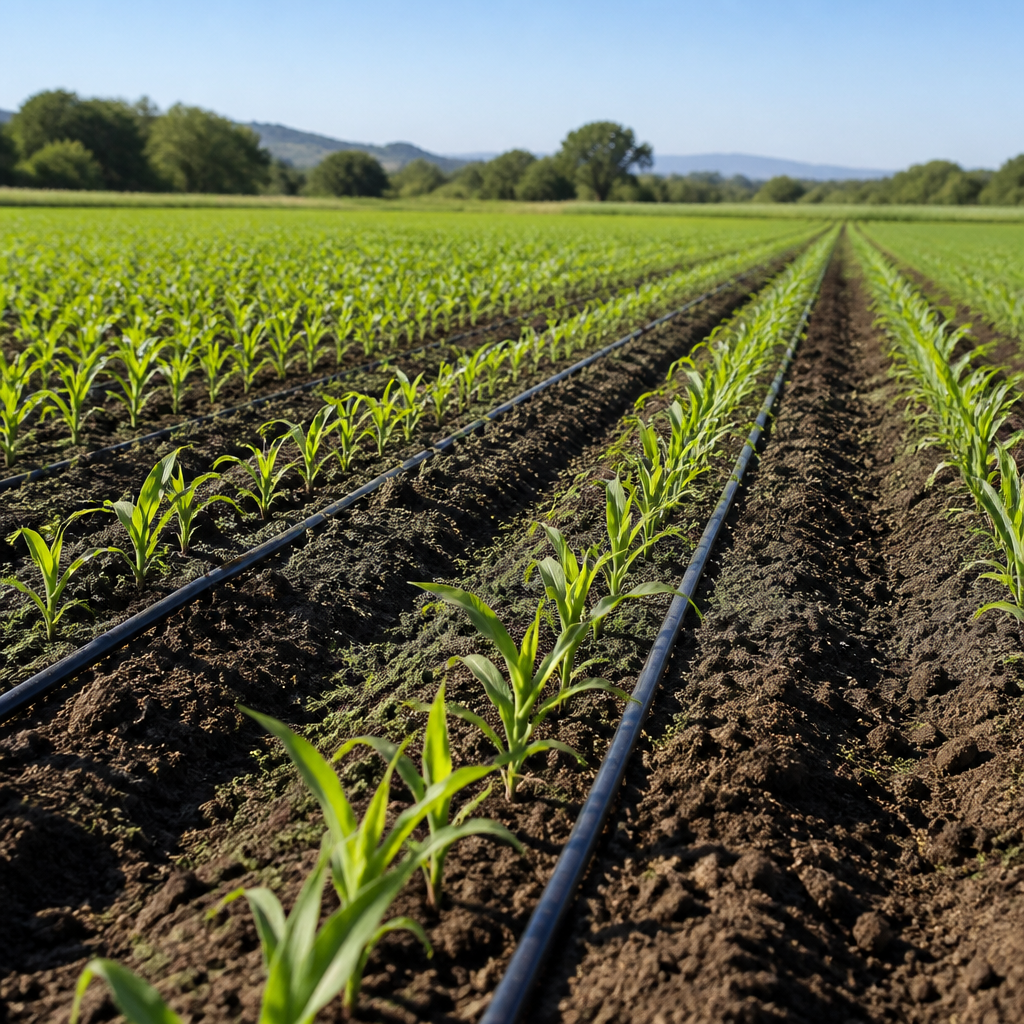
Agriculture is the largest water user globally, so small efficiency gains can translate into major conservation benefits. Here, polymers appear in drip irrigation tubing, pressure-compensating emitters, mulch films, greenhouse covers, controlled-release formulations, and superabsorbent soil amendments. Drip systems made from polyethylene deliver water close to plant roots, reducing evaporation and runoff compared with flood irrigation. Pressure regulation and emitter design, both dependent on polymer engineering, help maintain more uniform application across uneven terrain. In arid horticulture, that uniformity improves crop-per-drop performance and lowers nutrient leaching. Superabsorbent polymers, often based on cross-linked acrylic systems, can absorb and slowly release water in the root zone, which may reduce irrigation frequency in nurseries, landscaping, and some high-value crops when matched carefully to soil texture and crop needs.
The environmental impact is nuanced because agricultural polymers can solve one water problem while creating another. Mulch films suppress evaporation and weeds, but thin conventional films are difficult to recover cleanly from fields and can contribute to plastic contamination if mismanaged. Soil conditioners can help in sandy soils yet perform poorly in heavy clay or degrade under intense ultraviolet and thermal stress. Drip systems save water, but clogged emitters, poor filtration, and weak maintenance can undermine expected benefits. The strongest conservation outcomes occur when polymer products are part of a full agronomic program that includes soil moisture monitoring, evapotranspiration scheduling, fertigation control, and end-of-season recovery plans. Biodegradable options are improving, but they still need crop-specific evaluation because field degradation behavior varies with temperature, moisture, and microbial conditions.
Containment, Stormwater Control, and Groundwater Protection
Water conservation is not only about using less water; it is also about preventing contamination that removes water from safe use. Polymers are essential in geosynthetic clay liners, geomembranes, floating covers, erosion-control products, and stormwater management systems that protect surface water and groundwater. High-density polyethylene geomembranes line landfills, mining ponds, wastewater lagoons, and reservoirs, limiting seepage of contaminated liquids into surrounding soils and aquifers. Polymer-modified concrete admixtures, joint sealants, and waterproofing layers extend the service life of canals, tunnels, and treatment basins while reducing infiltration and exfiltration. In urban drainage, polypropylene and polyethylene modules support detention and infiltration structures that manage runoff peaks and improve recharge where geology allows. These applications often deliver conservation indirectly by keeping existing water sources cleaner and reducing treatment burdens downstream.
Real-world performance depends heavily on specification and monitoring. A liner is only as protective as its seam quality, puncture resistance, subgrade preparation, and leak-detection system. Floating covers on reservoirs can reduce evaporation substantially while also limiting algal growth by blocking light, yet they must withstand wind uplift, ultraviolet exposure, and anchoring stresses. The environmental tradeoff is that large polymer containment systems use significant material mass and may be difficult to recycle after long service in contaminated environments. Even so, when compared with the consequences of leachate migration, pond failure, or chronic seepage, the protective value is usually decisive. For regulators and facility owners, the key metric is avoided harm: preserving groundwater quality often saves far more water in the long term than the material footprint of the barrier itself.
Environmental Tradeoffs Across the Polymer Life Cycle
Any serious discussion of environmental impact has to look beyond use-phase benefits and examine extraction, manufacturing, operation, and end-of-life management. Most conventional polymers used in water systems are derived at least partly from petrochemical feedstocks, and their production carries greenhouse gas emissions, air pollutants, and resource demands. Additives such as plasticizers, stabilizers, flame retardants, pigments, and processing aids can also influence toxicity profiles and recyclability. During service, some applications raise concern about microplastic generation, additive leaching, or degradation byproducts, especially where abrasion, sunlight, oxidants, or high temperatures are present. However, impact is context specific. A durable membrane module or pipe that prevents water loss for decades may have a lower life-cycle burden per cubic meter conserved than a seemingly benign alternative that fails earlier or requires more energy.
| Application | Main water benefit | Key environmental concern | Best mitigation approach |
|---|---|---|---|
| Polymer pipes | Lower leakage and corrosion | Fossil feedstocks and end-of-life recovery | Long design life, certified resins, take-back programs |
| RO and UF membranes | Water reuse and desalination | Energy use, cleaning chemicals, spent modules | Efficient pretreatment, energy recovery, module recycling pilots |
| Drip irrigation plastics | Reduced evaporation and runoff | Field waste and contamination | Collection systems, thicker reusable lines, filtration maintenance |
| Geomembranes and covers | Protect groundwater and reduce evaporation | Difficult recycling after contaminated service | Robust installation, long service life, controlled disposal |
That is why life-cycle assessment is the right framework for comparing options. Standards such as ISO 14040 and ISO 14044 help evaluate tradeoffs using consistent boundaries rather than intuition. In procurement reviews, I look at functional unit first: conserving one cubic meter of potable water, treating one cubic meter of wastewater to reuse quality, or preventing one unit of contaminant escape. Then I compare durability, maintenance intervals, energy intensity, and disposal routes. This approach avoids simplistic claims that all polymers are either sustainable or harmful. The reality is narrower and more actionable: some polymer applications are indispensable for water conservation, some are beneficial only under strict operating conditions, and some should be redesigned to reduce waste or contamination risks.
What Better Material Choices Look Like Next
The next phase of water-conserving polymer use is less about abandoning polymers and more about selecting, designing, and managing them better. Manufacturers are developing membranes with improved fouling resistance, lower operating pressure, and longer cleaning intervals; these changes directly reduce the energy and chemical cost of reuse. Utilities are adopting smarter asset management, pairing polymer pipe networks with acoustic leak detection, pressure monitoring, and digital twins to target losses before they escalate. In agriculture, thicker reusable drip lines, retrieval programs, and precision irrigation platforms are reducing the waste associated with seasonal plastics. Researchers are also expanding bio-based polymers, recyclable multilayer alternatives, and additive packages designed for safer potable-water contact. Certification remains essential, with NSF/ANSI standards, WRAS approvals, and regional drinking-water regulations providing baseline assurance for health and performance.
For buyers, specifiers, and sustainability teams, the practical lesson is straightforward. Do not ask whether polymers are good or bad for water conservation in the abstract. Ask which polymer, in which application, under which operating conditions, with what maintenance plan, and against which realistic alternative. The best environmental outcomes usually come from durable products that stop leaks, enable reuse, or prevent contamination over long service lives, while also minimizing energy demand and ensuring responsible end-of-life handling. The worst outcomes come from short-lived, hard-to-recover products used without recovery systems or performance oversight. If you are building a materials strategy under the broader Materials and Properties topic, use environmental impact as a decision lens across the full water cycle: supply, transport, use, treatment, reuse, and protection. Start by auditing where water is lost or polluted in your system, then match the polymer solution to the exact conservation problem you need to solve.
Frequently Asked Questions
What are polymers, and why are they so important in water conservation?
Polymers are materials made from long chains of repeating molecular units, and that basic structure gives scientists and engineers remarkable control over how a material behaves around water. By changing the chemistry, chain length, flexibility, surface properties, or degree of cross-linking, polymers can be designed to absorb water, repel it, filter it, move it efficiently, or prevent it from escaping. That versatility is exactly why polymers are so important in water conservation.
In practical terms, polymers appear throughout modern water systems. They are used in irrigation tubing, municipal and industrial pipes, waterproof liners, gaskets, sealants, filtration membranes, reverse osmosis systems, protective coatings, and superabsorbent materials that help retain moisture in soil. They also support water reuse by enabling wastewater treatment technologies that separate contaminants from usable water more efficiently. In homes and buildings, polymer-based fixtures, valves, insulation materials, and leak-resistant plumbing components help reduce everyday water loss.
The biggest reason polymers matter is that water conservation is not just about using less water at the tap. It is also about minimizing losses during transport, improving filtration and recycling, protecting clean water from contamination, and matching water delivery to real demand. Polymers help at every stage of that process. When properly selected and responsibly managed, they can improve durability, reduce maintenance, lower leakage rates, and make advanced water treatment systems more practical and affordable.
How do polymers help conserve water in agriculture?
Agriculture is one of the largest water-consuming sectors in the world, so even small efficiency gains can have major conservation benefits. Polymers contribute by improving how water is delivered, stored in soil, and made available to plants. One of the most visible examples is drip irrigation, which relies heavily on polymer tubing and emitters. These systems deliver water directly to plant roots rather than flooding a field, reducing evaporation, runoff, and overwatering. Because many polymer materials resist corrosion, chemical degradation, and weather exposure, they can support efficient irrigation over long operating periods.
Another important agricultural use is in superabsorbent polymers and soil-conditioning materials. These polymers can absorb and hold large amounts of water, then release it gradually into the surrounding soil. In water-stressed regions or during irregular rainfall, that function can improve moisture retention and reduce how often irrigation is needed. Some polymer-based mulches, films, and ground covers also help slow evaporation from the soil surface, maintain more stable moisture conditions, and limit weed growth that would otherwise compete for water.
Polymers also support precision agriculture. Moisture-control materials, sensor housings, fertigation systems, and controlled-release technologies often rely on polymer engineering to help water and nutrients reach crops more efficiently. The result is better targeting of limited water supplies, less waste, and potentially healthier crops with fewer inputs. While performance depends on climate, soil type, crop selection, and product quality, polymer-based technologies have become an important part of modern strategies for producing more food with less water.
How are polymers used in water filtration, treatment, and reuse systems?
Polymers are foundational to many of the most effective water treatment technologies in use today. One of their most important roles is in membranes used for microfiltration, ultrafiltration, nanofiltration, and reverse osmosis. These polymer membranes are engineered with pore structures or selective transport properties that allow water to pass through while trapping suspended solids, salts, pathogens, organic compounds, or other contaminants. Because the polymer chemistry can be tailored very precisely, these systems can be optimized for different treatment goals, from producing drinking water to reclaiming industrial wastewater.
Beyond membranes, polymers are also used in ion-exchange resins, flocculants, adsorbent composites, cartridge filters, and protective linings for treatment equipment. In many treatment plants, polymer-based coagulant aids help tiny particles clump together so they can be removed more easily. That improves process efficiency and helps facilities recover cleaner water for discharge or reuse. In reuse applications, advanced polymer systems allow treated wastewater to be purified for irrigation, cooling, cleaning, or even indirect potable reuse, depending on the treatment standard and local regulations.
From a conservation perspective, the value is clear: every gallon of water that can be safely treated and reused is a gallon that does not need to be withdrawn again from rivers, reservoirs, or aquifers. Polymers make that possible by improving treatment efficiency, reducing energy use in some systems, extending equipment life through corrosion resistance, and enabling highly selective separation processes. They are one of the key material platforms behind circular water management, where water is used more than once instead of being treated as a single-use resource.
Can polymers help reduce water loss in infrastructure and buildings?
Yes, and this is one of the most overlooked ways polymers contribute to water conservation. A significant amount of treated water is lost through leaks, pipe failures, poor sealing, and infrastructure deterioration before it ever reaches the end user. Polymer materials help address that problem in multiple ways. Polymer pipes, fittings, liners, gaskets, and sealants are widely used in water distribution systems because they can offer corrosion resistance, flexibility, lighter weight, and long service life compared with some traditional materials. Those traits can reduce breakage and leakage, especially in systems exposed to soil movement, chemical exposure, or changing temperatures.
In buildings, polymers appear in plumbing components, joint seals, waterproof membranes, tank linings, valve assemblies, appliance hoses, and insulation systems that protect pipes from temperature-related damage. Better sealing and more durable connections mean less hidden leakage behind walls, under floors, or in mechanical systems. Polymer coatings can also protect concrete and metal surfaces in reservoirs, treatment facilities, and storage tanks, helping preserve water quality while reducing maintenance-related losses.
Smart water infrastructure increasingly relies on polymers as well. Many sensor housings, meter components, flexible connectors, and monitoring devices use engineered polymer parts that support leak detection and flow control. When paired with good system design and maintenance, these materials help utilities and property owners conserve water not just by improving efficiency, but by preventing loss before it happens. In water conservation, stopping wasted water in transit is often just as important as reducing consumption at the point of use.
Are there environmental concerns associated with using polymers in water conservation?
There can be, which is why the conversation around polymers and water conservation should be balanced and evidence-based. While polymers deliver major benefits in filtration, transport, storage, and efficiency, not all polymer materials have the same environmental profile. Concerns may include fossil-based feedstocks, manufacturing impacts, long-term waste management, degradation under harsh conditions, and the potential release of microplastic particles if materials are poorly designed, misused, or inadequately disposed of. In some applications, additives or chemical residues also require careful oversight to protect water quality and public health.
That said, the presence of environmental concerns does not mean polymers should be dismissed. It means they should be selected and managed responsibly. Many high-performance polymer systems conserve far more water, energy, and infrastructure resources over their service life than less durable alternatives. Researchers and manufacturers are also developing better options, including longer-lasting materials, recyclable polymer components, lower-impact manufacturing methods, and bio-based or biodegradable polymers for specific uses. Regulatory standards, product testing, and lifecycle assessment are increasingly important in determining which materials provide the best overall sustainability outcomes.
The most useful way to think about polymers in water conservation is not as universally good or bad, but as tools whose impact depends on design, application, maintenance, and end-of-life handling. When used wisely, polymers can make water systems more efficient, resilient, and protective of scarce freshwater supplies. The goal is to maximize those conservation benefits while minimizing material-related risks through better engineering, stronger oversight, and continued innovation.