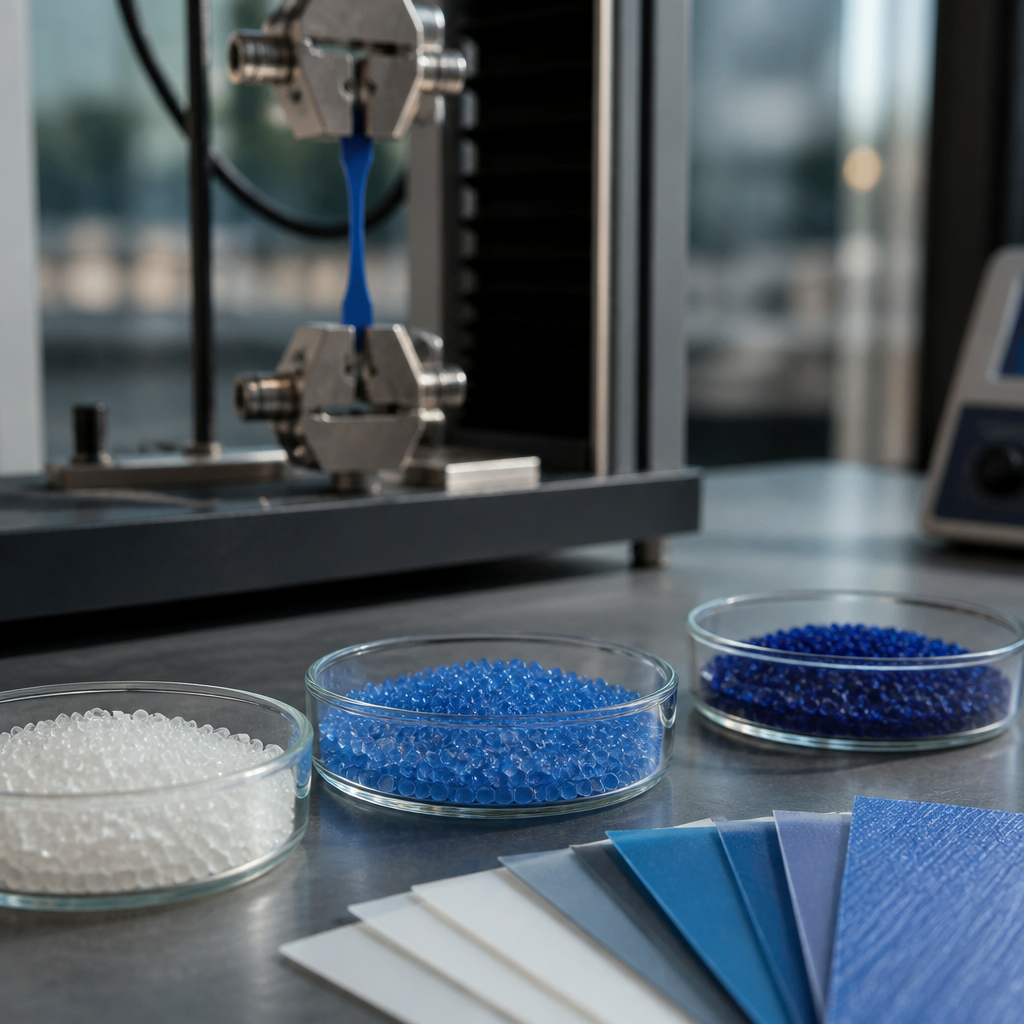
Molecular weight is one of the most influential variables in polymer science because it controls how long polymer chains are, how strongly they interact, and how a material ultimately behaves in processing and service. In practical terms, molecular weight refers to the mass of a polymer molecule, but unlike small molecules, polymers never come as a single exact size. They exist as distributions of chain lengths, so polymer engineers usually discuss number-average molecular weight, weight-average molecular weight, and dispersity rather than a single value. Those measurements are not abstract lab metrics. They are direct predictors of melt viscosity, tensile strength, toughness, diffusion, crystallization behavior, and long-term durability.
I have seen this relationship repeatedly in production environments. A resin that looked chemically identical on paper behaved very differently on an extrusion line because its average molecular weight had shifted upward and its molecular weight distribution had broadened. Throughput dropped, die pressure climbed, and the film became tougher but harder to seal. That is why understanding the impact of molecular weight on polymer properties is foundational for anyone working within materials and properties, especially on the physical properties side. It links chemistry to manufacturability and product performance in a way few other variables do.
For a hub article, the key idea is simple: molecular weight affects nearly every physical property of a polymer, but not always in the same direction or with the same sensitivity. Some properties improve sharply once chain entanglement begins. Others plateau beyond a certain range. Processing often becomes more difficult as performance improves. The most useful way to read this topic is to treat molecular weight as a master control that influences mechanical, thermal, rheological, barrier, optical, and surface behavior through chain mobility and intermolecular interaction. Once that framework is clear, related pages on tensile behavior, impact resistance, viscosity, crystallinity, and permeability become easier to navigate and compare.
What molecular weight means in polymer materials
In polymer science, molecular weight is typically reported as number-average molecular weight, abbreviated Mn, and weight-average molecular weight, abbreviated Mw. Mn gives more weight to smaller chains because it is based on molecule count. Mw gives more weight to larger chains because it reflects mass contribution. Their ratio, Mw divided by Mn, is dispersity, often symbolized as D or Đ. A perfectly uniform polymer would have a dispersity of 1.0, but real commercial polymers are broader. Step-growth polymers often differ from chain-growth polymers in distribution shape, and controlled polymerization methods such as ATRP or RAFT are used when tighter distributions are needed.
Measurement matters because property prediction depends on which average is being discussed. End-group analysis, gel permeation chromatography, light scattering, intrinsic viscosity, and MALDI methods are all used in different molecular weight ranges. In industrial quality control, gel permeation chromatography is especially common because it provides the full molecular weight distribution, not just a single average. That distribution often explains why two resins with similar Mn still process differently. A small high-molecular-weight tail can dramatically increase elasticity in the melt, while excess low-molecular-weight fraction can reduce strength, increase extractables, or accelerate stress cracking.
Physical properties respond to molecular weight because longer chains occupy more space, entangle more readily, and move more slowly. Below the critical entanglement molecular weight, many polymers behave like collections of relatively mobile coils. Above that threshold, chains interpenetrate and constrain one another, increasing cohesion and resistance to flow. This is why the same chemistry can produce a brittle, waxy, rubbery, or tough engineering material depending on chain length and architecture. In this hub, molecular weight should be understood as both a structural descriptor and a practical lever for tuning physical performance.
Mechanical properties: strength, toughness, and fracture behavior
Mechanical performance is often the first place the influence of molecular weight becomes obvious. As molecular weight increases, tensile strength, elongation at break, fracture toughness, and environmental stress crack resistance usually improve, especially when the polymer moves from unentangled to entangled behavior. The reason is that long chains bridge microvoids, transfer stress more effectively, and resist pullout during deformation. In semicrystalline polymers, tie molecules connecting crystalline lamellae become more numerous as chain length rises, which can significantly improve ductility and crack resistance.
Polyethylene is a classic example. Ultra-high-molecular-weight polyethylene has exceptional abrasion resistance and impact performance because its chains are extremely long and heavily entangled. It is used in joint implants, ballistic fibers, and wear strips for precisely that reason. By contrast, low-molecular-weight polyethylene grades can be easier to process but do not provide the same combination of toughness and creep resistance. In polystyrene, very low molecular weight creates brittle behavior because chains slip past one another too easily and cannot dissipate stress through large-scale deformation.
The relationship is not infinite. Mechanical gains often level off once sufficient entanglement density is reached. Past that point, further molecular weight increases may produce smaller property improvements than expected while causing major processing penalties. There are also tradeoffs with orientation and residual stress. During injection molding, a high-molecular-weight resin may retain more frozen-in orientation if processing is not optimized, which can affect dimensional stability and anisotropic mechanical response. For product design, the useful rule is that adequate molecular weight is essential for toughness, but the optimal range depends on loading mode, temperature, and fabrication method.
Rheology and processability: how chain length changes flow
Molecular weight has a dominant effect on polymer rheology, which is why processors watch it so closely. Melt viscosity generally increases strongly with molecular weight, and above the entanglement threshold the dependence becomes steep. For many linear polymers in the entangled regime, zero-shear viscosity scales approximately with molecular weight to the 3.4 power. That means a modest increase in molecular weight can produce a very large increase in viscosity. In real plants, this shows up as higher motor load, higher die pressure, slower filling, and narrower processing windows.
That same increase can also be beneficial. High-molecular-weight polymers often have greater melt strength, better bubble stability in blown film, improved sag resistance in thermoforming, and stronger parison support in blow molding. Low-molecular-weight materials flow easily into thin sections and fine features, making them useful for injection molding complex parts, but they may lack the melt elasticity needed for free-surface processes. This is why polypropylene grades for fiber spinning, cast film, and thermoforming are deliberately tailored to different molecular weight ranges and distributions even when the base chemistry is similar.
| Property area | Lower molecular weight tendency | Higher molecular weight tendency | Typical practical effect |
|---|---|---|---|
| Melt viscosity | Lower viscosity | Higher viscosity | Easier filling versus harder extrusion |
| Melt strength | Lower elasticity | Higher elasticity | Poor bubble stability versus better thermoforming |
| Toughness | More brittle response | Greater ductility | Cracking risk versus impact resistance |
| Diffusion and permeability | Faster chain mobility | Slower mobility | Higher transport versus improved barrier in some systems |
| Solubility and dissolution | Dissolves more readily | Dissolves more slowly | Faster coating prep versus harder recycling or rework |
Molecular weight distribution matters as much as the average. Broad distributions can improve processability because shorter chains lubricate flow while longer chains preserve melt strength. Narrow distributions create more uniform behavior and can be preferred in high-precision applications, but they sometimes process less forgivingly. Long-chain branching adds another layer by increasing extensional viscosity without always raising shear viscosity to the same degree. For processors, the central question is not simply whether higher molecular weight is better. It is whether the selected molecular weight profile matches the deformation history of the chosen process.
Thermal and morphological effects in amorphous and semicrystalline polymers
Molecular weight influences thermal behavior indirectly through chain mobility and morphology. In amorphous polymers, the glass transition temperature can rise modestly with increasing molecular weight because chain ends contribute extra free volume and mobility. The Fox-Flory relationship captures this trend: lower molecular weight materials have more chain ends per unit mass, which can depress Tg. This is especially relevant in oligomer-rich systems, coatings, and low-molecular-weight resins where small changes in chain length meaningfully affect hardness and service temperature.
In semicrystalline polymers, molecular weight affects crystallization rate, lamellar organization, and final crystallinity. Very short chains may crystallize easily because they move readily, but they often form less mechanically integrated structures. Very long chains can hinder crystal perfection because entanglements slow chain folding and rearrangement. The practical result is often a balance between mobility and connectivity. For example, in polyethylene terephthalate and nylon, molecular weight influences crystallization during cooling and therefore affects transparency, shrinkage, warpage, and toughness. Mold temperature and cooling rate determine how strongly those effects appear in finished parts.
Thermal stability during processing is also tied to molecular weight retention. Chain scission from heat, oxygen, moisture, or shear reduces molecular weight and can rapidly change physical properties. Polycarbonate can lose toughness if hydrolysis occurs before molding. PET requires drying for the same reason. On the other side, post-reaction or chain extension can raise molecular weight and alter melt behavior unexpectedly. When engineers troubleshoot physical property drift, they often discover that thermal history changed molecular weight more than formulation did. That is why resin drying, residence time control, and antioxidant selection are core topics within any serious discussion of polymer physical properties.
Barrier, surface, and durability properties across service life
Barrier performance, solvent resistance, and long-term durability are also shaped by molecular weight. Higher molecular weight generally reduces segmental mobility and can lower diffusion rates for penetrants, although crystallinity, polarity, and free volume often dominate the final result. In packaging, a higher molecular weight polyethylene or polyamide may show better environmental stress crack resistance and slower chemical attack because chains are less likely to disentangle and fail under combined stress and exposure. However, a polymer with excellent intrinsic barrier chemistry can still underperform if morphology is poor, so molecular weight must be judged alongside structure and processing history.
Surface properties are affected in more subtle ways. Low-molecular-weight species can bloom, migrate, or enrich the surface, changing coefficient of friction, printability, odor, and extractables. In medical and food-contact materials, excessive low-molecular-weight fraction can raise compliance concerns because small species are more mobile and more likely to leach. In coatings and adhesives, lower molecular weight may improve wetting and substrate contact, yet final cohesive strength usually requires either higher molecular weight or curing after application. This is why pressure-sensitive adhesives often balance tack from lower molecular weight components with holding power from higher molecular weight fractions.
Durability under load is especially dependent on molecular weight. Creep resistance, fatigue performance, and crack growth resistance generally improve as chain entanglement increases. In piping, geomembranes, and cable insulation, long-term failure is rarely explained by a single short-term tensile test. It is governed by slow crack growth, oxidation, and molecular mobility over years. High-density polyethylene pipe grades are selected partly for molecular architecture that delays crack initiation and propagation. In my experience, teams that focus only on initial strength often miss the real design risk, which is molecular weight stability across the entire service life.
How engineers choose the right molecular weight for an application
Selecting molecular weight is a balancing exercise between performance, processability, cost, and reliability. The first question is what failure mode matters most. If the application is an impact-loaded housing, toughness and weld-line integrity may justify a higher molecular weight grade. If it is a thin-wall disposable part with complex geometry, lower viscosity may be more valuable than maximum ductility. The second question is how the polymer will be processed. Extrusion blow molding, film blowing, fiber spinning, rotational molding, and injection molding each reward different molecular weight ranges and distributions.
Engineers then validate the choice using data tied to actual use conditions. Melt flow index gives a quick indirect view of molecular weight for many commodity polymers, but it is not enough by itself. Gel permeation chromatography, dynamic mechanical analysis, DSC, rheometry, tensile testing, impact testing, and environmental stress crack testing provide the fuller picture. Standards from ASTM and ISO are essential because test method details strongly influence reported properties. A material that appears superior in one data sheet may lose its advantage once tested at the relevant strain rate, temperature, or chemical exposure level.
The most effective approach is to treat molecular weight as part of a larger structure-property-processing map. Chain architecture, branching, copolymer composition, additives, residual monomer, moisture, and thermal history all interact with it. Still, molecular weight remains the hub variable for physical properties because it is the clearest bridge between molecular scale and product scale. If you are building out a materials and properties knowledge base, start here, then connect this page to focused discussions on tensile behavior, impact strength, rheology, crystallinity, permeability, creep, and durability. That structure helps readers solve real material selection problems instead of collecting isolated facts.
The impact of molecular weight on polymer properties can be summarized in one practical statement: longer chains usually create stronger interactions, greater entanglement, and better toughness, but they also make polymers harder to process. That tradeoff explains why molecular weight sits at the center of polymer design. It affects mechanical strength, fracture resistance, melt viscosity, thermal transitions, crystallization behavior, barrier performance, and long-term reliability. Because polymers exist as distributions rather than single molecules, understanding Mn, Mw, and dispersity is essential for predicting how a resin will behave in production and in service.
For anyone studying physical properties, this topic is the natural hub because it connects nearly every downstream property discussion. When you understand how chain length changes mobility and morphology, you can interpret why one grade molds easily but cracks in use, why another resists chemicals yet processes poorly, or why drying and thermal history matter so much. I have seen many formulation and processing problems traced back to unnoticed molecular weight change, and that lesson holds across commodity, engineering, and high-performance polymers.
Use this article as your starting point for material selection and troubleshooting. Compare molecular weight data alongside rheology, crystallinity, and mechanical test results, then match the resin to the real demands of processing and service. That approach leads to better polymer choices, fewer production surprises, and more reliable products.
Frequently Asked Questions
What does molecular weight mean in polymers, and why is it different from molecular weight in small molecules?
In polymer science, molecular weight refers to the mass of an individual polymer chain, but the concept is more complex than it is for small molecules. A small molecule such as water or ethanol has a single, well-defined molecular mass because every molecule of that substance is essentially identical. Polymers are different because they are made up of very long chains formed during a statistical growth process, which means a polymer sample contains many chains of different lengths rather than one exact size. As a result, polymer scientists usually describe molecular weight as a distribution instead of a single number.
To make that distribution meaningful, engineers commonly use averages such as number-average molecular weight (Mn) and weight-average molecular weight (Mw). Mn reflects the average chain size by counting molecules equally, while Mw gives more emphasis to larger chains, which often have a stronger effect on physical behavior. This is why two polymers can have the same chemical composition but perform very differently if their molecular weight averages and distributions are not the same. Molecular weight influences how easily the chains move, how strongly they entangle, and how the polymer responds during melting, forming, stretching, or long-term use. In short, molecular weight is one of the most important structural variables because it connects the microscopic chain architecture to real-world material performance.
How does molecular weight affect the mechanical properties of a polymer?
Molecular weight has a major influence on mechanical performance because longer polymer chains create more opportunities for entanglement and intermolecular interaction. As molecular weight increases, chains become more capable of physically intertwining with one another, and that network of entanglements helps the material resist deformation and fracture. In many polymer systems, this leads to improvements in toughness, impact resistance, elongation at break, and overall durability. A higher molecular weight polymer is often less brittle because the longer chains can distribute applied stress more effectively throughout the material.
That said, the relationship is not always linear or unlimited. At low molecular weight, a polymer may be weak, fragile, or prone to cracking because the chains can slide past each other too easily. As molecular weight rises above a critical threshold, properties often improve rapidly because sufficient chain entanglement develops. Beyond that point, additional increases may still help, but the gains can become more gradual depending on the polymer type and the application. Stiffness and tensile strength may improve, but not every property changes in the same way or at the same rate. Crystallinity, branching, copolymer composition, and additives also matter. Even so, molecular weight remains a central factor because it strongly shapes how a polymer absorbs energy, carries load, and survives repeated use in service.
Why does higher molecular weight usually make polymer processing more difficult?
Higher molecular weight generally makes processing more challenging because longer chains move less easily when the polymer is heated or dissolved. As chain length increases, entanglement density rises, and those entanglements act like temporary knots that resist flow. This causes the melt viscosity to increase, sometimes dramatically. In practical processing operations such as extrusion, injection molding, blow molding, and film casting, a more viscous polymer requires greater force, higher pressures, and often more careful temperature control to shape effectively.
This is one of the classic trade-offs in polymer engineering. A material with high molecular weight may offer superior toughness and long-term performance, but it can also be harder to pump, mix, mold, or draw into fibers and films. If viscosity becomes too high, manufacturers may encounter incomplete mold filling, greater energy consumption, unstable flow, surface defects, or thermal degradation from prolonged heating. On the other hand, a polymer with very low molecular weight may process easily but lack the mechanical integrity needed in the final product. That is why selecting molecular weight is often an optimization problem rather than a simple “higher is better” decision. Engineers aim for a range that delivers sufficient performance while still allowing efficient and consistent manufacturing.
What is the difference between number-average molecular weight, weight-average molecular weight, and molecular weight distribution?
Because polymers consist of chains with many different lengths, a single average does not fully describe the material. Number-average molecular weight, or Mn, is calculated by treating each polymer molecule equally regardless of its size. This makes Mn especially sensitive to the presence of shorter chains. Weight-average molecular weight, or Mw, gives greater importance to heavier chains, so it more strongly reflects the influence of the largest molecules in the sample. Since those larger molecules often have a disproportionate effect on rheology, toughness, and melt behavior, Mw is especially important in predicting how a polymer will process and perform.
The relationship between these averages helps define molecular weight distribution, which describes how broad or narrow the range of chain lengths is within the material. A commonly used measure is dispersity, often expressed as Mw divided by Mn. A value close to 1 indicates a relatively narrow distribution, while a larger value indicates a broader spread of chain sizes. This matters because two polymer samples can have similar average molecular weights but behave differently if one contains a wider mix of very short and very long chains. A broader distribution may improve processability in some cases because shorter chains aid flow, while longer chains maintain strength. In other cases, a narrower distribution is desirable for tighter control of product consistency and performance. Understanding Mn, Mw, and distribution together gives a far more accurate picture of polymer behavior than relying on one number alone.
How do polymer engineers choose the right molecular weight for a specific application?
Choosing the right molecular weight depends on balancing end-use performance with manufacturing requirements. Engineers begin by considering what the polymer must do in service: withstand impact, carry mechanical loads, stretch without breaking, resist creep, form a strong film, or maintain dimensional stability over time. Applications that demand toughness, abrasion resistance, and high melt strength often benefit from higher molecular weight because longer chains improve entanglement and structural integrity. Examples include certain packaging films, fibers, engineering plastics, and high-performance molded components.
At the same time, the polymer must still be practical to process. If the molecular weight is too high, melt viscosity may become excessive and make extrusion or molding inefficient or even impossible under standard operating conditions. If it is too low, the material may flow beautifully during processing but fail in the field due to poor strength or brittleness. Engineers therefore also consider equipment capabilities, processing temperature windows, shear conditions, residence time, solvent behavior when relevant, and cost. They may tailor not only the average molecular weight but also the molecular weight distribution to fine-tune both flow and final properties. In commercial polymer design, the ideal choice is rarely the maximum molecular weight achievable; it is the molecular weight profile that best aligns performance, consistency, production efficiency, and long-term reliability for the intended application.