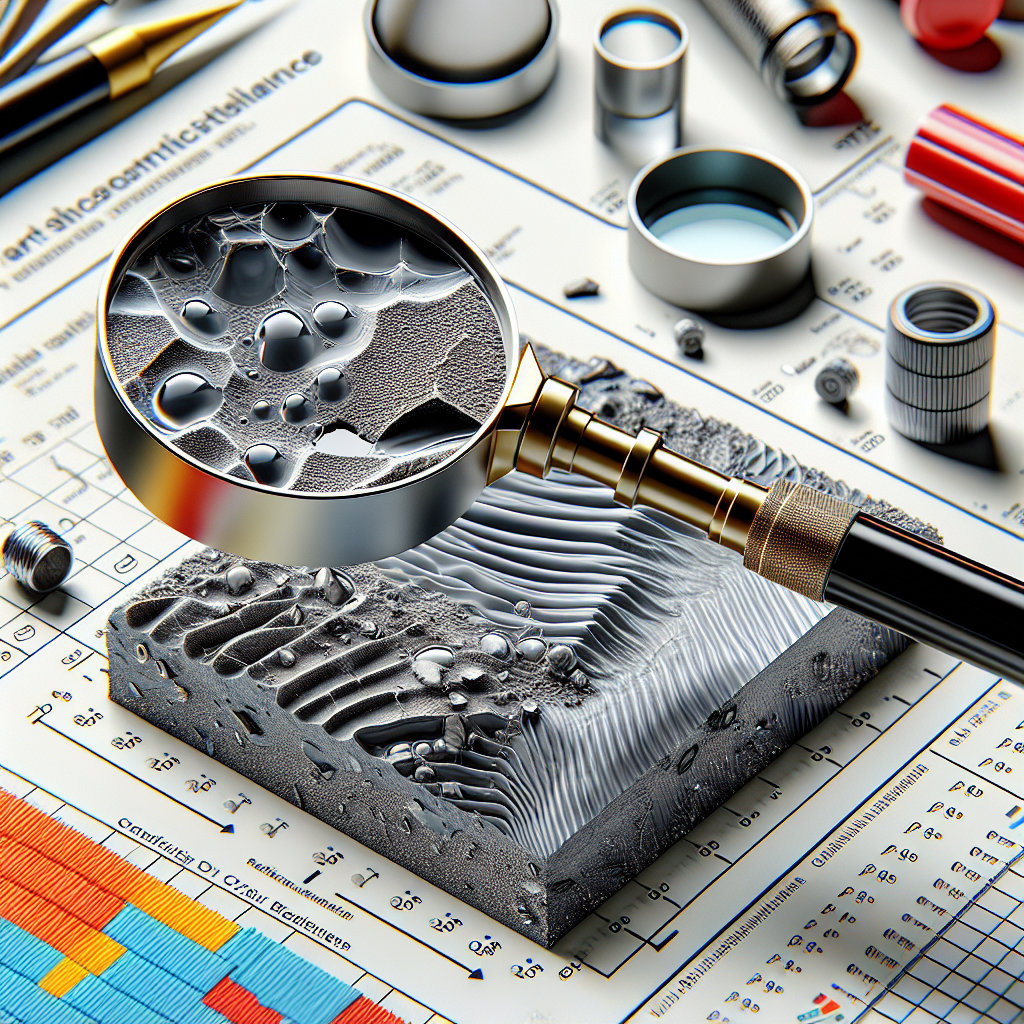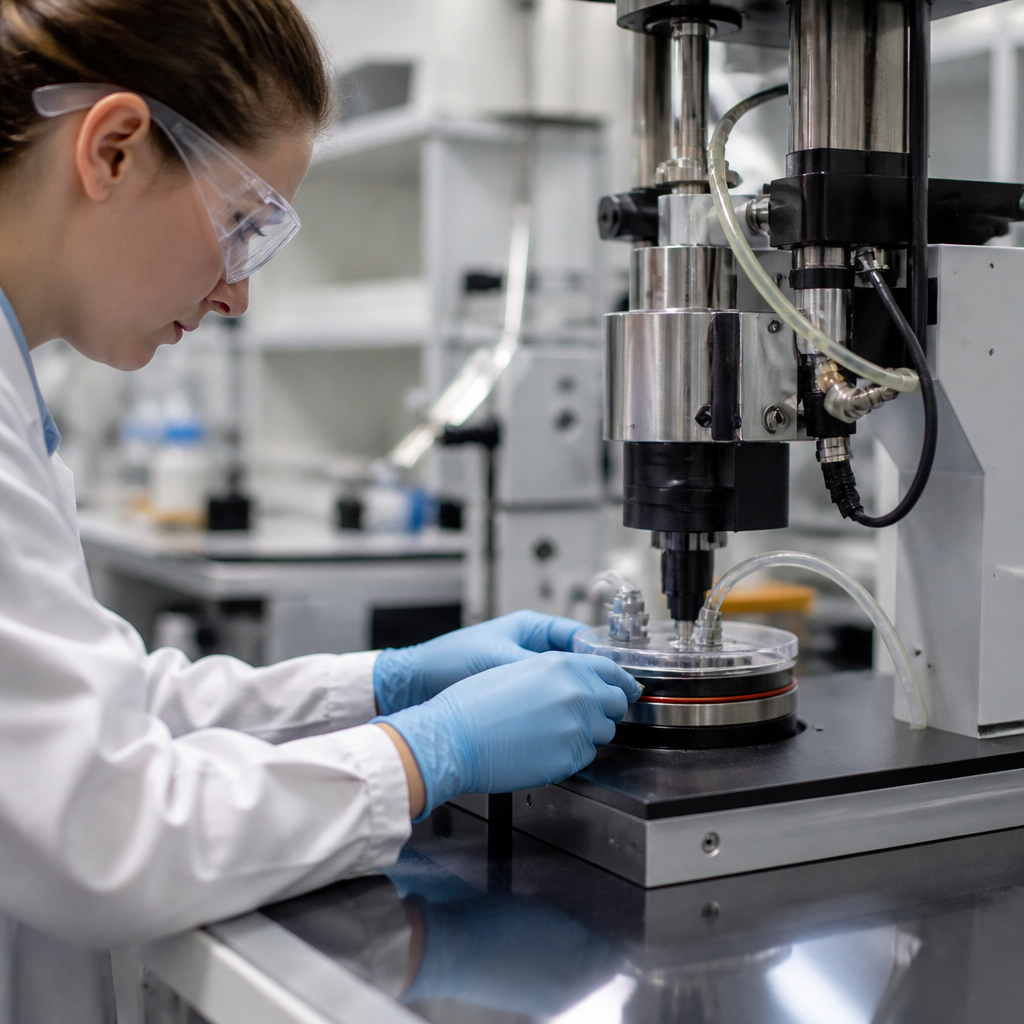
Evaluating the permeability of polymer materials is essential to understanding how plastics, elastomers, films, membranes, coatings, and composite barriers perform when gases, vapors, and liquids attempt to pass through them. In materials engineering, permeability describes the rate at which a penetrant moves through a solid under a driving force, usually a pressure, concentration, or partial-pressure gradient. Within the broader field of physical properties, permeability sits alongside density, hardness, crystallinity, thermal conductivity, glass transition temperature, and mechanical strength because it directly influences product safety, shelf life, corrosion resistance, sterilization compatibility, and environmental durability. I have evaluated permeability for packaging films, tubing, seals, and multilayer laminates, and the same lesson repeats across applications: a polymer that looks identical in tensile testing can behave completely differently as a barrier. That difference matters in food packaging that must retain aroma and exclude oxygen, in medical bags that must control moisture loss, in hydrogen systems where small molecules diffuse quickly, and in electronics coatings where water vapor transmission can determine service life. To evaluate permeability correctly, engineers must define the penetrant, polymer morphology, test conditions, and governing transport mechanism before choosing a method or comparing data.
Permeability is often confused with related terms, so clear definitions are important. Permeability is the product of diffusivity and solubility, commonly expressed as P = D × S. Diffusivity describes how fast a molecule moves through the polymer matrix. Solubility describes how much of that penetrant dissolves into the material at equilibrium. Permeance differs because it normalizes flux by specimen thickness, making it useful for multilayer structures and finished films when the exact active layer thickness is uncertain. Transmission rate, such as oxygen transmission rate or water vapor transmission rate, reports the quantity passing through an area over time under specified conditions. Selectivity compares the permeability of one penetrant to another and is especially important in separation membranes. These distinctions are not semantic; they determine whether data from one report can be used in design calculations. For example, a packaging engineer choosing an ethylene vinyl alcohol layer needs transmission-rate data for the laminate at target humidity, while a membrane scientist selecting polysulfone for gas separation needs intrinsic permeability and selectivity values for pure gases.
Permeability matters because polymers are rarely perfect barriers. Molecular transport occurs through free volume between chains, through amorphous regions, along defects, and sometimes through interfaces in filled or multilayer systems. The practical consequences can be expensive. Elevated oxygen ingress accelerates rancidity in edible oils, moisture loss changes pharmaceutical tablet stability, fuel vapor permeation affects emissions compliance, and carbon dioxide loss reduces beverage shelf appeal. In industrial settings, chemical permeation through gloves, liners, or seals can create direct safety hazards. This hub article covers the physical-property foundation needed to evaluate polymer permeability comprehensively: the transport mechanisms, the structural factors that control barrier performance, standard test methods, interpretation pitfalls, and material-selection strategies. From here, readers can move deeper into related physical properties such as crystallinity, free volume, thermal transitions, and sorption behavior, all of which govern how and why molecules move through polymers in the real world.
How Permeation Works in Polymer Materials
The standard model for nonporous polymers is solution-diffusion. First, penetrant molecules sorb at the upstream surface. Next, they diffuse through the polymer under a chemical-potential gradient. Finally, they desorb from the downstream side. This mechanism explains why permeability changes with both penetrant chemistry and polymer structure. Small, noncondensable gases such as helium often show high diffusivity but low solubility. Larger or more condensable molecules such as carbon dioxide or many organic vapors may diffuse more slowly yet dissolve more readily, resulting in unexpectedly high total permeability. Water is especially challenging because it can interact strongly with polar groups, plasticize certain polymers, and alter the transport path over time. In my own testing, polyamide films that looked excellent in dry oxygen barrier measurements lost much of that advantage once humidity increased, because absorbed water increased chain mobility in amorphous regions.
Fick’s laws are the basis for most permeability calculations. Steady-state flux is proportional to the permeability coefficient, specimen thickness, and pressure or concentration gradient. Before steady state is reached, there is a transient period called lag time, which is used to estimate diffusivity. For engineers, the practical point is simple: a single barrier number rarely tells the whole story. A package for a short shelf-life product may perform adequately with moderate steady-state permeability if the lag time is long. A membrane used continuously in gas separation demands the opposite emphasis. Transport can also depart from ideal Fickian behavior. Dual-mode sorption in glassy polymers, concentration-dependent diffusion, swelling, and penetrant-induced plasticization can all cause nonlinear results. That is why careful reporting of pressure, temperature, humidity, upstream concentration, and preconditioning is mandatory when comparing polymer permeability data.
Material Structure Factors That Control Barrier Performance
Polymer chemistry is the first major control on permeability. Chains with rigid backbones, bulky side groups, aromatic rings, or strong intermolecular interactions usually restrict segmental motion and reduce diffusivity. Highly polar polymers may either improve or worsen barrier performance depending on the penetrant; they can repel nonpolar gases yet absorb water strongly. Crystallinity is equally important because crystalline regions are largely impermeable, forcing molecules to follow tortuous paths through amorphous domains. That is why high-density polyethylene generally has lower gas permeability than low-density polyethylene, which contains more branching and lower crystallinity. Orientation from stretching can also improve barrier by aligning chains and reducing free volume, as seen in biaxially oriented polypropylene and polyethylene terephthalate used for packaging. However, orientation may introduce anisotropy, so machine-direction and cross-direction behavior are not always identical.
Free volume is the concept that best connects molecular structure to transport. Permeants move through temporary gaps created by chain motion. More free volume generally means higher diffusivity. Temperature increases segmental mobility and free volume, which is why permeability often rises exponentially with temperature. Around the glass transition temperature, transport behavior can shift dramatically. Below Tg, a glassy polymer like PET may provide strong barrier to many gases. Above Tg, chain mobility increases and permeability can jump. Additives complicate the picture further. Plasticizers usually increase free volume and penetrant mobility. Fillers can lower permeability if they create a tortuous path, but only when dispersion and interfacial adhesion are good. Poorly bonded fillers or processing defects can do the opposite. Multilayer structures often outperform monolayers because each layer addresses a different weakness, for example combining polyethylene for sealability, EVOH for oxygen barrier, and polyamide for toughness.
| Factor | Typical Effect on Permeability | Example in Practice |
|---|---|---|
| Higher crystallinity | Usually lowers gas and vapor permeability | HDPE resists oxygen transfer better than LDPE |
| Higher temperature | Usually increases permeability | Hot-fill packages lose barrier margin at elevated storage temperatures |
| Humidity in hygroscopic polymers | Can sharply increase oxygen permeability | Nylon and EVOH lose dry-state barrier when moisture absorbed |
| Orientation | Often lowers permeability, may create directionality | BOPP and oriented PET improve packaging barrier |
| Plasticizer addition | Usually increases diffusivity | Flexible PVC transmits vapors faster than rigid PVC |
| Platelet nanofillers | Can lower permeability if well dispersed | Nylon-clay composites create a longer diffusion path |
Test Methods, Standards, and Laboratory Practice
Reliable permeability evaluation starts with recognized standards. For oxygen transmission through plastic film and sheeting, ASTM D3985 is widely used using a coulometric sensor under controlled temperature and humidity. For water vapor transmission, ASTM F1249 is a common instrumental method based on infrared detection, while ASTM E96 remains a longstanding gravimetric option for many sheet materials and coatings. Gas permeability coefficients for plastics can also be measured using differential-pressure methods under ASTM D1434. In packaging laboratories, MOCON instruments became an industry benchmark for oxygen and water vapor testing because they provide stable environmental control and sensitive detection limits, though equivalent systems are available from other suppliers. The key point is not the brand but strict control of specimen conditioning, leak integrity, exposed area, calibration gases, and steady-state confirmation. Small leaks around the mask or cell gasket can overwhelm true permeation, especially for high-barrier samples.
Sample preparation is where many comparisons fail. Thickness must be measured accurately and at enough points to capture variation. For coextruded or coated materials, the active barrier layer thickness may differ from nominal gauge, so permeance may be more reliable than calculated permeability unless layer thickness is confirmed by microscopy or supplier data. Conditioning matters because polymers retain thermal and moisture history. A film tested immediately after extrusion can perform differently after annealing or humid storage. Defects matter too. Pinholes, gel particles, and fold lines can dominate measured transmission rates in thin barrier films. When evaluating molded parts rather than films, geometry complicates analysis and often requires custom fixtures or mass-loss methods. For aggressive liquids and solvents, standardized glove-permeation methods such as ASTM F739 are more suitable than gas-barrier tests because breakthrough time and cumulative permeation become the critical metrics. Good laboratories report all conditions clearly: temperature, relative humidity, pressure differential, test area, sample thickness, conditioning protocol, and replicate variability.
Interpreting Data for Design, Quality, and Material Selection
Permeability numbers are only useful when interpreted in context. First, units vary widely. Barrer, GPU, cm³·mil/m²·day·atm, g·mil/m²·day, and SI forms all appear in the literature. Converting incorrectly can invalidate a design review, so engineers should standardize units before ranking materials. Second, published values often come from ideal lab specimens, not finished parts with welds, seams, orientation gradients, or residual stress. Third, a single-point value hides environmental sensitivity. EVOH is a classic example: excellent oxygen barrier in dry conditions, much weaker in humid conditions. Fluoropolymers often show strong chemical resistance, yet some grades allow faster permeation of specific gases than engineers expect. Silicone elastomers provide outstanding flexibility and temperature range but are highly permeable to many gases, which is beneficial in some medical and venting applications and unacceptable in containment applications.
Permeability evaluation also supports quality control and failure analysis. If a package fails shelf-life targets, the root cause may be resin substitution, reduced crystallinity from process changes, inadequate drying before extrusion, coating voids, or seal defects rather than the nominal polymer family itself. I have seen oxygen transmission rise significantly after a converter increased line speed and unintentionally changed orientation and coating cure. In fuel and chemical systems, permeation complaints can stem from swelling that alters dimensions long before complete chemical attack occurs. Design teams should therefore combine permeability data with sorption, dimensional stability, tensile retention, and aging results. A useful selection workflow is straightforward: define the penetrants, quantify allowable ingress or loss, set the worst-case temperature and humidity, identify regulatory constraints, compare candidate polymers and multilayers using normalized data, and validate with finished-part testing. That process turns permeability from an abstract lab property into a design parameter tied directly to product performance and risk.
Common Polymer Families and What Their Barrier Profiles Mean
Polyolefins such as LDPE, LLDPE, HDPE, and polypropylene are widely used because they are economical, processable, and moisture resistant, but their gas-barrier performance ranges from modest to poor compared with specialized barrier resins. HDPE generally provides better gas barrier than LDPE because its higher crystallinity reduces diffusion pathways. PET offers balanced stiffness, transparency, and moderate gas barrier, which is why it dominates beverage bottles, often with additional barrier layers or scavengers for sensitive products. Polyamides provide good oxygen barrier when dry and strong toughness, making them useful in vacuum packaging and multilayer films, but they absorb moisture and lose barrier efficiency. EVOH remains one of the best oxygen barrier polymers under dry to moderate humidity conditions and is commonly placed between moisture-protective layers. PVDC historically delivered excellent barrier to both oxygen and moisture, though environmental and processing concerns reduced its use in some markets. Fluoropolymers, polyacetal, polysulfone, polycarbonate, and thermoplastic elastomers each occupy narrower niches where permeability must be balanced against chemical resistance, transparency, heat resistance, or flexibility.
Membrane applications invert the usual goal. Instead of minimizing all transport, designers seek high permeability for desired species and high selectivity against others. Polysulfone, cellulose acetate, and polyimides are established membrane materials because their structure enables useful gas separation performance. In protective equipment, low permeation and long breakthrough time take priority, so multilayer laminates, fluorinated polymers, and butyl rubber are common choices against challenging chemicals. In electronics and photovoltaics, water vapor transmission rates must be exceptionally low; even tiny ingress levels can corrode conductors or degrade organic layers. In these systems, inorganic coatings, hybrid barriers, and edge-seal design become as important as the base polymer. Across all these examples, the governing rule is consistent: there is no universally best barrier polymer. The best material is the one whose permeability profile matches the penetrant, environment, processing route, service life, and cost target.
Evaluating the permeability of polymer materials requires more than reading a datasheet value. Engineers need a clear definition of permeability, a sound grasp of solution-diffusion transport, and a disciplined approach to testing and interpretation. Polymer chemistry, crystallinity, free volume, orientation, humidity, temperature, additives, and defects all shape barrier behavior. Standard methods such as ASTM D3985, ASTM F1249, ASTM D1434, ASTM E96, and ASTM F739 provide the framework, but meaningful decisions come only when data are tied to real service conditions and finished-part performance. As the hub for physical properties within materials and properties, permeability connects directly to thermal transitions, morphology, sorption, dimensional stability, and mechanical durability. Understanding those links helps teams predict shelf life, reduce emissions, improve safety, and prevent costly field failures. Use this page as your starting point, then build deeper evaluations around the specific penetrants and environments your product will face. When permeability is measured carefully and interpreted correctly, polymer selection becomes faster, safer, and far more reliable.
Frequently Asked Questions
What does permeability mean in polymer materials, and why is it important?
Permeability in polymer materials describes how easily a gas, vapor, or liquid can pass through a solid polymer when a driving force is present. That driving force is usually a pressure difference, a concentration difference, or a partial-pressure gradient across the material. In practical terms, permeability tells engineers how well a plastic, elastomer, film, membrane, coating, or composite barrier can resist or allow transport of a penetrant. This makes it a critical property for packaging, medical devices, fuel systems, construction materials, protective coatings, and membrane-based separation technologies.
From a materials engineering perspective, permeability is not just a single transport event. It typically reflects the combined effects of sorption, diffusion, and desorption. A penetrant first dissolves into the polymer at the high-concentration side, then diffuses through the polymer matrix, and finally exits on the low-concentration side. Because of this, permeability is often understood as the product of diffusivity and solubility. That relationship helps explain why two polymers can behave very differently even when exposed to the same environment: one material may absorb a penetrant readily but slow its movement, while another may absorb less but allow faster diffusion.
Its importance is tied directly to performance and service life. In food and pharmaceutical packaging, low oxygen and moisture permeability help preserve quality and shelf stability. In fuel tanks and hoses, permeability control helps reduce evaporative emissions. In barrier coatings and corrosion protection systems, limiting water and chemical transport can prevent degradation of the substrate. Conversely, in membranes for gas separation, water purification, or breathable textiles, selective permeability is desirable. Evaluating permeability therefore helps engineers choose the right polymer, optimize thickness and structure, compare candidate materials, and predict how a product will behave under real operating conditions.
How is permeability different from diffusivity and solubility in polymers?
Permeability, diffusivity, and solubility are closely related, but they describe different parts of the transport process. Diffusivity refers to how quickly a penetrant moves through the polymer once it is inside the material. Solubility refers to how much of that penetrant the polymer can absorb at equilibrium under given conditions. Permeability combines these two effects and expresses the overall ability of the penetrant to pass completely through the material. In many polymer systems, permeability is described as the product of diffusivity and solubility, which is why all three properties are often evaluated together.
This distinction matters because a polymer can have low permeability for different reasons. It may have low diffusivity because its molecular structure is tight, highly crystalline, or heavily crosslinked, making it difficult for molecules to move through. It may also have low solubility because the penetrant is not very compatible with the polymer chemistry and therefore does not dissolve into it easily. On the other hand, some polymers absorb certain vapors strongly, especially organic solvents or water, which can increase overall transport even if the polymer initially seemed like a good barrier.
Understanding the separate contributions of diffusivity and solubility is especially useful during material development and troubleshooting. If a barrier film is underperforming, engineers need to know whether the issue comes from excessive uptake, rapid transport, or both. That insight can guide formulation changes such as increasing crystallinity, adding fillers, modifying polarity, changing copolymer composition, or introducing multilayer structures. So while permeability is the headline property in many applications, diffusivity and solubility provide the deeper scientific explanation behind the measured result.
What factors affect the permeability of plastics, elastomers, films, and coatings?
Permeability in polymers is influenced by a wide range of structural, environmental, and testing-related factors. One of the most important is polymer chemistry. Chain mobility, polarity, free volume, crystallinity, crosslink density, and molecular architecture all affect how easily molecules can dissolve into and move through the material. Highly crystalline polymers generally present a better barrier because the ordered crystalline regions are less accessible to penetrants, while amorphous regions often provide the main transport pathways. Elastomers, because of their flexible chains and higher segmental mobility, frequently show higher permeability than rigid engineering plastics.
Material morphology and construction also play major roles. Thickness matters because thicker sections generally reduce transmission rate, even though permeability itself is considered an intrinsic material property when properly normalized. Orientation from processing, multilayer design, surface treatments, coatings, and the presence of fillers or reinforcements can all alter transport behavior. Platelet-shaped fillers, for example, may create a more tortuous diffusion path and improve barrier performance. In composite barriers and coated systems, defects such as pinholes, interfacial gaps, microcracks, or uneven coverage can dominate real-world results even when the base polymer has strong inherent barrier properties.
Environmental conditions can dramatically change permeability as well. Temperature usually increases permeability because molecular motion becomes more active, enhancing diffusion and sometimes solubility. Humidity can plasticize some polymers, especially hydrophilic ones, causing them to swell and become more permeable. Exposure to fuels, oils, solvents, or aggressive chemicals may produce similar effects. Pressure and penetrant type also matter, since small nonpolar gases behave differently from condensable vapors or liquid chemicals. For this reason, permeability data should always be interpreted in the context of the exact polymer grade, penetrant, temperature, humidity, and test method used. Barrier performance is rarely a fixed number independent of conditions.
How is the permeability of polymer materials measured and evaluated?
Permeability is measured by exposing a polymer specimen to a controlled driving force and monitoring how much penetrant passes through over time. The exact method depends on whether the penetrant is a gas, vapor, or liquid and on the material form being tested, such as a free film, coating, membrane, sheet, or finished component. For gases, common approaches involve maintaining a pressure or partial-pressure difference across the sample and detecting transmission on the downstream side. For water vapor, standardized cup methods or instrumental techniques may be used. Liquid permeation testing often focuses on uptake, breakthrough time, mass change, or steady-state transport behavior, depending on the application.
A proper evaluation usually considers more than one output. Engineers often look at transmission rate, permeability coefficient, diffusivity, solubility, lag time, and breakthrough behavior. The transmission rate tells how much material passes through per unit area in a given time under specified conditions. The permeability coefficient normalizes the result with respect to thickness and driving force, making it more suitable for comparing materials. Lag time can reveal diffusion characteristics before steady state is reached, while sorption measurements help quantify the material’s affinity for the penetrant. Together, these metrics provide a fuller picture than any single value alone.
Reliable testing depends heavily on good experimental control. Sample conditioning, thickness measurement, sealing quality, temperature stability, humidity control, and the elimination of leaks are all essential. In coated or composite materials, the test must account for real construction details and potential defects. Standards from organizations such as ASTM or ISO are often used to ensure consistency and comparability. Still, engineers should be careful when comparing published values, because differences in specimen preparation, orientation, aging history, and test conditions can produce significantly different results. The best permeability evaluation combines standardized measurement with application-specific interpretation.
How can engineers improve the barrier performance of polymer materials?
Improving barrier performance starts with understanding the transport mechanism that needs to be controlled. If excessive permeability is caused by rapid diffusion, engineers may select polymers with lower free volume, higher glass transition temperature, greater crystallinity, or stronger intermolecular interactions. If the issue is high penetrant solubility, they may choose a polymer whose chemistry is less compatible with the fluid or gas of concern. For example, selecting a more hydrophobic polymer can reduce water uptake in some applications, while aromatic or high-density structures may improve resistance to certain gases and hydrocarbons.
Material design strategies are often highly effective. Multilayer structures are widely used because they allow different polymers to contribute complementary properties, such as processability, toughness, sealability, and barrier resistance. Coatings can provide a thin but highly effective barrier layer, especially when the base polymer alone is insufficient. Fillers such as nanoclays, graphene-related materials, mica, or other plate-like reinforcements can increase tortuosity and slow penetrant transport if they are well dispersed and properly aligned. Crosslinking, orientation, and controlled crystallization can also reduce permeability by restricting chain motion and limiting accessible pathways.
Just as important is preserving barrier performance during manufacturing and service. A theoretically excellent barrier material may fail if processing introduces voids, residual stresses, poor layer adhesion, or surface defects. Environmental exposure can also undermine performance through plasticization, swelling, oxidation, hydrolysis, or mechanical cracking. That is why engineers typically pair material selection with durability testing under realistic temperature, humidity, and chemical conditions. In the most successful designs, barrier improvement is treated as a system-level challenge involving polymer chemistry, microstructure, processing, geometry, and end-use environment rather than as a property that can be solved by material choice alone.