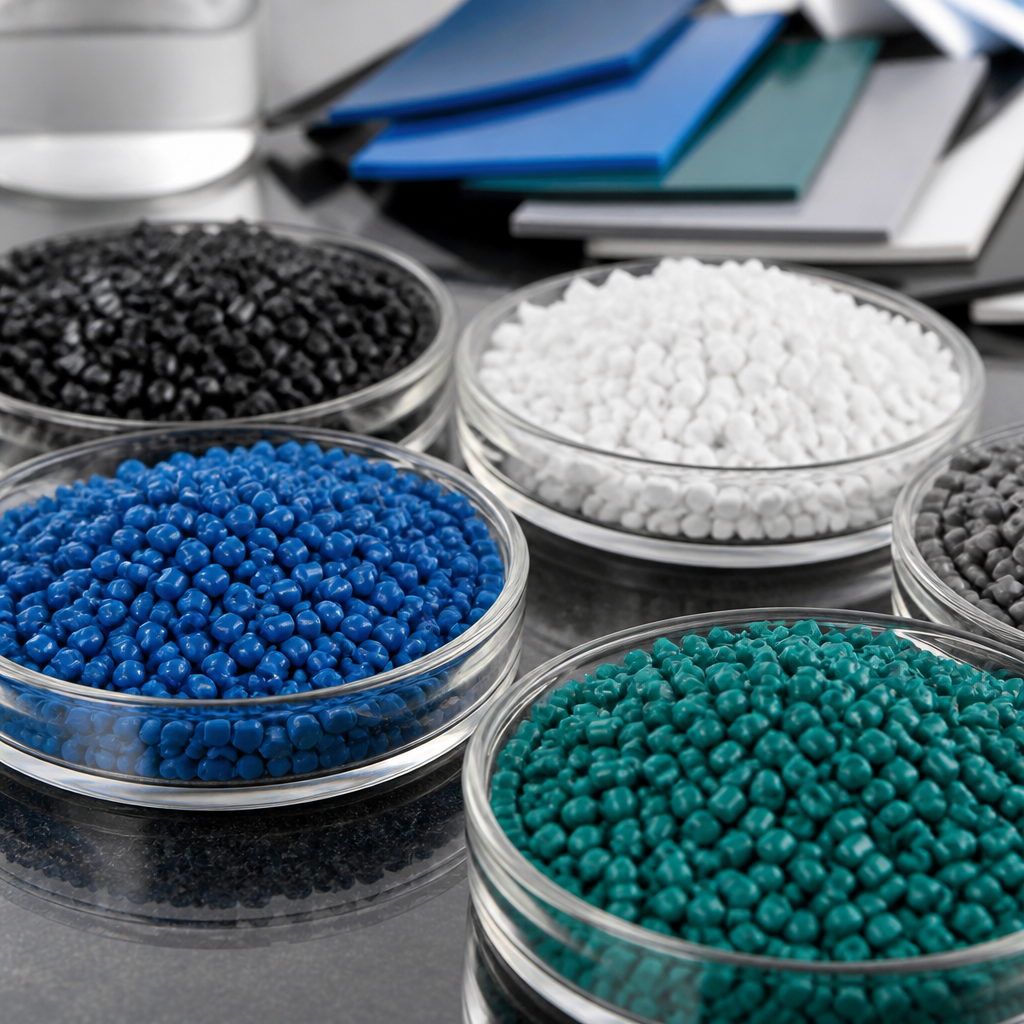
Polymer additives determine whether a plastic part stays flexible in winter, survives ultraviolet exposure on a rooftop, resists impact during shipping, or processes cleanly at commercial scale. In materials engineering, physical properties describe how a polymer behaves under force, heat, light, moisture, electricity, and time without necessarily changing its chemical identity. These properties include stiffness, toughness, elongation, hardness, density, transparency, thermal stability, dimensional stability, conductivity, permeability, and surface behavior. Additives are the nonpolymeric ingredients blended into a base resin to tune those outcomes. Common classes include plasticizers, fillers, reinforcements, impact modifiers, stabilizers, flame retardants, lubricants, nucleating agents, pigments, antistatic agents, and processing aids. I have worked with compounders selecting these packages, and the same base polymer can behave like two different materials depending on additive choice, loading level, dispersion quality, and service environment. That is why this topic matters across packaging, automotive, building products, electronics, medical components, and consumer goods. Designers rarely choose a polymer grade based on resin alone; they choose a formulated system. Understanding how additives influence polymer physical properties helps engineers predict performance, troubleshoot failures, reduce cost, and align formulation with standards such as ASTM, ISO, UL, and FDA requirements where relevant. This article serves as a hub for physical properties, connecting the most important mechanisms and tradeoffs that govern real-world polymer behavior.
Mechanical Properties: Stiffness, Strength, Toughness, and Creep
Additives can raise modulus, increase impact resistance, or improve long-term load bearing, but they almost always introduce tradeoffs. Fillers such as calcium carbonate and talc usually increase stiffness and hardness because rigid particles restrict polymer chain mobility. In polypropylene, talc-filled grades commonly deliver higher flexural modulus and better heat deflection than unfilled grades, which is why appliance housings and automotive interior trim often use them. The compromise is reduced elongation at break and lower notched impact if particle size, aspect ratio, or interfacial adhesion are poorly controlled. Glass fiber reinforcement pushes this effect much further. A 30% glass-filled nylon can more than double tensile modulus compared with neat resin and dramatically improve creep resistance, making it suitable for under-hood brackets and structural clips. Yet the same glass fibers can create anisotropy, warpage, and brittle failure if gate design and fiber orientation are ignored.
Impact modifiers work in the opposite direction. Core-shell acrylic modifiers in PVC and MBS modifiers in transparent styrenics absorb energy by initiating localized shear yielding or crazing, improving toughness without always sacrificing appearance. In nylon and polyester engineering plastics, elastomeric modifiers can prevent cold-temperature fracture, but excessive loading reduces stiffness and may depress heat resistance. Plasticizers soften rigid polymers by increasing free volume between chains. In PVC, phthalate-free plasticizers can transform a hard pipe formulation into a flexible cable jacket, lowering modulus and hardness while boosting elongation. However, plasticization can also increase creep under sustained stress and may affect long-term extraction resistance. When evaluating additives for mechanical performance, test data should include tensile properties, flexural modulus, Izod or Charpy impact, hardness, and creep at relevant temperatures and humidity. A formulation that looks strong in a short tensile test can still fail in service from slow deformation over months.
Thermal Behavior: Heat Resistance, Crystallinity, and Dimensional Stability
Thermal physical properties are especially sensitive to additives because heat changes chain mobility, crystallization behavior, and internal stress. Mineral fillers generally reduce the coefficient of thermal expansion, which improves dimensional stability in molded parts exposed to temperature swings. That matters in electronics housings, where mismatch between polymer expansion and metal inserts can lead to stress cracking or loosening. Reinforcements such as glass fiber also raise heat deflection temperature by limiting deformation under load. This is one reason glass-reinforced polyamide outperforms unfilled grades near engines, pumps, and lighting systems. Nucleating agents provide another route. In semicrystalline polymers like polypropylene and polyethylene terephthalate, nucleants accelerate crystallization and create a finer crystal structure. Faster crystallization shortens cycle time in molding and can increase stiffness, clarity, or dimensional consistency depending on the polymer and additive type.
Heat stabilizers and antioxidants protect physical properties during processing and service. Polyolefins are vulnerable to thermo-oxidative degradation, especially during extrusion and repeated regrind use. Hindered phenol primary antioxidants and phosphite secondary antioxidants interrupt radical-driven chain scission, preserving melt strength and impact performance. Without them, a polypropylene part may embrittle or discolor after multiple heat histories. In PVC, metal soap or organotin heat stabilizers prevent dehydrochlorination during processing, which otherwise causes discoloration and severe property loss. Flame retardants also influence thermal behavior, though not always positively. Halogen-free mineral flame retardants, such as aluminum trihydrate and magnesium hydroxide, can require high loading levels that increase density and stiffness while reducing toughness and flow. Reactive phosphorus systems in engineering resins may preserve mechanical balance better, but compatibility and hydrolysis resistance must be checked. Thermal property selection should therefore consider heat deflection temperature, Vicat softening, crystallization kinetics, thermal aging, and shrinkage, not simply whether a material survives a short exposure to high temperature.
Optical, Surface, and Barrier Properties
Additives strongly affect how a polymer looks and how its surface interacts with the environment. Transparency depends on controlling refractive index mismatch, particle size, and crystallinity. Large mineral fillers scatter visible light, so they turn clear polymers opaque. By contrast, sorbitol-based clarifiers in polypropylene reduce spherulite size below the wavelength of visible light, producing the clear food containers widely used in retail packaging. Pigments and color concentrates alter appearance, but they also influence heat buildup and weathering. Carbon black is a notable example: it provides deep black coloration and excellent ultraviolet screening, which is why polyethylene agricultural film, geomembranes, and outdoor conduit often use it. Titanium dioxide delivers whiteness and opacity and can improve UV durability when properly surface treated, though poor dispersion can create weak points and gloss defects.
Surface-active additives modify friction, printability, and contamination behavior. Slip agents such as erucamide bloom to the surface of polyolefin film, lowering coefficient of friction so packaging runs efficiently on high-speed equipment. Antiblock additives like silica create microscopic surface roughness that prevents adjacent film layers from sticking. Antistatic additives reduce dust attraction and improve handling in electronics packaging by dissipating charge, but many migrate over time and lose effectiveness in very dry conditions. Barrier properties also shift with additives. Platelet fillers, including nanoclays and mica, can create a tortuous path that slows gas permeation, useful in packaging that needs better oxygen resistance. On the other hand, some plasticizers raise free volume and increase permeability to gases and vapors. Surface energy matters for adhesion and coating performance as well. Internal lubricants may improve processing while making downstream painting or bonding harder. These interactions explain why appearance, feel, and package shelf life must be developed as a system rather than as isolated targets.
Weathering, Moisture, and Electrical Performance
Outdoor and electrically sensitive applications reveal how additives protect or reshape physical properties over time. Ultraviolet light breaks polymer chains and initiates oxidation, leading to chalking, color shift, gloss loss, and brittle fracture. Light stabilizer packages usually combine UV absorbers with hindered amine light stabilizers, known as HALS, to absorb harmful radiation and neutralize degradation pathways. In polypropylene outdoor furniture and automotive exterior trim, these packages can mean the difference between multi-year durability and rapid embrittlement. Carbon black remains one of the most effective UV stabilizers when black color is acceptable. Moisture introduces another dimension. Polyamides absorb water, which acts like a plasticizer, lowering stiffness and increasing ductility while changing dimensions. Fillers and glass fibers can reduce swelling, but they do not eliminate equilibrium moisture uptake. Formulators must therefore specify conditioning state when reporting physical properties, especially for nylon gears, connectors, and clips.
Electrical properties respond sharply to conductive, antistatic, and flame-retardant additives. Carbon black, carbon nanotubes, stainless fibers, and intrinsically conductive additives can lower surface resistivity enough for electrostatic discharge protection or electromagnetic shielding. The challenge is achieving percolation at practical loadings without ruining toughness, color, or processability. Conversely, high-purity mineral fillers may help maintain dielectric strength in insulating systems. Flame retardants can complicate this balance by increasing ionic content or moisture sensitivity, which may reduce tracking resistance. In wire and cable compounds, plasticizer choice also affects low-temperature flexibility and dielectric behavior. Because weathering and electrical performance evolve with exposure, accelerated aging methods such as ASTM G154 or xenon arc testing should be paired with retention of impact, tensile, color, and resistivity. A formulation that meets its initial specification but drifts outside property limits after six months outdoors is not a robust material solution.
Processing Effects, Dispersion Quality, and Formulation Tradeoffs
The influence of additives on physical properties depends not only on chemistry but also on how well the additive is incorporated. Dispersion quality is often the hidden variable behind inconsistent results. Agglomerated filler acts like a defect, reducing impact strength and creating stress concentration sites. Poorly distributed pigment causes streaking and local heat absorption. In glass-filled compounds, excessive screw shear can shorten fibers, lowering reinforcement efficiency even if nominal loading remains unchanged. Coupling agents, especially silanes and maleic-anhydride-grafted polyolefins, improve interfacial adhesion between polar fillers and nonpolar matrices, often increasing strength and reducing water sensitivity. Processing aids can improve melt flow and surface finish, but too much internal lubricant may reduce weld line strength or secondary adhesion. This is why compound development relies on both formulation and manufacturing discipline: drying conditions, residence time, screw design, venting, and pellet quality all affect final properties.
The table below summarizes common additive classes and the physical property directions they usually drive. These are patterns, not guarantees, because polymer type, additive grade, particle morphology, and processing history all matter.
| Additive class | Typical property gains | Typical tradeoffs | Common applications |
|---|---|---|---|
| Talc, calcium carbonate | Higher stiffness, hardness, dimensional stability, lower cost | Lower impact strength, reduced transparency, higher density | Packaging, appliances, automotive interiors |
| Glass fiber | Higher modulus, strength, creep resistance, heat performance | Warpage, anisotropy, tool wear, brittle failure risk | Structural parts, electrical housings, under-hood components |
| Plasticizers | Greater flexibility, elongation, low-temperature performance | Lower hardness, creep resistance, possible migration | Cable, flooring, flexible tubing |
| Impact modifiers | Higher toughness and low-temperature impact resistance | Lower stiffness and sometimes lower heat resistance | PVC profiles, nylon parts, ABS blends |
| UV stabilizers, antioxidants | Better property retention during processing and aging | Added cost, compatibility limits in some systems | Outdoor products, films, molded consumer goods |
When comparing additive options, start with the target property profile and failure mode rather than a generic recipe. If a polypropylene enclosure fails by warping in heat, talc and nucleation may solve more than an impact modifier. If a nylon latch snaps in winter, elastomer toughening may matter more than extra glass. If a clear package hazes, revisit nucleation, pigment dispersion, and contamination before changing the base resin. Experienced formulators also consider regulatory and sustainability constraints. Heavy-metal stabilizers, certain brominated flame retardants, and some legacy plasticizers have been phased out or restricted in many markets. Recycled content introduces additional complexity because residual additives, contamination, and molecular weight history alter response to fresh additive packages.
Testing Strategy and Property Mapping Across the Product Life Cycle
Reliable additive selection requires property mapping from pellet to finished part to end-of-life scenario. Laboratory screening should combine standardized tests with application-specific simulations. ASTM D638 tensile data, D790 flexural modulus, D256 Izod impact, D648 heat deflection, DSC crystallinity, DMA temperature response, haze, gloss, density, and melt flow index provide a starting framework. But in practice, I have seen materials pass datasheet thresholds and still fail because gate orientation, wall thickness, humidity conditioning, and assembly loads were not represented. For that reason, good programs include molded-part testing, environmental conditioning, accelerated weathering, chemical exposure, and dimensional measurement after thermal cycling. Statistical tools such as design of experiments help quantify which additive variables actually drive performance and where interactions occur, for example between stabilizer package and pigment, or between filler level and impact modifier.
As a hub within physical properties, this topic connects directly to deeper work on mechanical testing, thermal analysis, optical performance, barrier behavior, electrical properties, weathering, rheology, shrinkage, and failure analysis. The core principle is consistent: additives change polymer physical properties by altering chain mobility, phase morphology, interfacial adhesion, energy dissipation, crystallization, and degradation resistance. Those mechanisms are measurable, predictable, and manageable when formulation is tied to service conditions. Use this framework to review every material choice in your product portfolio, compare datasheets critically, and validate properties in the shape and environment that matter. The benefit is better performance with fewer surprises, whether you are selecting a flexible packaging film, an exterior automotive trim, a load-bearing engineering part, or a medical device component. Start by identifying the one property that most limits your current polymer application, then trace which additive class can improve it without creating a more serious compromise elsewhere.
Frequently Asked Questions
1. How do additives change the physical properties of a polymer without completely changing the base material?
Additives work by modifying how a polymer behaves in service and during processing, while the polymer itself remains the primary structural ingredient. In practical terms, that means a resin can keep its basic chemical identity yet perform very differently once specific additives are introduced. A plasticizer, for example, can increase chain mobility, making a material softer, more flexible, and less brittle at low temperatures. An impact modifier can help a rigid polymer absorb and dissipate energy instead of cracking when dropped or struck. A UV stabilizer can slow surface degradation caused by sunlight, helping the part retain color, toughness, and dimensional stability over time.
This is why additives are so important in materials engineering. Physical properties such as stiffness, toughness, hardness, elongation, transparency, density, thermal stability, electrical behavior, and moisture response are not determined by the base polymer alone. They are influenced by the total formulation. Even small additive concentrations can affect how polymer chains move, how crystals form, how stress is distributed, or how heat and light are managed inside the material. In other words, additives fine-tune performance. They allow manufacturers to tailor one polymer for very different end uses, such as flexible cable insulation, rigid packaging, weatherable exterior panels, or impact-resistant housings.
The key point is that additives do not all act in the same way. Some operate at the molecular level by increasing free volume or reducing intermolecular attraction. Others act more like microscopic reinforcements, lubricants, shields, or scavengers. Because of this, selecting additives is never just a matter of “more is better.” The type, loading level, compatibility with the resin, and interaction with other ingredients all determine the final balance of properties.
2. Which additives have the biggest effect on flexibility, stiffness, and impact resistance?
The additives with the strongest influence on mechanical feel and structural response are typically plasticizers, fillers, reinforcements, and impact modifiers. Plasticizers are widely used when a polymer needs to remain flexible, especially in cold conditions. They reduce the glass transition-related rigidity of the material and allow polymer chains to move more freely, which increases softness and elongation while reducing hardness and stiffness. This is especially useful in films, tubing, wire coatings, seals, and flexible consumer products.
On the other end of the spectrum, mineral fillers and reinforcing agents often increase stiffness and hardness. Fillers such as calcium carbonate, talc, or glass fibers can make a polymer more dimensionally stable and resistant to deformation under load. Glass fiber reinforcement, in particular, can dramatically raise modulus and improve strength, but it may also reduce elongation and make the material more brittle if the formulation is not balanced correctly. That tradeoff matters in structural parts, where rigidity is important but sudden fracture is unacceptable.
Impact modifiers are used when toughness is the priority. These additives help a polymer absorb energy from shock, drops, or repeated mechanical stress. In rigid plastics that might otherwise crack during shipping or assembly, an impact modifier can significantly improve durability. However, that improvement can sometimes come with changes in surface finish, transparency, or stiffness. As a result, formulators usually optimize several properties at once rather than targeting only one. A packaging material may need enough stiffness to hold shape, enough toughness to survive transport, and enough flexibility to avoid splitting at low temperatures. Additive selection is what makes that balance possible.
3. How do stabilizers help polymers resist heat, sunlight, oxygen, and long-term aging?
Stabilizers are essential when a polymer must maintain its physical properties over time in demanding environments. Heat, ultraviolet light, oxygen, and environmental exposure can all break down polymer structures gradually, even if the part looks fine at first. As degradation progresses, the material may become discolored, chalky, brittle, warped, or weaker under stress. Stabilizers are designed to interrupt or slow those damage pathways before they significantly affect performance.
Thermal stabilizers are used to protect polymers during high-temperature processing and in applications where the finished part will see elevated service temperatures. Without them, some resins can degrade in the extruder, molding machine, or end-use environment, leading to loss of strength, embrittlement, or dimensional instability. UV stabilizers and light absorbers are especially important for products exposed to sunlight, such as roofing materials, outdoor furniture, agricultural films, automotive trim, and building components. They help reduce photodegradation that can otherwise attack the surface and eventually compromise appearance and mechanical integrity.
Antioxidants also play a major role in long-term property retention. They help prevent oxidative chain scission and other reactions that reduce toughness and elongation over time. In many formulations, multiple stabilizers are used together because real-world aging is rarely caused by one factor alone. A rooftop plastic component, for example, may experience sunlight, oxygen, moisture, and heat cycling all at once. The right stabilization package helps the polymer retain flexibility, impact resistance, color, and structural reliability for a much longer service life.
4. Can additives affect properties like transparency, density, dimensional stability, and electrical performance?
Yes, and often quite significantly. Additives do far more than alter strength or flexibility. They can also change how a polymer looks, how much it weighs, how accurately it holds shape, and how it behaves around electrical fields or current. For transparency, the choice of additive is critical. Some additives disperse cleanly and preserve clarity, while others introduce haze, light scattering, or visible particles. This matters in applications such as packaging, lenses, display covers, and medical components where visual appearance is part of the performance requirement.
Density can also shift depending on the additive package. Heavy mineral fillers generally increase density, which may be desirable for cost control or feel in some products, but undesirable in lightweight applications. Foaming agents can have the opposite effect by reducing density and creating a lower-weight structure. Dimensional stability is another area strongly influenced by additives. Fillers and reinforcements can reduce shrinkage and warpage, helping molded parts maintain tighter tolerances. This is especially valuable in precision components, housings, and assemblies where fit and flatness matter.
Electrical properties are equally formulation-sensitive. Some additives help maintain insulation performance, while others can intentionally increase conductivity or static dissipation. In electronics, cable systems, and industrial equipment, even a small formulation change can influence dielectric behavior, surface resistance, or long-term reliability under humidity and heat. Because of these interactions, additive selection must always be tied to the application. A formulation optimized for transparency may not be ideal for dimensional control, and one optimized for electrical insulation may require different stabilizers than a weather-exposed product. Good polymer design is about managing those tradeoffs intelligently.
5. What should engineers and manufacturers consider when choosing additives for a polymer formulation?
The most important consideration is that additives should be selected based on the actual service conditions and performance priorities of the part, not just on a single target property. A material that performs well in a lab tensile test may still fail in the field if it sees UV exposure, freeze-thaw cycling, humidity, repeated impact, or elevated processing temperatures. Engineers therefore need to consider the full operating environment: mechanical loads, temperature range, outdoor exposure, expected lifetime, regulatory requirements, manufacturing method, appearance standards, and cost constraints.
Compatibility is another major factor. An additive must work well with the base polymer and with the rest of the formulation. Poor compatibility can lead to blooming, phase separation, loss of clarity, surface defects, inconsistent mechanical performance, or reduced long-term stability. Processing behavior also matters. Some additives improve flow, mold release, and throughput, while others may require tighter control of temperature, shear, or drying conditions. A formulation that looks excellent on paper still has to run efficiently at commercial scale.
Finally, additive choice should always be validated through testing rather than assumed from generic data. Real formulations behave differently depending on additive concentration, particle size, dispersion quality, and interactions among ingredients. Engineers typically evaluate not only immediate properties such as stiffness, hardness, and impact strength, but also aging resistance, dimensional change, thermal performance, and property retention after exposure to moisture, heat, or light. The goal is not simply to improve one number on a datasheet. It is to create a balanced material system that stays functional, manufacturable, and reliable throughout the product’s intended life.