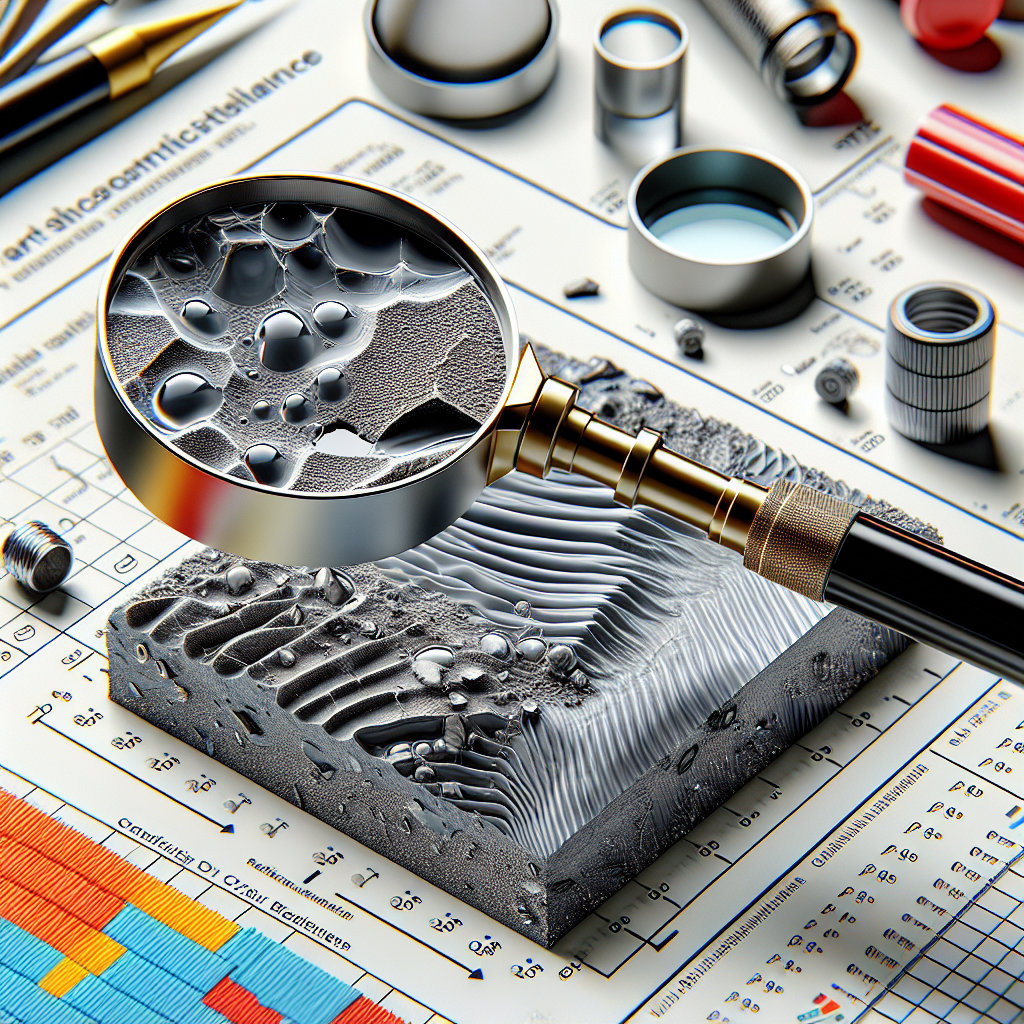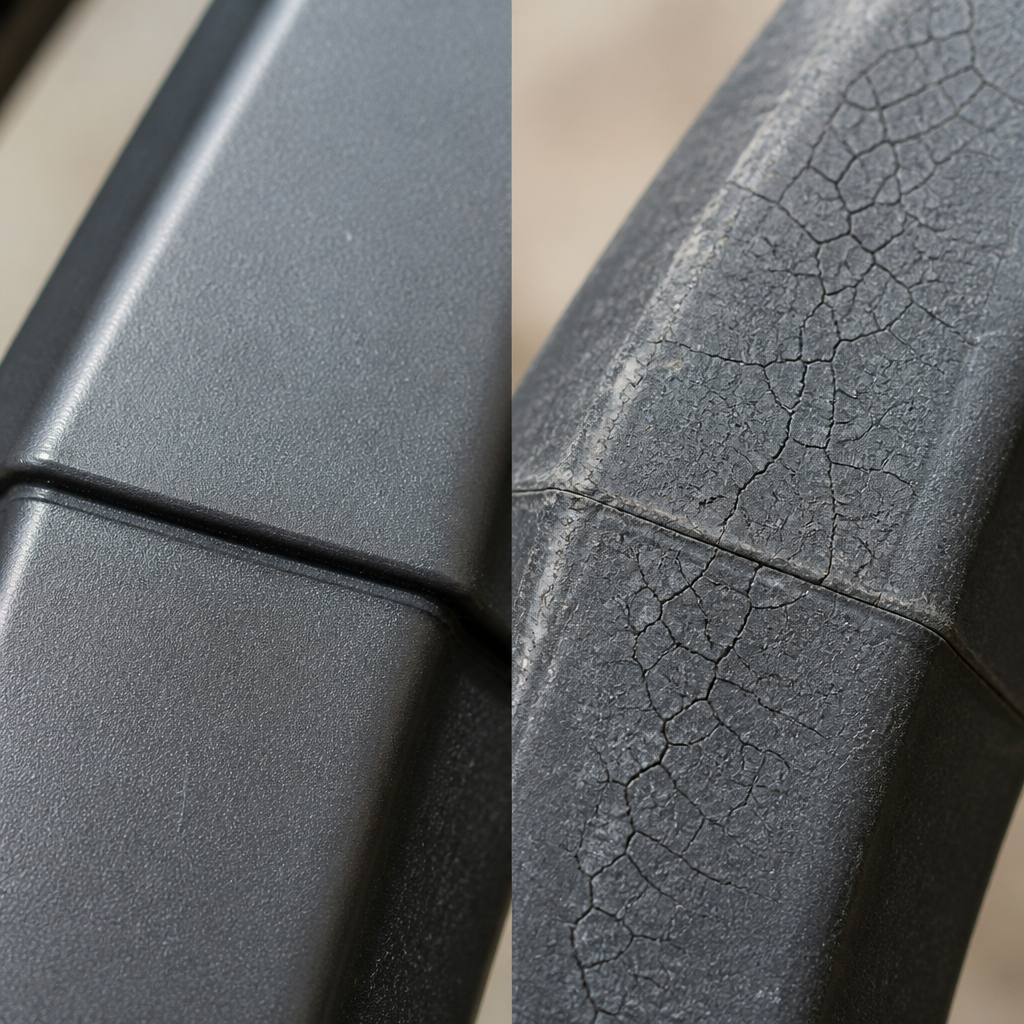
Physical aging in polymers is a time dependent change in structure and properties that occurs when an amorphous or partially amorphous material is held below its glass transition temperature. In practical terms, the polymer chains slowly move toward a lower energy packing state, even though the part looks unchanged to the eye. I have seen this repeatedly in films, seals, housings, and pressure sensitive components: a part that passed incoming inspection can stiffen, shrink slightly, or lose impact tolerance after weeks or months in service without any visible chemical damage. That quiet evolution is why physical aging matters.
For a hub page on physical properties, physical aging is a useful anchor because it connects mechanical behavior, thermal response, barrier performance, dimensional stability, optical clarity, and long term reliability. It is not the same as chemical degradation. No bonds need to break, oxygen does not have to attack the backbone, and ultraviolet light is not required. Instead, the driving force is thermodynamic relaxation. The polymer was frozen in a nonequilibrium state during cooling from the melt or from solvent evaporation. Over time, free volume decreases, enthalpy relaxes, and the material becomes denser and less mobile. Those changes alter how the material performs under load, during sterilization, during shelf storage, and during outdoor exposure cycles.
Understanding physical aging is essential when selecting materials and setting realistic specifications. Designers often focus on published data sheet values such as tensile strength, modulus, heat deflection temperature, hardness, and water absorption. Those numbers are valuable, but many are measured under tightly controlled conditioning histories. In the field, conditioning history is the property. A medical tray, an aerospace adhesive film, or a consumer electronics housing may all begin with acceptable stiffness and creep resistance, then drift as the amorphous fraction relaxes. The result can be warpage, brittle response, seal force loss, or a mismatch between qualification testing and actual service behavior. Any serious discussion of physical properties must therefore include time, temperature, and prior thermal history.
What physical aging is and how it differs from other polymer changes
Physical aging occurs mainly in glassy polymers such as polystyrene, polycarbonate, polysulfone, polyetherimide, PMMA, and many epoxy networks, although semicrystalline materials can also show aging in their amorphous regions. The key condition is service below the glass transition temperature, commonly abbreviated Tg. Above Tg, chain segments have enough mobility to stay near equilibrium. Below Tg, mobility drops sharply and the nonequilibrium glass slowly relaxes. Classic manifestations include increased elastic modulus, increased yield stress in some systems, reduced elongation at break, lower impact resistance, lower creep rate over some time scales, and slight density increase. Differential scanning calorimetry often reveals enthalpy recovery as an endothermic overshoot near Tg during reheating.
This process is distinct from oxidation, hydrolysis, chain scission, crosslinking, plasticization, and solvent stress cracking, though those can occur at the same time. In a troubleshooting lab, separating them matters. If a polycarbonate part becomes brittle after aging at room temperature in dry storage, the first suspect should not automatically be chemical attack. I have evaluated retained samples where FTIR showed no meaningful oxidation, molecular weight stayed stable, and yet Izod impact dropped substantially. The explanation was physical aging accelerated by a quench history during molding followed by long storage below Tg. By contrast, a nylon component that absorbs moisture may soften because water acts as a plasticizer, temporarily offsetting some aging effects. Physical properties only make sense when viewed as an interaction between structure, environment, and history.
How molecular structure and processing history control aging rate
The rate and magnitude of physical aging depend on how far the polymer is from equilibrium and how easily segments can rearrange. Temperature relative to Tg is the central variable. Aging is often most noticeable at temperatures moderately below Tg, where enough mobility exists for relaxation to proceed on practical time scales. Far below Tg, the process continues but may be very slow. Free volume theory helps explain this behavior. Rapid cooling traps excess free volume, so quenched parts generally age more strongly than annealed parts. Orientation from drawing or thermoforming, residual stress from injection molding, and solvent removal history in coatings or membranes can all set the starting point for later drift.
Chemical structure matters as well. Rigid backbones and bulky side groups raise Tg and can produce highly glassy behavior, but they do not eliminate aging. In fact, many high performance amorphous polymers are especially sensitive because applications demand tight tolerances over long service lives. Crosslinked thermosets also age physically, although network architecture changes the relaxation spectrum. Additives complicate the picture. Plasticizers increase chain mobility and can reduce stiffness initially, but if they migrate out over time the material may seem to age dramatically. Fillers such as glass fiber can reduce bulk creep and shrinkage, yet the matrix between fibers still relaxes, affecting interfacial stress and microcrack risk. Processing choices therefore become property choices, not merely manufacturing details.
Which physical properties change and why designers notice them
Mechanical properties are usually the first place engineers detect physical aging. Modulus rises because tighter packing limits segmental motion. Yield behavior may become sharper, while ductility and impact strength decline because the aged glass has less ability to dissipate energy through local rearrangement. In pressure sensitive applications, stress relaxation behavior changes, altering clamp force or seal integrity. In thin films and membranes, shrinkage and curl can appear as residual orientation relaxes unevenly. Dimensional changes are often small in absolute terms, but in optical assemblies, multilayer electronics, and precision medical devices, small changes are enough to trigger field failures.
Thermal and transport properties also evolve. Aged polymers can show lower heat capacity near Tg due to enthalpy relaxation. Gas permeability may decline as free volume decreases, which can be beneficial for barrier packaging but problematic if performance was qualified immediately after manufacture and then drifted during storage. Optical behavior can change indirectly through stress development or microvoid suppression. Electrical properties may shift slightly as density and mobility change, especially in insulating films used in capacitors or flexible circuits. The practical lesson is simple: physical properties are linked. A change measured in one test often signals broader movement across the property profile, which is why this topic serves as a central hub within materials and properties.
| Property area | Typical aging trend below Tg | Why it changes | Common example |
|---|---|---|---|
| Modulus | Increases | Reduced segmental mobility and free volume | Stiffer polycarbonate housing after warehouse storage |
| Impact resistance | Decreases | Less energy dissipation in the glassy state | PMMA cover becomes more notch sensitive |
| Dimensions | Slight shrinkage or warpage | Density increases and residual stress relaxes | Thermoformed tray loses flatness |
| Creep response | Often decreases initially | Higher resistance to molecular rearrangement | Adhesive backing shows less short term sag |
| Barrier performance | Permeability often decreases | Lower free volume limits diffusion pathways | Packaging film transmits less oxygen over time |
How engineers measure physical aging in the lab and in production
No single test captures physical aging completely, so robust evaluation combines thermal analysis, mechanical testing, and controlled conditioning. Differential scanning calorimetry is a standard starting point because enthalpy recovery near Tg is a direct fingerprint of prior aging. Dynamic mechanical analysis shows shifts in storage modulus and damping, and it is especially useful for mapping relaxation behavior across temperature. Tensile, flexural, compression, creep, and impact tests reveal application level consequences. For barrier materials, oxygen transmission rate and water vapor transmission rate can be tracked over storage time. Density gradient columns, dilatometry, and precise dimensional metrology can detect subtle volume relaxation.
Good test design matters more than many teams realize. I generally insist on recording molding conditions, cooling rate, post cure schedule, humidity, sample thickness, and the exact aging temperature history before comparing data. Standards such as ASTM D638 for tensile properties, ASTM D256 for impact, ASTM E1356 for DSC, and ISO 11357 for thermal analysis provide useful frameworks, but they do not substitute for a conditioning plan aligned to service reality. Time aging superposition and Struik style protocols are often used in research and advanced development to separate short term viscoelastic response from the evolving state of the glass. In production, even a simpler approach works well: retain baseline parts, age matched samples under controlled conditions, and trend the properties that matter most to fit for use.
Industry examples where physical aging drives success or failure
In medical packaging, amorphous trays and lids may be sterilized, stored, shipped, and opened months later. If physical aging raises stiffness and lowers toughness too far, peel behavior changes and corner cracking can occur. In aerospace interiors, transparent polycarbonate and polysulfone parts are valued for toughness and flame performance, yet long dwell times below Tg can alter impact margins, especially around notches and fasteners. Electronics manufacturers face a different version of the problem: adhesive films, encapsulants, and display layers may gradually shrink or develop residual stress that affects registration, lamination quality, or optical uniformity.
Pressure pipe, membranes, and structural adhesives provide other instructive cases. Glassy membrane materials can become more selective but less permeable as free volume relaxes, which is excellent only if the process was designed around the aged state. Structural adhesive joints based on glassy thermosets may show higher modulus but lower strain tolerance after storage, changing fatigue behavior under thermal cycling. Consumer products are full of quieter examples: a snap fit that becomes harder to assemble after inventory aging, a visor that turns more brittle in winter service, or a clear cosmetic package that warps after thermoforming and warehouse dwell. These are not edge cases. They are routine consequences of physical aging acting on real manufacturing history.
How to manage physical aging through material selection, design, and processing
The best strategy is to decide early which physical properties must remain stable and over what time and temperature window. If the application sits well below Tg for years, choose materials with a proven record under those conditions and request data after realistic conditioning, not only at twenty four hours after molding. Annealing can reduce the later drift by allowing some relaxation before the part enters service. Processing changes that reduce quench severity, residual orientation, and thickness gradients often improve stability. In some cases, moving to a semicrystalline polymer shifts the property balance in a favorable direction, though that introduces its own issues such as crystallization shrinkage and anisotropy.
Design details also help. Reduce notch sensitivity, avoid sharp corners in aged glassy polymers, and account for clamp load or seal force changes over storage. Qualify assembled products, not just resin plaques, because interfaces amplify the effect of modest property shifts. When additives are involved, verify whether moisture, plasticizer movement, or solvent loss could mask or magnify physical aging. Most important, write specifications around conditioned state. A smart physical properties program defines acceptance after representative aging, links those results to manufacturing controls, and updates validation when tooling or cycle time changes. If you are building a materials and properties knowledge base, use this page as the hub: physical aging ties together modulus, toughness, creep, thermal transitions, barrier behavior, dimensional stability, and long term performance in a single, testable framework.
Physical aging explains why polymer performance can change even when chemistry appears unchanged. Below Tg, glassy materials continue relaxing toward equilibrium, and that relaxation reshapes physical properties that designers care about most: stiffness, toughness, creep, dimensions, permeability, and reliability. The effect is common, measurable, and manageable. It becomes problematic mainly when teams rely on unconditioned data, ignore thermal history, or qualify a resin instead of the finished part. When physical aging is built into material selection and validation, surprises drop sharply.
The central benefit of understanding this topic is better prediction. Engineers can choose more stable polymers, processors can tune cooling and annealing, and quality teams can test properties at the right point in the product life cycle. For readers exploring the wider physical properties landscape, this hub should lead naturally into deeper pages on glass transition, creep, impact behavior, dimensional stability, barrier properties, and thermal analysis methods. Review your current polymer specifications, check whether aging history is defined, and update one test plan this week to reflect real service conditions.
Frequently Asked Questions
What is physical aging in polymers, and why does it matter in real-world applications?
Physical aging in polymers is a gradual, time-dependent change that occurs when an amorphous or partially amorphous polymer is stored or used below its glass transition temperature, often called Tg. In that condition, the material is technically solid, but the polymer chains still have limited mobility and continue to rearrange very slowly toward a denser, lower-energy packing state. The part may look exactly the same from the outside, yet its internal structure is evolving over time. That subtle structural relaxation is what drives changes in measurable properties.
In practical terms, physical aging matters because it can alter performance long after manufacturing and initial inspection are complete. A polymer film may become stiffer and less extensible, a seal may lose compliance, a housing may shrink slightly or develop internal stress, and a pressure-sensitive component may lose the balance of softness and recovery that it originally had. These changes can affect dimensional stability, sealing force, impact resistance, creep behavior, optical performance, and long-term reliability. This is especially important in products with tight tolerances or load-bearing functions, where even small shifts in modulus, toughness, or strain response can lead to unexpected field issues.
What makes physical aging especially important is that it is not usually caused by visible damage, chemical attack, or obvious misuse. It can happen during normal storage, shipping, warehousing, or service life. A component may pass incoming inspection and still behave differently weeks or months later because its molecular arrangement continued to relax. That is why engineers, converters, and product designers pay close attention to physical aging when selecting materials, setting shelf-life expectations, and defining qualification test protocols.
How does physical aging change the properties of a polymer over time?
As a polymer physically ages, its free volume decreases and the molecular segments pack more efficiently. That denser packing tends to increase stiffness, yield stress, and hardness, while reducing ductility, impact resistance, and stress relaxation capability. In simple terms, the material often becomes less forgiving. It may resist small deformations more strongly, but it can also become more prone to brittle behavior under larger or faster loads. This is why a polymer part that initially feels compliant can later feel noticeably firmer, even though no chemical degradation has occurred.
Dimensional and viscoelastic properties are also affected. Slight shrinkage can occur as the structure densifies, which may be enough to matter in precision films, thin-wall housings, laminated constructions, or seal geometries. In adhesives and pressure-sensitive systems, aging can shift tack, peel, and energy dissipation behavior because the balance between chain mobility and elastic recovery changes with time. In sealing applications, a gasket or O-ring may lose some of the softness needed to conform well to mating surfaces. In impact-sensitive applications, a reduction in toughness can be more critical than the increase in stiffness, because the part may crack more easily under sudden loading.
The rate and severity of these changes depend on several factors, including the polymer chemistry, how far below Tg the material is held, prior thermal history, orientation from processing, part thickness, and the time scale being considered. Highly amorphous materials often show the effect most clearly, but partially amorphous systems can be affected in their amorphous regions as well. Because these property shifts can be gradual and nonlinear, they are easy to miss unless testing is repeated over realistic storage or service intervals.
What factors accelerate or influence physical aging in polymers?
The most important factor is temperature relative to the polymer’s glass transition temperature. Physical aging occurs when the polymer is below Tg, but not so far below it that molecular rearrangements become essentially frozen. In many cases, aging proceeds most noticeably when the service or storage temperature is somewhat below Tg, where there is still enough segmental mobility for the structure to relax over time. If a material is repeatedly exposed to temperatures near Tg, the rate of structural change can increase significantly. Time, of course, is the other essential variable: the longer a polymer spends in that below-Tg condition, the more opportunity it has to densify and evolve.
Processing history has a major influence as well. Rapid cooling, thermoforming, stretching, orientation, annealing, and molding conditions all affect how much excess free volume or internal nonequilibrium structure is present at the start. A part that is quenched quickly may begin life farther from equilibrium and therefore show more pronounced aging later. Residual stress, thickness variation, and constrained geometries can also shape how physical aging appears in a finished component. Even two parts made from the same resin can age differently if they were processed under different thermal or mechanical conditions.
Additives and formulation details can modify the behavior too. Plasticizers, fillers, impact modifiers, and blends may alter the mobility of the amorphous phase and change how quickly properties drift. Moisture can complicate the picture in some polymers by acting as a temporary plasticizer, masking or counteracting stiffness increases until environmental conditions change. In applications where the material sees fluctuating temperatures, periodic stress, or cyclic humidity, the observed behavior may reflect the interaction of physical aging with other time-dependent processes. That is why material evaluation should always consider the actual service environment rather than relying only on short-term room-temperature test data.
How is physical aging different from chemical degradation or ordinary wear?
Physical aging is a structural relaxation process, not a chemical breakdown process. The polymer chains are not being cleaved, oxidized, hydrolyzed, or fundamentally changed in composition. Instead, they are slowly rearranging into a more thermodynamically stable packing state while remaining below the glass transition temperature. By contrast, chemical degradation involves reactions that alter molecular structure, such as oxidation from heat and oxygen exposure, hydrolysis from moisture, ultraviolet damage, or chain scission caused by harsh environments. Those mechanisms often produce irreversible chemical changes, discoloration, embrittlement, surface cracking, or major molecular weight loss.
Ordinary wear is different again, because it typically refers to mechanical damage from friction, abrasion, repeated contact, or fatigue loading. A worn polymer part may lose material, develop scratches, or fail from accumulated stress cycles. Physical aging does not require rubbing, impact, or chemical attack. It can occur in a part sitting quietly on a shelf. That is one reason it is so often overlooked: there may be no visible warning signs, yet the mechanical response of the material has still shifted in a meaningful way.
From a troubleshooting perspective, distinguishing among these mechanisms is important because the remedies are different. If the issue is physical aging, engineers may address it by choosing a different polymer, modifying the formulation, adjusting processing conditions, annealing strategically, or designing around property drift over time. If the issue is chemical degradation, the focus may need to shift to stabilizers, barrier protection, lower service temperature, or environmental resistance. If the issue is wear, geometry, lubrication, contact stress, and surface design become central. Correct diagnosis prevents expensive trial-and-error and leads to more reliable material selection.
How can engineers and manufacturers reduce the impact of physical aging on polymer performance?
The first step is to recognize physical aging as a design and qualification issue rather than a lab curiosity. Material selection should begin with the expected service temperature range relative to the polymer’s Tg. If a component will spend long periods below Tg and depends on stable compliance, toughness, or dimensional control, it may be wise to select a resin or formulation that is less sensitive to aging in that window. Engineers should also consider whether the part’s function relies on viscoelastic behavior, because these applications often reveal aging effects more strongly than simple static parts do.
Processing control is another effective lever. Cooling rate, molding temperature, orientation, post-process annealing, and residual stress management can all influence how far from equilibrium the polymer starts out. In some cases, a carefully chosen annealing step can reduce subsequent drift by allowing the structure to relax in a more controlled way before the part enters service. However, this must be balanced against possible dimensional changes or cycle-time impacts. For films, seals, and thin components, consistency in thermal history is especially important because even modest variations can create noticeable differences in long-term behavior.
Just as important is testing strategy. Short-term acceptance tests are rarely enough on their own. Good practice is to evaluate properties after representative aging intervals at realistic storage and use temperatures, and to measure the specific performance attributes that matter most, such as modulus, elongation, compression set, peel, impact strength, or dimensional stability. Shelf-life studies, accelerated aging programs, and periodic requalification can all be valuable when products have long storage periods or strict performance windows. The goal is not necessarily to eliminate physical aging entirely, because that is often unrealistic, but to understand it well enough that the final product still performs reliably throughout its intended life.