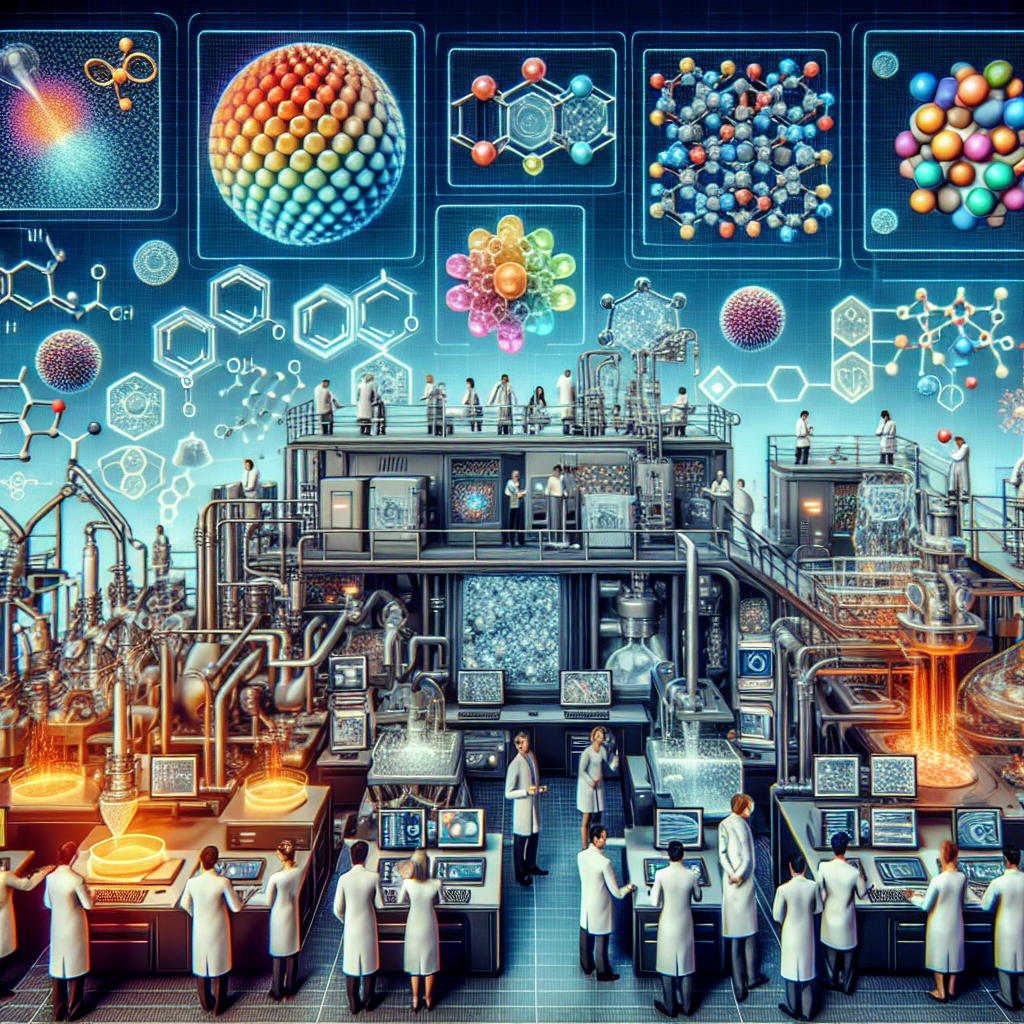
Introduction
Polymer blends represent an essential part of modern materials science. Advancements in this domain have unlocked numerous functional and high-performance materials with applications across various industries, including automotive, aerospace, electronics, and healthcare. By combining different polymers, these blends allow the tailoring of material properties to meet specific requirements, offering an ecosystem of advantages such as enhanced mechanical properties, cost-effectiveness, and processability. The evolution of high-performance polymer blends reflects significant scientific and technological progress, providing opportunities for innovation and sustainability. As the demand for advanced materials grows, the industry continues to explore and develop novel blending techniques, pushing the boundaries of what polymer blends can achieve. This article provides an extensive overview of the current advances in high-performance polymer blends, discussing their benefits, applications, recent technological trends, and future prospects.
The competence of polymer blends lies in their ability to combine the physical and chemical properties of individual components. Their popularity is attributed to their unique combination of mechanical, thermal, and barrier properties. By understanding the intricacies of polymer compatibilization and development, researchers and manufacturers can efficiently customize materials to fit intricate and dynamic market needs. This intricate personalization offers industries the potential to create products that stand out in performance and durability.
The growing means of developing high-performance polymer blends is becoming a transformative force across different sectors. Industry leaders attend to continuous shifts in consumer and regulatory expectations, leveraging these blends to meet requirements for resilience and sustainability. The focus on novel intelligent blends also underscores a strategic approach to addressing environmental concerns, such as recyclability and reduced carbon footprints. The interconnection between material science and environmental stewardship is evident, further elevating the significance of polymer blend advancements.
This intricate and ever-evolving field reveals continuous innovation driven by scientific curiosity and market demands. As chemistry sits at the heart of these advances, understanding the behavior and interaction of various polymers has presented a rewarding intellectual challenge, continuously yielding breakthroughs. Analysts and stakeholders within this domain remain highly optimistic about the trajectory of high-performance polymer blends, anticipating new functionalities and transformational applications that promise to revolutionize various markets and, in turn, improve quality of life worldwide.
Properties and Applications of High-Performance Polymer Blends
High-performance polymer blends are valued for their adaptability, as they provide a means to fine-tune material properties, combining polymers to exploit their complementary qualities. One of the most sought-after properties is mechanical strength, where blends can exhibit superior tensile strength, impact resistance, and flexibility than single-component polymers. These remarkable mechanical properties are pivotal for industries that require durable and resilient materials, such as automotive and construction.
Temperature resistance is another critical metric where polymer blends show significant promise. High-performance blends are engineered to maintain structural integrity across wide temperature ranges, crucial for applications in electronics and aerospace, where materials frequently endure extreme thermal conditions. Moreover, these blends possess favorable chemical resistance, making them suitable for environments exposed to harsh chemicals or solvents, offering stability and longevity.
Barrier properties, such as gas and moisture permeability, can also be enhanced with polymer blends. In the food and beverage packaging industry, this capability is crucial for preserving product freshness. Similarly, in medical applications, high-performance blends reduce the risk of contamination, ensuring safer coatings for medical devices.
Beyond functional properties, processability is a significant advantage offered by polymer blends. These materials can often be processed using standard manufacturing equipment such as extrusion and injection molding, leading to cost savings and expanded production options. Polymer blends can also contribute to lightweighting efforts crucial to the transportation industry, as they often allow for the substitution of heavier metal components, thus reducing the overall weight and contributing to energy efficiency.
The conductive property of certain polymer blends has paved the way for developments in electronics, revolutionizing areas like flexible electronics and wearables. By blending conductive fillers with polymers, one can achieve materials that maintain flexibility while exhibiting significant electrical conductivity. These materials are indispensable in developing innovative consumer electronics, sensors, and smart textiles.
Recent developments have also focused on sustainability and environmental compatibility. For example, biodegradable and bio-based polymer blends offer promising solutions for reducing plastic waste and reliance on petroleum-based materials. Incorporating renewable sources into blends not only supports eco-friendly practices but also meets increasing consumer demand for sustainable products.
Technological Advances in Compatibilization and Processing
The compatibilization of polymers in blends represents a fundamental aspect of creating high-performance materials. Compatibilizers are typically added to blends to enhance the compatibility between different polymers, ensuring a stable and uniform mixture. By employing strategic compatibilization techniques, such as the use of block copolymers or reactive compatibilizers, the interfacial adhesion between disparate polymers can be improved, thereby enhancing mechanical properties and phase stability.
Advancements in the field focus on identifying novel compatibilizers capable of acting at lower concentrations. This development can provide substantial cost savings while maintaining the desired blending attributes. Research into reactive compatibilizers has shown promise, as these molecules can facilitate chemical reactions between polymers, forming covalent bonds that secure the blend’s integrity even under stress.
Nanotechnology has also provided a significant boost to polymer blend development. Nano-fillers, such as nanosilica, carbon nanotubes, and graphene, are incorporated into polymer blends to improve properties such as strength, conductivity, and heat resistance. These nano-scale additions enable the precise tuning of material characteristics, unlocking new capabilities for high-performance applications.
Advances in processing techniques complement the development of high-performance polymer blends. For example, the refinement of twin-screw extrusion technology has enhanced the homogeneous mixing of polymers, offering greater control over blend morphology and property distribution. Furthermore, additive manufacturing, commonly known as 3D printing, has proven compatible with many polymer blends, bringing about possibilities for custom and complex geometries that were previously unattainable using traditional methods.
Processing innovations also include advancements in the recycling and reprocessing of polymer blends. These approaches address crucial environmental concerns associated with the disposal and longevity of polymer products. Employing closed-loop systems and upcycling techniques, industries are increasingly able to repurpose polymer blends and create valuable secondary materials, significantly reducing waste and enhancing sustainability.
The integration of machine learning and artificial intelligence (AI) has increasingly played a role in predicting and optimizing the properties of polymer blends. AI-driven models use extensive datasets to predict blend behavior under various conditions, configuring formulations that maximize desired properties while minimizing cost and environmental impact. These models are developed to anticipate phase behavior, mechanical characteristics, and thermal stability, offering a significant advantage in experimental design and development.
In summary, technological advances in compatibilization and processing are instrumental in creating polymer blends with unprecedented properties and applications. By aligning scientific insight with technological innovation, the industry can cultivate new opportunities and respond proactively to market demands and environmental challenges.
Environmental Impact and Sustainability Considerations
As the global focus shifts toward sustainable practices, the polymer blend industry faces increasing pressure to develop materials that are not only high-performing but also environmentally responsible. High-performance polymer blends have the potential to address several sustainability challenges by minimizing waste, reducing energy consumption, and enhancing recyclability.
The incorporation of bio-based polymers and biodegradable materials into blends plays a crucial role in reducing dependence on fossil fuels and tackling plastic pollution. These bio-derived polymers are obtained from renewable resources such as plant materials, offering a more sustainable alternative to conventional synthetic polymers. By designing blends that integrate these materials, industries can achieve a reduced carbon footprint and contribute to broader environmental goals.
Sustainability efforts also focus on optimizing the lifecycle of polymer blends. This involves designing for durability and longevity while maintaining the potential for recycling and reusability. Closed-loop recycling systems allow the recovery of polymer blends into their constituent components, which can be reused in the production of new materials. Life cycle assessments inform design decisions by evaluating the environmental impact of blends, from raw material extraction to end-of-life disposal.
The development of energy-efficient production processes is another significant aspect of promoting sustainability. Reducing energy consumption during the synthesis and processing of polymer blends contributes to the overall reduction of greenhouse gas emissions. Advances in equipment and process designs, such as low-temperature production techniques or solvent-free methodologies, play a role in achieving these efficiencies.
Furthermore, the growing acceptance of circular economy principles encourages the continuous circulation of materials within the economy. High-performance polymer blends, when designed for easy recyclability, can align with these principles by allowing materials to be returned to the production cycle after use. By fostering a circular approach, industries can minimize resource extraction and waste generation, achieving economic and environmental benefits.
Moreover, regulatory frameworks increasingly demand the reduction of hazardous chemicals in materials, impelling industry stakeholders toward innovation focused on safer alternatives. Regulatory compliance becomes a driving force behind the development of blends with minimal environmental and health risks. By employing non-toxic additives and ensuring compliance with safety standards, companies can enhance the marketability of their products and assure consumer confidence.
Conclusion
The landscape of high-performance polymer blends is marked by remarkable progress and potential, driven by advances in material science, innovation in blending and processing technologies, and a strong emphasis on sustainability. These materials are set to revolutionize industries with their diverse applications, offering unique solutions to mechanical, thermal, and environmental challenges. The focus remains on maximizing the performance properties of polymer blends while addressing the urgent need for sustainable practices.
As the industry moves forward, collaboration among material scientists, engineers, and industry stakeholders will be crucial in harnessing the full potential of high-performance polymer blends. Continuous research and innovation are imperative to develop more efficient, cost-effective, and environmentally friendly materials that align with global sustainability goals. Moreover, the integration of cutting-edge technologies such as AI and nanotechnology will further expand the horizons of what these blends can achieve.
In conclusion, high-performance polymer blends are an emblem of modern material science that continues to evolve and inspire. Their journey of advancement holds promise for a future where innovation intersects with sustainability, providing solutions that enhance everyday life while preserving the planet for future generations. As we embrace these transformative materials, the opportunity for progress and discovery remains boundless, opening doors to new possibilities across various industries and applications.
Frequently Asked Questions
1. What are high-performance polymer blends, and how do they differ from regular polymers?
High-performance polymer blends are materials created by combining two or more different polymers to achieve improved and specialized properties that are not present in individual polymers alone. Unlike regular polymers, which may have limitations in specific applications due to their inherent characteristics, these blends provide the flexibility to tailor mechanical, thermal, chemical, and physical properties to suit particular needs. This is achieved by leveraging the strengths of each component polymer while minimizing its weaknesses. For example, a blend could enhance tensile strength, toughness, or thermal stability, making it suitable for demanding environments like aerospace or automotive applications. These high-performance blends increase design versatility and functionality, enabling innovations across various industries.
2. What are the primary industries benefitting from advances in high-performance polymer blends?
The advancements in high-performance polymer blends are revolutionizing a wide array of industries. Notably, the automotive industry uses these materials to produce lighter, more fuel-efficient vehicles while maintaining or even enhancing safety and performance standards. In the aerospace sector, weight reduction is crucial for fuel efficiency, and these blends provide resilience and weight advantages. The electronics industry also benefits from such materials in the manufacture of components that require specific electrical, thermal, and mechanical properties. Furthermore, the healthcare sector uses these blends in medical devices and components, given their biocompatibility, durability, and ability to be sterilized without degradation. Each application benefits from tailored material properties that high-performance blends can provide.
3. How are high-performance polymer blends developed to meet specific application requirements?
The development of high-performance polymer blends is a highly specialized process tailored to meet specific application demands. It begins with rigorous evaluation and selection of polymer components based on the desired properties of the final product, e.g., thermal resistance, impact strength, flexibility, etc. Material scientists often utilize methodologies such as compatibilization, where additives are used to enhance the interaction and stability between different polymers, producing a more homogeneous mixture. Advanced processing techniques, like extrusion or injection molding, allow for precise control over the blending process, ensuring consistent and uniform material distribution. Moreover, computer modeling and simulation technologies can predict the behavior and performance of the blend before physical testing, aiding in faster and more efficient development cycles.
4. What are some challenges associated with creating high-performance polymer blends?
Despite their numerous benefits, creating high-performance polymer blends involves several challenges. One of the primary challenges is ensuring compatibility between different polymers, as polymers have varying chemical structures and properties. Incompatibility can lead to phase separation, resulting in weakened material properties. Additionally, achieving a stable and uniform blend often requires specialized processing technologies and conditions. The cost of some advanced polymers and necessary additives may be high, affecting the overall material cost. Finally, scaling production from laboratory to industrial scales while maintaining quality and performance consistency also presents challenges. Material scientists and engineers continuously work to overcome these obstacles through innovative research and development strategies.
5. Why are high-performance polymer blends considered cost-effective compared to other materials?
High-performance polymer blends are considered cost-effective because they can be designed to meet specific performance requirements that might otherwise necessitate the use of more expensive materials. By combining affordable base polymers with high-performance ones, manufacturers can achieve desired properties without incurring the high costs associated with using single, high-cost materials throughout. Additionally, the ability to tailor these blends minimizes the need for additional components or enhancements in final products, reducing material redundancy and waste. The manufacturing processes for these blends are often optimized, resulting in efficient production at scale, further driving down costs. Ultimately, their versatility and adaptability reduce the long-term development expenses and material trial-and-error often associated with custom materials.