
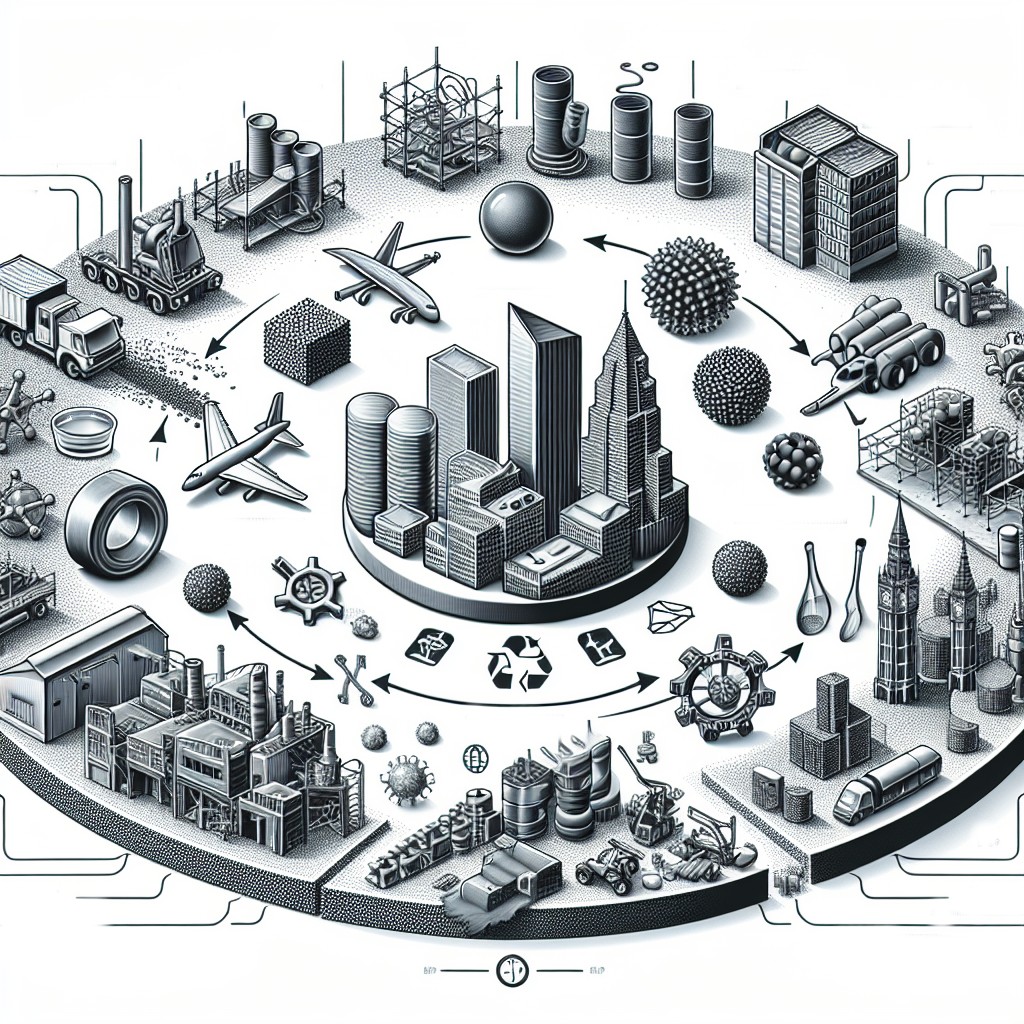
The polymer industry has experienced significant advancements over the past few decades. Innovations in polymer materials have not only enhanced their mechanical properties but have also expanded their applications across various industrial sectors. Polymers, known for their versatility and lightweight properties, are indispensable in fields like automotive, aerospace, electronics, and construction. However, their inherent brittleness has often been a limitation. To address this, scientists and engineers have developed toughened polymers that exhibit enhanced mechanical characteristics, such as improved toughness and impact resistance.
This article delves into the advancements in toughened polymers, focusing on their materials and mechanical properties. By understanding these advancements, industries can leverage the enhanced performance of toughened polymers for improved safety, durability, and efficiency. From automotive bumpers to protective coatings, the improved mechanical properties of toughened polymers have led to their widespread adoption in demanding environments. We’ll explore the materials used to toughen polymers, the processing techniques involved, and the resulting improvements in their mechanical performance.
Materials Used in Toughened Polymers
The quest to improve the mechanical properties of polymers has led to the development of various toughening agents. These materials are incorporated into the polymer matrix to enhance toughness and impact resistance. Among the most common toughening agents are rubber particles, core-shell particles, and block copolymers.
Rubber particles, for example, act as stress concentrators that absorb and dissipate impact energy, preventing crack propagation. Core-shell particles, comprising a rubbery core and a rigid shell, offer an optimal balance between toughness and stiffness. Block copolymers, on the other hand, consist of different polymer blocks that microphase separate, creating regions of toughness within the polymer matrix. Each toughening agent brings unique attributes to the polymer, enabling customized solutions for specific industrial applications.
Another significant material used in toughened polymers is nanomaterials. Incorporating nanoparticles such as nanoclays, carbon nanotubes, and graphene can significantly improve the mechanical properties of polymers. These nanomaterials create a reinforcing effect, enhancing the toughness and strength of the polymer matrix. The combination of traditional toughening agents and nanomaterials represents a forward-looking approach to achieving superior mechanical performance in toughened polymers.
Processing Techniques to Enhance Toughness
The methods used to process toughened polymers play a pivotal role in determining their final mechanical properties. One commonly used technique is melt blending, wherein the toughening agents are mixed with the polymer melt. This process ensures a homogeneous distribution of the agents, leading to improved toughness. Another technique is reactive processing, where chemical reactions occur during polymerization or crosslinking to achieve the desired toughening effect.
Furthermore, novel processing methods like electrospinning and 3D printing are being explored to fabricate toughened polymers with tailored properties. Electrospinning allows the creation of nanofibrous mats with high surface area and mechanical strength, while 3D printing allows precise control over the polymer’s microstructure. These advanced techniques open up new possibilities for designing toughened polymers that meet specific industrial requirements.
It’s also essential to optimize processing parameters such as temperature, pressure, and shear rate to achieve the desired toughening effect. Tailoring the processing conditions ensures that the toughening agents are effectively integrated into the polymer matrix, resulting in improved mechanical performance and long-term durability. By understanding the interplay between materials, processing techniques, and their mechanical properties, industries can achieve better performance from toughened polymers.

Mechanical Properties: Toughness and Beyond
Toughened polymers’ mechanical properties are critical for assessing their suitability in industrial applications. Toughness, one of the primary attributes, measures the polymer’s ability to absorb energy and resist fracture. Impact resistance, another vital property, gauges the material’s capacity to withstand sudden forces without breaking. These properties are closely related to the polymer’s microstructure, which is influenced by the type and distribution of toughening agents.
In addition to toughness and impact resistance, other mechanical properties such as tensile strength, flexural modulus, and elongation at break play crucial roles in determining the polymer’s overall performance. Tensile strength measures the polymer’s resistance to deformation under tension, while flexural modulus assesses its stiffness under bending. Elongation at break indicates the polymer’s ability to stretch before breaking, providing insights into its flexibility.
By optimizing the composition and distribution of toughening agents within the polymer matrix, engineers can achieve a balance of these mechanical properties, making toughened polymers suitable for various industrial applications. For instance, in automotive applications, toughened polymers with excellent impact resistance and tensile strength can enhance the safety and durability of vehicle components. In the construction industry, toughened polymers with high flexural modulus and elongation at break ensure long-lasting performance in demanding environments.
Applications in the Automotive and Aerospace Industries
Toughened polymers have revolutionized the automotive and aerospace industries, where lightweight materials with superior mechanical properties are crucial. In automotive manufacturing, these polymers are used in bumpers, dashboards, and interior trim components. Their ability to absorb impact energy and protect passengers in the event of a collision makes them indispensable in modern vehicle design. Additionally, toughened polymers contribute to weight reduction, improving fuel efficiency and reducing emissions.
In the aerospace sector, toughened polymers are employed in aircraft structures, including fuselage panels, wing components, and interior parts. The lightweight nature of these materials aids in reducing the overall weight of the aircraft, enhancing fuel efficiency and payload capacity. Furthermore, their excellent toughness and impact resistance ensure the structural integrity and safety of the aircraft under extreme conditions.
Advancements in toughened polymers have also enabled the development of high-performance composites, where these materials are combined with fibers such as carbon or glass to achieve superior mechanical properties. These composites find applications in critical aerospace components like landing gear and turbine blades, where strength, toughness, and weight savings are paramount. The integration of toughened polymers in these industries exemplifies their transformative impact on performance and sustainability.
Future Trends and Research Directions
The future of toughened polymers is promising, with ongoing research focused on further enhancing their mechanical properties and expanding their applications. One exciting area of research is the development of self-healing toughened polymers. These materials have the ability to repair small cracks and damages autonomously, extending the lifespan and reliability of polymer-based components. Self-healing polymers hold great potential in applications where maintenance and repair are challenging, such as remote or inaccessible locations.
Another notable trend is the use of bio-based and sustainable toughening agents. With growing environmental concerns, researchers are exploring natural fibers, biopolymers, and bio-nanocomposites as alternatives to conventional toughening agents. These bio-based materials not only reduce the environmental impact of toughened polymers but also offer unique properties such as biodegradability and renewable sourcing.
Advancements in computational modeling and simulation techniques are also shaping the future of toughened polymers. By leveraging these tools, researchers can predict the behavior of toughened polymers under various conditions, optimizing their composition and processing parameters for desired mechanical properties. This approach accelerates the development of new toughened polymer formulations and reduces the need for extensive experimental testing.
Challenges and Opportunities
While the progress in toughened polymers is remarkable, several challenges remain to be addressed. One significant challenge is achieving a uniform dispersion of toughening agents within the polymer matrix. Agglomeration of toughening agents can lead to inhomogeneous properties and reduced performance. Researchers are working on innovative methods to improve dispersion, such as surface functionalization and advanced mixing techniques.
Another challenge lies in balancing toughness with other mechanical properties. Enhancing toughness often comes at the expense of stiffness or strength. Striking the right balance requires a deep understanding of the interplay between different toughening agents, processing techniques, and the polymer matrix. Ongoing research aims to develop toughened polymers with holistic mechanical performance, catering to the diverse needs of industrial applications.
Furthermore, cost considerations can be a barrier to the widespread adoption of toughened polymers. High-performance toughening agents and advanced processing techniques may increase production costs. However, the long-term benefits, including improved durability, reduced maintenance, and enhanced performance, often outweigh the initial investment. Industries need to evaluate the cost-performance trade-offs and make informed decisions about incorporating toughened polymers into their products.
Conclusion
The polymer industry continues to evolve, driven by the demand for materials with superior mechanical properties. Toughened polymers represent a significant advancement in this journey, offering enhanced toughness, impact resistance, and durability. By leveraging a combination of innovative materials and processing techniques, industries can unlock new possibilities for lightweight, high-performance solutions in various applications.
The ongoing research and development efforts are poised to push the boundaries of toughened polymers even further. From self-healing materials to sustainable toughening agents, the future promises exciting advancements that will shape the landscape of the polymer industry. As toughened polymers continue to find applications in automotive, aerospace, electronics, and more, their transformative impact on performance, safety, and sustainability will be felt across industries.
In conclusion, the advancements in toughened polymers are a testament to the ingenuity and innovation within the polymer industry. By understanding the materials, processing techniques, and mechanical properties, industries can harness the full potential of toughened polymers to meet the ever-evolving demands of modern technology and sustainability.


