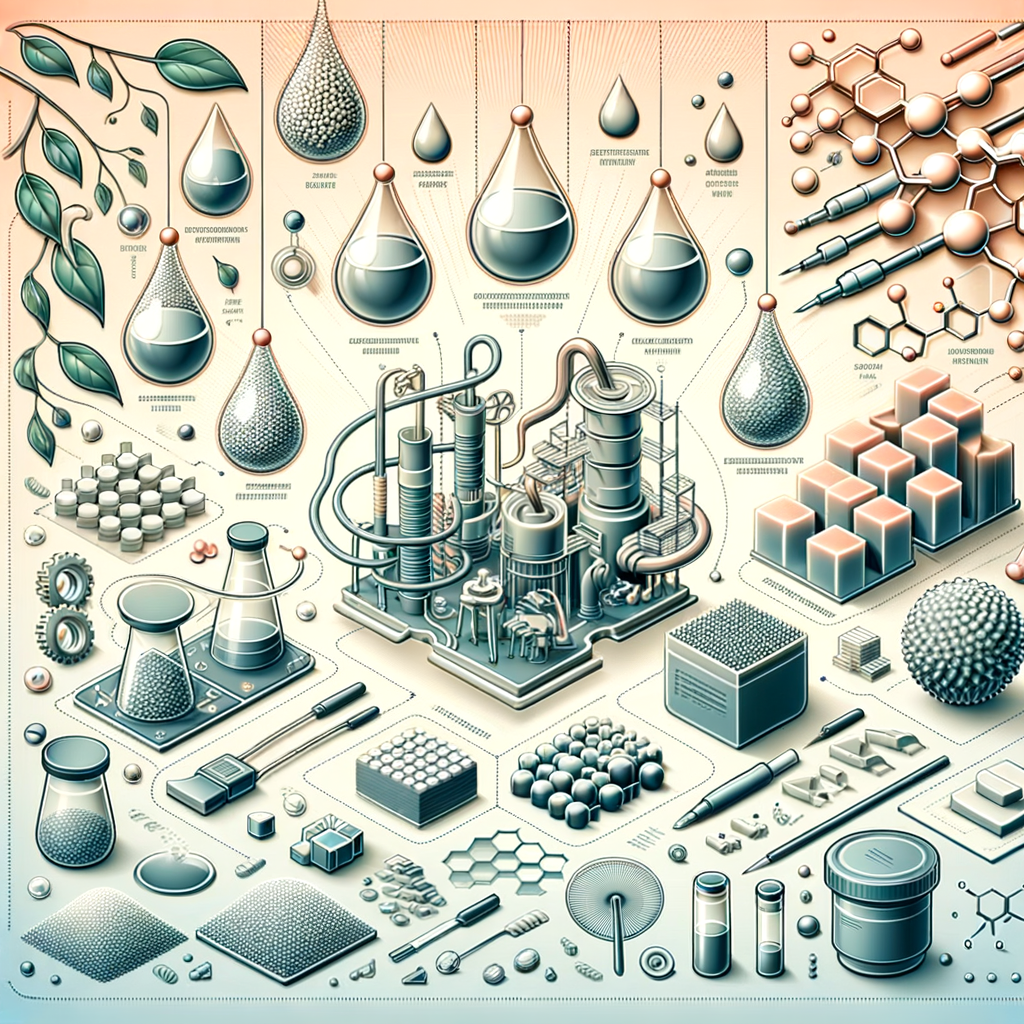
The world of polymers stretches far and wide, and today, we delve deep into thermosetting polymers, a specific branch that holds promising future trends. Thermosetting polymers, known for their durable and robust nature, find utilization in various industries, from aerospace to everyday household items. Understanding these polymers’ types and their evolving trends helps grasp their role in shaping technological advancements. This article ventures into the realm of thermosetting polymers and what the future holds in their research and application.
Introduction:
For decades, the polymer industry has significantly contributed to material science, providing versatile solutions for various applications. Among the diverse types of polymers, thermosetting polymers stand out due to their unique characteristics and capabilities. Once cured, these polymers do not soften upon heating, thanks to their cross-linked molecular structure. Their resilience to high temperatures and chemical resistance make them ideal for demanding environments, differentiating them from thermoplastics, which can be remelted and reshaped multiple times.
Examples of thermosetting polymers include epoxy resins, phenolic resins, and unsaturated polyester resins. These materials find uses in an array of applications such as coatings, adhesives, and composite materials. Their importance is ever-growing, driven by the need for high-performance materials in modern technology and industries. In recent times, the research and development in this field have been largely focused on improving the properties of thermosetting polymers, exploring new applications, and finding sustainable solutions. The future trends in thermosetting polymer research promise to revolutionize the industry further, leveraging advancements in nanotechnology, bio-based materials, and additive manufacturing.
Enhancing Mechanical and Thermal Properties
A critical aspect of ongoing research in thermosetting polymers is enhancing their mechanical and thermal properties. Traditionally, these polymers have been chosen for applications requiring strength and durability. However, the demand for even higher performance materials is driving research into innovative methods to improve these properties further.
One such method involves incorporating nanomaterials, such as carbon nanotubes and graphene, into thermosetting polymer matrices. These nanomaterials significantly enhance the mechanical strength, thermal stability, and electrical conductivity of the polymers. The integration of nanotechnology into thermosetting polymers opens avenues for applications in fields like aerospace, automotive, and electronics, where materials are subjected to extreme conditions.
Additionally, researchers are exploring new polymer blends and composites to achieve better performance. By combining different thermosetting polymers or incorporating reinforcing fibers, scientists can create materials with tailored properties suited for specific applications. These advancements make thermosetting polymers more versatile and capable of meeting the stringent requirements of modern technologies.
Sustainable and Bio-Based Thermosetting Polymers
As environmental concerns take center stage, the push towards sustainability is influencing every facet of material science, including thermosetting polymers. The future of thermosetting polymer research is geared towards finding sustainable alternatives that do not compromise performance.
Bio-based thermosetting polymers are emerging as a viable solution. These polymers are derived from renewable resources such as plant oils, lignin, and other bio-based feedstocks. They offer a sustainable alternative to traditional petrochemical-based thermosetting polymers, addressing the environmental impact associated with polymer production and disposal.
Research in this area focuses on developing bio-based epoxy resins, polyurethanes, and other thermosetting polymers with comparable or superior properties to their conventional counterparts. These advancements align with the global trend towards green chemistry and sustainable manufacturing practices, marking a significant step forward in the polymer industry’s evolution.

Advancements in Additive Manufacturing
Additive manufacturing, commonly known as 3D printing, is revolutionizing how materials are designed and utilized. In the context of thermosetting polymers, additive manufacturing offers exciting possibilities for creating complex and customized shapes with high precision.
Recent advancements in additive manufacturing technologies enable the printing of thermosetting polymers with intricate geometries and optimized material properties. These developments hold particular promise for industries like aerospace, healthcare, and electronics, where customized components with specific attributes are in high demand.
Researchers are working on improving the printability of thermosetting polymers, finding ways to control the curing process during printing, and enhancing the overall performance of printed parts. This integration of thermosetting polymers with additive manufacturing technologies is expected to expand the possibilities for innovative design and rapid prototyping in various sectors.
Smart and Functional Thermosetting Polymers
The future of thermosetting polymer research is also focusing on creating smart and functional materials capable of responding to external stimuli. These polymers can change their properties or behaviors in response to environmental changes such as temperature, light, or mechanical stress.
One area of interest is the development of self-healing thermosetting polymers. These materials can autonomously repair damage without external intervention, significantly extending the lifespan of polymer-based products and reducing maintenance costs. Self-healing mechanisms can be triggered by various stimuli, such as heat or light, making these polymers highly adaptable for different applications.
Moreover, researchers are exploring the creation of thermosetting polymers with embedded sensors and conductive pathways. These materials can monitor structural health, detect damage or stress, and transmit data in real-time. Such functional thermosetting polymers have the potential to revolutionize industries like aerospace, construction, and healthcare by providing advanced materials capable of intelligent performance.
Challenges and Future Directions
While the future of thermosetting polymer research looks promising, it is not without its challenges. The development of advanced thermosetting polymers often requires addressing issues such as cost, scalability, and processing complexities.
Scaling up the production of nanomaterial-enhanced thermosetting polymers and bio-based polymers to industrial levels remains a significant hurdle. Ensuring that the performance improvements observed in laboratory settings can be consistently achieved in large-scale production is crucial for commercialization.
Furthermore, the processing of thermosetting polymers, especially in additive manufacturing, requires careful control of curing kinetics and material behavior during printing. Researchers are continuously working on optimizing these processes to achieve reliable and high-quality printed parts.
Despite these challenges, the future directions for thermosetting polymer research hold immense potential. Collaborative efforts between academia, industry, and government agencies can drive innovation and overcome the barriers to progress. By focusing on sustainability, performance enhancement, and smart functionality, the polymer industry can pave the way for groundbreaking advancements that benefit various sectors.
Conclusion
The landscape of thermosetting polymers is undergoing a transformative journey driven by cutting-edge research and technological advancements. The future trends in this field hold great promise for developing materials with enhanced mechanical and thermal properties, sustainability, smart functionality, and integration with additive manufacturing technologies.
By leveraging nanotechnology, bio-based resources, and advanced manufacturing techniques, researchers are pushing the boundaries of what thermosetting polymers can achieve. These innovations have the potential to revolutionize industries requiring high-performance materials, such as aerospace, automotive, electronics, and healthcare.
As the polymer industry continues to evolve, addressing challenges related to scalability, cost, and processing complexities will be essential. The collaboration between researchers, industry experts, and policymakers will play a crucial role in driving the development and commercialization of next-generation thermosetting polymers.
In conclusion, the future of thermosetting polymer research is bright, promising a new era of materials with exceptional properties and functionalities. These advancements will not only enhance existing applications but also open up new possibilities for innovative design and manufacturing, ultimately contributing to technological progress and sustainability.