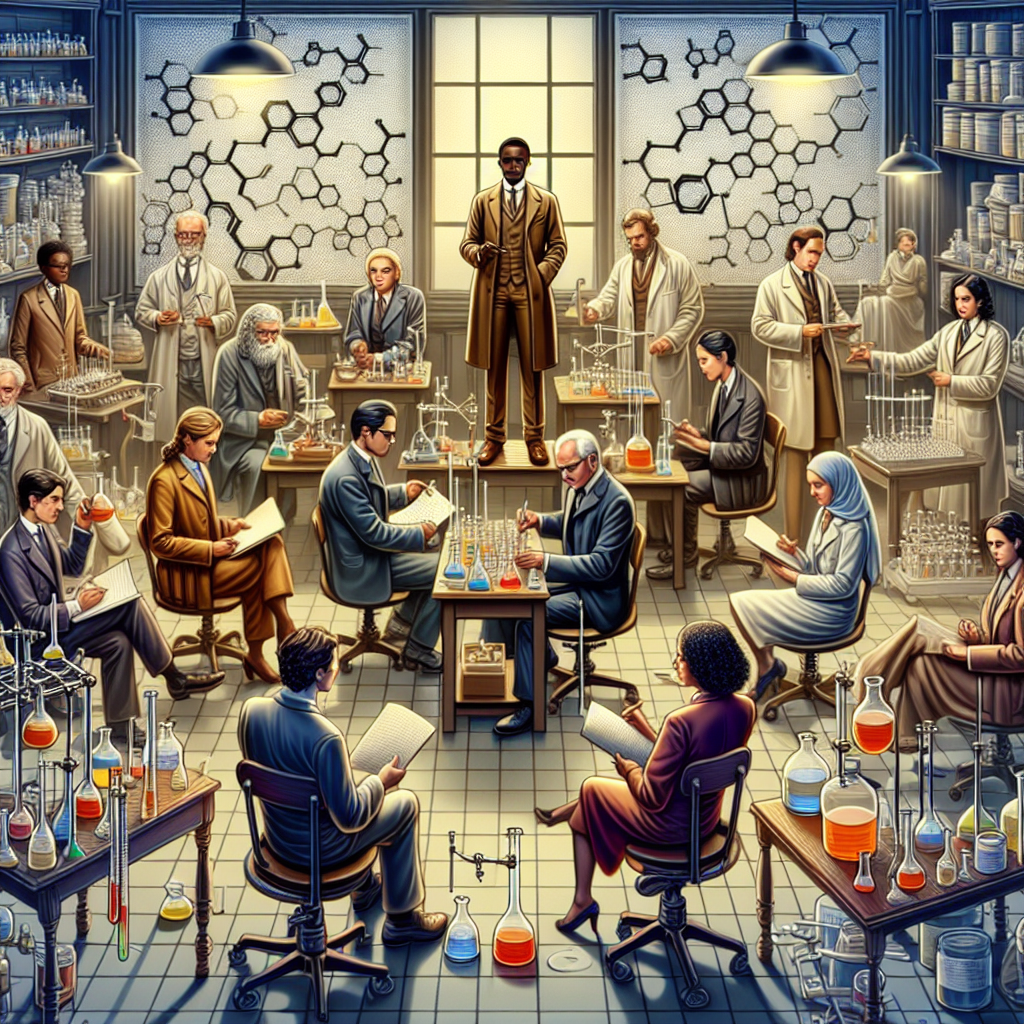
In the vast landscape of modern science, polymers hold an undeniable position of prominence. Polymers are substances composed of long, repeating chains of molecules, and they are indispensable in diverse industries, ranging from packaging and textiles to electronics and healthcare. The story of polymers is intertwined with the contributions of several pioneering scientists and innovators. This article offers a comprehensive overview of key historical figures who significantly shaped polymer science.
Introduction: The Origins of Polymer Science
The journey of polymers dates back to ancient civilizations, although the term “polymer” and the scientific understanding of these materials came much later. Early human societies inadvertently utilized natural polymers, such as rubber, cellulose, and proteins, which were central to various artifacts and daily tools. For instance, the ancient Mesoamericans used natural rubber from the latex of local trees to create balls for sport and ceremonial objects. However, a lack of scientific understanding restricted the development and manipulation of these materials.
It wasn’t until the 19th century that scientists began to systematically study and understand the properties of polymers. The nascent field of polymer science was thus born out of curiosity about natural substances and the quest to create new materials with desirable properties. This period marked the transition from empirical use to methodological research, driven by a handful of ingenious minds who laid the foundation of modern polymer science.
The development of polymer science is a classic tale of interdisciplinary efforts, involving chemists, physicists, and engineers whose combined insights and breakthroughs culminated in the creation of synthetic polymers that revolutionized industries and daily life. Let’s delve into the lives and contributions of some of these historical figures who were instrumental in shaping the landscape of polymer science.
Hermann Staudinger: The Father of Polymer Chemistry
Hermann Staudinger, often hailed as the father of polymer chemistry, made groundbreaking advances that fundamentally changed the understanding of polymer structures. Born in 1881 in Worms, Germany, Staudinger’s early work focused on organic chemistry. It was his pioneering research in the 1920s that led to the conceptual realization that polymers were long chains of repeating units (monomers) connected by covalent bonds.
At a time when many scientists believed polymers were mere aggregates of small molecules held together by weak forces, Staudinger proposed the idea of macromolecules. He faced considerable skepticism, but his persistence paid off. Through rigorous experimentation, Staudinger demonstrated that polymers were indeed giant molecules with unique properties. His work earned him the Nobel Prize in Chemistry in 1953 and established the foundation on which modern polymer science is built.
Staudinger’s contributions went beyond theoretical insights. He also emphasized the practical importance of polymers, foreseeing their potential in various industries. Today, materials such as plastics, rubber, and synthetic fibers are ubiquitous, owing much to Staudinger’s visionary work. His legacy continues to inspire contemporary research in polymer chemistry and material science.
Wallace Carothers: From Theory to Application
While Staudinger laid the theoretical groundwork, Wallace Hume Carothers played a pivotal role in transitioning polymer science from theory to practical application. Born in 1896 in Burlington, Iowa, Carothers was an American chemist whose work at DuPont in the early 20th century led to the development of the first synthetic polymer, nylon.
Carothers’ research focused on understanding the mechanisms of polymerization. His meticulous experiments on condensation reactions led to the discovery of neoprene, the first synthetic rubber, in 1930. However, his most significant achievement came in 1935 with the invention of nylon, a strong, flexible polymer that soon found applications in various products, including stockings, parachutes, and ropes.
Nylon’s success demonstrated the immense potential of synthetic polymers, igniting interest and investment in polymer research and development. Carothers’ work represented a landmark shift, showcasing the commercial viability of synthetic polymers and inspiring subsequent innovations in the field. Tragically, Carothers’ life was cut short by suicide in 1937, but his legacy endures in the myriad applications of synthetic polymers that are integral to modern life.

Otto Bayer: The Polyurethane Innovator
Otto Bayer, a German chemist born in 1902, was another pivotal figure who significantly advanced polymer science. Bayer is best known for developing polyurethane, a versatile polymer that has become indispensable in numerous industries. In the late 1930s, while working at the IG Farben company, Bayer discovered the polyaddition process, which was crucial in synthesizing polyurethanes.
Polyurethane’s unique properties, such as flexibility, durability, and resistance to chemicals, quickly made it a popular choice for various applications. Today, polyurethanes are used in products ranging from foam insulation and adhesives to coatings and elastomers. Bayer’s innovation not only expanded the horizons of polymer science but also demonstrated the potential for creating materials tailored to specific needs and performance criteria.
Otto Bayer’s contributions highlight the symbiotic relationship between scientific discovery and industrial application. His work exemplifies how breakthroughs in polymer chemistry can lead to practical solutions that address real-world challenges, making life easier and more efficient. Bayer’s legacy continues to influence contemporary research and development in polymer materials.
Paul Flory: Statistical Mechanics and Polymer Solutions
Paul John Flory, an American chemist born in 1910, made seminal contributions to the understanding of polymer solutions and their behavior. Flory utilized principles of statistical mechanics to develop theoretical models that described the properties and dynamics of polymer solutions. His work provided critical insights into the nature of polymer interactions, solubility, and the formation of networks.
Flory’s most notable achievement was the development of the Flory-Huggins solution theory in collaboration with Maurice Huggins, which mathematically described the thermodynamics of polymer solutions. This theory became a cornerstone in the study of polymer phase behavior and continues to be a fundamental concept in polymer physics and chemistry courses worldwide.
In recognition of his contributions, Paul Flory was awarded the Nobel Prize in Chemistry in 1974. His theories have had a lasting impact on polymer science, enabling researchers to predict and manipulate the properties of polymer systems with greater precision. Flory’s work exemplifies the power of theoretical chemistry in driving forward the understanding and application of complex materials.
Karl Ziegler and Giulio Natta: Catalysts of Modern Polymerization
The advent of modern polymerization techniques can be attributed to the groundbreaking work of Karl Ziegler and Giulio Natta. Karl Ziegler, a German chemist born in 1898, and Giulio Natta, an Italian chemist born in 1903, revolutionized the field with their development of Ziegler-Natta catalysts in the 1950s. These catalysts enabled the production of polymers with precise stereochemistry and molecular weight control, leading to the generation of polymers with specific properties.
Ziegler’s discovery of organometallic catalysts allowed for the polymerization of ethylene at low pressures, resulting in the formation of high-density polyethylene (HDPE). Building on Ziegler’s work, Natta extended the approach to propylene, creating isotactic polypropylene with regular, repeating structures. These advancements opened new avenues for the creation of customized polymers with enhanced mechanical and chemical properties.
Ziegler and Natta’s collaboration was recognized with the Nobel Prize in Chemistry in 1963. Their work has left an indelible mark on polymer science, with Ziegler-Natta catalysts remaining integral to the industrial production of polyolefins, a class of polymers that includes polyethylene and polypropylene. These materials are foundational to countless products and applications, underscoring the transformative impact of Ziegler and Natta’s innovations.
Conclusion: The Ever-Evolving Legacy of Polymer Pioneers
The history of polymer science is a testament to the ingenuity and perseverance of the scientists who ventured into uncharted territories to unravel the mysteries of macromolecules. The contributions of Hermann Staudinger, Wallace Carothers, Otto Bayer, Paul Flory, Karl Ziegler, and Giulio Natta, among others, laid the groundwork for an ever-evolving field that continues to push the boundaries of material science.
Today, polymers are essential to countless aspects of daily life, from packaging and textiles to medical devices and electronics. The ongoing research in polymer science builds on the legacy of these historic figures, driven by the quest for new materials that are sustainable, efficient, and capable of addressing emerging challenges. Innovations in biodegradable polymers, smart materials, and nanocomposites are just a few examples of the directions in which polymer science is heading.
As we reflect on the historical figures who shaped polymer science, it is clear that their pioneering spirit and relentless pursuit of knowledge have created a lasting impact that will continue to inspire and influence future generations of scientists. The story of polymers is far from over, with each new discovery adding a chapter to an ever-growing narrative of scientific exploration and innovation.
Frequently Asked Questions
1. Who is considered the father of polymer science?
When discussing the foundations of polymer science, Hermann Staudinger often emerges as a pivotal figure. Staudinger, a German chemist, is heralded as the “father of polymer chemistry.” His groundbreaking work in the 1920s revolutionized the scientific community’s understanding of macromolecules. Before Staudinger’s research, the prevailing belief was that polymers were clusters of smaller molecules, rather than long chains of repeated units. Staudinger challenged this perspective by asserting that polymers are indeed large, chain-like molecules, or ‘macromolecules.’ He substantiated his claims through meticulous experimentation and publication, which eventually garnered him the Nobel Prize in Chemistry in 1953. His tenacity laid the bedrock for the development of synthetic polymers, which today are pivotal in countless consumer and industrial applications.
2. What contributions did Wallace Carothers make to polymer science?
Wallace Carothers stands as an iconic figure whose inventive prowess propelled the plastics and synthetic materials industry forward. Working at DuPont in the early 20th century, Carothers spearheaded the development of nylon, the world’s first synthetic fiber, in 1935. This invention marked a monumental leap for textile manufacturing and consumer goods alike. Carothers’s work did not stop at nylon; he played an instrumental role in laying out the principles of polymerization, through which monomers are connected to create polymers. His expertise also led to the development of neoprene, a type of synthetic rubber with significant industrial applications. Carothers’s legacy is a testament to the transformative power of applying chemical principles to create innovative materials that reshape everyday life.
3. How did Paul Flory contribute to our understanding of polymers?
Paul John Flory is a luminary in the field of polymer science whose theoretical insights and experimental frameworks continue to inform research and application. Known for his detailed study of the thermodynamics and kinetics of polymerization, Flory fundamentally enhanced the scientific comprehension of how polymers behave. His research into the statistical mechanics of chain molecules clarified complex phenomena related to polymer solutions and blends. For instance, Flory proposed Flory-Huggins theory, which describes the thermodynamics of polymer mixtures, a crucial advance for those working on the compatibility of complex materials. The importance of his contributions was recognized with the Nobel Prize in Chemistry in 1974. Through his theories, Flory enriched scientists’ capability to predict and manipulate polymer behaviors, thus accelerating the development of new synthetic materials.
4. In what way did Karl Ziegler and Giulio Natta revolutionize polymer synthesis?
German chemist Karl Ziegler and Italian scientist Giulio Natta are credited with a seismic shift in polymer synthesis methodologies, thanks to their development of catalysts that allowed for the creation of specific polymer structures. In the 1950s, Ziegler discovered a new method for polymerizing ethylene at low pressures using organometallic catalysts, resulting in the production of polyethylene with higher strength and stability. Building on Ziegler’s work, Giulio Natta applied similar principles to develop tactics for synthesizing stereoregular polymers such as isotactic and syndiotactic polypropylene. This ability to control polymer structure at a molecular level translated to materials with tailored properties—the cornerstone of creating specialized polymers for distinct applications. Their pioneering catalyst systems, known today as Ziegler-Natta catalysts, transformed industries, making a wide array of strong, durable, and versatile plastics available worldwide. Their work earned them the Nobel Prize in Chemistry in 1963.
5. Why is Stephanie Kwolek considered a pivotal figure in polymer science?
Stephanie Kwolek’s contributions to polymer science reflect innovation with a profound impact on safety and industry. Best known for her discovery of Kevlar, a material renowned for its exceptional strength and durability, Kwolek was a chemist at DuPont in the 1960s when seeking alternatives for lightweight, yet strong fibers. Her innovative work led to the development of poly-paraphenylene terephthalamide, a polymer that, when spun, results in Kevlar—a substance five times stronger than steel on an equal weight basis. Kevlar’s unique properties have revolutionized materials used in bulletproof vests, construction, and numerous industrial applications where high-strength materials are imperative. Kwolek’s ability to recognize the potential of her experimental results and pursue the development of such materials demonstrates the profound impact one individual can have in shaping our material world, ensuring her place as a trailblazer in the annals of polymer science.