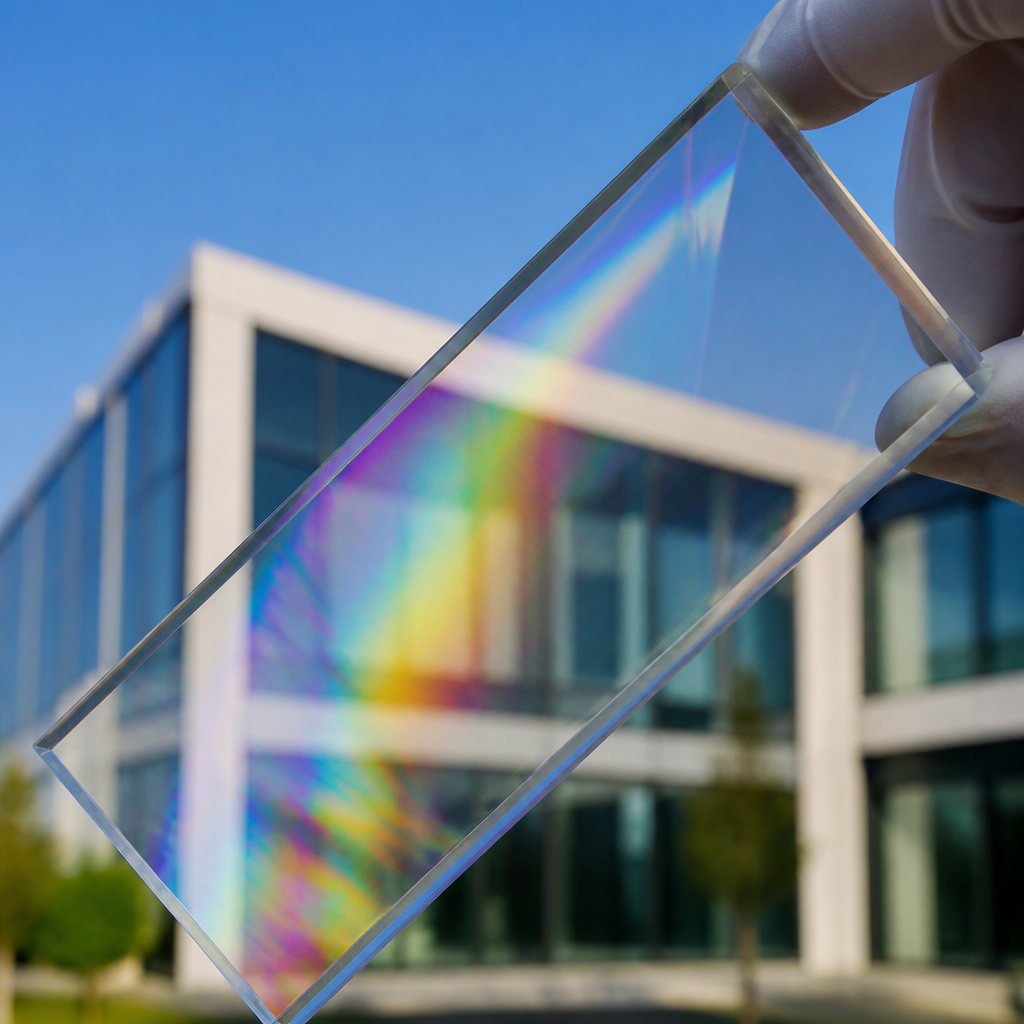
Polymer optical properties determine how plastics interact with light, and additives are often the decisive factor that turns an ordinary resin into a high-clarity lens, a diffusive light guide, a UV-stable outdoor panel, or an opaque barrier film. In practical terms, optical properties include transparency, translucency, haze, gloss, color, refractive index, light transmission, UV resistance, fluorescence, and surface appearance. Additives are the ingredients blended into a base polymer to modify those behaviors without changing the entire resin family. In production settings, I have seen a small change in additive package shift a part from acceptable to unusable because optics respond not only to chemistry, but also to dispersion, processing temperature, cooling rate, and final thickness.
This matters across packaging, electronics, lighting, automotive glazing, medical devices, and consumer goods. A polypropylene food container needs clarity and low haze so contents are visible. A polycarbonate headlamp lens needs UV stabilization to resist yellowing. A polyethylene agricultural film may need controlled light diffusion to improve crop growth while blocking harmful ultraviolet wavelengths. A smartphone light guide must manage transmission and scattering with exceptional consistency. Because optical performance directly affects product function and appearance, engineers treat additive selection as a core design decision rather than a finishing detail.
For readers exploring the broader Materials and Properties topic, this hub on optical properties maps the main mechanisms, additive classes, tradeoffs, and testing methods that shape light behavior in polymers. The central principle is simple: light interacts with molecular structure, phase morphology, fillers, pigments, and surface topography. Additives work by absorbing, reflecting, refracting, scattering, transmitting, or converting portions of the electromagnetic spectrum. The best formulation balances target optics with mechanical strength, weatherability, food-contact compliance, cost, and processability. Understanding that balance is the foundation for selecting polymers and additives that meet real application requirements.
Core optical properties in polymers and how additives influence them
The most important optical properties can be defined directly. Transparency is the ability of a material to transmit light clearly enough to see objects through it. Translucency allows light through, but scatters it so images blur. Haze measures wide-angle scattering that reduces clarity, while gloss describes mirror-like surface reflection. Color is governed by selective absorption and reflection in the visible spectrum. Refractive index measures how much a material bends light, an essential parameter for lenses, light guides, and display films. UV stability describes resistance to discoloration, embrittlement, and transmission loss after sunlight exposure.
Additives influence each property through distinct mechanisms. Nucleating agents can reduce spherulite size in semicrystalline polymers such as polypropylene, improving clarity by limiting visible light scattering. Clarifying agents, often sorbitol-based chemistries in polypropylene, are specifically designed for this purpose and are widely used in transparent food packaging. Plasticizers may improve transparency in some systems by improving compatibility and lowering microphase separation, though they can also increase migration risk. Antiblock additives and slip agents affect surface roughness, which can change gloss and visual feel. Even antioxidants matter optically because poor thermal stabilization during processing can generate yellowing.
The relationship between additive and optical result is rarely linear. A pigment that creates a clean white appearance may sharply reduce transmission because titanium dioxide scatters visible light efficiently due to its high refractive index. A UV absorber may preserve color outdoors but slightly tint the part if loading is too high or the chemistry absorbs into the visible edge. A flame retardant package can reduce clarity if it creates phase separation or residue. This is why formulators evaluate the full package rather than single ingredients in isolation.
Clarifying agents, nucleating agents, and transparency improvement
When manufacturers want clearer polypropylene, they usually begin with clarifying technology. Polypropylene is naturally limited by crystallinity: during cooling, it forms spherulites that scatter visible light if they grow large enough. Clarifying additives provide many nucleation sites, creating finer crystalline structures that scatter less light. The result is lower haze, better transparency, and often improved stiffness and shorter cycle times. Milliken’s Millad family is one of the best-known commercial examples, and it changed how transparent polypropylene packaging is produced globally.
Nucleating and clarifying additives work best when paired with sound processing. Melt temperature, mold temperature, shear history, and cooling profile all influence final morphology. I have seen plants add a premium clarifier yet miss the target because residence time was too long and thermal degradation introduced yellowing, offsetting the optical gain. In cast film and injection molding, thickness also matters: a part that looks crystal clear at 0.5 millimeters may appear hazy at 2 millimeters because the optical path length increases and reveals internal scattering.
These additives are especially valuable when companies want to replace more expensive transparent polymers with polypropylene. For example, clarified random copolymer polypropylene is often selected for deli containers, hinged lids, and housewares where good transparency, low density, and low cost matter. It still does not behave like acrylic or optical-grade polycarbonate in demanding lens applications, but the cost-performance balance is compelling. The limitation is equally important: no clarifier can fully overcome poor resin quality, contamination, moisture defects, or incompatible regrind.
Pigments, whitening agents, and color control
Color in polymers is not just cosmetic; it defines brand identity, light blocking, product inspection visibility, and thermal behavior. Additives used for color control include organic pigments, inorganic pigments, soluble dyes, carbon black, titanium dioxide, and optical brighteners. Organic pigments typically provide strong chroma with lower density and, in many cases, less opacity than inorganic alternatives. Inorganic pigments such as iron oxides offer high durability and heat stability. Soluble dyes can deliver brilliant transparent shades in amorphous polymers but may have lower lightfastness than pigments.
Titanium dioxide is the standard white pigment because it provides exceptional opacity and brightness through light scattering. Rutile grades are preferred in outdoor use because they are more photostable than anatase grades. Carbon black is the most effective black pigment and a strong UV protector because it absorbs ultraviolet radiation efficiently; that is why black polyethylene pipe can survive long outdoor service. Optical brighteners work differently. They absorb ultraviolet light and re-emit it in the blue region, making materials appear whiter and brighter. These are common in films, fibers, and consumer goods where a cleaner visual tone is desired.
Color consistency depends on dispersion quality as much as chemistry. Poor dispersion creates streaks, specks, and local opacity shifts. Masterbatch design, screw configuration, screen packs, and filtration all influence the result. In medical and food-contact products, pigment choice also intersects with regulatory requirements such as FDA compliance, EU food-contact rules, and extractables limits. A visually perfect formulation that fails migration testing is not commercially viable.
Light diffusion, haze control, and surface appearance
Not every optical application aims for maximum transparency. In LED lighting, display backlights, and agricultural films, controlled diffusion is often the goal. Diffusing additives scatter light to reduce glare, hide hot spots, and create more uniform illumination. Common approaches include mineral fillers, polymeric diffusers, silicone-based particles, and engineered phase-separated domains sized to scatter visible wavelengths predictably. In lighting covers, the challenge is balancing transmission against diffusion: too much scattering lowers brightness, while too little reveals individual LEDs.
Haze can originate from internal structure or surface texture. Internally, mismatched refractive indices between polymer and additive create scattering. At the surface, roughness from fillers, antiblock agents, or mold finish can increase diffuse reflection and lower gloss. This matters in packaging where a matte look may be desirable for branding but unacceptable for product visibility. In biaxially oriented polypropylene films, for example, cavitating agents are used intentionally to create pearlescent opacity and reduce density. The resulting internal voids scatter light strongly, producing a white, paper-like appearance.
| Additive type | Primary optical effect | Common polymers | Typical applications |
|---|---|---|---|
| Clarifying agents | Lower haze, improve transparency | PP | Food containers, housewares |
| Titanium dioxide | Whiten, increase opacity | PE, PP, PVC, PET | Films, bottles, siding |
| Carbon black | Black color, UV blocking | PE, PP, PA | Pipes, geomembranes, housings |
| Optical brighteners | Increase perceived whiteness | PET, PS, PVC | Fibers, films, consumer goods |
| UV absorbers | Reduce yellowing and degradation | PC, PMMA, PETG | Glazing, lenses, outdoor panels |
| Diffusers | Increase light scattering | PC, PMMA, silicone blends | LED covers, displays |
Formulators control these outcomes by matching additive particle size, concentration, and refractive index contrast to the target effect. The same scattering principle that ruins optical clarity can be used advantageously to create soft light, privacy films, or decorative finishes. The difference lies in intention and precision.
UV stabilizers and long-term optical durability
Outdoor optical performance is usually limited by ultraviolet exposure, heat, and oxygen. UV radiation can break polymer chains, generate free radicals, and create chromophores that cause yellowing, haze increase, gloss loss, and brittle failure. Additives used to resist this include UV absorbers, hindered amine light stabilizers, antioxidants, and quenchers. UV absorbers such as benzotriazoles and triazines intercept damaging radiation before the polymer backbone is attacked. Hindered amine light stabilizers do not absorb UV directly; instead, they disrupt the photo-oxidative degradation cycle by scavenging radicals.
Polycarbonate illustrates the issue well. Unprotected polycarbonate has excellent transparency and impact strength, but it yellows and loses properties under prolonged UV exposure. For that reason, exterior grades often incorporate UV absorbers in the bulk resin and sometimes a coextruded cap layer with a higher stabilizer concentration. Acrylic, especially PMMA, offers better inherent weatherability, which is one reason it remains common in signage and outdoor transparent panels. However, PMMA is more brittle than polycarbonate, so additive strategy must be considered alongside base polymer choice.
Durability claims should be verified with established tests. ASTM G154 and ASTM G155 are widely used accelerated weathering standards, while ISO 4892 covers related exposure methods. Useful optical checkpoints include yellowness index, total luminous transmittance, haze, and gloss retention over time. Accelerated weathering is not a perfect predictor of every climate, but it is essential for comparative screening and quality control.
Refractive index modification, specialty optics, and measurement
Advanced optical applications require more than simple clarity or color. Lenses, optical fibers, display stacks, and sensor housings depend on refractive index control, birefringence management, and low defect counts. Additives can raise or lower effective refractive index through compositional changes, but this is delicate work because any incompatibility, crystallization, or agglomeration introduces scattering. High-index nanoparticles, aromatic additives, and specialty copolymers may be used in engineered systems, though surface treatment and dispersion are critical to preserve transparency.
Birefringence is another major consideration, especially in injection-molded transparent parts and oriented films. It arises when molecular chains align and create direction-dependent refractive behavior, which can distort transmitted light. Additives do not solve birefringence by themselves, but lubricants, processing aids, and thermal stabilizers can support process conditions that minimize stress and orientation. In optical-grade parts, gate design, melt temperature, packing pressure, and annealing often matter as much as formulation.
Measurement must be disciplined. Haze and luminous transmittance are commonly measured according to ASTM D1003. Color can be quantified in CIE L*a*b* space using spectrophotometers. Gloss is often measured per ASTM D523. UV-visible spectroscopy helps track absorption behavior, while microscopy reveals pigment dispersion and defect sources. In troubleshooting work, I rely on both instrument data and cross-sections under polarized light because many “optical additive problems” are actually morphology or processing problems in disguise.
How to choose the right additive package for optical properties
The best additive package starts with the application question, not the ingredient list. Do you need see-through clarity, soft diffusion, outdoor color retention, complete opacity, or selective UV blocking? Then define the service conditions: indoor or outdoor exposure, part thickness, sterilization method, food contact, mechanical load, and expected lifetime. From there, shortlist resin families and additive chemistries that are proven in similar uses. Packaging teams may compare clarified polypropylene against PET. Lighting designers often weigh diffusive polycarbonate against acrylic. Agricultural film producers may combine UV absorbers, antiblock agents, and light diffusers in multilayer structures.
Cost and manufacturing realities must be included early. Some additive packages deliver excellent optics but narrow the process window, increase plate-out, or complicate recycling. Others are robust but too expensive for commodity applications. The most reliable route is formulation screening with defined metrics: haze, transmission, gloss, color shift after heat aging, yellowness after UV exposure, and visual inspection under end-use lighting. If you are building an optical-properties knowledge base under Materials and Properties, this page should link outward to deeper articles on transparency, haze, gloss, colorants, UV stability, refractive index, and optical testing so readers can move from overview to selection detail.
Additives enhance polymer optical properties by giving formulators precise control over how plastics transmit, scatter, absorb, and withstand light. Clarifiers improve transparency in semicrystalline resins. Pigments and brighteners shape color, opacity, and whiteness. Diffusers create uniform illumination and privacy effects. UV stabilizers preserve clarity and color during outdoor exposure. Specialty modifiers support refractive index tuning and advanced optical performance, but only when processing and dispersion are tightly controlled.
The main lesson is that optical performance is never just a material data-sheet value. It is the result of polymer structure, additive chemistry, morphology, part design, and manufacturing discipline working together. A strong formulation acknowledges tradeoffs: a package that maximizes diffusion may reduce transmission, and a pigment that blocks light may also improve weatherability. The right choice depends on the exact job the part must do over its full service life.
Use this hub as your starting point for evaluating optical properties within the wider Materials and Properties landscape, then build your specification around measurable targets and validated test methods. If you are selecting a resin or troubleshooting an optical defect, begin with the required light behavior, match it to proven additive classes, and confirm performance with controlled trials.
Frequently Asked Questions
1. How do additives change the optical properties of polymers?
Additives change optical properties by altering how a polymer absorbs, transmits, reflects, scatters, or stabilizes light. A base resin may have useful mechanical performance, but its natural appearance and light behavior are often not optimized for the final application. By incorporating carefully selected additives, manufacturers can increase transparency, create controlled translucency, reduce or increase haze, improve gloss, adjust color, enhance UV resistance, or make a material fully opaque. In other words, additives allow processors to engineer the visual and functional light response of plastics without switching to an entirely different polymer system.
At a technical level, the effect depends on the additive’s chemistry, particle size, compatibility with the polymer, and dispersion quality. For example, clarifying agents can reduce internal light scattering in semi-crystalline polymers, making them appear clearer. UV stabilizers help preserve optical quality over time by slowing yellowing, embrittlement, and surface degradation caused by sunlight. Pigments and dyes selectively absorb certain wavelengths to create color, while opacifiers and diffusers scatter light to hide what is behind the plastic or to distribute light more evenly. Even small concentration changes can significantly affect appearance, which is why additive selection is usually tied closely to processing method, part thickness, and end-use performance requirements.
2. What types of additives are commonly used to improve transparency, haze, and light transmission?
Several additive categories are used when the goal is optical clarity or controlled light management. Clarifying agents are among the most important for polymers such as polypropylene because they influence crystal structure and reduce the size of crystalline domains that scatter visible light. This can dramatically improve transparency and lower haze. In transparent packaging, medical components, and consumer products, these additives help turn a naturally hazy resin into one with much better see-through appearance.
For applications where maximum light transmission matters, formulators also focus on additives that are highly compatible with the polymer and that disperse uniformly without forming particles or domains that scatter light. Processing aids can help here by improving melt flow and reducing defects such as gels, streaks, or surface irregularities. Antioxidants and heat stabilizers also play an indirect but critical role, since thermal degradation during processing can create discoloration and reduce optical quality. In lighting applications, diffusing additives may be intentionally used to increase haze while still maintaining high total transmission, allowing the polymer to soften and spread light rather than simply block it. That distinction is important: low haze is ideal for clear windows and lenses, while controlled haze is often preferred for LED covers, displays, and light guides where glare reduction and uniform illumination are more valuable than full transparency.
3. How do additives improve UV resistance and long-term optical stability in plastic products?
UV exposure is one of the main reasons plastics lose their original optical performance over time. Sunlight can trigger photo-oxidation, chain scission, surface cracking, yellowing, gloss loss, and reduced transparency. Additives designed for UV protection help slow or prevent these changes, allowing polymer products to maintain appearance and function much longer in outdoor or high-light environments. This is especially important for greenhouse films, skylights, automotive parts, outdoor signage, lenses, and construction panels.
The most common UV-protective additives include UV absorbers, hindered amine light stabilizers (HALS), and antioxidant systems. UV absorbers work by taking in harmful ultraviolet radiation and dissipating it as less damaging energy before it can attack the polymer chains. HALS function differently: they interrupt the degradation cycle and are especially effective at preserving surface appearance and mechanical integrity over time. Antioxidants support both processing stability and long-term performance by limiting thermal and oxidative breakdown. In many formulations, these additives are used in combination because no single chemistry solves every aging mechanism. The result is better color retention, less yellowing, more consistent gloss, and a longer service life for parts that must remain visually attractive or optically functional after prolonged exposure to weathering and light.
4. What is the difference between additives used for color, opacity, diffusion, and surface appearance?
Although these effects are all optical, they are achieved in different ways and usually with different additive technologies. Color is typically created with dyes or pigments. Dyes dissolve into the polymer and can produce bright, transparent color effects, while pigments are insoluble particles that often deliver stronger hiding power, better durability, and more consistent color under demanding conditions. The choice between them depends on whether the product should remain clear, tinted, translucent, or fully masking.
Opacity is generally increased with additives that either absorb or scatter visible light strongly enough to prevent see-through visibility. Titanium dioxide is one of the most widely used opacifying pigments because it provides excellent whiteness, brightness, and hiding power. Diffusing additives, by contrast, are designed not simply to block light, but to scatter it in a controlled way. This is valuable in light covers, display films, and illumination systems where uniform light output matters more than image clarity. Surface appearance is another distinct area. Gloss modifiers, antiblock agents, slip additives, and matting agents can change how light reflects off the surface, making a part look glossy, silky, soft-touch, or matte. In practice, these properties often interact. A formulation meant for a premium consumer product may combine colorants, UV stabilizers, and surface-control additives to achieve a very specific visual effect both immediately after molding and throughout the product’s life.
5. What factors should be considered when selecting additives for polymer optical applications?
Additive selection should always start with the optical target and the real-use environment. A formulation for a clear medical container has very different needs than one for an outdoor polycarbonate sheet, an LED diffuser, or an opaque barrier film. Key performance questions include whether the part must be transparent, translucent, matte, glossy, colored, UV-stable, fluorescent, or highly reflective. It is also important to define measurable optical requirements such as haze percentage, total light transmission, yellowness index, gloss level, refractive behavior, and color consistency from batch to batch.
Just as important are compatibility and processing considerations. An additive that performs well in theory can reduce optical quality if it disperses poorly, degrades during extrusion, migrates to the surface, or interacts negatively with other formulation components. Particle size, loading level, thermal stability, solubility, and refractive index relationship to the polymer all influence the final result. Manufacturers must also account for thickness effects, since a film, molded lens, and thick sheet may show very different optical behavior even with the same additive package. Regulatory compliance, cost, weatherability, and long-term durability also matter, especially in food contact, medical, electronics, and automotive markets. The most successful optical formulations are usually developed through a balance of material science, process control, and application-specific testing rather than by relying on a single “universal” additive solution.