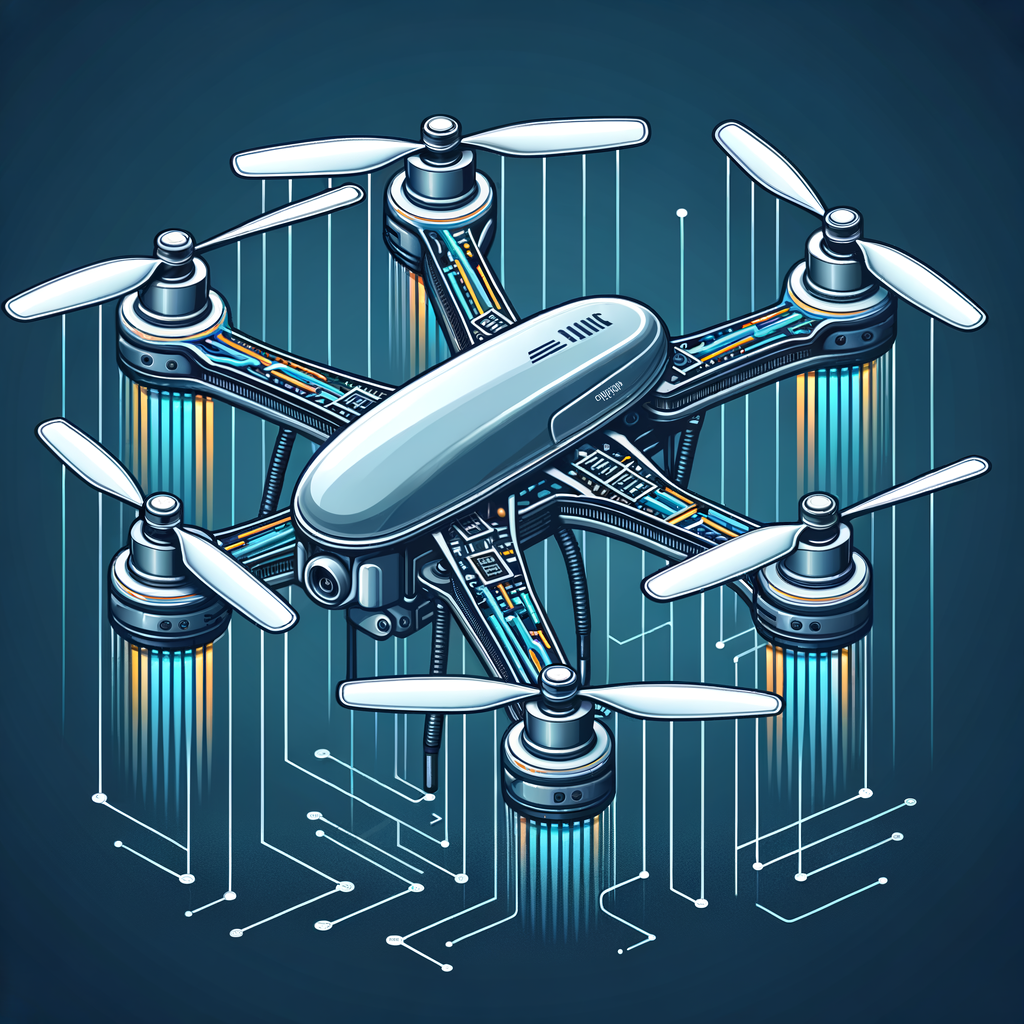
Unmanned Aerial Vehicles (UAVs), commonly known as drones, have revolutionized multiple sectors ranging from military operations to recreational activities. The evolution of UAVs has seen a significant focus on enhancing their functionality, efficiency, and durability. One pivotal factor driving this advancement is the utilization of polymers. Polymers, due to their unique properties, play an integral role in the design, construction, and operational efficiency of UAVs. They offer lightweight solutions which are crucial for lifting capacity, fuel efficiency, and overall maneuverability. The use of polymers in UAVs extends beyond merely reducing weight; these materials also contribute to resilience against environmental factors, enhancing the durability and longevity of these devices. Furthermore, polymers offer flexibility in design, allowing for innovative shapes and configurations that were previously impossible with traditional materials. As we delve deeper into the sophisticated world of UAV construction, it becomes evident that polymers are not only supporting elements but foundational pillars of modern UAV technology. In this comprehensive exploration, we will uncover the numerous ways polymers are employed in UAVs, illustrating their importance in transforming aerial technology.
The Role of Polymers in UAV Structures
The structural integrity and performance of UAVs heavily rely on materials that combine lightweight characteristics with high strength. Polymers, particularly those in advanced composite forms like carbon-fiber-reinforced polymers (CFRPs), are indispensable in achieving this balance. They provide the necessary strength-to-weight ratio that ensures UAVs can carry payloads without compromising speed or agility. Additionally, polymers like thermoplastics and thermosetting plastics are used in the fabrication of UAV shells and frames due to their capacity to endure mechanical stresses. Moreover, polymers allow for the design of aerodynamic structures that minimize air resistance, enhancing the UAV’s efficiency. Many manufacturers employ polymers like polyethylene and polypropylene in parts that demand impact resistance, ensuring the UAV remains operational even under challenging conditions.
Enhancing UAV Components with Polymers
Polymers are also crucial in the production of various UAV components. For example, landing gears benefit from polymers such as nylon composites, which offer flexibility and toughness. The combination of polymers with other materials can produce hybrid components that carry the benefits of all constituent materials. Such composite materials are used in constructing parts like propellers and rotor blades that are not only durable and lightweight but also less prone to damage from environmental exposure. Advanced polymers also contribute to the development of sealed compartments within UAVs, protecting sensitive electronics from moisture and dust. In electrical systems, insulated polymer coatings ensure safety and durability, preventing failures that could otherwise compromise the UAV’s function.
Thermal Management and Insulation
UAVs often operate in various climates and need to maintain stability in temperature-sensitive environments. Polymers provide solutions in the form of thermal insulators. Materials like polyimides are frequently used to shield UAV components from extreme temperatures, both high and low. These polymers help maintain optimal operational temperatures, thereby prolonging the lifespan of onboard electronics and other systems. Furthermore, polymers used in insulation help manage thermal expansion and contractions that occur due to temperature fluctuations, thereby preserving the structural integrity of the UAV. This thermal resilience ensures that UAVs can perform consistently across a wide range of operational environments, from scorching deserts to freezing arctic locations.
Enhancing UAV Performance with Polymer-Based Coatings
Polymers are not just used in the structure and components but also in coatings that further enhance performance and lifespan. The application of polymer-based coatings can provide additional functionalities such as UV resistance, hydrophobicity, and even stealth capabilities. For military UAVs, polymers painted with radar-absorbing materials can help in minimizing detection by enemy forces. Similarly, UAVs used for agricultural purposes benefit from polymer coatings that repel dirt and resist chemical corrosion from pesticides. By ensuring the exteriors of UAVs are protected, these coatings help in reducing maintenance needs and ensuring longer service intervals, thus offering economic benefits to operators who frequently deploy these vehicles.
Advancements in Polymer Technology for Future UAV Developments
The future of UAV technology is closely interlinked with advancements in polymer research. With ongoing developments in nanotechnology, the incorporation of nanoparticles in polymers promises to offer even greater enhancements in UAV performance. This can lead to the creation of lighter yet stronger materials with increased conductive properties which help in better energy distribution. Innovations such as self-healing polymers also offer exciting possibilities, where UAVs could repair themselves during flight, reducing downtime and increasing mission efficacy. Furthermore, biodegradable polymers open up avenues for sustainable UAV designs, particularly crucial as environmental concerns climb the global agenda. The use of bio-based or recyclable polymers aligns with efforts towards eco-friendly technology, marking a significant shift in the approach to UAV design and deployment.
Environmental Resilience Offered by Polymers
The ability of UAVs to operate in hostile environments is enhanced by polymers that resist degradation due to UV exposure, moisture, and mechanical wear and tear. Polymers like polycarbonate and polyetheretherketone (PEEK) exhibit high resistance to environmental stressors, making UAVs more reliable performer in varied settings. These materials are designed to sustain prolonged exposures to the elements without significant wear, ensuring that these aerial vehicles can function effectively in missions that take them across different terrains and climatic zones. The robust nature of polymers extends the usable life of UAVs, making them viable for long-term projects and while in remote locations where maintenance opportunities are rare.
Economic Impact and Cost Efficiency
The use of polymers significantly impacts the economic aspects of UAV production. The weight reduction achieved through polymer use leads directly to lower fuel consumption or energy expenditure, directly effecting operational costs. Polymer parts often require less complex manufacturing processes compared to metals, reducing the time and cost involved in their production. Additionally, the durability of polymers implies fewer replacements, contributing to long-term cost savings. For industries like logistics and agriculture deploying large fleets of UAVs, these savings can be substantial. With the increase in UAV utilization, the demand for cost-effective solutions rises, further promoting innovation in polymer technology focused on reducing production and maintenance costs.
Conclusion
Polymers have undeniably redefined the landscape of UAV technology, offering enhancements across manufacturing, functionality, and economy. By providing options that marry strength with lightness, polymers have enabled the creation of UAVs that achieve extraordinary feats while maintaining operational efficiency. The strategic application of polymers in UAV structures and components safeguards against environmental challenges and contributes to the sustainability goals of deploying current drone technology. As the demand for UAVs continues to expand, the ongoing innovations in polymer science promise even greater advancements, ensuring these materials remain at the forefront of aerial technology development. Future UAVs, fortified by cutting-edge polymers, are expected to be more versatile, cost-effective, and sustainable, playing pivotal roles in both civilian and military domains. The continuous evolution of polymers heralds an exciting era of innovation, where possibilities become realities, and challenges in aviation technology are met with smart, efficient solutions.
Frequently Asked Questions
1. What role do polymers play in the construction of UAVs?
Polymers are immensely crucial in the construction of Unmanned Aerial Vehicles (UAVs). They are used primarily due to their lightweight nature, which is essential for the aerial performance of UAVs. Lighter materials allow drones to fly longer distances on less fuel or battery, enhancing their efficiency and operational range. Polymers also contribute to the aerodynamics of UAVs with their ability to be molded into precise, streamlined shapes that minimize air resistance. The versatility of polymers in adapting to different designs means they’re an ideal choice for achieving the specific structural requirements of various UAVs. Additionally, polymers offer excellent resistance to corrosion and environmental factors, increasing the durability and longevity of drones in diverse operational conditions.
2. How do polymers enhance the durability of UAVs?
Polymers enhance the durability of UAVs in several ways. Firstly, they are resistant to corrosion and degradation caused by UV radiation, moisture, and chemicals, making them durable materials suitable for UAVs often exposed to harsh environmental conditions. Their intrinsic flexibility absorbs impacts better than brittle materials, thereby reducing the risk of structural damage during crashes or rough landings. Furthermore, polymers can be engineered to offer high strength-to-weight ratios, allowing UAVs to maintain structural integrity while remaining lightweight. This combination of strength, flexibility, and resistance extends the service life of drones, making them more robust in both military and civilian applications.
3. Why are polymers considered more efficient than traditional materials in UAV production?
Polymers are often deemed more efficient than traditional materials in UAV production for several compelling reasons. One of the most significant is their lightweight nature, which is crucial for energy efficiency, allowing UAVs to maximize payload capacity and operational range on limited energy resources. Moreover, polymers can be manufactured with precision through injection molding and 3D printing, enabling the production of complex geometries that enhance aerodynamic performance and structural integrity. Unlike metals, polymers do not rust, reducing maintenance needs and the overall cost of ownership. Additionally, polymers can be engineered to integrate various functional properties, such as electrical conductivity or thermal stability, enhancing the multi-dimensional performance of UAVs beyond what traditional materials can offer.
4. Can polymers in UAVs improve fuel efficiency and battery life?
Absolutely, the incorporation of polymers in UAV construction significantly contributes to improved fuel efficiency and battery life. The lightweight characteristics of polymers lead to a decrease in the weight of the UAV, which directly results in less energy being required for flight. This reduced energy consumption means that drones can fly longer on the same amount of fuel or battery charge. Moreover, certain polymers can be designed to improve thermal insulation, preventing energy loss and thus optimizing energy use throughout operations. The increased efficiency from polymers translates to lower operational costs and extended flying times, making UAVs more practical and economical for a wide range of applications.
5. What types of polymers are commonly used in UAVs and why?
Several types of polymers are widely used in UAVs due to their distinct properties. Thermoplastics like polycarbonate and ABS (acrylonitrile butadiene styrene) are popular for their impact resistance and ease of molding, which is essential for crafting intricate UAV components. Carbon fiber reinforced polymers (CFRPs) are also extensively used due to their exceptional strength-to-weight ratios and rigidity, making them ideal for critical structural parts such as wings and fuselages. These materials can withstand high-stress conditions and offer thermal stability, ensuring steady performance in varying temperatures. Furthermore, epoxy resins are often used for their superior adhesive properties, vital for integrating different polymer components seamlessly. These polymers are chosen because they strike an effective balance between performance, durability, and manufacturability, fulfilling the complex demands of both civilian and military UAV applications.