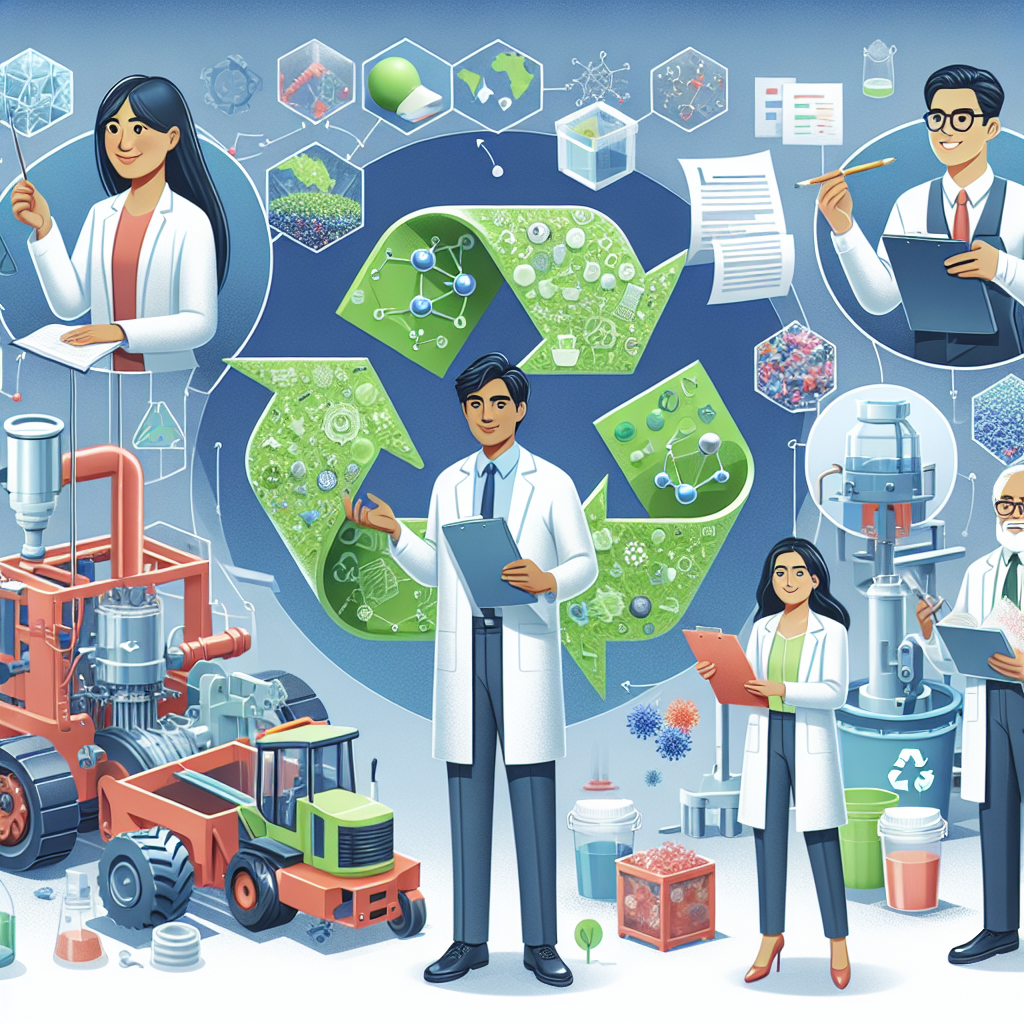
Polymer testing has become an essential part of material science and engineering, owing to the pivotal role polymers play in various industries. Polymers form the basis of countless products we use daily, from the simplest packaging materials to the complex components in automobile and aerospace industries. With technological advancements, the methodologies used in polymer testing have developed to ensure these materials meet quality and performance standards expected by consumers and industry specialists. Understanding these advancements offers insights into how thoroughly polymers are now scrutinized and optimized for a wide range of applications. In this introduction, we’ll explore the importance of polymer testing, illustrating the need for innovation and technology in the testing processes. This discussion sets the foundation for comprehending the new strides taken in polymer testing that bolster reliability, safety, and enhanced material properties that align with modern demands.
Historically, polymer testing consisted of basic mechanical testing methods such as tensile and impact testing, which provided limited information regarding material properties. As the applications of polymers have expanded, so too has the demand for advanced testing methodologies to glean more detailed insights into their performance under varied conditions. Advances in technology have paved the way for more sophisticated and accurate methods, including chemical, thermal, and microscopic analysis techniques. These methods are crucial for understanding polymers at a molecular level, allowing researchers and engineers to address challenges and innovate in material design. The necessity for these advancements stems from an ever-evolving industrial landscape, which demands materials with specific characteristics to handle new functionality and sustainability goals. Through this introduction, we set the stage for a deep dive into the specific technological advancements that have revolutionized polymer testing, showcasing their importance in ensuring high-performance, sustainable material solutions across industries.
Advanced Characterization Techniques
Among the most significant advancements in polymer testing are the sophisticated characterization techniques allowing for a more comprehensive analysis of polymers at the molecular level. Techniques such as Fourier Transform Infrared Spectroscopy (FTIR), Nuclear Magnetic Resonance (NMR) spectroscopy, and Raman spectroscopy enable the precise identification of chemical structures and compositions of the polymers. FTIR, for instance, plays a critical role in identifying functional groups within the polymer matrix, providing essential insights into chemical modifications implemented during production or degradation over time. NMR spectroscopy, another well-regarded method, offers detailed information about the molecular dynamics and conformational changes that occur within polymers, permitting an in-depth analysis of their molecular architecture. These techniques collectively contribute to a better understanding of the chemical properties of polymers, which is imperative in the design and modification of materials to meet specific requirements.
Thermal analysis techniques such as Differential Scanning Calorimetry (DSC) and Thermogravimetric Analysis (TGA) have also evolved, providing detailed thermodynamic profiles of polymers. DSC measures heat flows associated with material transitions, such as glass transition, melting, and crystallization, giving researchers insights into the thermal stability and content of polymers. TGA measures changes in weight in relation to temperature, thereby identifying composition and decomposition of materials, which proves vital in assessing material stability under different environmental conditions. These thermal analysis methodologies are integral in testing conditions that polymers will face in real-life applications, ensuring their durability and functionality in diverse operational environments. Advances in these techniques have provided significant improvements in detecting subtle changes in polymer structure, vastly enhancing quality control and material performance predictions in industrial applications. They effectively bridge the gap between laboratory analysis and real-world utilization, bringing polymer testing into a new age of precision and reliability.
Microscopic Analysis and Imaging
Advances in microscopic analysis have significantly impacted polymer testing, allowing researchers to examine structural details that weren’t detectable before. Electron microscopy, including Scanning Electron Microscopy (SEM) and Transmission Electron Microscopy (TEM), has proven invaluable in observing the microstructure and morphology of polymers. SEM provides topographical information with a high depth of focus, making it ideal for investigating surface characteristics and identifying defects within polymer matrices. TEM, offering the ability to visualize internal structures at atomic resolutions, facilitates the detailed examination of polymer blends and nano composite structures. These microscopic methods have radically improved the ability to characterize polymers at multiple scale levels, thus enhancing the understanding of structure-property relationships.
Additionally, Atomic Force Microscopy (AFM) has emerged as a powerful tool for surface analysis at the nanometer scale. It can measure the mechanical properties, such as hardness and elasticity, of various polymers with high precision. AFM’s ability to provide three-dimensional surface profiling without extensive sample preparation is particularly advantageous, offering unique insights into material characteristics that are difficult to discern through other means. These imaging technologies bring a new level of accuracy and detail to surface and internal characterization, enabling the development of complex polymer structures with controlled properties for highly specialized applications.
Mechanical Testing and Simulation
Mechanical testing remains a cornerstone of polymer testing, but technological advancements have led to more accurate, reliable, and efficient processes. Automated testing systems enable continuous feedback and control during experiments, ensuring precise monitoring and repeatability. Additionally, the development of high-speed and high-resolution testing machinery allows for evaluating the dynamic mechanical properties of polymers, such as creep, fatigue, and impact resistance, under varying operational conditions.
Computer-aided simulations have also surged as invaluable tools in polymer testing. Finite Element Analysis (FEA) has become a standard approach to model and predict polymer behavior under different mechanical stresses and strains. These simulations play a critical role during the design phase, allowing engineers to optimize materials before creating physical prototypes, thus significantly reducing costs and development time. By utilizing simulations in tandem with real-world testing, researchers can iterate on and refine polymer formulations more efficiently, ensuring that they meet or exceed the desired specifications and performance metrics in real-world applications.
Environmental and Durability Testing
Technological advancements have enabled more accurate environmental and durability testing to evaluate the long-term performance of polymers under various environmental conditions. Sophisticated weathering chambers can simulate prolonged exposure to sunlight, humidity, and various temperatures, observing the effects of UV radiation, oxidation, and other aging processes. This testing is vital for determining a polymer’s lifespan and ensuring it will remain effective and stand the test of time under real-world conditions.
Alongside these tools are advanced chemical resistance tests that let industries predict how polymers will respond to exposure to harsh chemicals or corrosive environments. Through accelerated life testing, manufacturers gain vital insights, enabling them to formulate polymers with enhanced resistance properties to endure specific toxic or corrosive substances over extended periods. These methodologies are key in developing durable, high-performance polymers that can survive harsh industrial, environmental, and consumer conditions, ensuring maximum reliability and safety across diverse applications.
Sustainability and Biodegradability Assessments
Growing environmental concerns and regulations demand that modern polymer testing includes assessments for sustainability and biodegradability. New technological developments have facilitated evaluations that determine a polymer’s lifecycle impact, focusing on recyclability and biodegradability. Techniques that assess bio-based content and the breakdown of polymers in natural environments are becoming critical parts of the testing process. For instance, standardized biodegradability tests can evaluate how effectively a material decomposes in soil or marine environments, providing manufacturers with data that guide the development of eco-friendly alternatives to traditional polymers.
Life Cycle Assessments (LCA), a crucial tool in this regard, analyze the full environmental impact of a polymer – from raw material extraction to end-of-life disposal. These assessments have become integral in guiding sustainable material innovation, pushing industries toward reducing carbon footprints and enhancing the recyclability and sustainability of polymer products. Through these advances, the polymer industry aligns more closely with global environmental goals, creating products that are not only high-performing but also environmentally responsible. Such considerations are increasingly vital as regulatory structures around the world prioritize environmental sustainability, pushing the envelope for the materials science sector to innovate responsibly.
Conclusion
Technological advancements in polymer testing have revolutionized how these materials are assessed and optimized for various applications. By incorporating cutting-edge characterization, microscopic, thermal, and environmental testing methods, polymer testing now extends far beyond the conventional mechanical tests that once dominated the field. This shift has allowed for a deeper understanding of polymers at molecular and macro levels, leading to materials that are better designed to handle specific functional demands and environmental conditions.
The integration of simulations and advanced mechanical testing reveals important insights into the polymer’s durability, mechanical properties, and long-term behavior under a range of stresses. Environmental and sustainability testing further aid in aligning polymer development with global ecological and sustainability goals. These developments collectively ensure that modern polymers are thoroughly vetted, high-performing, and efficiently meet the rigorous standards desired by today’s industries and consumers.
Understanding these major strides in polymer testing helps characterize the evolving discipline of materials science, melding precision testing with sustainable practices. As the sector continues to innovate, these technologies will further enhance polymer performance, directly supporting the creation of safer, more efficient, and environmentally responsible products across a multitude of applications. The ongoing evolution in polymer testing underscores a commitment to continuous improvement, reflecting significant progress amid the growing complexities and environmental considerations guiding modern material development. As industries advance, so too must the tools and technologies behind them, ensuring that polymer testing remains at the forefront of scientific innovation and application.