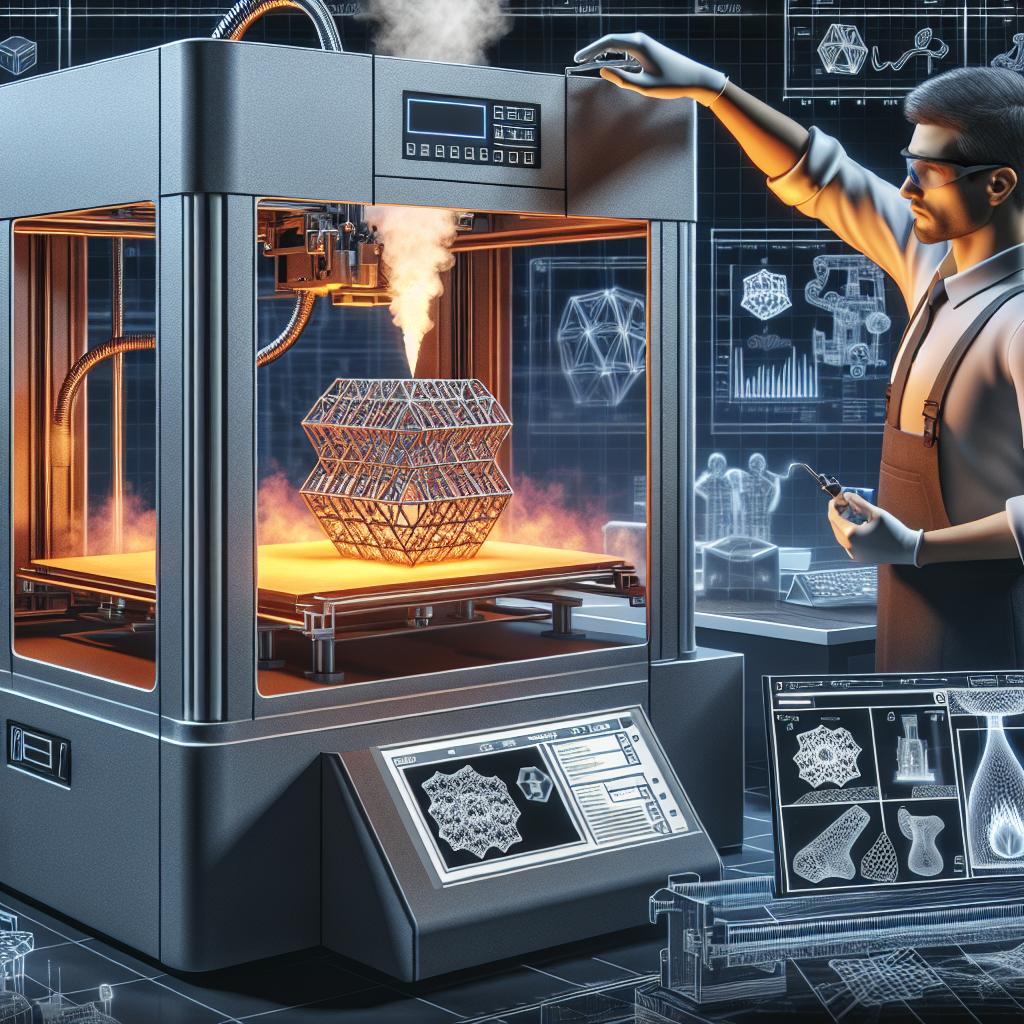
The polymer industry has undergone significant changes due to advancements in manufacturing technologies, particularly additive manufacturing. Additive manufacturing, more commonly known as 3D printing, is transforming various sectors, from automotive to healthcare. At the heart of this revolution are thermoplastics, a type of polymer known for their reusability and versatility.
Thermoplastics are materials that become moldable upon heating and solidify upon cooling. This characteristic makes them particularly useful for 3D printing, where materials often need to be reshaped and reused. They are different from thermosets which, once hardened, cannot revert to their original, pliable state.
From prototyping to producing end-use parts, thermoplastics are pivotal in fostering innovation. With the ability to customize materials based on specific industry requirements, the polymer industry is empowering new realms of possibilities. This article delves into the nuances of thermoplastics, their varieties, and how they impact additive manufacturing.
Understanding Thermoplastics
Thermoplastics are a subset of polymers that soften when exposed to heat and harden when cooled. This reversible process allows for easy processing and manufacturing. The primary advantage of thermoplastics lies in their ability to be recycled and reshaped multiple times without losing their inherent properties.
Common types of thermoplastics include Polyethylene (PE), Polypropylene (PP), Polyvinyl Chloride (PVC), Acrylonitrile Butadiene Styrene (ABS), and Polycarbonate (PC). Each type of thermoplastic offers unique properties that make them suitable for specific applications. For instance, ABS is known for its toughness and impact resistance, making it popular in the automotive industry. On the other hand, Polycarbonate is prized for its transparency and is often used in eyewear lenses and digital disks.
The flexibility of thermoplastics in additive manufacturing is significant. Their ability to be extruded or molded into intricate shapes makes them ideal for 3D printing. This adaptability leads to innovative product designs and efficient manufacturing processes.
The Role of Thermoplastics in Additive Manufacturing
Additive manufacturing with thermoplastics enables the creation of complex geometries that would be difficult, if not impossible, with traditional manufacturing methods. This process involves adding material layer by layer to build the final product, offering enhanced design flexibility.
The widespread adoption of thermoplastics in 3D printing is driven by their advantageous properties, including ease of use, cost-effectiveness, and mechanical strength. For instance, Nylon (a thermoplastic) is highly regarded in the 3D printing community for its excellent balance of strength, flexibility, and chemical resistance. Similarly, PLA (Polylactic Acid), a biodegradable thermoplastic, is favored in educational and hobbyist projects due to its low printing temperature and ease of use.
From creating functional prototypes to producing intricate medical devices, thermoplastics facilitate various applications in additive manufacturing. Industries such as aerospace and automotive leverage these materials to produce lightweight, durable components, thereby improving efficiency and performance.

Advantages of Thermoplastics in 3D Printing
The benefits of using thermoplastics in additive manufacturing are manifold. Firstly, their ability to undergo multiple heating and cooling cycles without significant degradation makes them ideal for iterative design processes. This characteristic is critical during prototyping stages, where designs may require frequent modifications.
Secondly, thermoplastics offer a broad range of mechanical properties, from rigidity to flexibility. This diversity allows manufacturers to select materials that perfectly match their specific project requirements. For instance, TPU (Thermoplastic Polyurethane), known for its high elasticity, is extensively used for producing flexible, durable parts like gaskets and seals.
Additionally, the economic aspect cannot be overlooked. Thermoplastic filaments used in 3D printing are generally affordable, making the technology accessible to a wider audience, including small businesses and educational institutions.
Challenges and Considerations
Despite their numerous advantages, working with thermoplastics in additive manufacturing does present some challenges. One primary concern is the warping or distortion that can occur during the cooling process. Materials like ABS tend to contract when cooled, which can lead to part deformation if not managed correctly. Techniques such as using heated print beds or enclosures can mitigate this issue.
Another consideration is the environmental impact of thermoplastic waste. While many thermoplastics are recyclable, not all recycling processes are straightforward. The additive manufacturing community is increasingly focusing on sustainability, pushing for advancements in recycling technologies and the development of biodegradable alternatives.
Finally, the mechanical properties of printed parts may differ from those produced through traditional methods. Understanding the limitations and capabilities of 3D printed thermoplastics is crucial for achieving desired performance levels in end-use applications.
Future Trends
The future of thermoplastics in additive manufacturing looks promising, driven by continuous material innovations and advancements in 3D printing technology. Emerging materials such as high-performance thermoplastics (e.g., PEEK and PEKK) offer exceptional strength and thermal stability, opening new avenues for applications in demanding environments like aerospace and medical industries.
Additionally, advancements in composite thermoplastics, which combine polymers with reinforcing materials like carbon fibers, are set to enhance the mechanical properties of 3D printed parts. This development could lead to the production of lighter, stronger components, further broadening the scope of additive manufacturing.
On the sustainability front, research is ongoing to develop more environmentally friendly thermoplastics, including biodegradable and bio-based polymers. These materials aim to reduce the ecological footprint of 3D printing and align with global efforts toward sustainability.
Conclusion
Thermoplastics play a crucial role in the landscape of additive manufacturing, offering unparalleled flexibility, cost-efficiency, and adaptability. As the technology evolves, the polymer industry continues to innovate, developing new materials that push the boundaries of what is possible.
From simple prototyping to complex end-use parts, thermoplastics have proven their worth across various industries. While challenges exist, ongoing research and technological advancements promise to address these issues, paving the way for a more sustainable and efficient future in 3D printing.
As businesses and industries continue to explore and harness the capabilities of thermoplastics in 3D printing, the next few years will undoubtedly witness remarkable transformations, redefining manufacturing processes and setting new standards for product development.