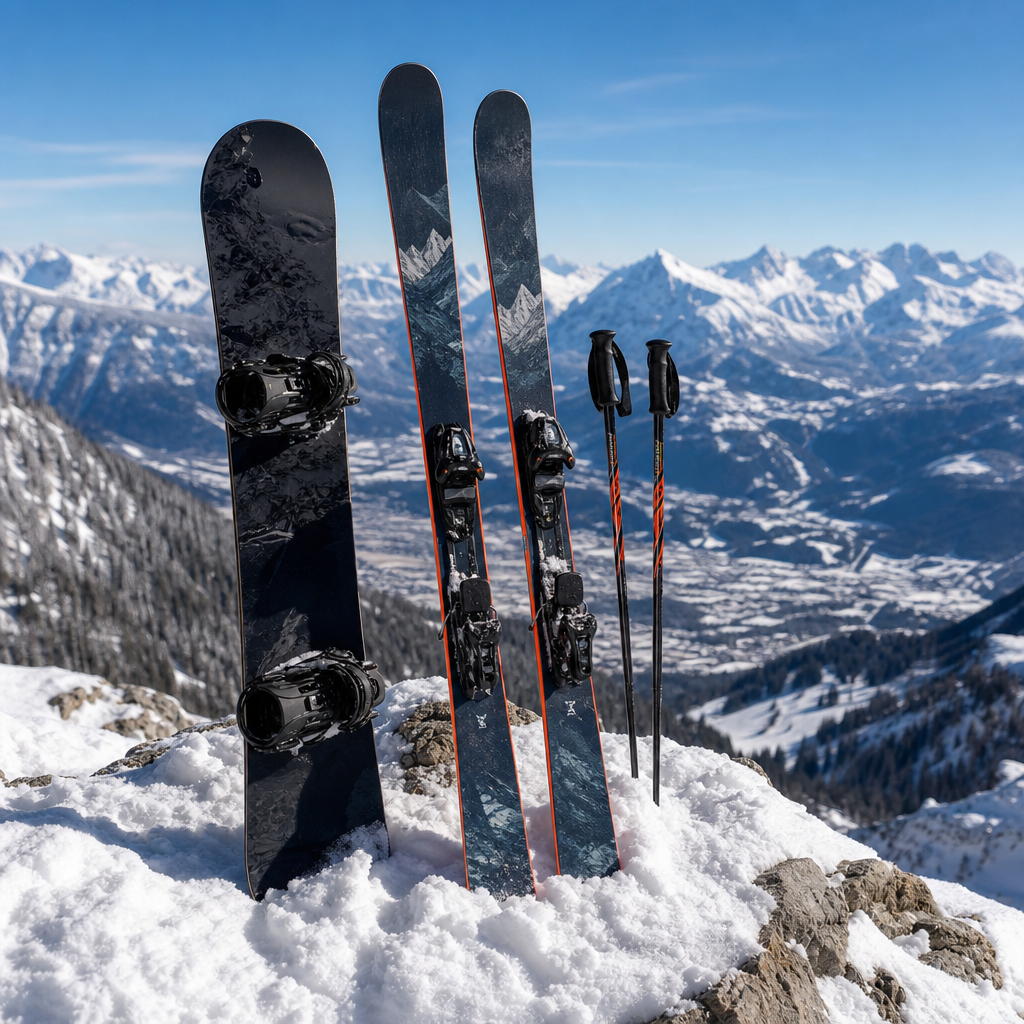
Innovations in polymer-based skis and snowboards have transformed Sports and Leisure equipment from heavy, moisture-sensitive wooden constructions into highly engineered systems tuned for speed, control, durability, and rider preference. In this context, polymers are large-molecule materials such as polyethylene, polyurethane, epoxy, thermoplastic polyurethane, polyamide, and advanced composite resins that appear in bases, sidewalls, topsheets, damping layers, bindings interfaces, boots, and manufacturing adhesives. As someone who has worked with ski and snowboard product teams, tested layups on snow, and reviewed warranty failures in shops, I have seen how material choices change real performance: a faster sintered base glides better in cold dry snow, a tougher sidewall survives park impacts, and a better damping film reduces chatter on refrozen groomers. This matters because modern riders expect one product to balance speed, edge hold, impact resistance, sustainability, and reasonable cost. Polymer innovation makes that balancing act possible. It also shapes the broader Sports and Leisure market by influencing how brands position all-mountain skis, freeride snowboards, rental fleets, race products, youth gear, and backcountry equipment. Understanding these materials helps buyers choose intelligently and helps manufacturers build gear that performs consistently across temperature swings, terrain types, and skill levels.
How polymers changed ski and snowboard construction
The biggest shift in ski and snowboard design came when manufacturers moved from mostly wood and metal structures to layered composite constructions built around polymer chemistry. Today, a typical ski or snowboard is a laminate: a base made from ultra-high-molecular-weight polyethylene, steel edges, fiberglass or carbon reinforcement embedded in epoxy resin, sidewalls commonly made from ABS, a wood or foam core, rubber damping layers, and a protective topsheet often based on polyamide or thermoplastic films. Each polymer contributes a different property. Polyethylene provides low friction and wax absorption. Epoxy binds fibers to the core and transfers load. ABS sidewalls resist cracking and seal the core from moisture. TPU and elastomer films absorb vibration and improve chip resistance. In practical use, this layered system gives designers precision. They can make one model torsionally stiff for carving, another lighter for touring, and another softer and more impact tolerant for freestyle.
For Sports and Leisure applications, that precision matters because the category is broad. Race skis prioritize edge grip and energy return. Rental skis need durability and easy tune cycles. Park snowboards must survive repeated rail impacts. Powder boards benefit from lightweight swing weight and damping in chopped snow. Polymer systems let brands fine-tune these outcomes without relying solely on thicker wood or heavier metal. Well-known construction methods such as cap, sandwich, hybrid sidewall, and monocoque all depend on polymer selection as much as geometry. The result is a market where material engineering, not just shape, determines the rider experience.
Base materials, sidewalls, and topsheets: where performance starts
If a customer asks what polymer innovation they can feel immediately, the answer is usually in the base. Most performance skis and snowboards use sintered UHMW-PE bases, often sold under P-Tex trade names. Sintering creates a porous microstructure that holds wax better than extruded polyethylene, leading to higher speed, especially in cold abrasive snow. Extruded bases are cheaper and easier to repair, which is why many entry-level and rental products still use them. In testing, sintered bases generally reward regular waxing and structure tuning, while extruded bases suit casual riders who value low maintenance more than maximum glide.
Sidewalls are another important but underestimated polymer component. ABS remains the standard because it machines cleanly, bonds well, and handles repeated impacts better than brittle plastics. Some brands blend ABS with recycled content or replace sections with polyurethane to improve damping. In park and rental environments, sidewall toughness directly affects warranty rates because edge compression and topsheet separation often begin at impact points along the sidewall. Topsheets also evolved. Polyamide and TPU-based topsheets resist scratching and chipping better than older brittle layers, and matte thermoplastic films now provide print quality without excessive weight. These material upgrades reduce cosmetic damage and preserve resale value, which matters in a Sports and Leisure market where appearance influences buying decisions almost as much as technical specs.
Composite resins, fibers, and damping systems
The resin system is the hidden engine of modern construction. Epoxy remains dominant because it adheres well to wood, fiberglass, metal, and polymer films while maintaining strength under low temperatures. Better epoxies now offer improved toughness, lower viscosity for fiber wet-out, and more consistent cure cycles in automated presses. That consistency reduces voids, dry spots, and delamination, which are major causes of premature failure. In premium models, manufacturers increasingly pair epoxy with triaxial fiberglass, carbon stringers, basalt fiber, flax reinforcement, or titanal sheets to tune flex and damping. The polymer matrix controls how those reinforcements actually behave under load.
Damping is where polymer science becomes obvious on snow. Rubber foils, viscoelastic films, TPU inserts, and elastomer edge dampers absorb high-frequency vibration that can make skis feel nervous at speed. Brands use different trade names, but the principle is the same: convert vibrational energy into heat before it reaches the rider. On hardpack, effective damping improves contact length and confidence. In choppy resort snow, it reduces fatigue over a full day. There is a tradeoff. Too much damping can make a ski feel dead or slow edge to edge. The best constructions balance lively rebound with calmness, and polymer layers are usually the tuning tool that makes that balance possible.
Manufacturing innovations shaping modern Sports and Leisure gear
Production methods have advanced alongside materials. Early hand layups varied from unit to unit, but current factories rely on CNC-cut cores, digitally controlled presses, precision resin metering, and infrared or heated mold systems that improve repeatability. Thermoplastic components are now welded, co-molded, or overmolded more accurately than in earlier generations. That matters because modern Sports and Leisure buyers expect every ski in a shop rack to feel like the demo pair they tested. Repeatable polymer processing helps deliver that consistency.
One major innovation is the growing use of thermoplastic reinforcement and recyclable resin systems. Traditional thermoset epoxies create strong products but are hard to recycle at end of life. Some manufacturers are trialing bio-based epoxies, recyclable thermoplastic matrices, and lower-temperature cure systems that cut energy use. Others use water-based inks and solvent-reduced finishing layers on topsheets. None of these changes automatically make a ski sustainable; transport, edge steel, core sourcing, and durability still matter. However, I have seen real progress when factories combine cleaner resins with better scrap control and longer-lasting constructions. A board that lasts five hard seasons is often the more responsible product than one marketed as green but built to fail early.
| Component | Common polymer | Main benefit | Typical tradeoff |
|---|---|---|---|
| Base | UHMW-PE, sintered | Fast glide, strong wax absorption | Needs regular tuning and waxing |
| Base | Extruded polyethylene | Low cost, easy repair | Lower peak speed |
| Sidewall | ABS | Impact resistance, reliable bonding | Petrochemical origin, moderate weight |
| Topsheet | TPU or polyamide film | Chip resistance, good graphics | Can add cost |
| Damping layer | Rubber or TPU elastomer | Smoother ride, less chatter | May reduce liveliness if overused |
| Matrix resin | Epoxy | Strong bonding, cold-weather performance | Recycling challenges |
Boots, bindings, and interface materials
Skis and snowboards do not perform alone; the polymer systems in boots and bindings strongly influence control. Ski boots use polyurethane, polyether-based polyurethane, Grilamid, Pebax, and other engineered plastics for shells and cuffs. Polyurethane delivers smooth flex and good damping, making it common in alpine boots. Grilamid and Pebax reduce weight and are widely used in touring boots, where every gram matters on the uphill. Snowboard bindings rely on glass-filled nylon, TPU straps, EVA footbeds, and urethane bushings to balance support and comfort. Boots add heat-moldable foams, thermoformable liners, and rubber compounds designed for cold-temperature traction.
The interface is increasingly sophisticated. Vibration-damping plates under bindings, elastomer pads, and polymer bushings can change stance feel as much as the board itself. In snowboarding, softer urethane underfoot can improve comfort on landings, while stiffer binding chassis maintain response in carving. In skiing, integrated plates and binding interfaces distribute force and affect how the ski bends. These details are central to Sports and Leisure because they shape accessibility. Better polymers make boots easier to fit, bindings lighter to use, and gear less punishing for intermediates. They also help advanced riders push harder without sacrificing comfort.
Discipline-specific design: racing, freestyle, freeride, and touring
Not every innovation benefits every discipline equally. In racing, the priority is precision under extreme force, so manufacturers combine dense sintered bases, stiff epoxy-fiber laminates, and carefully tuned damping polymers with metal reinforcement. The goal is edge hold at speed and clean energy transfer. In freestyle skis and park snowboards, impact resistance and flex durability are more important. Brands often use tougher topsheet films, thicker sidewalls, urethane-rich side bevel areas, and softer resin schedules that resist cracking after repeated compressions. Freeride products sit in the middle: they need damping for chopped snow, low swing weight for maneuverability, and enough backbone for landings.
Backcountry touring has driven some of the fastest polymer innovation in the last decade. Lightweight polyamide and thermoplastic boot shells, adhesive skin systems, and lighter resin-rich composite layups reduce fatigue over long ascents. Yet shaving weight can produce a harsher downhill feel, so brands add localized elastomer damping or hybrid laminates to restore composure. The same pattern appears across Sports and Leisure equipment generally: every material change creates a tradeoff in cost, durability, weight, or feel. Good product design is not about chasing the newest polymer. It is about matching the right polymer system to the actual use case.
What buyers should look for and where the market is heading
For buyers, the practical questions are straightforward. What kind of snow do you ride most? How often will you tune the base? Do you need park durability, touring weight savings, or frontside stability? Answers to those questions reveal which polymer innovations matter. Frequent riders should favor sintered bases, robust ABS or equivalent sidewalls, and reputable epoxy composite construction from brands with strong quality control. Casual riders may be happier with an extruded-base ski or snowboard that is easier to maintain. Anyone shopping for lightweight touring gear should evaluate shell plastic, not just stated weight, because different polymers change fit, warmth, and downhill support.
The market is heading toward better recyclability, smarter damping, more precise layup control, and greater customization. Expect more bio-derived resin content, more replaceable components, and more thermoplastic parts that simplify repair or reprocessing. Digital manufacturing will likely tighten flex tolerances, helping brands offer more consistent products across sizes. For the Sports and Leisure category, that means equipment that is more specialized yet easier to choose because performance claims can be tied more clearly to material design. If you are building a winter gear strategy, start by understanding the polymers in the product, then compare how those materials support your terrain, ability, and maintenance habits. That is the fastest route to gear that lasts longer and rides better.
Frequently Asked Questions
1. What polymers are most important in modern skis and snowboards, and what does each one do?
Modern skis and snowboards rely on several specialized polymers, each chosen for a specific performance role rather than used as a generic plastic. Ultra-high-molecular-weight polyethylene, often used for base material, is one of the most important because it provides a fast, wax-absorbent, abrasion-resistant sliding surface that can withstand repeated contact with snow, ice, and debris. Epoxy resins are equally critical, serving as the matrix that bonds fiberglass, carbon fiber, wood cores, and metal laminates into a unified structure. Without high-quality epoxy systems, the board or ski would not maintain its designed flex pattern, torsional rigidity, or long-term structural integrity.
Polyurethane and thermoplastic polyurethane are widely used where impact resistance, flexibility, and damping matter. These materials often appear in sidewalls, vibration-control layers, protective films, and boot components because they help absorb shock while resisting cracking in cold conditions. Polyamide, commonly known as nylon in many sports applications, can be found in topsheets, reinforcement layers, and binding-related components due to its combination of toughness, dimensional stability, and wear resistance. Advanced composite resins and engineered thermoplastics also show up in mounting zones, edge interfaces, and hybrid laminate systems where manufacturers want to fine-tune strength-to-weight ratio, responsiveness, and manufacturing efficiency.
What makes polymer innovation so significant is not just the presence of these materials, but how precisely they are combined. Designers can adjust molecular structure, hardness, elasticity, friction behavior, bonding chemistry, and temperature response to create equipment tailored for racing, all-mountain riding, freestyle use, touring, or powder performance. In other words, polymers are not simply replacing wood or metal; they are enabling a far more sophisticated engineering approach to speed, control, durability, and rider customization.
2. How have polymer-based innovations improved the performance of skis and snowboards compared with older wooden designs?
The shift from traditional wooden constructions to polymer-enhanced systems has dramatically improved consistency, durability, and precision. Older wooden skis and boards were often heavier, more sensitive to moisture, and less predictable over time because natural materials can vary from piece to piece and change with environmental exposure. Modern polymer systems solve many of those issues by giving manufacturers tighter control over flex, rebound, damping, and wear characteristics. That means a rider gets equipment that performs more reliably from the first run to the hundredth, and from cold morning groomers to softer afternoon conditions.
One major advance is in glide and base durability. Polyethylene bases are faster, more repairable, and more resistant to abrasion than older surface materials, especially when sintered formulations are used. Another major improvement is vibration management. Through elastomeric damping layers, polyurethane sidewalls, and resin systems tuned for energy absorption, manufacturers can reduce chatter at speed while preserving edge hold and responsiveness. This helps skiers and snowboarders feel more stable on rough snow, icy sections, and high-speed descents.
Polymers have also transformed shaping and construction freedom. Engineers can build layered structures that combine a wood core with fiberglass, carbon, titanal, thermoplastic reinforcements, and elastomer inserts, all bonded through advanced resin chemistry. This makes it possible to produce lightweight but powerful designs with very specific longitudinal flex and torsional stiffness profiles. As a result, athletes and recreational riders benefit from products that can be optimized for carving, park riding, powder float, freestyle landings, or backcountry efficiency. Compared with older wood-dominant designs, modern polymer-based equipment offers a much more refined balance of strength, liveliness, impact resistance, and rider-specific tuning.
3. Why are polymer bases and sidewalls so important for speed, edge control, and durability?
The base and sidewall are two of the hardest-working parts of any ski or snowboard, and polymer science has made both substantially better. The base, usually made from polyethylene, directly affects how the equipment interacts with snow. Its molecular structure influences friction, wax retention, abrasion resistance, and repairability. Higher-performance sintered polyethylene bases contain a more porous microstructure that holds wax effectively, helping reduce drag and improve glide across a wider range of snow conditions. For racers and advanced riders, this can make a noticeable difference in acceleration, top speed, and consistency through changing terrain.
Sidewalls, frequently made from polyurethane, ABS-type materials, or other impact-resistant polymers, play an equally important role in durability and edge transmission. They help connect the top structure of the ski or board to the steel edges and base assembly while protecting the core from impact and moisture intrusion. A well-designed sidewall material can absorb shocks from rocks, rails, hard landings, and repetitive edge pressure without becoming brittle in cold temperatures. At the same time, it contributes to how directly force from the rider is transferred into the edge during carving or quick directional changes.
These polymer components also influence long-term reliability. Poor sidewall adhesion or low-quality base material can lead to delamination, edge separation, gouging, and reduced performance over time. By contrast, advanced formulations are engineered for better bond compatibility, cold-weather toughness, UV resistance, and dimensional stability. The result is equipment that remains fast, controllable, and structurally sound even after repeated exposure to harsh mountain environments. In practical terms, polymer bases and sidewalls are central to the ride feel people notice most: speed underfoot, confidence on edge, and resistance to wear.
4. How do polymers affect vibration damping, flex, and overall ride feel?
Polymers are fundamental to ride feel because they can be engineered to manage how energy moves through a ski or snowboard. When a rider encounters chop, ice, landings, or high-speed vibrations, those forces travel through the structure. Without proper damping, the equipment can feel nervous, harsh, or unstable. Elastomeric polymers such as polyurethane and thermoplastic polyurethane help absorb and disperse those vibrations, reducing chatter while allowing the ski or board to stay composed. This is especially valuable for aggressive carving, freeride descents, and mixed snow where stability is essential.
Flex behavior is also heavily influenced by polymer-based bonding systems and reinforcement layers. Epoxy resin does more than glue the product together; it helps define how the laminated structure bends, rebounds, and resists twisting. The interaction between resin, fiberglass, carbon, and core materials determines whether a design feels playful, powerful, forgiving, or highly reactive. Because polymers can be formulated with different stiffness and elastic properties, manufacturers can fine-tune the balance between snap and smoothness. A park-oriented snowboard might prioritize impact tolerance and a softer, more pressable flex, while a race ski may use a stiffer laminate package with highly controlled damping for edge precision at speed.
Another key point is temperature stability. Ride feel should not change dramatically in sub-freezing conditions, and advanced polymer systems are developed to maintain appropriate flexibility and toughness in cold environments. This matters not only for performance but also for safety and longevity. A ski or snowboard that stays predictable in varying temperatures gives the rider better control, more confidence, and less fatigue. In short, polymers are central to the sensory experience of modern equipment: how smooth it feels, how quickly it responds, how much energy it returns, and how composed it remains when the terrain gets demanding.
5. Are polymer-based skis and snowboards more sustainable, and what innovations are shaping the future?
Sustainability in polymer-based skis and snowboards is a complex issue, but the industry is making meaningful progress. Traditional petrochemical-derived polymers still dominate many parts of construction because they offer proven strength, bonding performance, low-temperature durability, and process consistency. However, manufacturers are increasingly exploring bio-based epoxies, recycled polyethylene base content, recycled thermoplastics, solvent-reduced processing, and more efficient layup methods that cut manufacturing waste. In some products, thermoplastic composite systems are being investigated because they may allow better recyclability and faster processing compared with conventional thermoset-only constructions.
Durability itself is also an important sustainability factor. A ski or snowboard that lasts longer, resists delamination, and maintains performance over many seasons reduces replacement frequency and lowers material turnover. Polymer innovations that improve impact resistance, moisture protection, edge retention, and repairability can therefore contribute to a more sustainable product lifecycle, even if the material system is not yet fully circular. Better bases that can be repaired repeatedly, tougher topsheets that resist chipping, and stronger bonding chemistries all extend usable life in practical ways that matter to both consumers and brands.
Looking ahead, some of the most important innovations include smarter hybrid material systems, lower-emission resin chemistry, recyclable thermoplastic laminates, and digital manufacturing techniques that reduce excess material use. Researchers and manufacturers are also refining how polymers interact with natural fibers, sustainably sourced wood cores, and lightweight composite reinforcements to create equipment that performs at a high level with a lower environmental footprint. The future is unlikely to involve a single miracle material. Instead, it will be defined by better polymer selection, cleaner production methods, improved end-of-life strategies, and designs that deliver elite performance while using materials more responsibly.