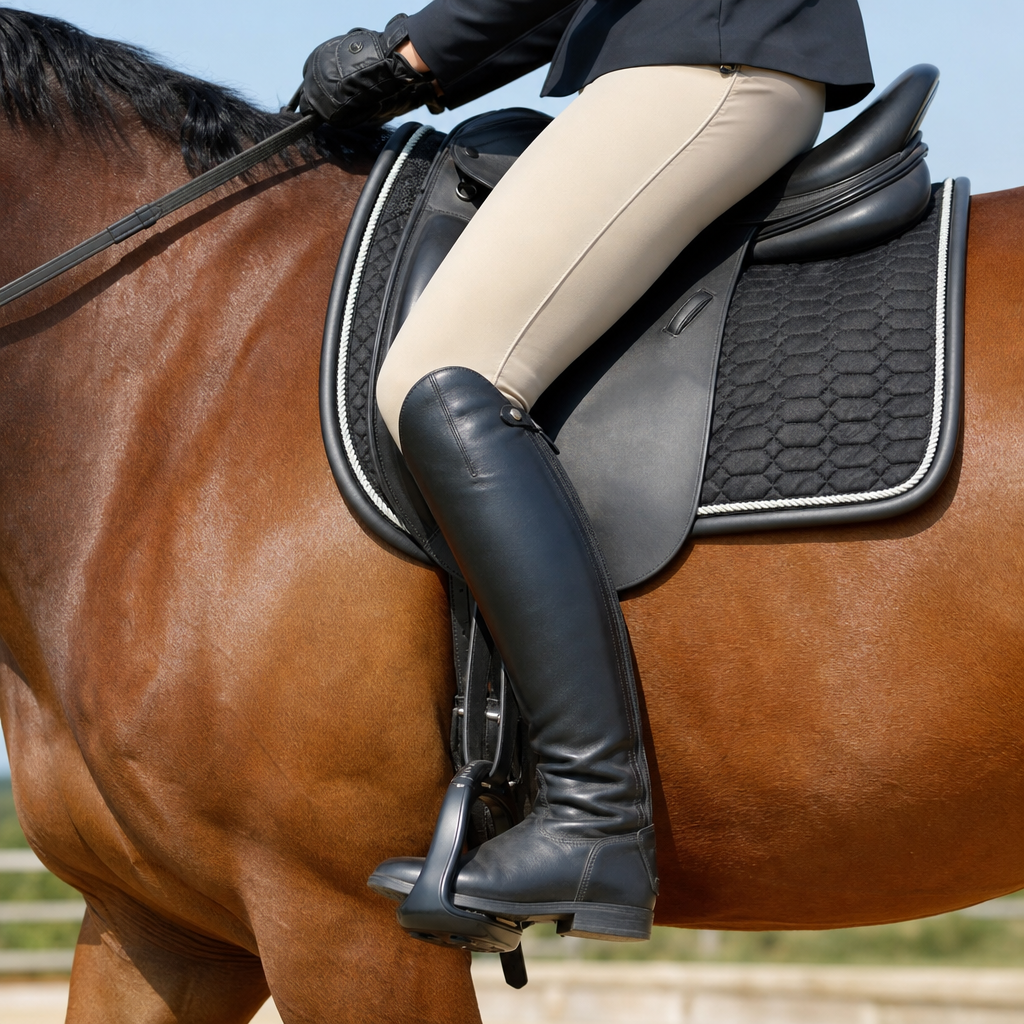
Polymers are the backbone of modern equestrian equipment, shaping everything from safety helmets and protective boots to saddle trees, synthetic tack, arena surfaces, and stable fittings. In equestrian use, a polymer is any large-chain material, natural or synthetic, engineered to deliver properties such as impact absorption, flexibility, weather resistance, low weight, abrasion resistance, or easy sanitation. I have worked with polymer-based components in sport and industrial product lines, and the equestrian sector is a clear example of why these materials matter: horses create high loads, repetitive motion, sweat, mud, ultraviolet exposure, and safety-critical impact scenarios that traditional materials alone cannot manage efficiently.
For riders, owners, trainers, and facility managers, understanding polymers in equestrian equipment is not a niche technical topic. It affects rider protection, horse comfort, equipment lifespan, maintenance cost, and even regulatory compliance. A helmet liner made from expanded polystyrene behaves differently from one using expanded polypropylene. A stirrup tread molded from thermoplastic elastomer offers more grip in rain than hard polypropylene. A synthetic saddle with reinforced polymer panels can reduce upkeep compared with leather, yet it may fit differently and distribute pressure in another way. These differences are practical, not academic, and they influence purchase decisions across recreational riding, show jumping, dressage, eventing, racing, and yard management.
The sports and leisure side of equestrian applications is especially broad because it combines performance products, protective equipment, transport accessories, and infrastructure. Riders need gear that performs consistently over long training cycles. Horses need tack and leg protection that minimizes rubbing, manages heat, and withstands repeated cleaning. Barns and arenas need materials that resist moisture, manure acids, microbial growth, and freeze-thaw stress. Polymers answer these demands through formulations that can be foamed, fiber-reinforced, injection molded, laminated, extruded, coated, or woven into technical textiles. That versatility is why this hub article matters: it explains the core polymer families, where they are used, what benefits they provide, and where their limitations should be considered before selecting equipment.
Why polymers dominate modern equestrian gear
Polymers became central to equestrian equipment because they solve a difficult engineering problem: how to combine low weight with controlled flexibility, durability, and surface resilience. Traditional materials such as leather, steel, and wood still matter, but on their own they can be heavy, inconsistent in wet conditions, vulnerable to rot or corrosion, and expensive to maintain. Thermoplastics like polypropylene, polyethylene, thermoplastic polyurethane, and polyamide can be shaped into repeatable forms at scale. Thermoset composites and reinforced polymer structures can provide stiffness where needed, such as in helmet shells, saddle components, trailer panels, and stirrup frames. Elastomeric polymers add cushioning and grip in reins, girths, boot linings, saddle pads, and arena products.
In practical terms, polymers improve three things that riders notice immediately. First, they reduce fatigue because equipment can be lighter. Second, they improve consistency because molded parts do not vary as much as natural materials. Third, they simplify cleaning because non-porous surfaces shed water and dirt more easily. Consider a synthetic girth using a polyurethane-coated outer layer and closed-cell foam inner padding. After a muddy schooling session, it can be rinsed, disinfected, and dried quickly. A leather equivalent may offer excellent feel but usually needs more careful drying and conditioning to avoid stiffening or cracking. That tradeoff between tactile tradition and low-maintenance performance runs through the entire category.
Safety is another decisive reason polymers dominate. Impact management relies heavily on engineered foams and shell materials. In riding helmets, expanded polystyrene crushes on impact to absorb energy, while polycarbonate or ABS shells help spread load and resist penetration. In body protectors and air vests, segmented foams and coated fabrics must flex with movement but react predictably in a fall. Protective horse boots use polyurethane or TPU shells to shield against strikes while lining materials help prevent pressure points. These are not interchangeable choices; each polymer is selected for a measurable property profile that affects real-world injury risk.
Key polymer families used in equestrian applications
The most common equestrian polymers fall into several functional groups. Polyurethane appears in coatings, synthetic leathers, foams, adhesives, and protective shells because it can be tuned from soft and flexible to hard and abrasion resistant. Thermoplastic polyurethane is particularly valuable in bell boots, tendon boots, over-reach boots, and grippy components because it resists tearing, flex cracking, and many oils. Polypropylene is widely used for molded parts, buckles, webbing components, and lightweight shells. Polyethylene appears in stable boards, water buckets, liners, and rotationally molded products because it handles moisture and chemical exposure well.
Polyamide, commonly known as nylon, is essential in webbing, stitching, brush bristles, reinforced hardware housings, and technical textiles. Its high tensile strength and abrasion resistance make it useful in halters, lead ropes, luggage, and turnout accessories, though it can absorb moisture and needs thoughtful design in humid conditions. Polyester is another major textile polymer found in saddle pads, turnout rugs, stable blankets, and web straps. It offers strong dimensional stability and better UV resistance than many alternatives. EVA, or ethylene-vinyl acetate, is frequently used for padding in saddle systems, protective inserts, and lightweight cushioning. Neoprene, a synthetic rubber, remains common in girths, boot linings, and support wraps because it is flexible and water resistant, although heat build-up can be a drawback if ventilation is poor.
Composite materials also deserve attention. Many modern saddles, especially synthetic and semi-synthetic designs, use polymer-based trees reinforced with glass fiber or carbon fiber. These structures can be engineered for controlled flex and long-term dimensional stability. The same principle applies to crop shafts, helmet shells, and select carriage or trailer components. In facility products, recycled rubber granules bound with polymer systems are often used in pavers, walkway mats, and arena additives. This mix of material families is why equestrian equipment development requires both mechanical understanding and practical horse-world knowledge.
Where polymers appear across sports and leisure equipment
As a sports and leisure hub, this topic extends well beyond obvious tack. Riders encounter polymers from head to toe and from stable aisle to competition arena. The broadest product categories include protective gear, tack and saddlery, horse boots and bandaging systems, apparel and footwear, grooming and feeding equipment, transport products, and riding surfaces. Each category uses different polymer combinations depending on whether the design priority is energy absorption, tensile strength, grip, low water uptake, thermal comfort, or resistance to manure, disinfectants, and sunlight.
| Equipment area | Common polymers | Main benefit | Typical tradeoff |
|---|---|---|---|
| Helmets and body protectors | EPS, EPP, polycarbonate, ABS, PU foams | Impact management and low weight | Limited life after major impact or UV aging |
| Saddles and tack | PU, TPU, nylon, polyester, composite resins | Easy care, weather resistance, repeatable fit components | Different feel from premium leather |
| Horse boots and wraps | TPU, neoprene, EVA, polyester mesh | Strike protection, cushioning, washability | Possible heat retention if poorly vented |
| Stable and arena products | HDPE, rubber compounds, geotextiles, PU binders | Moisture resistance and durability | Quality varies widely by formulation |
A few real-world examples show how integrated these materials have become. In eventing, riders often use lightweight polymer-reinforced stirrups, ventilated helmets, TPU tendon boots, technical base layers made from polyester-elastane blends, and trailer liners based on polyethylene or rubber composites. In dressage, synthetic girths with soft polymer covers are common for easy cleaning, while arena mirrors and kickboards frequently rely on polymer-framed or polymer-faced construction. In leisure trekking, waterproof saddle bags, molded hoof-pick handles, insulated drink containers, and rainproof turnout rugs all depend on polymer technology as much as on traditional craftsmanship.
Safety equipment and impact protection
Helmet design is one of the clearest demonstrations of polymer science in equestrian sport. Most certified riding helmets use a thin outer shell, often polycarbonate or ABS, bonded to an energy-absorbing foam liner. The liner is usually EPS, which crushes irreversibly during a significant impact, converting kinetic energy into deformation. Some models incorporate EPP or multiple-density foams to manage repeated minor knocks better, although no helmet should be treated as indefinitely reusable after a serious fall. Vent channels, retention systems, and comfort pads frequently rely on polyester mesh, nylon webbing, PU foam, and moisture-wicking textiles. Certification standards vary by market, but reputable products are tested for impact attenuation, retention strength, and penetration resistance.
Body protectors and air vests use polymers differently. Traditional body protectors rely on segmented foam layers enclosed in abrasion-resistant textile shells so the rider can move while the vest disperses impact energy over a broader area. Air vests depend on coated woven fabrics, sealed seams, trigger mechanisms, and inflatable polymer bladders that deploy rapidly when the rider separates from the saddle. In my experience, the best products succeed not just because of headline protection claims but because the materials maintain performance after sweat, repeated flexing, temperature cycling, and cleaning. A protector that becomes brittle in winter or waterlogged after washing will fail in ordinary use, even if the lab concept is sound.
Horse leg protection follows the same principle of balancing rigidity and compliance. Open-front boots, brushing boots, fetlock boots, and over-reach boots typically combine a molded outer shell with a softer lining. TPU and PU are common shell choices because they resist cuts and flex fatigue. Linings may use neoprene, perforated foam, faux fur, or spacer fabrics. The critical issue is not only strike protection but also thermal management. Several studies in equine sports medicine have raised concerns about tendon heating under poorly ventilated boots. That is why vented shell geometry, perforated lining foams, and moisture-moving textiles are increasingly important design features rather than marketing extras.
Saddlery, tack, and rider contact surfaces
Saddles illustrate both the strengths and the limits of polymers in equestrian equipment. Synthetic saddles often use molded polymer trees, foam panels, synthetic suede seats, and PU-coated outer surfaces. Their advantages are low weight, weather tolerance, lower maintenance, and manufacturing consistency. For riding schools, trekking centers, and owners in wet climates, these are substantial benefits. A synthetic saddle can often be wiped clean after use, while a leather saddle may need careful drying and conditioning. However, saddle fit still depends on shape, panel design, flocking or foam behavior, and the horse’s changing musculature. A polymer-based saddle is not automatically better fitting; it is simply built from different materials with different adjustment limits.
Bridles, reins, girths, and breastplates also show how polymers can support function without fully replacing traditional preferences. Biothane-style coated webbing, TPU-coated straps, rubberized reins, and neoprene-lined girths are popular because they resist sweat and mildew and remain usable in rain. Endurance riders especially value tack that can be cleaned quickly at vet gates or multi-day camps. Yet some riders still prefer leather for suppleness, repairability, and appearance in formal disciplines. The practical conclusion is that polymer tack excels where sanitation, weather resistance, and low maintenance are priorities, while premium leather still leads where nuanced feel and classic presentation matter most.
Even small rider contact points benefit from polymer engineering. Stirrup treads made from elastomeric compounds improve grip. Flexible jointed stirrups may use polymer bushings or inserts to reduce vibration transfer. Riding boots often include polyurethane midsoles, thermoplastic heel counters, and waterproof membrane laminates. Gloves use synthetic leather palms and silicone or PU grip zones. These details affect security and comfort during long sessions, and they help explain why polymer use in equestrian sport is now systemic rather than occasional.
Stable equipment, arena systems, and maintenance realities
Outside tack rooms and competition rings, polymers are equally influential in the wider leisure ecosystem. High-density polyethylene is common in buckets, feed bins, mounting blocks, kickboards, and stable partitions because it resists moisture, many cleaning chemicals, and impact. Rubber and EVA mats reduce slip risk in wash bays, aisles, and trailers while offering shock absorption underfoot. Geotextile membranes made from polypropylene or polyester are used beneath arena footing to improve drainage separation and structural stability. Polymeric binders may also be used in waxed or treated arena systems to help manage dust and consistency.
Durability, however, depends heavily on formulation and environment. Sunlight can embrittle lower-grade plastics. Cold temperatures can change impact behavior. Harsh disinfectants may attack some elastomers and coatings. Recycled-content products can be excellent, but feedstock consistency matters. I have seen low-cost polymer stable fittings fail early because they were not UV stabilized or because screw retention in thin molded sections was poorly designed. Buyers should therefore evaluate not just material names but also wall thickness, reinforcement, fastening method, temperature rating, and exposure conditions.
Sustainability is a growing concern in this category. Polymers can extend service life and reduce water use from maintenance, but end-of-life management remains uneven. The best direction is not simply replacing every item with “eco” labeling; it is choosing durable products, repairing textile and tack components where possible, and favoring manufacturers that disclose recycled content, take-back programs, or material traceability. For a sports and leisure operation such as a riding school, lifecycle cost usually aligns with environmental sense: a longer-lasting helmet component, mat, or synthetic strap reduces both waste and procurement frequency.
Polymers have transformed equestrian sports and leisure by making equipment lighter, safer, easier to clean, and more consistent in demanding conditions. They now underpin helmets, body protectors, horse boots, saddles, tack, riding apparel, arena systems, trailer fittings, and stable hardware. The main reason is simple: no other material family offers the same range of tunable properties across impact absorption, flexibility, weather resistance, grip, and sanitation. When chosen well, polymers improve rider safety, horse comfort, and day-to-day practicality without eliminating the role of traditional materials.
The most useful way to assess equestrian polymers is by application, not by hype. Ask what the item must do under real conditions: absorb impact, resist sweat, shed water, flex repeatedly, protect tendons, hold shape, or survive disinfectants and sun exposure. Then look at the exact polymer system, construction method, ventilation, reinforcement, and certification where relevant. A TPU boot, an EPS helmet, a PU-coated girth, and an HDPE stable board solve different problems, so they should never be judged by one generic standard. Good buying decisions come from matching material properties to the discipline, climate, horse, and maintenance routine.
As the hub page for sports and leisure applications, this topic connects every major equestrian product category through one central idea: polymer selection drives performance. If you are reviewing equipment for purchase, replacement, or product development, use this article as your starting framework, then compare the specific subtopics in helmets, tack, arena materials, stable systems, and protective gear in greater detail. Better material knowledge leads directly to better equipment choices.
Frequently Asked Questions
What kinds of polymers are commonly used in equestrian equipment, and why are they so important?
Polymers appear in nearly every category of modern equestrian equipment because they can be engineered to solve very specific performance and safety problems. In practical terms, this includes thermoplastics such as polycarbonate, polypropylene, polyethylene, nylon, TPU, and EVA, as well as foams, elastomers, coated fabrics, and fiber-reinforced polymer composites. You will find these materials in riding helmets, body protectors, tendon boots, stirrup treads, saddle trees, reins, synthetic saddles, bucket liners, arena grids, jump cups, fencing components, and stable hardware. Their importance comes down to control over properties. A polymer can be formulated to absorb impact, resist cracking in cold weather, flex without permanent deformation, repel water, withstand UV exposure, or survive repeated abrasion from dirt, leather, metal fittings, and daily handling.
That design flexibility is what makes polymers so valuable in equestrian use. Traditional materials such as leather, wood, and metal still play major roles, but polymers often improve consistency, weight, hygiene, and weather resistance. A polymer shell in a helmet can spread impact forces. A closed-cell foam liner can help manage energy and improve comfort. A synthetic girth or bridle can be made easier to clean and less vulnerable to water damage than untreated natural materials. In arena construction, polymer additives and geotextile systems can help stabilize footing and improve drainage performance. In stable environments, molded polymer fittings can reduce maintenance and resist corrosion better than some metal alternatives. The reason polymers matter is not simply that they are “plastic,” but that they let manufacturers tune the behavior of equipment in ways that directly affect rider safety, horse comfort, durability, and day-to-day practicality.
How do polymers improve safety in helmets, body protectors, and leg protection for horses?
Safety is one of the strongest arguments for polymer use in equestrian equipment. In helmets, polymers are used in layered systems, with each layer performing a different job. The outer shell, often made from a tough engineering polymer or composite-reinforced polymer, helps resist penetration and distribute impact over a larger area. Beneath that, an energy-managing foam liner compresses during an impact to reduce peak forces transmitted to the rider’s head. Comfort pads, retention components, and harness parts frequently rely on softer polymer foams, textiles, and webbing to improve fit and stability. This combination is effective because polymers can be selected for controlled deformation, low weight, and repeatable manufacturing quality. A helmet that is too heavy, too brittle, or inconsistent from unit to unit is not acceptable, and polymers help manufacturers balance all of those requirements.
In body protectors and horse leg protection, polymers contribute in a similar way by combining shock management with flexibility. Protective vests and air-compatible systems often use layered foams, segmented panels, and resilient outer materials that move with the rider while still offering structured protection. On the horse, tendon boots, fetlock boots, brushing boots, and overreach boots frequently use molded shells, foam linings, neoprene-like elastomeric layers, or TPU strike zones. These materials can cushion impact, reduce abrasion, and maintain usable performance in mud, water, dust, and repeated flexing. Importantly, good protective polymer components are not just hard; they must manage energy, avoid creating pressure points, and remain stable over time. That is why material selection, thickness, density, vent design, and fastening quality all matter. A well-designed polymer-based protector should help dissipate force while remaining comfortable enough that horse or rider can perform naturally.
Are synthetic polymer-based tack and saddlery as durable and reliable as traditional leather?
Synthetic tack and polymer-based saddlery can be highly durable and reliable, but the answer depends on design quality, polymer choice, reinforcement strategy, and intended use. High-quality synthetic bridles, girths, stirrup leathers, and saddles are often built with coated webbing, reinforced polymer laminates, engineered textiles, and molded structural parts that perform very well under wet, dirty, and high-use conditions. One of the biggest advantages is environmental resistance. Many synthetic materials do not absorb water the way leather does, so they are less likely to become heavy, stiff, mold-prone, or difficult to clean after exposure to rain, sweat, and mud. For riding schools, endurance use, event support equipment, or owners who prioritize easy maintenance, that can be a significant operational benefit.
That said, durability should never be judged by material category alone. A premium leather product can far outperform a poorly made synthetic one, and the reverse is equally true. Reliable polymer-based tack usually includes proper load-bearing reinforcement, quality stitching or bonding, stable hardware interfaces, and materials selected for creep resistance, abrasion resistance, and UV durability. Areas around billets, buckle turns, stress holes, and attachment points are especially critical. If a polymer material is too soft, too thin, or poorly stabilized, it may crack, stretch, delaminate, or fail under repeated load. Good manufacturers account for these risks through testing and conservative design. In use, synthetic tack often excels in consistency and easy care, while leather may still win on traditional feel, aesthetics, and in some cases long-term serviceability if meticulously maintained. The best choice depends on workload, climate, rider preference, and whether the specific product has been engineered for real equestrian stresses rather than simply made to look modern.
How are polymers used in saddles, arena surfaces, and stable equipment beyond obvious plastic parts?
Polymers are often working behind the scenes in ways riders do not immediately notice. In saddles, for example, they may form the saddle tree itself or serve as part of a hybrid structure combining polymer matrices with fiber reinforcement for stiffness and dimensional stability. This can help control weight, manufacturing repeatability, and resistance to moisture-related warping compared with some traditional constructions. Foam panels, synthetic flocking components, molded seat bases, flexible knee blocks, and coated saddle coverings also rely on polymer technology. Even where a saddle appears traditional on the outside, the internal structure may include engineered polymer elements chosen to influence flex patterns, rider support, and durability under repeated loading.
In arena construction, polymers play a major role in footing systems and sub-base stabilization. Geotextiles, drainage membranes, polymer fibers mixed into footing, and modular grid systems can all influence drainage, shear stability, moisture retention, and surface consistency. The goal is not to replace sound arena design but to improve how the system behaves under hoof impact and weather variation. In stables and yards, polymers show up in wall liners, feed bins, water containers, kick boards, anti-slip mats, door guides, insulation layers, and corrosion-resistant fittings. These materials are chosen because they can be easy to sanitize, resistant to chemicals and moisture, quieter on impact than metal, and safer in certain contact zones if properly designed. So while the obvious “plastic part” may be visible on the surface, polymers are also embedded in structural, hygienic, and performance functions that shape the overall equestrian environment.
What should buyers look for when evaluating polymer-based equestrian equipment for quality, longevity, and horse comfort?
The first thing to look for is whether the product has clearly been designed around function rather than marketing language. Not all polymer-based equipment is equal, and broad claims such as “lightweight,” “shockproof,” or “weatherproof” do not mean much without evidence of good construction. Buyers should examine how the material is used at stress points, whether there is reinforcement where straps bend or loads concentrate, how edges and seams are finished, and whether closures, buckles, rivets, and attachment systems are compatible with the surrounding material. In safety equipment, recognized certification and proper fit are non-negotiable. In horse equipment, surface feel, flexibility, heat management, and avoidance of pressure hotspots matter just as much as headline durability. A boot or saddle component can be technically tough yet still perform poorly if it traps excessive heat, rubs, or restricts movement.
It is also wise to think about the real service environment. Sunlight, sweat, mud, washing chemicals, freezing temperatures, and repeated flexing all accelerate material aging. A good polymer product should be selected and built with those exposures in mind. Ask whether it resists UV degradation, whether it stays flexible in cold weather, whether it absorbs water, and whether cleaning methods are likely to shorten its life. For items in direct contact with the horse, comfort indicators include soft contact surfaces, stable shape under load, low risk of chafing, and enough flexibility to move with the body without collapsing. For structural items, dimensional stability and resistance to cracking or fatigue are essential. Ultimately, quality polymer-based equestrian equipment should feel purposeful: light where possible, strong where necessary, comfortable in use, easy to maintain, and consistent over time. When those traits are present, polymers are not a compromise; they are often the reason the product performs as well as it does.