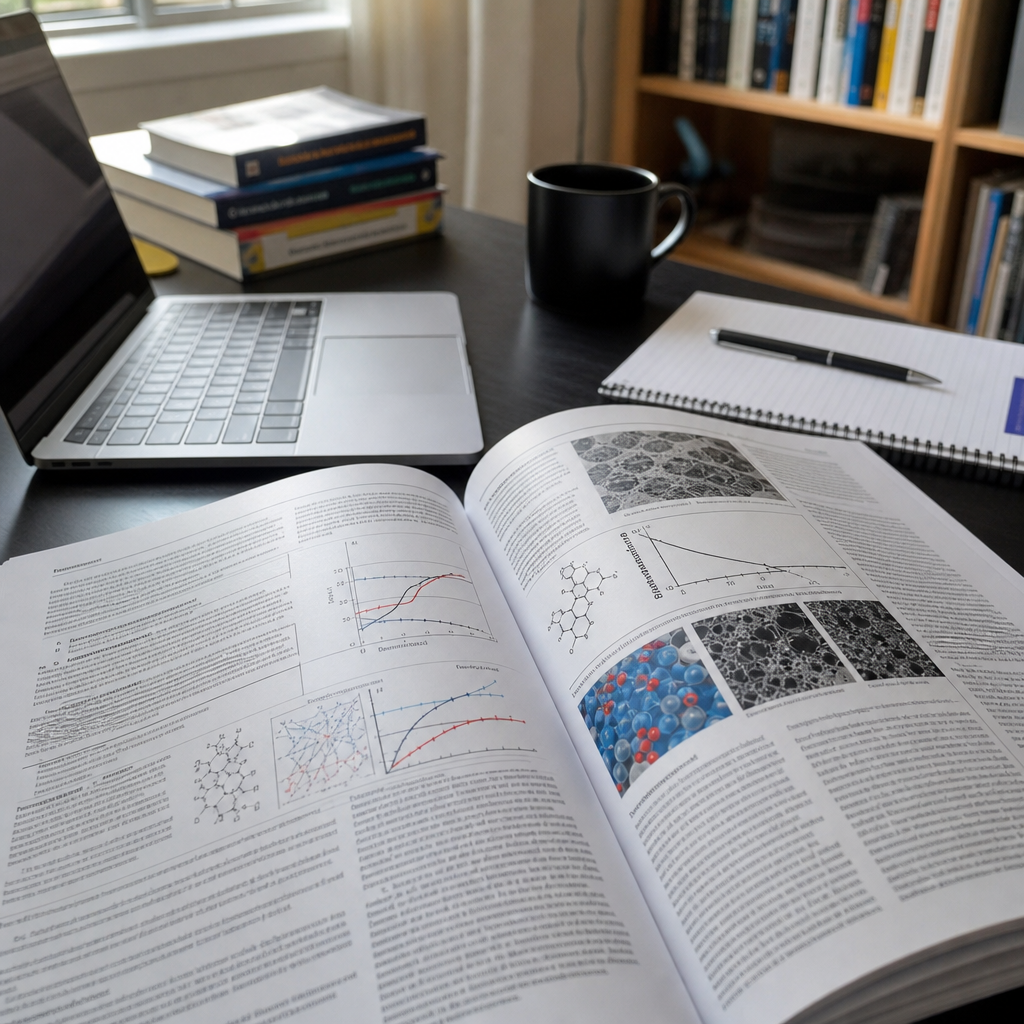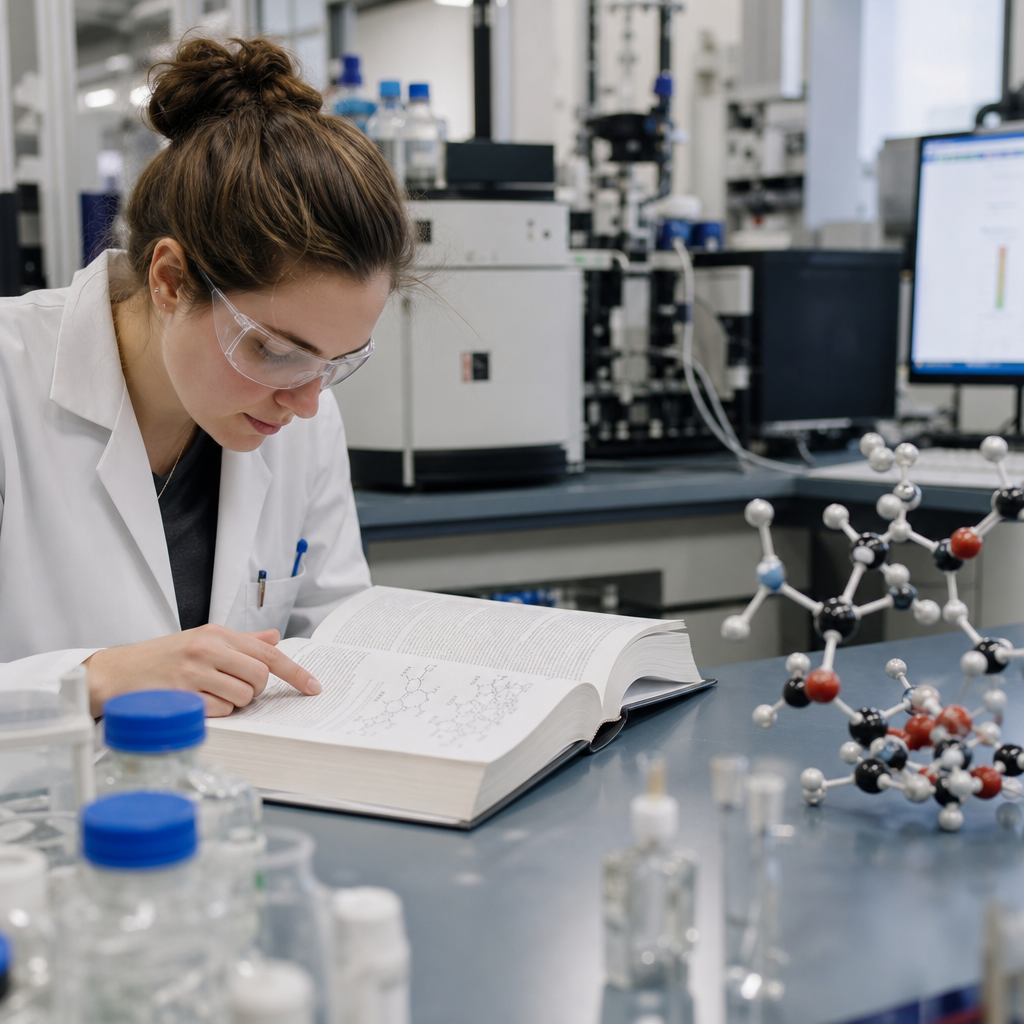
Reference books remain foundational tools in polymer research because they organize decades of chemistry, physics, processing knowledge, and materials data into dependable sources that scientists can use to frame experiments, interpret results, and train new researchers. In polymer science, a reference book is not simply a textbook. It is usually a handbook, encyclopedia, data compendium, methods manual, or advanced monograph designed for consultation rather than linear reading. Journals report what is new; reference books explain what is already established, how terminology is used, which measurements are standard, and where a material or method fits within the wider field. That distinction matters in a discipline where a single project can span synthesis, rheology, spectroscopy, thermal analysis, compounding, and end-use performance.
I have seen this repeatedly in laboratory and product development settings. Teams often begin with journal searches, but the most expensive mistakes happen when they skip foundational sources. A paper may describe a successful grafting reaction or nanocomposite formulation, yet omit assumptions that a good handbook makes explicit: moisture sensitivity, molecular weight effects, crystallinity changes, test method limitations, or common additives that alter behavior. Reference books reduce that risk by supplying context. They help a researcher understand why polyethylene creeps, why polyamide absorbs water, why differential scanning calorimetry can mislead when thermal history is ignored, or why gel permeation chromatography calibration must match polymer architecture.
For an Educational Resources hub focused on Books and Journals, this topic matters because polymer research depends on both stable knowledge and current discovery. Books provide the stable layer. Journals provide the moving frontier. Used together, they support stronger literature reviews, better experimental design, cleaner communication, and more credible technical decisions. This article explains the role of reference books in polymer research, how they differ from journals, which types of books serve specific needs, how researchers use them in practice, and how to build an efficient reading strategy that links books and journals into one working system.
Why reference books still matter in a journal-driven field
Polymer research moves quickly, but the field is cumulative. A scientist studying biodegradable polyesters today still relies on established ideas about step-growth polymerization, hydrolysis kinetics, morphology, and mechanical testing that were codified long before the latest paper appeared. Reference books matter because they consolidate this durable knowledge. They define standard terms such as number-average molecular weight, dispersity, glass transition temperature, entanglement density, and tacticity in ways that are more stable than article-specific usage. That stability is essential when comparing findings across laboratories, decades, and application areas.
They also save time. In practice, researchers rarely need to rediscover the basics of Fourier transform infrared spectroscopy peak assignments, the Flory-Huggins framework for mixing, the Williams-Landel-Ferry relation in viscoelasticity, or the principles behind melt flow index measurements. A strong reference source gives the accepted equation, assumptions, limitations, and typical interpretation. Instead of assembling that foundation from twenty papers with varying notation, the researcher gets a coherent baseline from one vetted source. This is especially important for interdisciplinary teams in coatings, packaging, biomedical devices, energy storage, and composites, where chemists, engineers, and analysts need a shared technical language.
Another reason reference books matter is quality control in literature interpretation. Journal articles can be narrow by design. They may optimize one response variable, use proprietary formulations, or focus on a single characterization method. A reference volume counters that narrowness by showing the broader landscape. When a paper claims improved toughness in polypropylene through elastomer modification, a handbook on polyolefins or impact modification helps assess whether the mechanism is realistic, whether stiffness losses are expected, and whether processing conditions could explain the result. In this way, books do not compete with journals. They make journals easier to read correctly.
Types of polymer reference books and what each one does
Not all reference books serve the same purpose, and polymer researchers benefit when they know which category to consult first. Handbooks are the fastest route to property data, standard values, processing ranges, and summary explanations. Titles such as polymer handbooks and plastics design references typically include density, refractive index, thermal transitions, mechanical properties, dielectric behavior, permeability, and solvent compatibility. Encyclopedias are broader and ideal when entering a new topic. They provide structured overviews of subjects like emulsion polymerization, thermosets, elastomers, biopolymers, flame retardants, conductive polymers, recycling, and nanocomposites.
Monographs go deeper into one domain. A researcher working on polymer rheology, for example, may rely on a specialized book to understand shear thinning, extensional viscosity, relaxation spectra, and time-temperature superposition in a way that no single journal article can teach. Methods manuals are equally important. They explain how to run differential scanning calorimetry, thermogravimetric analysis, dynamic mechanical analysis, gel permeation chromatography, nuclear magnetic resonance, X-ray diffraction, or tensile testing with enough procedural detail to avoid common errors. Data compendia and standards-based references complete the picture by linking material behavior to ASTM and ISO test methods, which is crucial when research results may later support regulatory filings, customer specifications, or scale-up decisions.
| Reference type | Best use in polymer research | Typical example of value |
|---|---|---|
| Handbook | Quick property checks and standard ranges | Comparing glass transition, density, and chemical resistance across candidate polymers |
| Encyclopedia | Entering a new subject efficiently | Getting a structured overview of controlled radical polymerization or recycling routes |
| Monograph | Deep technical understanding | Learning viscoelastic models before interpreting rheometer data |
| Methods manual | Running and validating experiments | Avoiding DSC errors caused by thermal history or pan selection |
| Standards reference | Ensuring comparable results | Aligning tensile, impact, or flammability testing with ASTM or ISO procedures |
For a Books and Journals hub, this classification is practical because it helps readers navigate related resources. Someone seeking polymer property data needs a different source than someone validating a spectroscopy workflow or surveying the state of biodegradable packaging. Organizing educational content around these categories mirrors how working researchers actually search for answers.
How reference books support experimental design and problem solving
The most immediate role of reference books in polymer research is improving experimental design. Before synthesizing a polymer or compounding a formulation, researchers need to know what variables usually matter. Books make those variables visible. In step-growth systems, stoichiometric imbalance strongly affects molecular weight. In free-radical systems, initiator concentration, transfer reactions, oxygen inhibition, and solvent choice can dominate outcomes. In semicrystalline polymers, cooling rate influences crystallinity, which then changes modulus, transparency, shrinkage, and barrier performance. Good reference sources connect these cause-and-effect relationships clearly, which leads to better planned experiments and fewer blind alleys.
They are equally valuable in troubleshooting. Consider a team developing a polyamide composite that shows erratic tensile strength. A journal search may produce papers on fillers, coupling agents, and processing windows, but a solid reference book on engineering thermoplastics will immediately flag moisture conditioning as a decisive variable. Polyamides can absorb enough water to alter dimensions and mechanical properties significantly. Likewise, a handbook on elastomers may remind a researcher that cure state, filler dispersion, and test temperature all distort comparisons if not controlled. In my experience, these are exactly the issues that delay projects when teams rely only on recent literature.
Reference books also improve analytical interpretation. Dynamic mechanical analysis curves, DSC thermograms, rheology sweeps, and chromatograms can all appear straightforward until artifacts enter the system. Books explain baseline shifts, overlapping transitions, degradation signatures, slippage, wall effects, and calibration bias. That guidance helps researchers distinguish meaningful structure-property relationships from instrument noise or method error. As a result, reference books do more than provide background reading. They actively shape more reliable data.
Reference books versus journals: different roles, stronger together
Researchers often ask whether books are still necessary when major databases index millions of articles. The answer is yes, because books and journals answer different questions. Journals answer, “What is new?” Reference books answer, “What is known, how is it defined, and how should it be applied?” A paper may show a novel self-healing polymer network with promising mechanical recovery. A reference book on polymer networks, thermosets, or characterization provides the framework needed to evaluate crosslink density, fracture mechanics, swelling behavior, and thermal stability. Without that framework, novelty can be mistaken for significance.
Journals are strongest when a project reaches the frontier: the latest catalytic route, machine-learning prediction of polymer properties, advanced membrane architecture, or recycling chemistry for mixed waste streams. Books are strongest at orientation, method selection, terminology control, and cross-checking plausibility. The most effective workflow starts with a trusted reference source, then moves to review articles, then primary papers, and finally patents or standards if commercialization is relevant. This sequence reduces noise and sharpens keyword selection. A researcher who learns the accepted vocabulary from books will search journals more effectively and miss fewer important studies.
As a hub page under Educational Resources, the Books and Journals pairing is therefore deliberate. Readers need both. Books provide durable structure; journals provide currency. Together they produce better literature reviews, stronger proposals, and more defensible conclusions.
What makes a polymer reference book trustworthy and useful
Not every reference book deserves equal weight. In polymer research, the most useful books are those written or edited by recognized specialists, published by established scientific presses, and anchored in clear definitions, citations, and standards. I look first for editorial quality: consistent terminology, updated references, named contributors with domain expertise, and explicit discussion of limitations. A good source distinguishes amorphous from semicrystalline behavior, bulk from surface properties, equilibrium from kinetic effects, and laboratory conditions from processing realities. If a book treats polymer degradation, for example, it should separate thermo-oxidative, hydrolytic, photochemical, and mechanical pathways rather than compress them into vague summaries.
Practical usability matters too. Strong reference books include tables, spectra, equations, and test method notes that can be used at the bench or during data review. They point readers toward ASTM, ISO, IUPAC terminology, and major analytical tools such as DSC, TGA, DMA, FTIR, NMR, GPC, SEM, and XRD. They also acknowledge where data vary with molecular weight, additives, orientation, humidity, specimen preparation, and processing history. That nuance is essential because polymer properties are not fixed constants in the way many beginners assume. They are conditional results shaped by structure and history.
Age alone does not disqualify a reference book. Foundational works on polymer physics, viscoelasticity, crystallization, and characterization often remain useful for decades because the principles have not changed. However, fast-moving areas such as sustainable polymers, additive manufacturing feedstocks, battery binders, and advanced recycling need recent companion sources, usually journals and newer edited volumes. The best research libraries balance classic references with current publications.
Building a practical Books and Journals strategy for students and researchers
A workable reading system begins by matching the question to the source. If the question is definitional, methodological, or comparative, start with a reference book. If the question is about the newest catalyst, architecture, or application result, move quickly to journals after establishing the basics. For students, I recommend creating a core shelf, physical or digital, that covers polymer chemistry, polymer physics, characterization methods, processing, and application-specific materials such as coatings, biomaterials, composites, or packaging. Add a list of key journals in each area and revisit them on a schedule rather than searching randomly.
Use books to extract keywords, mechanisms, and standard test names, then use those terms in databases such as Scopus, Web of Science, Google Scholar, or SciFinder. Track whether a journal result agrees with handbook ranges or established models. If it does not, treat the discrepancy as a signal to investigate rather than an immediate breakthrough. This habit improves judgment. It also helps researchers write better papers, because introductions become grounded, methods become more precise, and discussions connect results to accepted theory instead of isolated comparisons.
For anyone building educational resources around Books and Journals, the main lesson is simple: reference books are not outdated artifacts. They are the organizing layer of polymer knowledge. They teach the language of the field, clarify methods, support troubleshooting, and anchor interpretation of fast-moving journal literature. Use them early, use them often, and connect them deliberately to current papers and standards. That approach leads to stronger experiments, faster learning, and more reliable research outcomes. If you are expanding your polymer learning resources, start by selecting a few authoritative references for your specialty and pair them with the journals that define its frontier.
Frequently Asked Questions
What makes reference books so important in polymer research?
Reference books play a central role in polymer research because they bring together the foundational knowledge that scientists need to work efficiently and accurately. Polymer science spans organic chemistry, physical chemistry, materials science, rheology, thermodynamics, processing, characterization, and application engineering. That breadth makes it difficult to rely on scattered sources alone. A strong reference book organizes established principles, material properties, reaction pathways, testing methods, and processing relationships into a dependable format that researchers can consult quickly when designing experiments or interpreting results.
Unlike journal articles, which typically focus on a narrow question or a single new finding, reference books help researchers see the larger framework. They explain how different polymerization mechanisms compare, how structure affects crystallinity or glass transition behavior, how additives influence stability, and how processing conditions alter final performance. This broader view is essential in research because polymer problems are rarely isolated. A change in molecular weight, for example, may affect viscosity, mechanical properties, thermal behavior, and manufacturability all at once.
Reference books are also important because they provide vetted, durable knowledge. In fast-moving fields, individual papers can be highly useful but also limited by scope, assumptions, or experimental context. Reference works usually synthesize many studies, present standard terminology, and highlight consensus understanding. That makes them especially valuable when a scientist needs a trustworthy baseline before moving into current literature. In practice, researchers use them to confirm definitions, compare material classes, identify standard test methods, estimate expected ranges for properties, and train students or team members who are new to polymer systems.
How are polymer reference books different from textbooks and journal articles?
Polymer reference books differ from textbooks and journal articles mainly in purpose, structure, and depth of use. A textbook is usually written for guided learning. It introduces concepts in a sequence, builds understanding chapter by chapter, and often emphasizes teaching over exhaustive documentation. A journal article, by contrast, presents original research. It reports a new experiment, a new model, a new synthesis route, or a new interpretation of data, usually within a very specific scope.
A reference book sits in between these two formats in a very practical way. It is designed for consultation rather than continuous reading. Researchers open it to answer a targeted question: what are the common catalysts for a polymerization route, what are the standard dielectric properties of a polymer family, how does one prepare a sample for a particular spectroscopy method, or what factors influence melt flow under given conditions. This makes handbooks, encyclopedias, methods manuals, advanced monographs, and data compendia especially useful in laboratory and industrial settings.
Another major difference is synthesis. Good polymer reference books do not simply repeat known facts; they integrate decades of literature into organized, searchable knowledge. They can provide comparative tables, property ranges, reaction schemes, phase behavior summaries, degradation mechanisms, processing windows, and standard nomenclature in one place. That kind of structured overview saves time and reduces the risk of misinterpreting fragmented information from individual papers. For researchers, the best workflow often combines all three sources: textbooks for conceptual grounding, reference books for authoritative consultation, and journal articles for the latest findings.
What types of information do researchers typically look up in polymer reference books?
Researchers use polymer reference books to look up a wide range of information that supports both fundamental investigation and applied development. One common category is materials data. Scientists often need approximate values or established ranges for glass transition temperature, melting temperature, density, solubility parameters, refractive index, tensile strength, modulus, permeability, dielectric behavior, and thermal stability. Having those values gathered in a reliable source helps researchers benchmark their own results and identify whether an observed property is typical, unusual, or potentially affected by sample history or measurement conditions.
Another major category is synthesis and reaction knowledge. Polymer chemists consult reference works for information on polymerization mechanisms such as free-radical, step-growth, ring-opening, ionic, coordination, and controlled or living methods. They may also look for initiators, catalysts, monomer compatibility, side reactions, molecular weight control strategies, purification practices, and common causes of poor conversion or broad dispersity. This is especially useful when planning a new experimental route or troubleshooting a process that is producing inconsistent materials.
Characterization and processing information is equally important. Reference books often explain standard methods for techniques such as DSC, TGA, DMA, SEC, NMR, FTIR, XRD, rheometry, microscopy, and mechanical testing. They can also discuss sample preparation, instrument limitations, interpretation of curves, and typical artifacts. On the processing side, researchers may consult them for guidance on extrusion, molding, blending, curing, crystallization control, degradation during processing, and additive effects. In many labs, this kind of information is what turns a reference book from a passive resource into an active tool for day-to-day decision-making.
How do reference books help researchers design experiments and interpret results?
Reference books support experimental design by giving researchers the context needed to make informed choices before they begin lab work. In polymer research, small decisions can have large downstream effects. Selecting a solvent, initiator, temperature range, characterization technique, or processing method without a solid foundation can lead to wasted time and misleading results. Reference books help reduce that risk by outlining established relationships between chemistry, structure, processing, and properties. They allow scientists to begin with plausible conditions instead of starting from trial and error alone.
For example, if a researcher is developing a new copolymer, a reference source can help estimate how monomer composition may influence polarity, crystallinity, thermal transitions, or compatibility with fillers and additives. If a team is studying degradation, a handbook may clarify expected oxidation pathways, hydrolysis sensitivity, stabilizer functions, or how heat history affects molecular weight. If a result appears unusual, such as an unexpectedly broad transition in DSC or abnormal viscosity behavior, a reference book can offer possible explanations grounded in known polymer behavior, including branching, phase separation, residual solvent, crosslinking, or incomplete conversion.
Interpretation is where these resources often prove most valuable. Polymer data can be complex because many properties depend on molecular architecture, processing history, and testing conditions. Reference books help researchers avoid simplistic conclusions by showing how experts in the field have historically analyzed similar systems. They provide terminology, comparison points, and accepted frameworks for reading data critically. In that sense, they do more than supply facts. They strengthen scientific judgment, which is one of the most important assets in any research environment.
Do reference books still matter in the digital age of databases and online search?
Yes, reference books still matter greatly, even in an era of online databases, search engines, and rapidly expanding digital literature. Digital access has made information easier to find, but it has not automatically made that information easier to evaluate, connect, or trust. Polymer researchers often face a flood of isolated results, inconsistent terminology, incomplete methods sections, and property data reported under different conditions. Reference books remain valuable because they filter, organize, and interpret that information rather than simply listing it.
In many cases, the modern role of the reference book has actually expanded through digital formats. Researchers can now access electronic handbooks, searchable encyclopedias, and online monographs that combine the authority of traditional reference publishing with the convenience of rapid lookup. This means the strength of the format is no longer tied to print alone. What matters is the curated structure: clear definitions, expert authorship, comparative treatment of topics, standardized data presentation, and connection to established scientific understanding.
For polymer research specifically, this curated reliability is crucial. Scientists need more than a quick answer; they need context. A database may provide a number, but a reference book explains what influences that number, how it is measured, when it changes, and why it matters. That difference is especially important for training students, guiding interdisciplinary teams, and supporting long-term research programs. In short, digital tools are excellent for speed and breadth, but reference books remain essential for depth, coherence, and confidence in decision-making.