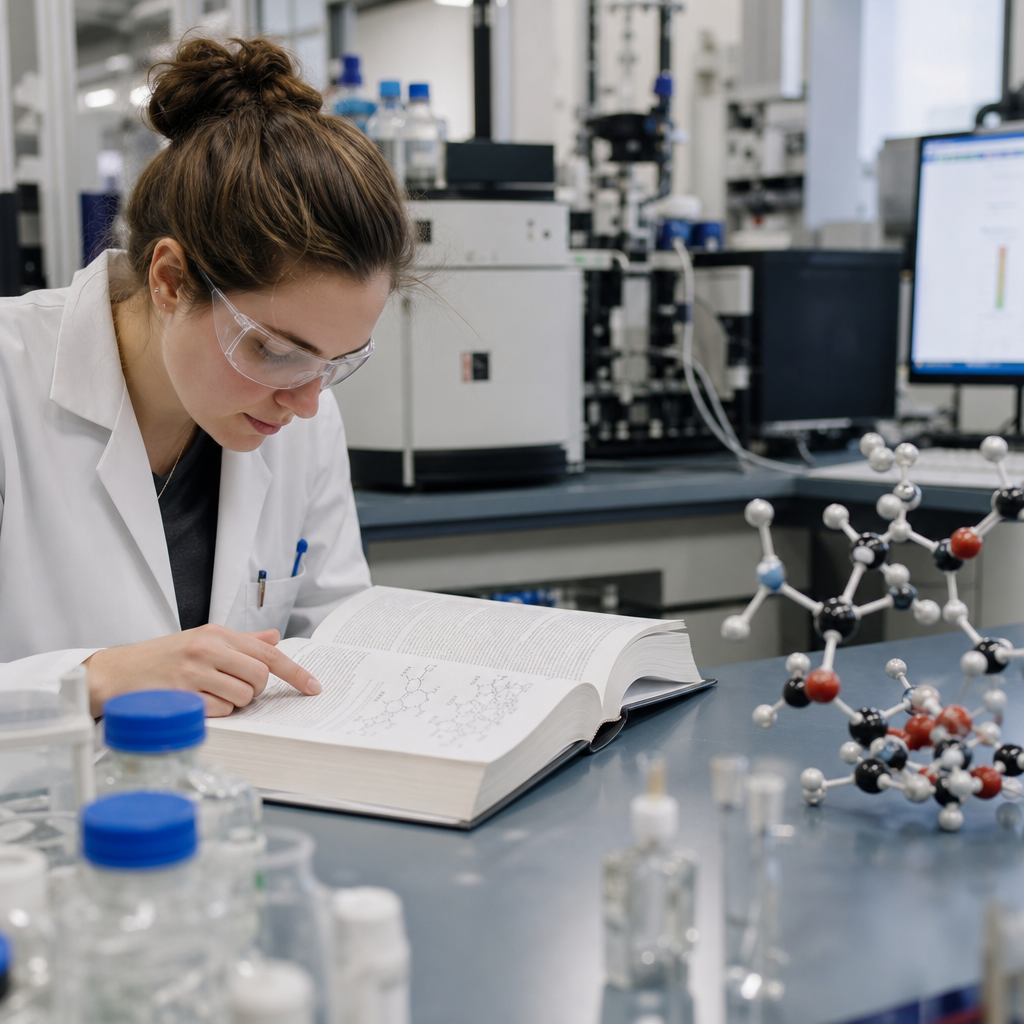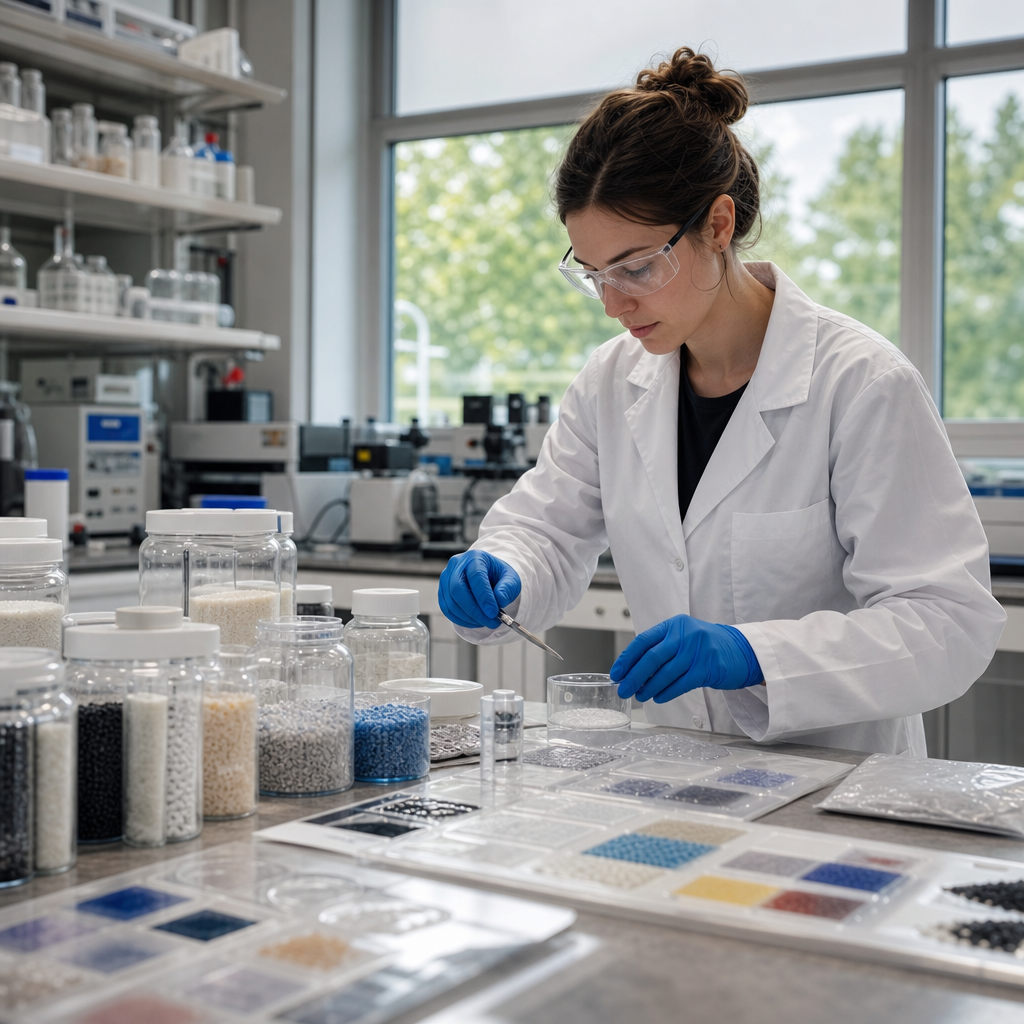
Polymer science rewards structured reading because the field spans chemistry, physics, engineering, characterization, processing, and applications, and no single textbook covers all of it equally well. For students, researchers, and working engineers trying to build a reliable learning path, the best books for learning polymer science are the ones that explain fundamentals clearly, connect molecular structure to properties, and point readers toward the journals that shape current practice. I have built polymer training plans for new hires and graduate researchers, and the same pattern appears every time: people progress fastest when they combine one strong introductory text, one deeper theory reference, one processing or characterization book, and regular reading of core journals.
Before choosing titles, it helps to define the subject. Polymer science studies macromolecules: how they are synthesized, how chains are structured, how they crystallize or remain amorphous, how they flow in melts and solutions, how they degrade, and how those behaviors determine performance in products from packaging and fibers to medical devices and aerospace composites. Polymer engineering applies that knowledge in manufacturing and design. Polymer chemistry focuses on reactions, mechanisms, molecular architecture, and composition. Polymer physics examines thermodynamics, chain dynamics, viscoelasticity, glass transition, crystallization, and mechanical response. Characterization ties all of those domains together through methods such as differential scanning calorimetry, dynamic mechanical analysis, gel permeation chromatography, Fourier transform infrared spectroscopy, nuclear magnetic resonance, and X-ray scattering.
Why does book selection matter so much? Because polymer science is unusually cumulative. If a reader does not understand tacticity, molecular weight distribution, entanglement, Flory-Huggins mixing, or time-temperature superposition early, later topics like rheology, extrusion instability, barrier properties, and fracture mechanics become harder than they need to be. Good books reduce that friction. They provide the language of the field, the standard equations, and the mental models used in labs, pilot plants, and design reviews. They also help readers judge newer claims in papers, patents, and product literature. In a field where processing history can change performance as much as composition does, that grounding prevents expensive misunderstandings.
This guide covers both books and journals because a complete educational resource needs both. Books teach stable fundamentals and give coherent progression. Journals show what is changing now: recyclable thermosets, controlled radical polymerization, membrane separations, biobased feedstocks, nanocomposites, solid polymer electrolytes, additive manufacturing feedstocks, and advanced recycling. The hub approach matters here because different readers need different entry points. An undergraduate may need a first polymer textbook. A formulation scientist may need a practical handbook on additives and blends. A PhD student may need journals with rigorous methods sections and high citation value. The sections below organize the best books for learning polymer science by level and purpose, then identify the journals worth following so readers can build a durable reading system rather than a random shelf.
How to Choose the Best Books for Learning Polymer Science
The best polymer science books are not simply the most cited or the most mathematically dense. They are the books that match your starting point and your goal. In practice, I recommend evaluating titles against five criteria. First, scope: does the book cover chemistry, structure, properties, and processing in a balanced way, or is it intentionally specialized? Second, clarity: are difficult concepts such as crystallinity, viscoelastic relaxation, copolymer sequence distribution, and phase behavior explained with usable examples? Third, currency: polymer fundamentals age slowly, but examples in sustainability, controlled polymerization, membranes, electronics, and biomedical materials evolve quickly. Fourth, pedagogy: end-of-chapter problems, diagrams, worked derivations, and references matter. Fifth, alignment with your work: a synthetic chemist and a plant engineer should not read the same first book.
For beginners, the most dependable starting point is Malcolm P. Stevens’ Polymer Chemistry: An Introduction. It remains popular because it introduces polymerization methods, structure-property relationships, and major commercial polymers in direct language without assuming excessive prior knowledge. Another strong entry text is Joel R. Fried’s Polymer Science and Technology, which is especially useful for readers who want a bridge between chemistry and engineering applications. Fried explains morphology, thermal behavior, rheology, additives, and processing with enough depth to support later specialization. If I had to choose one broad first text for mixed teams of chemists and engineers, Fried is often the most practical compromise.
For readers ready to go deeper into theory, Paul C. Hiemenz and Timothy P. Lodge’s Polymer Chemistry and Michael Rubinstein with Ralph H. Colby’s Polymer Physics are foundational. Rubinstein and Colby in particular give serious treatment to chain statistics, entanglements, scaling concepts, rubber elasticity, and dynamics. This is not casual reading, but it is one of the clearest routes into the physical framework behind melt behavior and mechanical response. For thermodynamics and solutions, texts that explain Flory-Huggins theory, osmotic pressure, and phase separation are especially valuable because these ideas recur in coatings, membranes, separations, and biomaterials.
If your work touches manufacturing, pair a fundamentals text with a processing book. Tim A. Osswald and Georg Menges’ Materials Science of Polymers for Engineers is an excellent bridge, and Tadmor and Gogos’ Principles of Polymer Processing remains a serious reference for extrusion, mixing, heat transfer, and flow. In industry, I have seen new engineers struggle not because they lacked chemistry knowledge, but because they did not understand residence time distribution, shear heating, die swell, or orientation effects. A processing text closes that gap quickly.
Core Books by Learning Stage and Use Case
The most efficient way to build a polymer science library is to choose a stack that reflects your current stage. The table below summarizes a practical progression that works well for self-study, coursework, and onboarding.
| Reader goal | Recommended book | Why it works |
|---|---|---|
| First exposure to polymers | Polymer Chemistry: An Introduction by Malcolm P. Stevens | Clear overview of polymer types, synthesis, molecular weight, and applications |
| Broad foundation across chemistry and engineering | Polymer Science and Technology by Joel R. Fried | Balanced treatment of structure, properties, additives, rheology, and processing |
| Deeper physical understanding | Polymer Physics by Rubinstein and Colby | Strong on chain statistics, dynamics, elasticity, and scaling concepts |
| Engineering and manufacturing context | Materials Science of Polymers for Engineers by Osswald and Menges | Connects morphology and thermal behavior to engineering performance |
| Advanced processing reference | Principles of Polymer Processing by Tadmor and Gogos | Detailed treatment of melt flow, extrusion, mixing, and process analysis |
| Characterization and testing | Specialized texts on DSC, DMA, spectroscopy, and chromatography | Essential for interpreting data rather than merely collecting it |
For undergraduates, Stevens or Fried usually provides the right level of difficulty. Stevens is approachable and efficient. Fried gives broader industrial context and often serves materials science students better because it links chemistry to mechanical and thermal performance. For graduate students, the strongest combination is one broad text plus one theory-heavy book plus one methods reference. That structure mirrors real research work. You need conceptual breadth, a mechanism-level understanding, and the ability to analyze data credibly.
For industrial practitioners, handbooks and application-focused books gain importance. Engineers working with polyethylene films, polypropylene parts, epoxy matrices, or thermoplastic elastomers often need faster access to processing windows, additive effects, failure mechanisms, and test methods than an academic textbook provides. In those cases, practical references on polymer blends, fillers, stabilizers, and design are worth adding early. Still, I would not skip fundamentals. Many recurring plant problems, from warpage to stress cracking to poor weld line strength, become easier to diagnose when the team understands crystallization kinetics, molecular orientation, and residual stress.
One caution is useful here: avoid building your learning plan around very narrow books too soon. A new reader may be tempted by titles on conductive polymers, hydrogels, or recycling chemistry because those topics are current and exciting. They are valuable, but if you do not yet understand molecular weight averages, glass transition, diffusion, and viscoelasticity, specialized books can feel fragmented. Start broad, then specialize with intent.
Best Specialized Books for Chemistry, Physics, Processing, and Characterization
Once the fundamentals are in place, specialized books sharpen competence. In polymer chemistry, the most important learning objective is understanding how synthesis controls architecture and therefore properties. Readers should be comfortable with step-growth versus chain-growth polymerization, free-radical kinetics, ionic methods, ring-opening polymerization, copolymerization, and modern controlled techniques such as ATRP and RAFT. Good advanced texts make the connection between reaction mechanism and measurable outcomes such as dispersity, branching, gelation, conversion, and end-group fidelity. That connection matters in coatings, adhesives, drug delivery, and recyclable systems.
In polymer physics, seek books that explain why chains behave differently from small molecules. The concepts are specific: random walk statistics, excluded volume, entanglement, reptation, free volume, relaxation spectra, and crystallization under confinement. Rubinstein and Colby is especially strong here because it translates difficult physical ideas into the language used in serious research papers. When readers grasp those concepts, they can interpret why a polymer toughens after orientation, why a blend phase-separates, why modulus shifts around the glass transition, or why ionic conductivity depends on segmental motion in solid polymer electrolytes.
Processing books matter because polymers remember flow and temperature history. In metal processing, composition often dominates. In polymers, processing conditions can dominate. Shear rate, cooling rate, mold temperature, draw ratio, moisture level, and residence time all influence morphology and final properties. A useful processing text explains extrusion, injection molding, compression molding, thermoforming, and fiber spinning not as isolated operations but as structure-forming events. This is where many readers finally understand why the same polypropylene grade behaves differently in a thick molded hinge and a biaxially oriented film.
Characterization books deserve more attention than they usually get. In practice, polymer decisions are only as good as the measurements behind them. A reader should know what DSC can and cannot reveal about crystallinity and transitions, why DMA is so sensitive to relaxation behavior, how GPC estimates molecular weight relative to standards, what FTIR can confirm about functional groups, and how SAXS or WAXS informs morphology. I routinely advise new researchers to read methods chapters slowly and compare book explanations against actual instrument data. That habit prevents common errors such as overinterpreting a broad thermal event or confusing number-average and weight-average molecular weight in discussions of processability.
Why Journals Matter and Which Ones to Follow
Books build the foundation, but journals keep polymer education current. The best journals for polymer science combine strong peer review, methodological detail, and broad relevance. Macromolecules is a leading title for polymer chemistry and physics, especially for chain architecture, dynamics, self-assembly, and synthesis. Polymer publishes widely across structure, properties, theory, and applications. Journal of Polymer Science remains important for fundamental and applied work. Progress in Polymer Science is especially valuable because its review articles synthesize whole subfields and often become standard entry points for new topics. If a reader asks me where to begin on vitrimer chemistry, membrane separations, or conjugated polymer design, I often start with a review in Progress in Polymer Science.
For applied and engineering work, Polymer Engineering and Science, Journal of Applied Polymer Science, and International Polymer Processing are useful. Materials-focused readers should also watch Biomacromolecules for biomedical systems, ACS Applied Polymer Materials for application-driven studies, and broader titles such as Advanced Functional Materials when polymers intersect with electronics, energy storage, membranes, and nanocomposites. No one needs to read every issue cover to cover. A better system is to select three or four journals, set keyword alerts, and save one review article per month for deeper study.
Readers should also know how to judge journal material. Start with the abstract, but do not stop there. In polymer papers, the methods and characterization sections often determine whether conclusions are credible. If a paper claims improved toughness, look for specimen geometry, strain rate, conditioning, and statistical treatment. If it claims controlled polymerization, check conversion, dispersity, chain-end analysis, and molecular weight evolution. If it claims sustainability, ask whether the work addresses feedstock origin, energy intensity, additive compatibility, end-of-life options, and scale limitations. Good books teach the vocabulary; good journal reading builds critical judgment.
Building a Practical Reading Path Under Educational Resources
As a hub within Educational Resources, this page should guide readers toward an organized learning path for books and journals rather than just a list of titles. A strong path begins with one introductory book, followed by a broader survey text, then one specialization chosen from chemistry, physics, processing, or characterization. Alongside that, readers should follow at least one review-heavy journal and one application-focused journal. This sequence works because it alternates stable knowledge with current developments.
A useful twelve-week plan looks like this. Weeks one through four: read introductory chapters on polymer structure, synthesis, molecular weight, thermal transitions, and morphology. Weeks five through eight: add rheology, viscoelasticity, crystallization, additives, and processing. Weeks nine through twelve: choose a specialization and read matching journal reviews. For example, a packaging engineer might study barrier properties and semicrystalline morphology, then read recent papers on polyethylene recycling and multilayer alternatives. A biomedical researcher might pair hydrogel fundamentals with Biomacromolecules reviews on drug delivery networks and biocompatible crosslinking strategies.
The central benefit of using the best books for learning polymer science is not just passing a course or assembling a bibliography. It is developing a mental map that links molecules to manufacturing and performance. Start with a clear introductory text, add one deeper reference, and make journals part of your routine. If you are building your polymer science reading list today, choose one beginner book, one specialized follow-up, and two core journals, then schedule your first month of reading.
Frequently Asked Questions
What are the best types of books to start with when learning polymer science?
The best starting point is usually a fundamentals-focused textbook that explains how polymer structure, synthesis, thermodynamics, mechanics, and processing fit together. Polymer science is broad by nature, so beginners benefit most from books that build a framework rather than diving immediately into narrow specialties. A strong introductory book should clearly explain core ideas such as molecular weight, chain architecture, crystallinity, glass transition, viscoelasticity, polymerization mechanisms, and the relationship between microscopic structure and bulk properties. Those topics create the vocabulary and intuition needed to understand more advanced reading later.
After that first foundation, the most effective learning path usually includes a second layer of books: one centered on polymer chemistry, another on physical properties and characterization, and a third on processing or engineering applications. This structured approach works well because polymer science sits at the intersection of chemistry, physics, and materials engineering. A chemistry-heavy book helps readers understand step-growth and chain-growth polymerization, copolymer design, and reaction control. A physics-oriented text explains why polymers behave differently from small molecules, especially in melts, solutions, and solids. An engineering-focused resource helps connect theory to extrusion, molding, rheology, failure, and product performance.
In practical terms, readers should choose books based on both clarity and purpose. Students often need a book with worked examples, end-of-chapter problems, and good diagrams. Researchers may prefer texts that connect fundamentals to journal literature. Working engineers usually benefit from books that translate theory into processing decisions and material selection. The best books for learning polymer science are not just comprehensive; they are readable, logically organized, and strong at showing how molecular design influences real-world behavior.
Do I need separate books for polymer chemistry, polymer physics, and polymer engineering?
In most cases, yes. While some general textbooks attempt to cover the whole field, polymer science is too large for any single book to treat every area with equal depth. A broad introductory text is useful for orientation, but deeper understanding usually comes from reading across subfields. Polymer chemistry explains how materials are made, polymer physics explains why they behave the way they do, and polymer engineering explains how they are processed and used. If one of those areas is missing, the overall picture tends to remain incomplete.
For example, a reader can memorize polymerization mechanisms without fully understanding why two polymers with similar repeat units may have very different mechanical behavior. That gap is often filled by polymer physics, which covers chain conformation, entanglement, crystallization, phase behavior, glass transition, and viscoelastic response. Likewise, someone can understand chemistry and physics yet still struggle to explain why a material performs differently after extrusion, injection molding, orientation, annealing, or blending. That practical bridge is where engineering and processing books become valuable.
That said, not every learner needs equal depth in all three categories at the same time. A chemistry student may begin with synthesis and characterization, while a mechanical engineer may start with rheology, structure-property relationships, and processing. The key is to recognize that polymer science becomes far more coherent when those perspectives are connected. For a reliable learning path, it is often smarter to build a small library of complementary books than to rely entirely on one “all-in-one” text.
How should students, researchers, and working engineers choose the right polymer science books for their goals?
The best choice depends heavily on what the reader needs to do with the knowledge. Students typically need books that teach fundamentals in a step-by-step way. For them, clarity matters as much as technical depth. Good student-friendly books usually define terms carefully, explain equations instead of assuming prior familiarity, and include problem sets or discussion questions. If the goal is coursework, exam preparation, or building a strong foundation for graduate study, books that emphasize conceptual progression are usually the best investment.
Researchers often need something different. A research-oriented reader usually benefits from texts that not only explain established principles but also point toward the journal literature that shapes current understanding. In polymer science, that means books with strong references to key papers, classic theories, modern characterization methods, and emerging application areas such as biomaterials, nanocomposites, sustainable polymers, membranes, electronic polymers, or advanced manufacturing. For researchers, a valuable book is one that helps identify where textbook knowledge ends and active scientific inquiry begins.
Working engineers generally need resources that connect polymer fundamentals to material selection, processing windows, failure mechanisms, and end-use performance. For example, an engineer may need to understand why molecular weight distribution affects processability, why crystallinity changes stiffness and barrier properties, or how additives alter durability and thermal stability. In that context, the right book is one that makes theory actionable. It should help with troubleshooting, interpreting test results, comparing materials, and understanding how processing history influences final properties.
A practical selection strategy is to evaluate books using three questions: Does the book explain fundamentals clearly? Does it connect molecular structure to measurable properties? Does it lead the reader toward trustworthy references, including standards and journal articles? If the answer to all three is yes, the book is likely to be useful regardless of whether the reader is in school, research, or industry.
Are older polymer science textbooks still worth reading, or should I focus only on newer books?
Older polymer science textbooks are often absolutely worth reading, especially for fundamentals. Many core concepts in polymer chemistry and physics were established decades ago, and some of the clearest explanations still appear in classic texts. Topics such as polymerization kinetics, molecular weight averages, chain statistics, crystallization, rubber elasticity, glass transition, and viscoelasticity do not become obsolete simply because a book is older. In fact, many experienced readers prefer older foundational books because they often spend more time developing first principles and less time summarizing trends.
However, newer books are still important because the field has expanded significantly. Modern texts are more likely to include advanced characterization methods, updated processing technologies, sustainability concerns, controlled polymerization techniques, functional soft materials, and application-driven topics such as biomedical polymers, energy materials, and recyclable systems. Newer books may also reflect current terminology, instrumentation, and industrial priorities more accurately than classic references.
The best approach is usually not choosing one over the other, but combining them. Use older books for rigorous explanations of the fundamentals and newer books for developments, applications, and recent perspectives. This is especially useful in polymer science because progress often builds directly on classic theory. A strong learning path might begin with a respected foundational text, then move to a recent book or review-based resource that shows how those principles apply in current research and industry. That combination gives readers both depth and relevance.
Can books alone teach polymer science, or do I also need journals and other resources?
Books are the best place to build a durable foundation, but they are rarely enough on their own if the goal is serious competence. Polymer science rewards structured reading because the field spans many interconnected areas, and textbooks are excellent at organizing that complexity. They help readers understand definitions, mechanisms, models, and major structure-property relationships without the fragmentation that often comes from learning only through scattered articles or online summaries. For foundational learning, books are indispensable.
At the same time, journals and other technical resources become increasingly important once the basics are in place. Polymer science is an active field, and many important developments appear first in journal articles rather than textbooks. Readers who want to understand current practice should follow the literature on synthesis, characterization, processing, and applications. This is especially true for specialized subjects like self-assembly, recyclable polymers, high-performance composites, conductive polymers, membranes, responsive materials, and biomedical systems. Textbooks explain the principles; journals show how those principles are evolving.
Beyond journals, useful supporting resources include review articles, handbooks, standards, application notes, and materials data sheets. Review papers are particularly valuable because they summarize large areas efficiently and help identify influential authors, methods, and debates. Standards and testing references matter for engineers who need to connect theory to real measurements. Data sheets and technical manuals help translate laboratory concepts into commercial material decisions.
So the most effective answer is this: books teach polymer science best at the foundational level, but books plus journals create real mastery. A reader who combines well-chosen textbooks with current literature will develop not only understanding, but also the ability to follow how the field actually moves in research and industry.