Choosing the right polymer science books is not a minor academic decision; it shapes how students, researchers, engineers, and technical buyers understand a field that directly influences packaging, medical devices, textiles, aerospace parts, adhesives, coatings, and sustainable materials. Evaluating the credibility of polymer science books means judging whether a book is accurate, current, well-sourced, technically sound, and appropriate for its intended audience. In practice, I assess these books by looking at author qualifications, publisher reputation, edition history, citation quality, alignment with established standards, treatment of core topics, and connection to peer-reviewed journals. This matters because polymer science combines chemistry, physics, engineering, and manufacturing, and weak books often blur those boundaries, oversimplify structure-property relationships, or repeat outdated claims about recycling, biodegradability, rheology, or processing behavior.
As a hub within Educational Resources, this guide covers both books and journals because credible books rarely stand alone. Strong polymer textbooks and reference works are built on journal literature from sources such as Polymer, Macromolecules, Journal of Applied Polymer Science, ACS Macro Letters, Progress in Polymer Science, and Polymer Testing. Readers often ask simple but important questions: Which polymer science book should a beginner trust? How can you tell whether a book is outdated? What separates a useful handbook from a superficial overview? The answer is to evaluate the book as part of a larger knowledge ecosystem. A credible book explains foundational concepts clearly, cites established research, reflects current industrial practice, and gives readers a reliable path into the journal record and related educational resources.
Start with author expertise, editorial quality, and publisher standards
The first credibility check is authorship. In polymer science, the strongest books are usually written or edited by people with visible records in macromolecular chemistry, polymer physics, processing, characterization, or materials engineering. I look for authors who have published peer-reviewed work, taught upper-level courses, led industrial R&D teams, or contributed to recognized reference frameworks. An author who has spent years working on crystallization kinetics, melt rheology, copolymerization, membrane transport, or degradation mechanisms will usually write with precision that general science writers cannot match. Their terminology is sharper, their examples are realistic, and their warnings about limitations are more trustworthy.
Publisher reputation also matters. University presses, established scientific publishers, and major professional imprints generally impose stronger peer review, developmental editing, and technical production standards than vanity outlets or generic online publishers. Names such as Elsevier, Springer, Wiley, CRC Press, Oxford University Press, and Cambridge University Press do not guarantee perfection, but they correlate with better indexing, clearer references, more stable editions, and stronger editorial oversight. Edited volumes need extra scrutiny because chapter quality can vary widely. In those cases, review the credentials of individual contributors and the coherence of the editor’s framework. A good editor imposes consistent definitions, notation, and scope across chapters instead of assembling disconnected essays.
For hub-level reading on Books and Journals, this is the decision point where you should branch into related resources: introductory polymer textbooks, specialized handbooks, laboratory manuals, review journals, and methods-focused titles. A credible hub article should help readers move from broad orientation to precise selection. If a book claims to serve everyone from first-year undergraduates to formulation scientists and patent professionals, that is usually a warning sign. Trustworthy books define their audience clearly, whether they are teaching step-growth polymerization, comparing thermoplastics and thermosets, or explaining dynamic mechanical analysis for practicing engineers.
Check currency: edition date, references, and scientific relevance
A polymer science book can be authoritative and still be too old for certain purposes. Fundamentals such as Flory-Huggins theory, glass transition concepts, viscoelasticity, and molecular weight distributions remain essential for decades. However, books that discuss recycling streams, biobased feedstocks, controlled radical polymerization, nanocomposites, additive manufacturing, PFAS alternatives, or advanced characterization need current evidence. I usually test a book’s currency by scanning the publication date, then checking whether the newest references cluster near that date or stop several years earlier. If a 2023 book cites almost nothing after 2016, its novelty claims deserve skepticism.
Edition history is another signal. A second, third, or fourth edition often shows that the book has been used, corrected, and updated. The best new editions do more than refresh cover art; they revise sections on living polymerization, block copolymer self-assembly, sustainability metrics, polymer composites, regulatory issues, and instrumental methods such as DSC, TGA, FTIR, NMR, GPC, SEM, and XRD. In contrast, some reissued titles preserve obsolete nomenclature, old ASTM references, and dated assumptions about mechanical recycling or biodegradability. Those books may still help with historical context, but they should not be your primary guide for current decisions.
Journal linkage is especially important here. A strong book should point readers toward review articles and landmark papers, not isolate them from the active literature. In my own evaluations, I become more confident when chapter references include recognized journals and when claims about performance, toxicity, barrier properties, aging, or processing windows can be traced to primary studies. Polymer science changes through incremental evidence, and books that hide that evidence behind broad statements are less reliable than books that show their scientific scaffolding.
Evaluate technical depth, coverage of fundamentals, and treatment of methods
Credible polymer science books explain not only what a material does, but why it behaves that way. That means a serious book covers molecular architecture, chain entanglement, crystallinity, tacticity, crosslink density, thermal transitions, diffusion, rheology, mechanical response, and degradation pathways in a connected way. If a text discusses polyethylene, polypropylene, polystyrene, PET, nylon, epoxy, silicone, and polyurethane as mere product categories without linking structure to properties and processing, it is probably too shallow for meaningful study. Good books also distinguish polymer science from polymer engineering: science explains mechanisms, while engineering translates those mechanisms into compounding, molding, extrusion, fiber spinning, coating, and end-use performance.
Method coverage is another decisive test. In polymer characterization, credibility depends on whether a book explains what an instrument measures, what assumptions are built into the method, and where errors arise. For example, gel permeation chromatography estimates molecular weight distribution relative to standards; differential scanning calorimetry identifies transitions and crystallinity-related events; dynamic mechanical analysis reveals viscoelastic behavior across temperature and frequency; tensile testing depends on specimen geometry, strain rate, and conditioning. Books that treat these techniques as black boxes are less dependable than books that explain calibration, sample preparation, artifacts, and interpretation limits.
When evaluating hub resources on Books and Journals, I recommend sorting materials by learning objective. Some readers need conceptual foundations, others need test methods, and others need application-specific references. The following framework works well:
| Resource type | Best use | Credibility signals | Common weakness |
|---|---|---|---|
| Introductory textbook | Core concepts and terminology | Clear equations, worked examples, end-of-chapter references | Oversimplifies industrial practice |
| Advanced monograph | Deep study of one topic such as rheology or crystallization | Author is a recognized specialist, extensive citations | Narrow scope for beginners |
| Handbook or reference work | Material properties and quick consultation | Data tables, standards references, contributor credentials | Uneven chapter quality |
| Laboratory or methods book | Testing, characterization, interpretation | Stepwise procedures, error discussion, ASTM or ISO alignment | Becomes outdated if standards change |
| Review journal article | Fast overview of current literature | Recent references, balanced synthesis, named debates | Limited pedagogical explanation |
Look for evidence quality: references, standards, data, and balanced claims
The most credible polymer science books show where their statements come from. References should include peer-reviewed articles, review papers, standards documents, and, when appropriate, authoritative industry or regulatory sources. For testing and properties, I expect to see standards from ASTM, ISO, or equivalent bodies because polymer performance depends heavily on method definition. A book that states a polymer is “strong,” “heat resistant,” or “recyclable” without specifying test conditions, grades, or system boundaries is not giving readers usable knowledge. Tensile strength varies by formulation and processing history. Heat resistance may refer to Tg, HDT, Vicat softening temperature, or long-term service temperature. Recyclability depends on collection, sorting, contamination, additives, and local infrastructure.
Balanced treatment is a major trust signal. In recent years, many materials books have made sweeping sustainability claims. Credible books do not present bioplastics as universally biodegradable, nor do they imply that all conventional polymers are environmentally equivalent. They explain distinctions among bio-based content, compostability, marine degradability, chemical recycling, mechanical recycling, and life-cycle assessment boundaries. The same balance applies to nanocomposites, flame retardants, plasticizers, and barrier coatings. A trustworthy author acknowledges uncertainty, notes where data conflict, and avoids turning active research questions into settled facts.
I also watch for numerical discipline. Good books provide units consistently, define acronyms at first use, and separate measured values from estimated ranges. If permeability coefficients, molecular weight averages, storage modulus values, or conversion rates appear without context, the material may have been assembled carelessly. In polymer science, credibility lives in details because details determine whether a concept survives outside the page and inside a laboratory, pilot plant, or product line.
Use journals to verify books and build a reliable learning path
Books are ideal for synthesis, but journals are the verification layer. When I want to test a book’s credibility, I pick one or two representative claims and trace them into the journal literature. If a chapter states that controlled radical polymerization transformed architecture control in acrylic systems, the references should lead to the foundational chemistry and to later practical limitations. If a processing book claims that moisture management is critical for PET or nylon, journal and technical literature should confirm hydrolysis risks, drying requirements, and effects on intrinsic viscosity or mechanical performance. This cross-check quickly separates robust educational resources from polished summaries.
For readers using this page as a hub, journals also help you choose the right book category. Review journals such as Progress in Polymer Science and Polymer Reviews are excellent for mapping a topic before buying a specialist monograph. Application journals such as Polymer Engineering and Science, Journal of Applied Polymer Science, and Polymer Testing help engineers evaluate whether a book connects theory to practical testing and processing. Chemistry-focused readers may lean on Macromolecules or ACS Macro Letters to assess whether a synthesis text reflects current mechanisms and nomenclature. This book-journal workflow is the fastest way to build a dependable polymer learning library.
Libraries, course syllabi, citation databases, and professional societies provide additional signals. If a book appears repeatedly in graduate syllabi, is cited in reviews, and is stocked by major technical libraries, that pattern usually indicates durable value. No single metric is perfect, but convergence across books, journals, instructors, and practicing professionals is a strong indicator that a resource deserves your time.
Practical evaluation checklist for students, researchers, and industry readers
The best way to evaluate the credibility of polymer science books is to use a repeatable checklist. First, identify the book’s audience and purpose. Second, verify the author’s track record in the exact topic covered. Third, inspect edition history and reference dates. Fourth, scan the table of contents for core subjects that should be present, such as synthesis, structure, thermal behavior, mechanics, rheology, characterization, and processing. Fifth, check whether claims are supported by journal references, standards, and data. Sixth, compare one chapter against recent journal reviews. Seventh, decide whether the level fits your needs: a beginner should not start with an ultra-specialized rheology monograph, and a process engineer should not rely only on an introductory survey text.
If you are buying one foundational resource, prioritize clarity, accuracy, and reference quality over breadth. If you are building a broader collection under Books and Journals, combine one strong textbook, one methods-focused reference, and regular access to current journals. That mix gives you conceptual grounding, practical interpretation tools, and up-to-date evidence.
Credible polymer science books help readers make better decisions in study, research, product development, and procurement because they connect theory, data, and real material behavior. The most reliable titles are written by qualified experts, published through established technical channels, updated through new editions, grounded in peer-reviewed journals, and careful about standards, methods, and limitations. Weak books tend to be vague, outdated, poorly referenced, and overconfident about complex issues such as performance, sustainability, or processing. Use this hub as your starting framework for evaluating books and journals across the Educational Resources section, then apply the checklist before you invest time or money. A careful evaluation today will save you from bad assumptions tomorrow and lead you toward resources you can trust.
Frequently Asked Questions
1. What are the most important signs that a polymer science book is credible?
A credible polymer science book usually shows its quality in several clear ways. First, look at the author’s background. In polymer science, credibility is stronger when the author has relevant academic training, research publications, industry experience, or teaching experience in areas such as polymer chemistry, materials science, rheology, processing, biomaterials, or composites. A well-qualified author does not automatically guarantee a perfect book, but it is one of the strongest early indicators.
Second, examine the publisher. Established academic and technical publishers often have stronger editorial standards, better peer review or expert review processes, and a reputation to protect. Third, check the references. A credible book should cite primary literature, standards, and foundational works rather than relying on vague claims or unsourced explanations. In polymer science especially, references matter because the field depends on measurable properties, test methods, structure-property relationships, and evolving processing technologies.
Another major sign is technical consistency. Definitions of terms such as glass transition temperature, crystallinity, molecular weight distribution, viscoelasticity, crosslink density, and copolymer architecture should be accurate and used correctly throughout the text. Figures, tables, and equations should also align with accepted scientific understanding. If a book oversimplifies complex concepts to the point of being misleading, or if it makes sweeping claims without discussing limitations, that is a warning sign.
Finally, credibility depends on fit for purpose. A book can be highly credible for one audience and not ideal for another. An introductory text for undergraduates may be excellent for fundamentals but insufficient for a researcher working on advanced polymer characterization or sustainable feedstocks. The strongest books are clear about their intended readership and deliver reliable depth at that level.
2. How can I tell whether a polymer science book is current enough for modern study or professional use?
Currency matters in polymer science because the field is both foundational and fast-moving. Some topics age slowly, such as basic polymerization mechanisms, chain structure, thermal transitions, diffusion principles, or classical mechanical behavior. Other areas change much faster, including recycling technologies, bio-based polymers, additive manufacturing, nanocomposites, regulatory issues, characterization methods, and sustainability frameworks. To judge whether a book is current enough, start with the publication date and edition, but do not stop there.
Look at the book’s bibliography. If most citations are decades old, the book may still be valuable for fundamentals, but it may not reflect current practice. A stronger modern text will combine classic references with recent journal articles, review papers, and recognized industry or testing standards. In practical terms, if you are using the book to support decisions in product development, materials selection, procurement, or process optimization, outdated information can lead to poor assumptions about performance, compliance, cost, or manufacturability.
You should also evaluate whether the book addresses current themes shaping the field. For example, does it discuss circular materials strategies, life-cycle thinking, microplastics concerns, solvent reduction, advanced analytics, biodegradable and compostable polymers, or modern processing tools? For applied readers, current coverage of ASTM, ISO, and regulatory considerations can be just as important as chemical theory. A book that ignores these areas may still be a useful reference, but it should not be your only source.
The best approach is to separate timeless content from time-sensitive content. A book can remain credible if its core science is solid, even if some application examples are older. But for any topic that directly affects present-day research, manufacturing, or purchasing decisions, confirm the book’s claims against recent review articles, standards, and reputable technical databases.
3. Why do references, citations, and sourcing matter so much in polymer science books?
References are one of the clearest ways to judge whether a polymer science book deserves trust. Polymer science is not a field where authority should rest on confident writing alone. Claims about molecular structure, degradation behavior, barrier performance, biocompatibility, processing windows, rheological response, or long-term durability need support from experiments, established theories, and reproducible evidence. Good citations allow readers to trace those claims back to the original data or to major review literature.
Strong sourcing also helps you distinguish between foundational knowledge and interpretation. For example, a book may explain how molecular weight affects viscosity, toughness, or processability. That explanation becomes more credible when it is tied to classic studies, modern reviews, or recognized textbooks rather than presented as unsupported fact. In technical buying and engineering settings, this matters because decisions often depend on whether the information is general guidance, a proven principle, or a context-specific observation.
References also reveal the depth and seriousness of the author’s work. A carefully sourced book typically draws from peer-reviewed journals, authoritative handbooks, technical standards, and respected conference literature where appropriate. By contrast, books with sparse citations, circular references, or reliance on promotional material should be treated cautiously. In a field that connects laboratory science to real-world products like coatings, adhesives, films, medical devices, fibers, and structural parts, weak sourcing can translate into weak decisions.
Just as important, citations let you go beyond the book itself. A credible polymer science book should function not only as a source of information but also as a gateway to deeper study. If a chapter on thermal analysis, polymer blends, degradation kinetics, or surface modification points you toward the key papers and standards, the book becomes much more useful for students, researchers, and professionals alike.
4. How do I evaluate whether the technical content in a polymer science book is accurate and well-structured?
Accuracy in polymer science books comes from both scientific correctness and disciplined presentation. Start by scanning how the book handles core concepts. Are polymer classifications explained clearly? Does the text correctly distinguish thermoplastics from thermosets, amorphous behavior from semicrystalline behavior, chain branching from crosslinking, and elastic response from viscoelastic response? Inaccuracies often appear when a book confuses basic definitions, uses imprecise language, or treats exceptions as universal rules.
Next, examine how the content is structured. A strong polymer science book usually builds knowledge in a logical progression: chemistry and synthesis, molecular architecture, morphology, thermal behavior, mechanical properties, rheology, processing, characterization, and applications. When a book is well-organized, readers can understand how one topic influences another, such as how tacticity affects crystallinity, how crystallinity affects barrier and mechanical performance, or how processing history affects morphology and final properties.
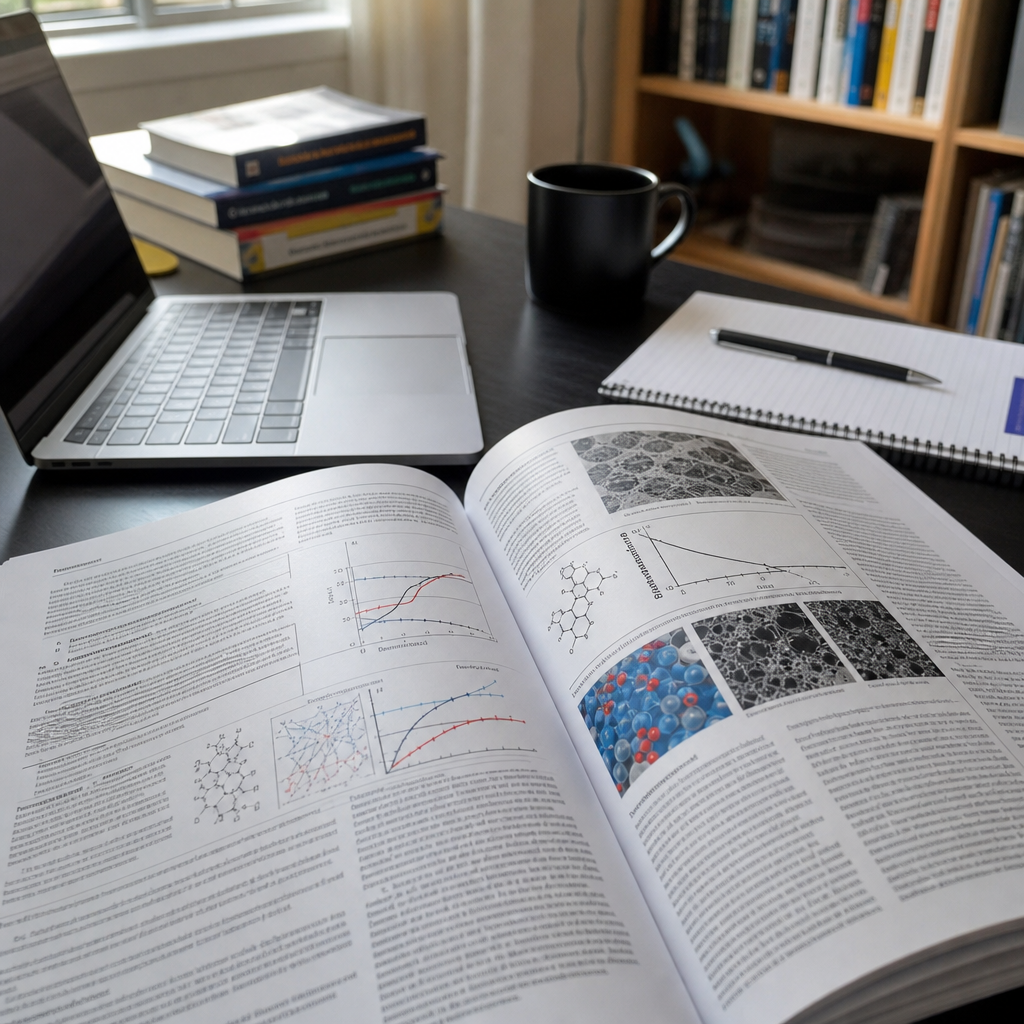
Figures, equations, and tables are especially revealing. In a credible text, graphs should be interpretable and correctly labeled, equations should be used in appropriate contexts, and property tables should indicate testing conditions where necessary. For instance, tensile strength, modulus, impact resistance, melt flow behavior, or thermal stability values are meaningful only when measurement context is understood. Books that present numbers without conditions, units, or limitations can mislead readers badly.
It is also helpful to compare a few sections with other trusted sources. If multiple respected textbooks, handbooks, or review articles explain a topic one way and the book in question presents a conflicting version without strong evidence, that is a signal to investigate further. The most reliable books do not just deliver facts; they show relationships, note uncertainty where appropriate, and help readers think critically about how polymer behavior changes across materials, environments, and processing conditions.
5. How should students, researchers, engineers, and technical buyers judge credibility differently based on their needs?
This is one of the most overlooked parts of evaluation. Credibility is not only about whether a book is scientifically sound; it is also about whether it is sound for your purpose. A student may need a book that explains polymerization, morphology, spectroscopy, thermal transitions, and processing fundamentals with clarity and educational structure. In that case, a credible book is one that teaches accurately, defines terms well, includes worked examples or diagrams, and avoids assuming too much prior knowledge.
A researcher usually needs something different. For advanced work, credibility depends more heavily on depth, literature integration, conceptual precision, and awareness of current developments. A book aimed at researchers should discuss mechanisms, competing interpretations, limitations of methods, and meaningful links to primary sources. It should help the reader identify not only what is known, but also where the field is still evolving.
Engineers and product developers often prioritize application relevance. For them, a credible polymer science book should connect material structure to performance in processing and end use. It should explain how choices affect manufacturability, durability, chemical resistance, thermal stability, dimensional control, and failure risk. Books that stay entirely theoretical may still be credible academically, but they may not be sufficient for engineering decisions without complementary applied references.
Technical buyers and procurement professionals need yet another lens. They may not need deep polymer theory, but they do need trustworthy explanations of material categories, property tradeoffs, testing language, compliance considerations, and the difference between marketing claims and validated technical performance. For this audience, a credible book is one that translates polymer science into practical evaluation criteria without distorting the science. In short, the best way to judge credibility is to ask two questions at once: “Is this technically reliable?” and “Is this reliable for what I need to do?”