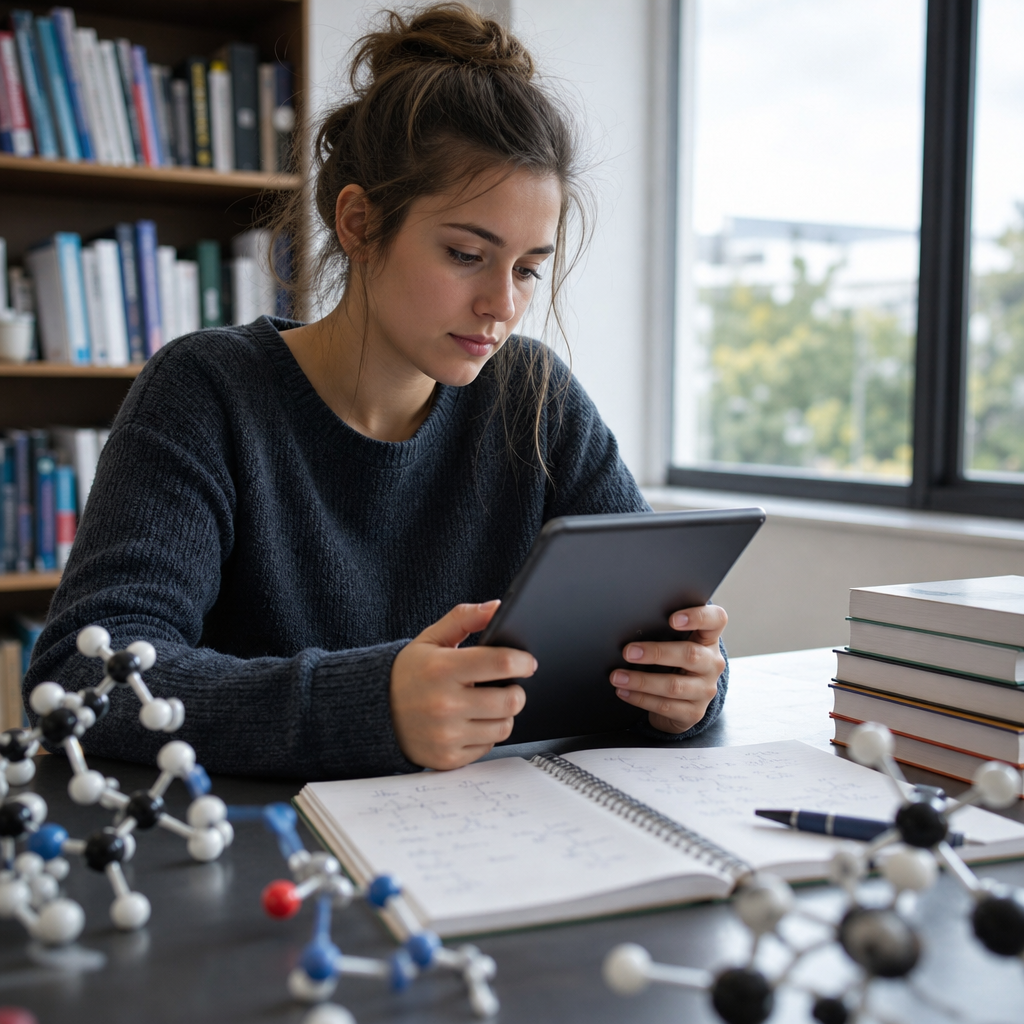
E-books have changed how polymer science is taught, studied, and updated, especially in a field where terminology, data, and industrial practice evolve faster than many printed textbooks can keep pace. In polymer science education, “e-books” includes digital textbooks, reference handbooks, interactive monographs, online journal archives, and mobile-access learning platforms that deliver content through PDFs, EPUB files, browser readers, and library databases. “Books and journals” remains the core publishing category because students need both foundational explanation from books and current evidence from journals. As a hub within educational resources, this topic matters because polymer science sits at the intersection of chemistry, physics, materials engineering, manufacturing, and sustainability. Learners must understand polymerization mechanisms, structure-property relationships, rheology, processing, characterization, degradation, and regulation, and they need sources that support both deep study and rapid retrieval.
In my experience working with polymer teaching materials and technical reference collections, the shift to digital formats has done more than replace paper. It has changed study behavior. Students now search for “glass transition temperature,” “step-growth polymerization,” or “DSC interpretation” across entire collections in seconds. Instructors assign a chapter from a handbook, a review article from a journal, and a processing case study from a professional society database in the same week. Researchers in academic labs and industrial settings use e-books for standards, equations, and troubleshooting while relying on journals for the latest work on biopolymers, recycling, composites, membranes, and additive manufacturing. The impact is therefore educational, operational, and strategic. Understanding that impact helps departments choose the right resources, helps instructors design better courses, and helps students build stronger habits for learning from both books and journals.
Why e-books fit polymer science particularly well
Polymer science is unusually well suited to digital publishing because it depends on diagrams, spectra, tables, structure drawings, processing windows, and links between theory and application. A student learning polyethylene, polypropylene, polystyrene, PET, epoxy, or silicone chemistry needs to move quickly between molecular structure, synthesis route, mechanical behavior, thermal transitions, and end-use examples. In print, that often means flipping between index entries, appendices, and separate journal issues. In e-books, cross-searching reduces friction. A learner can search “crystallinity” and immediately find sections on X-ray diffraction, DSC, density methods, barrier properties, and stiffness. That speed matters in courses where students are still mastering the vocabulary.
Digital books also support layered learning. Introductory materials can define monomer, repeat unit, tacticity, molecular weight distribution, and viscoelasticity, while advanced chapters connect those ideas to melt flow index, SEC calibration, Flory-Huggins theory, dynamic mechanical analysis, and finite element modeling of polymer components. I have seen this make a practical difference in mixed classrooms where chemistry students are comfortable with reaction mechanisms but less familiar with injection molding, while engineering students understand processing but need stronger grounding in kinetics and thermodynamics. E-books let each group navigate according to need without waiting for a lecture to revisit the topic.
Another advantage is currency. Printed polymer textbooks can become dated in areas such as chemical recycling, life-cycle analysis, bio-based feedstocks, conductive polymers, and high-performance composites. E-book platforms allow updated editions, corrected figures, and expanded bibliographies to reach students faster. When a course includes sustainability, PFAS concerns, packaging regulation, or battery materials, access to recently updated digital references is often the difference between teaching today’s industry and teaching the industry of ten years ago.
How digital books and journals improve teaching and learning outcomes
The best educational value of e-books is not convenience alone; it is better alignment between how polymer science is learned and how it is practiced. Students rarely solve problems using one source from start to finish. They triangulate. A chapter explains chain entanglement, a journal paper shows how entanglement affects electrospinning or film toughness, and a handbook provides material property ranges. Digital access makes that workflow normal instead of exceptional. That improves comprehension because concepts are reinforced in multiple contexts.
Searchability directly supports retention. When students can highlight, annotate, and revisit exact passages, they spend less time locating information and more time interpreting it. In polymer labs, that matters when preparing reports on FTIR peak assignment, tensile testing, TGA mass loss stages, or rheology curves. Many platforms also allow citation export to Zotero, EndNote, or Mendeley, which helps students develop disciplined literature practices early. Those habits are essential in final-year projects and graduate research, where weak source management quickly leads to errors.
Journals add a different educational function: they teach uncertainty, argument, and method. Books present established knowledge; journals show how knowledge is produced, challenged, and revised. In polymer science, a student may read a textbook explanation of living polymerization, then compare journal papers on RAFT, ATRP, or ring-opening polymerization to see how researchers justify catalyst choice, solvent system, dispersity targets, and characterization methods. That movement from settled explanation to active evidence is one of the strongest reasons a hub on books and journals belongs at the center of educational resources.
| Resource type | Best educational use | Example in polymer science |
|---|---|---|
| E-textbook | Build fundamentals and course structure | Explaining chain-growth vs step-growth polymerization |
| Reference handbook | Check formulas, properties, standards, and processing guidance | Looking up Tg ranges, melt temperatures, or ASTM test references |
| Review article | Summarize a fast-moving subfield | Surveying advances in biodegradable polymers or nanocomposites |
| Research article | Analyze methods, data, and conclusions | Evaluating how filler loading changes tensile strength and modulus |
| Society or database archive | Support literature discovery across topics | Finding papers on extrusion, membranes, coatings, or recycling |
Accessibility is another measurable gain. Students commuting, working part time, or studying remotely can access polymer science materials on laptops and phones without depending on a single library copy. For institutions serving distance learners or satellite campuses, this is not a minor benefit. It determines whether all students can participate equally. Screen resizing, text search, bookmarks, read-aloud features, and synchronized notes can significantly reduce barriers, although usability still varies by publisher platform.
Books and journals as the core of a polymer science resource hub
A strong educational hub on books and journals should guide readers through the full publishing ecosystem rather than treating all sources as interchangeable. Books are best for conceptual frameworks, worked examples, nomenclature, and historical grounding. Journals are best for current developments, comparative studies, and specialized methods. Students need to know when to use each one. If the goal is to understand why semicrystalline polymers behave differently from amorphous polymers, start with a book chapter. If the goal is to evaluate whether a new compatibilizer improves recycled polyolefin blends, move to recent journal literature.
For polymer science, the most useful book categories usually include introductory polymer chemistry texts, polymer physics texts, materials selection handbooks, processing references, characterization guides, and sustainability-focused volumes. On the journal side, students benefit from learning the difference between primary research journals, review journals, and application-oriented titles in areas such as composites, coatings, biomaterials, packaging, and elastomers. Platforms from Springer, Elsevier, Wiley, Taylor & Francis, ACS, and the Royal Society of Chemistry commonly appear in university collections, while SciFinder, Scopus, Web of Science, and Google Scholar support discovery across those holdings.
This hub role matters because students often struggle with source selection. They may overuse general web pages for definitions or jump directly into advanced articles without enough background. A well-designed books and journals hub can direct them to the right level: start with an e-book chapter on polymer morphology, follow with a review article on spherulite development, then examine a research paper using polarized optical microscopy and DSC to connect morphology with mechanical performance. That sequence mirrors good teaching practice and reduces the cognitive load that comes from entering a technical topic at the wrong depth.
Interactive features that print cannot match
The impact of e-books is strongest when publishers move beyond static scans of print pages. Interactive figures, embedded videos, linked glossaries, and problem sets make difficult polymer concepts easier to grasp. For example, a rotating 3D model of isotactic versus syndiotactic chain arrangement can clarify tacticity faster than text alone. An embedded animation of extrusion, blow molding, or resin transfer molding can connect molecular behavior to processing reality. In spectroscopy sections, clickable peak assignments help students move from memorization to interpretation.
Annotation tools are also underrated. In courses on polymer characterization, I have seen students build far better revision notes when they can tag passages by method, such as FTIR, NMR, XRD, DSC, TGA, DMA, SEM, or rheometry. Shared annotations can support seminar discussion and lab preparation, especially in graduate classes where students compare literature methods before designing experiments. Some platforms integrate quizzes or flashcards, which are useful for nomenclature, common abbreviations, and thermal or mechanical property trends across major polymer families.
Linking is another practical strength. A chapter on diffusion through polymers can link directly to journal articles on gas barrier films, desalination membranes, or drug delivery matrices. A section on degradation can connect students to standards, environmental case studies, and current recycling technologies. This transforms reading from a linear activity into a networked one. In a field as interdisciplinary as polymer science, that is not a luxury. It reflects how professionals actually learn and solve problems.
Limitations, tradeoffs, and quality control issues
E-books are not automatically better than print, and journals are not automatically reliable just because they are technical. Platform design can be poor, digital rights management can restrict downloading, and multi-user licenses can still be limited by budget. Some chemistry-rich texts display badly on small screens, especially when equations, reaction schemes, and fine figure labels are compressed. Students also report fatigue from prolonged screen reading, which is a legitimate drawback in mathematically dense or graph-heavy sections.
Quality control matters even more in digital abundance. Polymer science students must learn to distinguish peer-reviewed journals from predatory titles and authoritative handbooks from superficial compilations. Citation counts alone are not enough; methods quality, sample preparation, testing standards, and reproducibility all matter. A tensile result without specimen geometry, conditioning details, strain rate, or ASTM or ISO context is weak evidence. An e-book chapter without references or publication date should not anchor a literature review on a rapidly changing topic like advanced recycling or bio-based polymers.
There is also a pedagogical tradeoff. Searchability can tempt students to read only isolated snippets rather than understanding a full argument. In polymer physics, that leads to shallow learning because concepts like entropic elasticity, time-temperature superposition, and relaxation behavior depend on cumulative reasoning. Good instruction therefore combines the efficiency of digital search with assigned close reading. The educational aim is not faster skimming; it is stronger understanding supported by better access.
Best practices for students, instructors, and libraries
Students should treat e-books and journals as complementary tools. Begin with a trusted digital textbook or handbook to establish definitions, equations, and standard behavior. Then use review articles to map the subfield and research papers to inspect methods and data. Save citations in a reference manager from the first week of a course. Use consistent keywords, including polymer name, processing method, characterization technique, and target property. Searches like “PLA crystallization DSC annealing,” “epoxy DMA crosslink density,” or “polypropylene talc composite impact strength” are far more productive than broad phrases.
Instructors should build reading pathways instead of posting isolated files. A polymer blends module, for example, works well when students receive one e-book chapter on miscibility, one review on compatibilization strategies, and one recent journal article using SEM and rheology to assess morphology. Library staff and faculty should also prioritize perpetual access, DRM-light licenses, and platforms with strong indexing. MARC records, DOI support, and OpenURL compatibility still matter because discovery depends on clean metadata. Where budgets are tight, high-use reference collections and review-heavy journal access usually produce more educational value than duplicating niche materials.
For anyone building or using an educational resources hub on books and journals, the key principle is curation. Organize materials by learner level, topic, and use case: fundamentals, characterization, processing, applications, sustainability, and current research. Done well, e-books do not replace rigorous polymer science education. They strengthen it by making authoritative books and journals easier to find, connect, and apply. Review your current resource mix, identify gaps, and build a digital collection that helps every polymer learner move from basics to evidence with confidence.
Frequently Asked Questions
How have e-books changed the way polymer science is taught and learned?
E-books have significantly reshaped polymer science education by making specialized content easier to access, update, search, and integrate into modern teaching. In a subject that depends on precise terminology, evolving standards, new processing methods, and fast-moving materials research, digital resources help students and instructors work with information that is far more current than many traditional print textbooks. Instead of relying only on a fixed edition of a book that may become dated, learners can use digital textbooks, online handbooks, journal archives, and browser-based learning platforms to explore recent developments in polymer chemistry, rheology, characterization, sustainability, composites, and manufacturing.
One of the biggest educational advantages is speed of navigation. Students can search instantly for terms such as crystallinity, viscoelasticity, glass transition temperature, chain entanglement, or step-growth polymerization without flipping through hundreds of pages. That matters in polymer science because understanding often depends on connecting definitions, equations, structure-property relationships, and processing behavior across multiple chapters or sources. E-books also support learning through hyperlinks, embedded figures, zoomable diagrams, bookmarks, highlighting, and cross-references, which can make technically dense material more manageable.
For instructors, e-books allow course content to become more flexible and responsive. A professor teaching polymer science can assign foundational reading from a digital textbook, pair it with recent journal articles on recyclable polymers or biobased materials, and direct students to supplementary data tables or industrial case studies through a university library platform. This creates a stronger bridge between theory and current practice. In effect, e-books do not replace the core role of books and journals; they expand how those resources are delivered, connected, and used in the classroom, lab, and independent study.
Why are e-books especially valuable in a fast-evolving field like polymer science?
Polymer science changes quickly because the field sits at the intersection of chemistry, materials science, engineering, manufacturing, sustainability, and product design. New polymer blends, additives, recycling strategies, analytical methods, biomedical applications, and regulatory expectations appear constantly. In that environment, educational materials can lose relevance if they remain static for too long. E-books are particularly valuable because they are better suited to a field where knowledge does not stand still.
Digital formats make it easier for publishers, academic institutions, and professional organizations to distribute revised editions, corrected data, and newly curated collections of research. That is important when students are learning topics such as molecular weight distribution, polymer degradation, processing windows, barrier performance, nanocomposites, or environmental impacts, where current data and terminology matter. A printed text may still provide excellent fundamentals, but an e-book ecosystem allows those fundamentals to be supplemented with newer examples, updated standards, and recently published findings.
E-books also support broader exposure to the real scope of the discipline. Polymer science education is not limited to one textbook; it depends on handbooks, monographs, journals, conference literature, and application-focused references. With digital access, students can move more easily from an introductory explanation of polymerization kinetics to a review article, then to a materials selection handbook, and finally to a current industrial or academic case study. That kind of layered reading encourages deeper understanding and better reflects how professionals actually work. In short, e-books are valuable not simply because they are convenient, but because they align well with the speed, complexity, and interdisciplinary nature of polymer science itself.
Do e-books improve student understanding of complex polymer science concepts?
They often do, especially when the digital resource is well designed and used as part of a thoughtful learning strategy. Polymer science can be conceptually difficult because students must connect microscopic structure with macroscopic behavior. They need to understand how chain architecture, intermolecular forces, molecular weight, thermal transitions, morphology, and processing conditions influence final material properties. E-books can help by making these relationships easier to visualize and revisit.
For example, students reading about amorphous versus semicrystalline polymers may benefit from enlarged figures, linked definitions, searchable glossaries, and side-by-side comparisons of mechanical and thermal behavior. When learning about stress-strain response, diffusion, rheological models, or polymer reaction mechanisms, the ability to annotate a digital text, jump directly to prerequisite sections, and compare multiple sources quickly can reduce confusion and reinforce continuity. Interactive monographs and advanced educational platforms may also include videos, simulations, self-assessment tools, or linked datasets that support different learning styles.
That said, better understanding is not automatic. E-books are most effective when they are accurate, clearly organized, and paired with strong teaching. Students still need guidance in evaluating sources, interpreting technical claims, and building conceptual frameworks rather than just collecting isolated facts. In polymer science, where one term can have precise and context-dependent meaning, instructional structure matters. Used properly, e-books can improve comprehension by making complex content more accessible and interconnected, but their educational value comes from combining digital convenience with scientific rigor.
What are the main advantages of e-books for research, reference, and lab-based polymer science education?
E-books offer major advantages for students and researchers who need quick, reliable access to technical information during coursework, project work, and laboratory study. Polymer science education frequently involves moving between lectures, experiments, data analysis, and literature review. In that setting, digital books and journal collections are extremely practical because they allow users to retrieve information wherever they are working, whether in a classroom, library, lab, or off-campus environment.
Searchability is one of the most important benefits. A student preparing a lab report on differential scanning calorimetry, tensile testing, extrusion behavior, or solvent swelling can quickly locate definitions, equations, testing procedures, and comparative discussions across multiple references. Digital handbooks and library databases also make it easier to verify terminology, check material properties, and review foundational methods without losing time to manual searching. This efficiency is especially useful in polymer science, where reference work often requires consulting several sources rather than relying on a single text.
Another major advantage is access breadth. Through e-books and online journal archives, students can consult classic references and current research within the same workflow. They can compare established principles of polymer morphology or kinetics with recent studies on recyclable thermosets, smart polymers, membrane materials, or additive manufacturing feedstocks. Mobile access adds another layer of convenience, allowing review of reading assignments, figures, or reference tables from phones and tablets. For lab-based learning, this flexibility can support better preparation and more confident interpretation of results. Overall, e-books strengthen research and reference work by improving access, speed, and continuity between theory, experimentation, and application.
Are there any limitations to relying on e-books in polymer science education?
Yes, and recognizing those limitations is important for creating a balanced educational approach. Although e-books offer clear benefits, they are not a perfect substitute for all print resources or all forms of learning. One common challenge is digital fatigue. Polymer science often requires sustained concentration on dense technical material, equations, microstructure diagrams, spectra, and data tables. For some students, extended reading on screens can reduce focus or make it harder to absorb complex information compared with printed pages.
Another issue is uneven platform quality. Not all e-books are equally easy to use. Some PDFs are difficult to navigate on smaller devices, some browser readers limit annotation, and some library systems create access barriers through login restrictions or user limits. In addition, not every digital resource is updated regularly, and students may assume that “online” automatically means “current,” which is not always true. In a discipline like polymer science, where details matter, outdated or poorly curated material can lead to misunderstandings.
There is also a pedagogical concern: access to more information does not automatically produce better learning. Students can become overwhelmed by too many documents, too many versions of terminology, or too many disconnected sources. That is why books and journals still remain the core of serious scientific education, even when delivered digitally. The goal is not to replace scholarly depth with convenience, but to use e-books to improve access to authoritative content. The strongest approach usually combines high-quality digital resources, carefully selected print or digital core texts, instructor guidance, and active learning through problem solving, discussion, and laboratory practice.