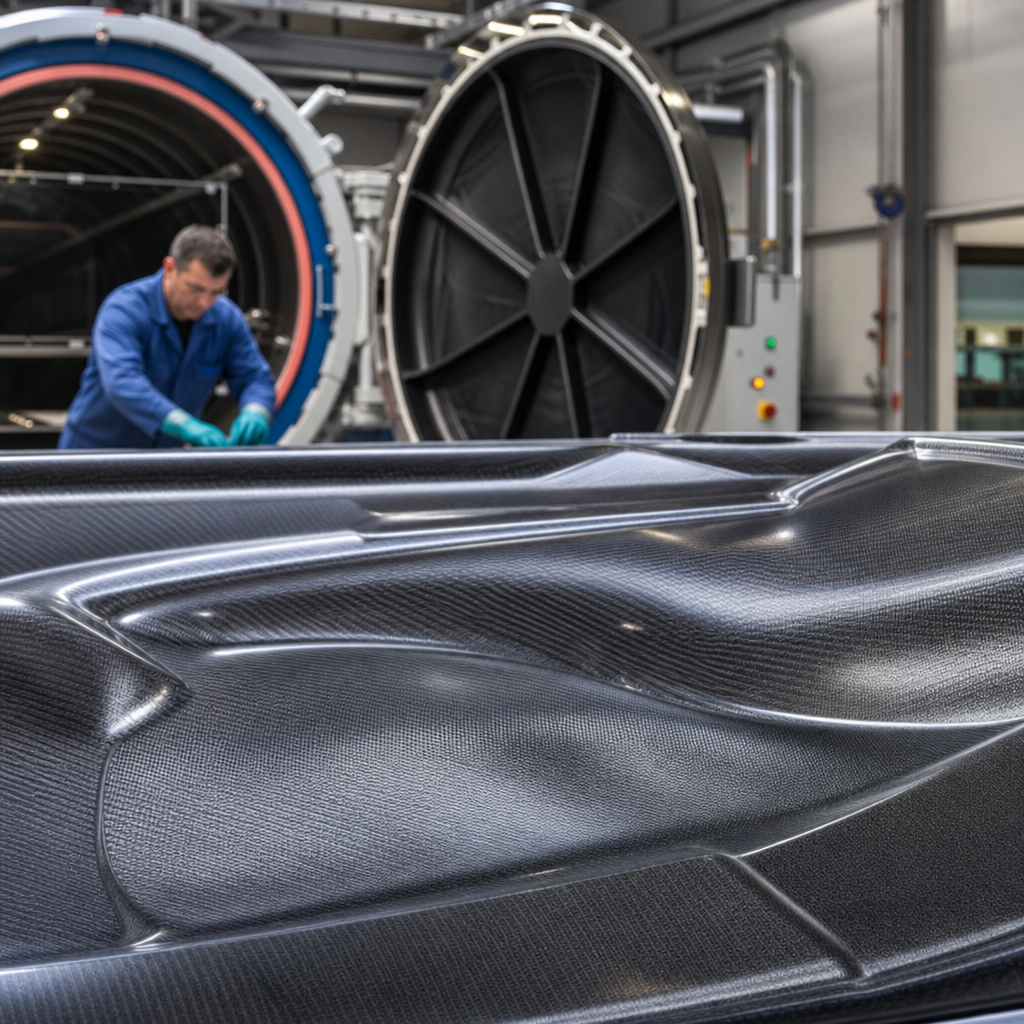
Breakthrough polymer products hitting the market in 2025 are reshaping packaging, construction, electronics, medicine, and mobility with materials engineered for lower emissions, longer life, and higher performance. In this context, polymers include commodity plastics, engineering resins, elastomers, thermosets, biopolymers, and advanced composites whose molecular architecture determines stiffness, barrier properties, heat resistance, conductivity, and recyclability. A product launch matters when it moves beyond lab promise into commercial supply, validated processing, regulatory compliance, and purchasing adoption. I track launches this way because buyers do not purchase chemistry alone; they purchase throughput, certification, total cost, and risk reduction. That is why 2025 stands out. After several years of pilot lines, joint development agreements, and recycled-content mandates, many polymer technologies are finally appearing as market-ready products rather than conference prototypes. The result is a wave of offerings that answer practical buyer questions directly: What problem does this solve, how does it process, what standards does it meet, and where will it deliver measurable value?
For manufacturers, procurement teams, and product developers, this new product launches hub matters because polymer choices now carry strategic consequences. Extended producer responsibility laws, PFAS restrictions, carbon reporting, food-contact rules, battery safety standards, and lightweighting targets all influence materials selection. In parallel, converters want drop-in solutions that run on existing extrusion, injection molding, thermoforming, and fiber spinning equipment without sacrificing cycle time. In my work reviewing launch portfolios and supplier briefs, the strongest 2025 products share a pattern: they combine an immediate operational benefit with a credible end-of-life or circularity story. Some increase post-consumer recycled content while preserving impact strength. Others replace multilayer structures with mono-material designs that simplify sorting and reprocessing. Still others bring new functionality, such as intrinsically flame-retardant housings for EV components or antimicrobial medical polymers that tolerate repeated sterilization. This article serves as the central guide to those developments, explaining the categories, examples, tradeoffs, and buying signals that define the most important polymer product introductions in 2025.
What qualifies as a breakthrough polymer launch in 2025
A breakthrough polymer product is not merely a resin grade with a fresh product code. It is a launch that changes performance economics, compliance capability, processing efficiency, or sustainability outcomes enough to alter specification behavior in the market. In practice, I look for five markers. First is scale: commercial availability in meaningful volumes, not kilogram samples. Second is compatibility: the product must process on standard equipment with documented melt flow, shrinkage, drying conditions, and weld-line behavior. Third is validation: UL, FDA, USP Class VI, ISO 10993, EN 45545, or equivalent certifications often determine whether a material can actually be sold into regulated sectors. Fourth is supply-chain credibility, including feedstock sourcing and geographic production footprint. Fifth is application fit, demonstrated through actual converter trials or brand-owner adoption.
These criteria explain why some 2025 launches deserve attention. Suppliers are introducing chemically recycled polyolefins under mass-balance systems certified to frameworks such as ISCC PLUS, allowing brand owners to claim circular feedstock inputs without changing process settings. Meanwhile, high-barrier polyethylene and polypropylene structures are reducing reliance on hard-to-recycle mixed laminates in food packaging. In electronics, halogen-free flame-retardant polyamides and polycarbonates are being released with thinner-wall performance that helps designers hit miniaturization targets. In healthcare, TPU and cyclic olefin polymers are advancing in drug delivery and diagnostic cartridges because they combine clarity, biocompatibility, and sterilization resistance. A genuine breakthrough launch solves a current engineering or regulatory bottleneck, not an imagined future need.
Packaging polymers moving from sustainability claims to measurable performance
Packaging remains the largest launch arena because brand owners are under pressure to reduce virgin fossil feedstocks while maintaining shelf life and machinability. The most important 2025 introductions fall into three groups: high-recycled-content resins, mono-material barrier systems, and compostable or bio-based polymers targeted at applications where recovery pathways are limited. Recycled-content polyethylene terephthalate and polyolefins are no longer novel by themselves. What is new is the consistency profile. Suppliers are promoting tighter control over color, acetaldehyde, odor, melt strength, and contamination, which makes these grades usable in demanding thermoforming, blow molding, and film applications. That matters because many earlier recycled grades performed well in marketing copy but created line instability in production.
Mono-material design is another major launch theme. Instead of combining PET, EVOH, PE, and tie layers in structures that are difficult to sort and recycle, suppliers are commercializing all-PE or all-PP barrier solutions using coatings, orientation, or carefully designed copolymers. For flexible food packs, this can preserve oxygen and moisture protection while keeping the package within a single polymer family. In practical terms, that improves mechanical recycling compatibility where collection systems exist. I have seen buyers respond strongly to these launches when suppliers provide full machine-run data, seal-window ranges, puncture resistance, and migration testing. Compostable products are also launching, particularly PLA blends and PHA-based items for food service and organic-waste programs, but the strongest suppliers now explain the limitation clearly: compostable does not mean suitable for every recycling stream, and infrastructure still determines real environmental value.
Automotive, aerospace, and mobility polymers advancing lightweighting and battery safety
Mobility applications are driving some of the most technically sophisticated polymer launches in 2025. Electric vehicles, e-bikes, rail systems, and aircraft cabins need lighter materials that resist heat, flame, chemicals, and mechanical fatigue. New long-glass-fiber polypropylene compounds, structural polyamides, polyphenylene sulfide grades, and thermoplastic composite tapes are entering the market with improved stiffness-to-weight ratios and better dimensional stability. These launches matter because every kilogram removed from a vehicle can improve efficiency or offset battery mass. Unlike older lightweighting efforts focused only on density, current launches target system-level performance: crash energy absorption, dielectric insulation, EMI shielding, coolant resistance, and assembly simplification through metal replacement.
Battery safety is a specific launch hotspot. Suppliers are releasing flame-retardant engineering polymers for cell spacers, busbar insulation, module covers, and charging hardware that meet stringent electrical and thermal requirements. Materials based on PBT, PA66, PPS, and specialty elastomers are being tailored for glow-wire performance, comparative tracking index, and resistance to thermal runaway propagation. In plain terms, these materials help prevent electrical leakage, deformation, or ignition when battery systems operate under stress. Aerospace and rail launches show a similar pattern, with interior components designed to meet smoke, toxicity, and flame standards while reducing part count. Real-world adoption depends on moldability and repeatability as much as performance, so the most credible 2025 products come with design guides, CAE material cards, and joining recommendations rather than headline claims alone.
Healthcare and electronics launches where purity, precision, and reliability are decisive
Medical and electronics markets reward polymers that fail less, contaminate less, and maintain tight tolerances. In 2025, new product launches in healthcare focus on biocompatible materials for wearable devices, diagnostic consumables, tubing, implant-adjacent components, and advanced wound care. Thermoplastic polyurethanes with improved hydrolysis resistance are being introduced for soft-touch housings and catheter-related components. Cyclic olefin copolymers and cyclic olefin polymers are expanding in microfluidics and pharmaceutical packaging because they offer high optical clarity, low extractables, and excellent moisture resistance. Silicone-modified polymers and antimicrobial additives are also appearing in devices where repeated cleaning or prolonged skin contact is important. Buyers in this segment want documentation first: sterilization compatibility, lot traceability, change-control commitments, and extractables data determine whether a launch becomes a qualified material.
Electronics launches are equally demanding. Recycled-content materials are entering consumer device housings, but only where aesthetics, impact resistance, and flame retardancy can be maintained. PC/ABS blends, LCPs for fine-pitch connectors, thermally conductive yet electrically insulating compounds for power electronics, and transparent polymers for optical assemblies are all seeing active commercialization. The breakthrough factor often lies in balancing conflicting requirements. A laptop housing resin may need UL 94 V-0 performance, a premium surface finish, low warpage, and PCR content. A connector material may need high flow in very thin sections while surviving solder reflow temperatures. In my experience, the suppliers winning specifications are the ones publishing comparative test data against incumbent grades and offering application engineering support from prototype to volume production.
How buyers should evaluate new polymer product launches in 2025
Choosing among new product launches requires a structured evaluation process because polymer performance is highly application-specific. A resin that excels in a data sheet can still fail in molding, sealing, bonding, sterilization, or recycling. The best buying teams compare candidates across performance, compliance, processing, economics, and end-of-life fit.
| Evaluation factor | What to verify | Why it matters in 2025 |
|---|---|---|
| Feedstock and formulation | Virgin, bio-based, mechanically recycled, chemically recycled, additive package | Determines carbon profile, compliance risk, and consistency |
| Processing window | Melt temperature, drying needs, cycle time, seal range, viscosity stability | Affects throughput and scrap rate on existing equipment |
| Regulatory status | Food contact, medical, flame, transport, electrical, or building certifications | Controls market access and qualification timelines |
| Performance under use | Impact, barrier, creep, heat aging, chemical resistance, fatigue | Prevents costly field failures and warranty exposure |
| Circularity pathway | Recyclability, compostability conditions, take-back options, mass-balance certification | Supports sustainability claims with operational evidence |
| Supply assurance | Production location, second-source options, lead times, change-control policy | Reduces disruption in volatile markets |
In practical sourcing reviews, I recommend asking four direct questions. Can this material run on our installed assets without major capital expense? What test data reflects our exact use conditions rather than generic benchmarks? How will claims about recycled or renewable content be substantiated in customer audits? What happens if volume ramps quickly and the supplier must qualify a second production site? These questions reveal whether a launch is mature enough for serious adoption. They also help teams separate meaningful innovation from cosmetic repositioning.
Market outlook and the most important launch trends to watch next
The broad 2025 outlook for breakthrough polymer products is positive, but the winners will be products that solve a chain of problems at once. First, expect more polymers designed for specific recovery systems, not generic sustainability messaging. Materials will be launched with sorting compatibility, wash performance, reprocessing behavior, and documented recycled-content pathways already mapped. Second, specialty performance will keep rising. Thermal management compounds, conductive polymers, self-healing coatings, and barrier materials tailored for e-commerce, medical diagnostics, and energy storage are moving closer to mainstream specification. Third, digital support is becoming part of the product itself. Leading suppliers now launch resins alongside life-cycle assessment data, processing simulations, digital material cards, and application libraries that accelerate qualification.
Geography will also shape product success. Europe continues to push recycled content, packaging redesign, and producer responsibility, while North America remains strongly influenced by brand commitments, state-level packaging legislation, and reshoring of manufacturing. Asia drives scale in electronics, EVs, and high-throughput converting, which means successful launches often prove themselves there first. Cost pressure remains the key restraint. Many advanced materials still carry premiums, and buyers must justify them through downgauging, faster cycles, reduced part count, longer service life, or compliance savings. The central lesson is straightforward: the best new product launches in polymers are not isolated chemistry stories. They are application-ready solutions backed by testing, standards, supply planning, and realistic sustainability pathways. Use this hub as your starting point for evaluating materials entering the market, then move deeper into category-specific analyses before making specification decisions.
Breakthrough polymer products hitting the market in 2025 are defining the next phase of innovation across the Innovative Products and Solutions landscape. The strongest new product launches are not just greener, stronger, or lighter in abstract terms; they address concrete commercial needs in packaging, mobility, healthcare, electronics, and industrial manufacturing. They help companies meet recycled-content goals without destabilizing production, improve flame resistance and thermal control in electrified systems, support sterile and precise medical applications, and simplify recycling through mono-material design. Across every sector, the same rule applies: breakthrough status comes from verified performance in real processing conditions, documented compliance, and a credible supply chain. Buyers should judge launches by how well they integrate into existing operations while reducing long-term regulatory, cost, and sustainability risk.
As a hub for new product launches, this page provides the framework for smarter material scouting in 2025. Start with the application need, then verify feedstock source, processability, certification, use-phase durability, and end-of-life pathway. Prioritize suppliers that offer transparent data, comparative testing, and engineering support rather than broad claims. When those pieces align, breakthrough polymer products can create measurable competitive advantage through lower weight, higher reliability, better circularity, and faster commercialization. Use this guide to shortlist opportunities, align internal stakeholders, and identify which launch categories deserve deeper evaluation next.
Frequently Asked Questions
1. What makes a polymer product a true breakthrough in 2025?
A polymer product earns the label “breakthrough” when it delivers a meaningful step-change in performance, sustainability, manufacturability, or cost compared with incumbent materials already used at scale. In 2025, that often means more than simply introducing a new plastic grade. It means launching a material system that solves a real market problem, such as reducing packaging weight without sacrificing barrier protection, replacing metal in automotive components while maintaining heat resistance, or enabling medical devices that are both biocompatible and easier to sterilize. The most important differentiator is not novelty alone, but whether the polymer’s molecular architecture, additives, fillers, or composite design produce measurable advantages in actual commercial use.
Another reason a launch matters is that polymers influence an unusually wide range of product attributes. A small change in chain structure, crystallinity, crosslink density, or reinforcement can alter stiffness, toughness, transparency, conductivity, flame resistance, and recyclability all at once. That is why 2025 product introductions are drawing attention across packaging, construction, electronics, medicine, and mobility. The strongest launches are those that can move from lab promise to production reality, meaning they are processable on existing equipment or with only modest conversion costs, are backed by supply chain readiness, and comply with relevant regulatory and environmental standards. In short, a breakthrough polymer in 2025 is one that performs better, scales faster, and creates a clearer value proposition than the material it aims to replace.
2. Which industries are being most affected by breakthrough polymer products hitting the market in 2025?
The biggest impact is being felt in packaging, construction, electronics, healthcare, and transportation, because these sectors depend heavily on material performance and are under intense pressure to cut emissions, improve durability, and control costs. In packaging, new high-barrier and mono-material polymer structures are helping brands extend shelf life while making flexible and rigid formats easier to recycle. Lightweighting remains a major advantage, but 2025 launches are also focusing on downgauging, improved sealability, and better compatibility with circular economy systems. This matters because packaging buyers increasingly need materials that can balance product protection, regulatory compliance, and end-of-life considerations.
In construction, advanced polymers and composites are improving insulation, corrosion resistance, weatherability, and service life in pipes, panels, membranes, sealants, and structural components. These products are especially valuable where maintenance costs are high or where legacy materials such as metal, wood, or concrete face limitations in moisture exposure or weight. Electronics is another fast-moving area, with polymers engineered for thermal management, dielectric performance, miniaturization, and flame retardancy in connectors, housings, wire coatings, printed electronics, and battery-related applications. In healthcare, the market is seeing stronger demand for polymers that support implantables, drug delivery systems, wearables, diagnostics, and single-use devices with consistent purity and sterilization performance. In mobility, from passenger vehicles to EVs, rail, aerospace, and micromobility, polymer breakthroughs are enabling lighter parts, improved battery protection, better interior durability, and reduced energy consumption. The common thread across all of these industries is that material innovation is now directly tied to both product competitiveness and sustainability targets.
3. Are the new polymer products in 2025 really more sustainable, or is it mostly marketing?
Some are genuinely more sustainable, but the answer depends on how sustainability is being defined and measured. The most credible 2025 polymer products are supported by data such as life-cycle assessments, recycled content verification, bio-based carbon accounting, lower processing energy requirements, or evidence of longer service life. A polymer can be considered more sustainable for several different reasons: it may reduce total material usage through lightweighting, lower emissions during manufacturing, improve recyclability by simplifying multi-layer structures, incorporate renewable or recycled feedstocks, or extend product lifespan enough to reduce replacement frequency. In many cases, the sustainability gain does not come from a single “green” claim, but from a combination of design efficiencies and system-level benefits.
At the same time, the market is rightfully cautious about overstated claims. A bio-based polymer is not automatically recyclable, and a recyclable polymer is not automatically being recycled at scale in every region. Likewise, compostability may only apply under industrial conditions, not in home or open-environment settings. That is why buyers, engineers, and manufacturers in 2025 are asking more precise questions: What infrastructure exists for collection and recycling? Does the material maintain performance after reprocessing? Does it reduce emissions across the whole value chain, not just at one stage? The most trustworthy breakthrough products are those that are transparent about trade-offs and application fit. Sustainability in polymers is becoming less about labels and more about verified performance, circularity potential, and practical deployment in real-world markets.
4. How do advanced polymers improve performance in products like packaging, medical devices, and electric vehicles?
Advanced polymers improve performance by allowing engineers to tune material properties at a very fine level for the exact demands of each application. In packaging, this can mean better oxygen and moisture barriers, stronger puncture resistance, improved clarity, and seal integrity, all while reducing weight. For food, pharmaceutical, and consumer goods applications, these improvements directly support shelf life, product safety, and transportation efficiency. New resin blends, coatings, and compatibilizers are also making it easier to create packaging solutions that preserve performance while aligning more closely with recycling pathways. This is particularly important in 2025 as converters and brand owners seek to replace difficult-to-recycle multi-material structures with more circular alternatives.
In medical devices, advanced polymers offer precision and consistency that are critical for patient safety and regulatory approval. Materials can be engineered for biocompatibility, chemical resistance, sterilization stability, flexibility, or controlled rigidity, depending on whether the end use is a catheter, surgical instrument, wearable sensor, implant component, or diagnostic cartridge. Some of the most significant 2025 launches are focused on cleaner formulations, tighter manufacturing tolerances, and materials that support miniaturized or connected medical technologies. In electric vehicles and broader mobility applications, polymers play a central role in reducing overall mass, managing heat, insulating electrical systems, and protecting battery components from impact, flame, and environmental stress. High-performance engineering resins, elastomers, thermosets, and composites are replacing heavier materials in under-the-hood, structural, and interior systems. The benefit is not just lighter weight, but often improved design freedom, corrosion resistance, integration of multiple functions into fewer parts, and potentially lower total system cost.
5. What should buyers, manufacturers, and investors look for when evaluating new polymer products in 2025?
The most important factors are application fit, scalability, certification readiness, economics, and long-term supply resilience. A polymer may look impressive in a technical datasheet, but the key question is whether it performs reliably under actual processing and end-use conditions. Buyers should examine thermal properties, mechanical strength, barrier performance, chemical resistance, dimensional stability, weathering behavior, and compatibility with existing production methods. Manufacturers should also consider whether the material runs on current extrusion, molding, lamination, coating, or compounding equipment, or whether significant capital investment is required. In 2025, successful polymer adoption is increasingly tied to how smoothly a new material can be integrated into established workflows without disrupting throughput, quality control, or compliance.
Investors and procurement teams should also look beyond material science headlines to the commercial fundamentals. That includes feedstock security, regional production capacity, pricing stability, intellectual property position, customer validation, and regulatory alignment in target markets. For sustainability-focused products, it is especially important to review traceability systems, recycled or bio-based content claims, and whether the company can support those claims with recognized standards or third-party verification. Another crucial indicator is whether the polymer solves a high-value pain point rather than offering only incremental improvement. Products that reduce total system cost, improve durability, meet tightening environmental requirements, or unlock new design possibilities are more likely to achieve durable market traction. In a year defined by rapid materials innovation, the winning polymer products are those that combine strong science with manufacturing practicality and a clear, provable business case.