High-performance polymers are specialized plastic materials engineered to retain mechanical strength, chemical resistance, dimensional stability, and biocompatibility under conditions that cause conventional plastics to fail. In medical applications, these polymers matter because modern devices must survive sterilization, bodily fluids, repeated flexing, imaging environments, and increasingly demanding regulatory expectations. I have seen product teams replace metal and commodity resin parts with advanced polymers not because the material sounded innovative, but because the device could not meet performance targets any other way. When a catheter hub cracks during assembly, an implant creeps under load, or a reusable surgical tool degrades after hundreds of autoclave cycles, material selection becomes a clinical and commercial issue at the same time.
The term high-performance polymers usually includes materials such as PEEK, PEKK, PPSU, PSU, PES, LCP, PTFE, UHMWPE, polyimide, and certain fluoropolymers and bioresorbable systems when they meet elevated performance requirements. These materials differ from standard engineering plastics by maintaining properties at higher temperatures, under radiation or steam sterilization, and in aggressive chemical environments. In healthcare, they appear in implants, instrument handles, dental devices, drug delivery systems, sterilization trays, electrophysiology components, wearable sensors, and diagnostic equipment. Their role extends beyond replacing metal. They enable lighter devices, transparent housings, radiolucent implant components, electrically insulating parts, low-friction bearing surfaces, and miniaturized geometries that are difficult to machine from traditional materials.
This matters because the medical industry is balancing several pressures at once: less invasive procedures, more reusable devices, stronger infection control, supply chain resilience, and stricter evidence for safety and long-term performance. High-performance polymers help answer practical questions clinicians and manufacturers ask every day. Can a material tolerate repeated steam sterilization without embrittlement? Will it resist lipids, disinfectants, and hospital cleaners? Is it visible or invisible under X-ray, CT, or MRI in the way the application requires? Can it be injection molded at scale, machined precisely, extruded into tubing, or additively manufactured for custom anatomy? The value of these polymers lies in matching property profiles to medical use cases with discipline, not in assuming one premium resin solves every problem.
What high-performance polymers do in medical devices
In plain terms, high-performance polymers allow medical devices to work reliably where heat, stress, chemistry, and precision all matter. A reusable instrument tray made from PPSU can handle repeated autoclave cycles better than many lower-grade plastics. A spinal implant manufactured from implantable PEEK offers a modulus closer to cortical bone than titanium, which can help reduce stress shielding in selected designs. PTFE liners and seals provide low friction and strong chemical resistance in pumps and fluid handling assemblies. UHMWPE remains essential in orthopedic bearing surfaces because of its wear performance, especially in highly cross-linked forms used in joint replacement systems.
These materials also support device design goals beyond durability. Electrical insulation is critical in electrosurgical tools and diagnostic equipment. Radiolucency can be valuable in trauma fixation and interbody fusion devices when clinicians want to assess bone healing around the implant. Transparency matters in connectors, reservoirs, and housings where fluid visibility supports safe operation. Lightweight construction reduces hand fatigue in surgical instruments and improves ergonomics in portable devices. In my experience, the strongest medical programs define the functional requirement first, then map material properties to that requirement rather than starting with a favored polymer and forcing the design around it.
Another important role is enabling manufacturing consistency. Medical products often demand tight tolerances, traceability, and validated processes. High-performance polymers can be injection molded into complex geometries with fewer secondary operations than machined metal assemblies, reducing part count and potential failure points. Liquid crystal polymer, for example, is valued in miniature electronic and catheter components because of its flow behavior and dimensional precision in very thin sections. Polyimide is widely used in catheter shafts and flexible circuits because it combines thermal stability with high dielectric performance. When a device must be small, stable, and reproducible across large production volumes, these materials become strategic rather than optional.
Core material families and where each fits
PEEK is one of the most recognized high-performance polymers in medicine because it combines strength, chemical resistance, sterilization tolerance, and biocompatibility. Implant-grade PEEK is used in spinal cages, trauma components, dental healing abutments, and instrument parts. Carbon fiber reinforced PEEK can increase stiffness for structural applications, although reinforcement changes wear behavior, machinability, and imaging characteristics. PEKK, a member of the PAEK family, offers similar appeal with different crystallization behavior and thermal performance, which can benefit additive manufacturing and selected implant uses. These are premium materials, and their cost only makes sense when the device truly needs their property set.
PPSU, PSU, and PES are workhorses for reusable medical equipment. PPSU is especially important where repeated steam sterilization is required, such as sterilization cases, instrument handles, and dental devices. Compared with polycarbonate, PPSU typically offers better hydrolytic stability and impact retention after repeated autoclaving. Fluoropolymers, including PTFE and FEP, dominate in low-friction liners, insulation, and chemically resistant tubing. UHMWPE remains central in orthopedics because its wear performance under articulation is well studied. Polyimides support minimally invasive devices, including catheters, balloons, and flexible electronic assemblies. Liquid crystal polymers serve miniaturized connectors and electronic substrates because of excellent dimensional control and moisture resistance.
| Polymer | Key medical advantages | Typical applications |
|---|---|---|
| PEEK | Strength, sterilization resistance, radiolucency, biocompatibility | Spinal implants, instrument components, dental devices |
| PEKK | High thermal performance, strong mechanics, processing flexibility | Implants, additively manufactured parts, structural components |
| PPSU | Autoclave durability, impact resistance, hydrolytic stability | Reusable instrument handles, trays, dental tools |
| PTFE | Low friction, chemical inertness, electrical insulation | Catheter liners, seals, tubing, wire insulation |
| UHMWPE | Excellent wear resistance, toughness | Hip and knee bearing surfaces |
| Polyimide | Thermal stability, flexibility, dielectric performance | Catheters, flexible circuits, tubing |
No family is universally superior. For example, PEEK is strong and processable, but it is not as naturally lubricious as PTFE and is more expensive than many sterilizable amorphous polymers. PPSU performs extremely well in reusable applications, but it is not an implant bearing material. UHMWPE excels in wear, yet it is not chosen for high-load structural housings. The right decision depends on load case, sterilization method, contact duration, regulatory pathway, and manufacturing route. That is why this subtopic deserves a hub article: high-performance polymers are not a single category to buy; they are a toolkit to deploy carefully.
Key performance requirements in medical environments
The first requirement is biocompatibility, but that term needs precision. A material can have a history of medical use and still fail in a specific application if the processing additives, colorants, sterilization residues, or contact duration are wrong. Teams typically assess endpoints through ISO 10993 based on the nature and duration of body contact. Implantable grades demand especially strong evidence, often including long-term data, extractables characterization, and controlled manufacturing. For nonpatient-contact equipment, the focus may shift more toward cleanability, sterilization compatibility, and chemical resistance than implant biology.
Sterilization resistance is another decisive factor. Steam autoclave, ethylene oxide, gamma irradiation, electron beam, hydrogen peroxide plasma, and chemical disinfection each affect polymers differently. Repeated steam exposure can cause hydrolysis, warpage, discoloration, or loss of impact strength in unsuitable resins. Radiation can induce chain scission or crosslinking, altering mechanical properties over shelf life. I have seen a polymer pass initial mechanical testing and then fail after sterilization aging because the validation plan did not include worst-case exposure. The lesson is simple: sterilization is not a postscript to material selection; it is part of the material requirement.
Mechanical performance must also be considered under realistic use conditions. Tensile strength alone is not enough. Designers need creep resistance for loaded implants and clips, fatigue data for flexing components, wear data for articulating surfaces, and notch sensitivity information for molded features. In medical devices, geometries are often thin, miniature, and subject to assembly stresses, which makes gate design, knit lines, and residual stress important. Chemical resistance to lipids, alcohols, enzymatic cleaners, iodine solutions, and hospital disinfectants can determine whether a device lasts months or years. Imaging behavior, flame performance where applicable, and electrical properties further narrow the shortlist.
Manufacturing methods, validation, and quality control
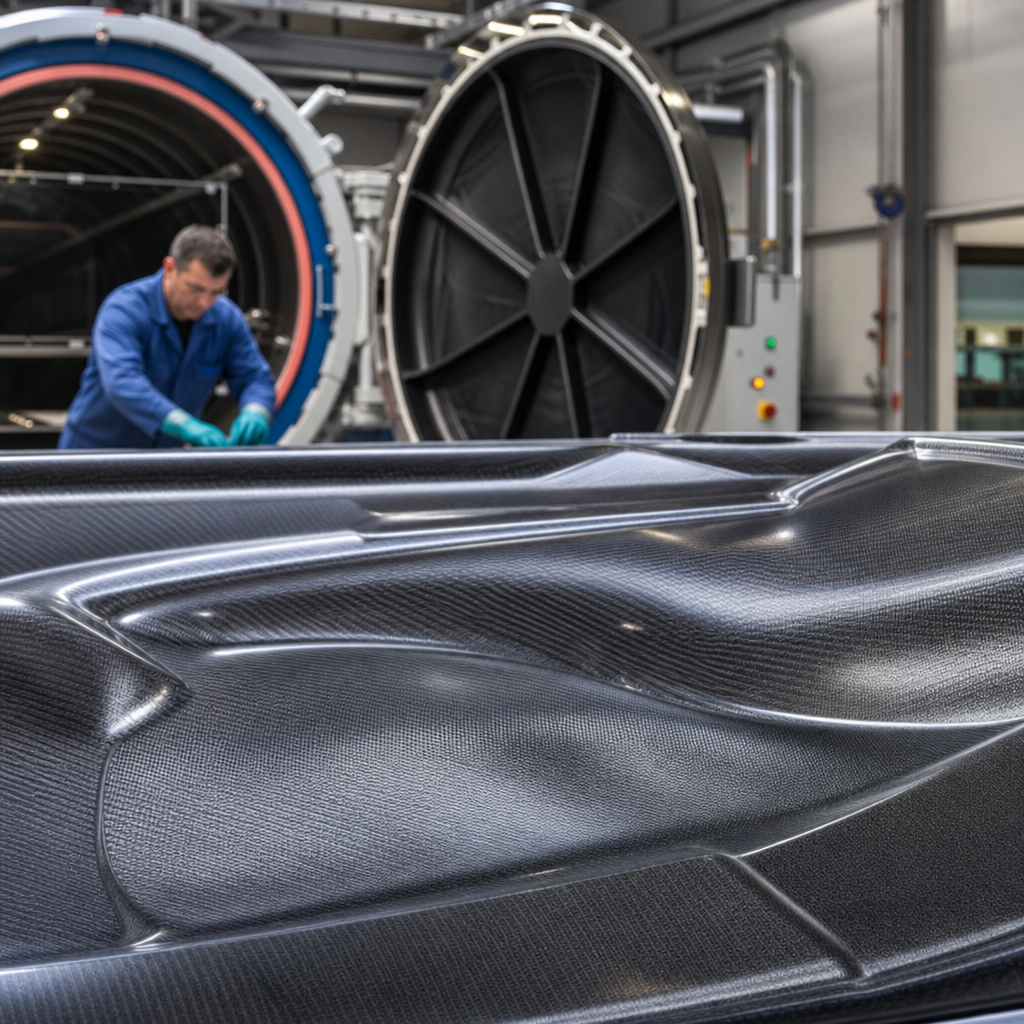
High-performance polymers create opportunities in manufacturing, but they also impose discipline. Injection molding is common for PPSU, PEEK, LCP, and many other resins, yet these materials usually require tighter control of melt temperature, mold temperature, drying, and residence time than standard plastics. PEEK and PEKK, for instance, are sensitive to thermal history and crystallinity, which can affect mechanical performance and dimensional stability. Extrusion supports tubing and catheter structures, while machining remains important for lower-volume implant parts and prototype iterations. Compression molding, ram extrusion, and sintering are relevant for PTFE and UHMWPE systems, where conventional melt processing may not apply.
Validation is where strong material programs separate themselves from weak ones. Medical manufacturers need documented incoming material controls, lot traceability, process qualification, and change management aligned with quality system requirements. Resin suppliers may offer healthcare grades with letters of authorization, change notification commitments, and supporting test data, which simplifies submissions and risk management. However, supplier documentation does not replace device-level verification. Dimensional capability, sterilization effects, package aging, bond strength, particulate generation, and assembly performance all have to be tested on the finished design. A resin with excellent data sheets can still fail in a device if the gate location or annealing strategy is wrong.
Additive manufacturing is expanding the conversation, especially around PEKK and selected medical-grade polymers for custom instruments, anatomical models, and patient-specific implants where permitted. The benefit is design freedom, but layer adhesion, porosity, and post-processing controls become central. Machined PEEK may offer predictable properties, while printed PEKK may enable geometry impossible through machining. The correct choice depends on whether customization outweighs manufacturing complexity. In every route, contamination control matters. Drying hoppers, grinders, molds, and packaging areas must be managed to avoid foreign material, especially for implantable or fluid-path components.
Clinical examples and market drivers shaping adoption
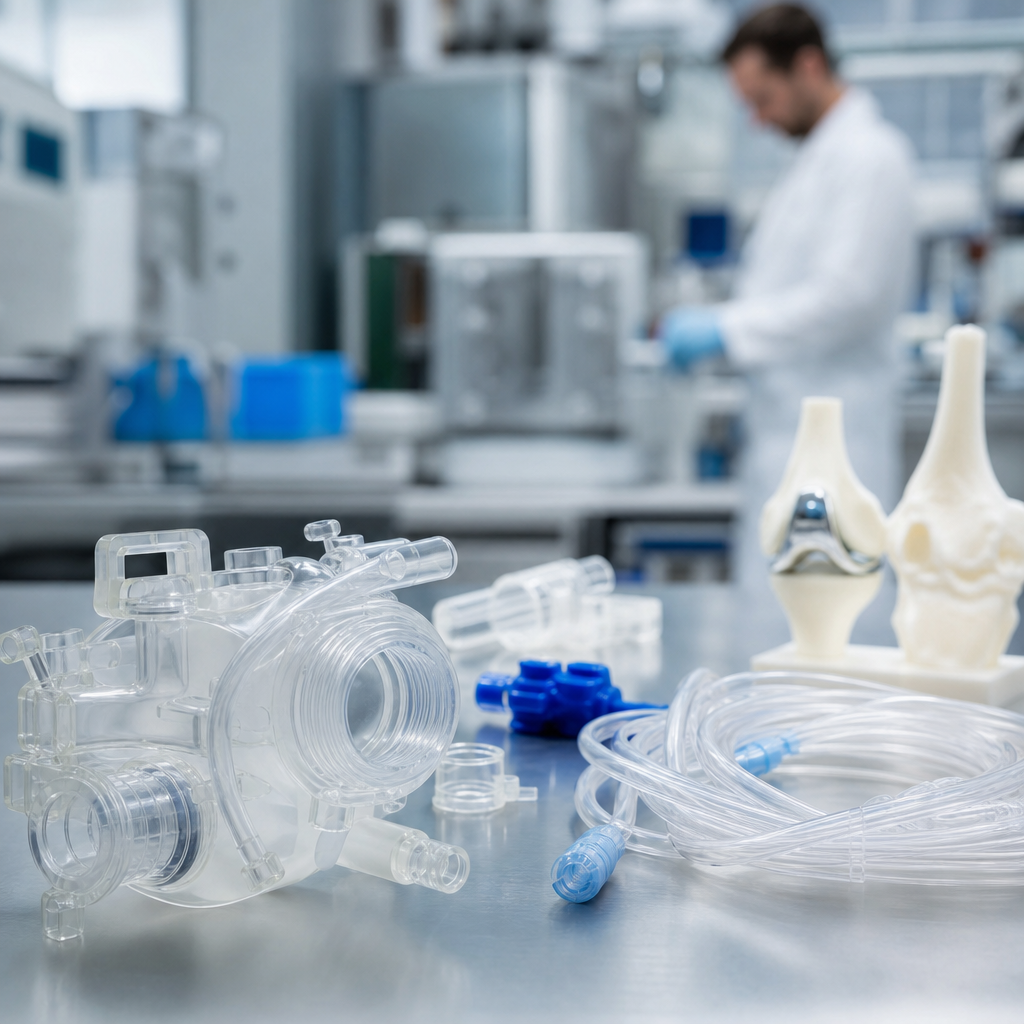
Orthopedics provides some of the clearest examples of the role of high-performance polymers in medical applications. PEEK interbody cages gained adoption because they are radiolucent and have a modulus closer to bone than metal, helping surgeons evaluate fusion on imaging while giving engineers a different load-sharing profile. UHMWPE transformed joint arthroplasty as a bearing material, and ongoing improvements in crosslinking and oxidation stabilization have extended implant longevity. In cardiovascular and minimally invasive devices, PTFE liners, polyimide shafts, and advanced fluoropolymer insulations support lower-friction navigation, torque response, and reliable electrical performance in compact devices.
Reusable instruments are another major growth area. Hospitals want devices that withstand repeated reprocessing without cracking, clouding, or losing strength. PPSU has become a standard choice for sterilization cases and robust handles because it survives hundreds or thousands of steam cycles better than many transparent plastics. Diagnostic and surgical robotics platforms increasingly use high-performance polymers for lightweight housings, cable management, bearings, and insulating components. In wearable and home healthcare products, engineers often seek polymers that combine skin compatibility, chemical resistance, and manufacturability at consumer-like volumes without sacrificing medical compliance expectations.
Several market drivers explain why adoption is accelerating. The first is miniaturization: smaller devices need thinner walls, tighter tolerances, and more reliable material behavior. The second is the shift toward outpatient and minimally invasive care, which favors lightweight, flexible, and high-precision components. The third is sterilization intensity and infection prevention, especially for reusable products. The fourth is supply chain strategy. Many manufacturers now want alternatives to machined metal assemblies that can be molded closer to net shape in multiple regions. High-performance polymers are not automatically simpler to source, but when qualified well, they can reduce assembly complexity and improve design resilience.
How to choose the right high-performance polymer
The best selection process begins with a detailed requirement matrix. Define contact type, sterilization method, expected life, loading mode, chemical exposure, transparency needs, imaging requirements, regulatory path, and manufacturing volume. Then compare candidate materials against those criteria instead of comparing data sheets in isolation. For example, if a reusable laparoscopic handle needs impact resistance after repeated autoclaving, PPSU will usually outrank polycarbonate quickly. If an implant needs radiolucency and structural stability, implantable PEEK or PEKK may deserve attention. If the need is a low-friction catheter liner, PTFE is a natural starting point. Good material selection is a process of elimination driven by application physics.
Cost should be evaluated as total system cost, not resin price per kilogram. Premium polymers are expensive, but they can reduce secondary machining, lower part count, improve sterilization durability, and shorten assembly time. The opposite can also happen: an over-specified resin may increase mold wear, cycle time, and validation burden without adding clinical value. I recommend involving suppliers, processing engineers, quality teams, and regulatory specialists early. Ask for medical-grade documentation, sterilization data, and change control policies up front. Then test the real design under worst-case conditions. That disciplined approach is how high-performance polymers deliver their full value in medical applications.
High-performance polymers have become essential to medical innovation because they solve real problems that standard plastics and metals often cannot solve as efficiently. They enable implant performance, reusable device durability, miniaturized electronics, low-friction delivery systems, and cleaner, lighter designs across healthcare. The most important takeaway is that material selection must be application-specific. PEEK, PEKK, PPSU, PTFE, UHMWPE, polyimide, and related materials each play distinct roles, and success depends on aligning properties, processing, sterilization, and regulatory evidence from the start. That is why this topic belongs at the center of any serious discussion about innovative medical products.
For teams building a subtopic strategy around high-performance polymers, the practical next step is to go deeper into the individual families, processing methods, and end-use categories linked from this hub. Focus on the questions that determine success: what the device must withstand, how it will be made, how it will be sterilized, and what evidence regulators and clinicians will expect. When those answers are clear, the right polymer choice becomes much easier. Use this hub as your starting point, then map each medical application to the material class most likely to deliver safe, durable, manufacturable performance.
Frequently Asked Questions
1. What are high-performance polymers, and why are they important in medical applications?
High-performance polymers are advanced plastic materials designed to maintain their properties in demanding environments where standard plastics often degrade, deform, crack, or lose performance. In medical applications, that distinction matters because devices and components are routinely exposed to stressors such as sterilization cycles, harsh cleaning agents, bodily fluids, elevated temperatures, repeated mechanical loading, and strict biocompatibility requirements. Materials used in the healthcare sector cannot simply be lightweight or easy to mold; they must also perform consistently over time and under tightly controlled regulatory expectations.
These polymers are important because they help engineers solve multiple design problems at once. A single material may need to provide mechanical strength, chemical resistance, dimensional stability, wear resistance, and compatibility with imaging or sterilization processes. For example, a medical device component may need to retain tight tolerances after repeated steam sterilization, resist disinfectants in a hospital setting, and avoid interfering with diagnostic imaging equipment. High-performance polymers can often meet these overlapping demands better than commodity resins and, in some cases, better than metal.
They also support broader product development goals. Medical manufacturers are under constant pressure to reduce device weight, improve ergonomics, streamline assembly, and enhance patient comfort without sacrificing safety. High-performance polymers enable thin-walled geometries, complex molded shapes, and integrated features that can reduce part count and simplify production. In many devices, replacing traditional materials with high-performance polymers can improve reliability, lower system complexity, and create more design freedom, which is why they have become increasingly important across surgical tools, implantable systems, diagnostic equipment, drug delivery platforms, and minimally invasive devices.
2. How do high-performance polymers compare with metals and conventional plastics in medical devices?
High-performance polymers sit in a valuable middle ground between commodity plastics and metals, but in many cases they outperform both depending on the application. Compared with conventional plastics, they generally offer much better heat resistance, superior chemical resistance, stronger retention of mechanical properties, lower creep under load, and improved stability after sterilization. A commodity plastic might be suitable for a simple disposable housing, but it may not survive repeated autoclave cycles, long-term fluid exposure, or constant flexing in a critical medical environment. High-performance polymers are specifically engineered for these more extreme conditions.
Compared with metals, the advantage is often not raw strength alone but a combination of performance and design flexibility. Many high-performance polymers are significantly lighter than metal, which can improve handling in handheld devices and reduce strain in wearable or implant-adjacent applications. They can also provide corrosion resistance without the need for additional coatings, and they often enable part consolidation by allowing complex shapes to be molded directly rather than machined and assembled from multiple components. In some designs, that can reduce manufacturing complexity and eliminate secondary operations.
Another important difference is functionality beyond mechanics. Some high-performance polymers are radiolucent, meaning they do not block imaging in the same way metals can. Others offer electrical insulation, low friction, or compatibility with sensitive electronic systems. In imaging environments or electrically active devices, those characteristics can be decisive. That said, material selection is always application-specific. Metals may still be the best choice for very high load-bearing structures, and conventional plastics may remain ideal for low-cost disposables. The value of high-performance polymers comes from their ability to bridge the gap, delivering advanced performance where standard materials are not enough and metal may introduce unnecessary weight, cost, or design constraints.
3. What properties make a polymer suitable for sterilizable and biocompatible medical use?
A polymer suitable for medical use must do much more than pass a basic strength test. One of the most important requirements is the ability to withstand sterilization without significant degradation. Medical products may be sterilized using steam autoclaving, ethylene oxide, gamma radiation, electron beam, or other methods depending on the device and its intended use. Each sterilization process affects materials differently. Some polymers may discolor, become brittle, lose impact resistance, or change dimensions after repeated exposure. High-performance polymers used in medical settings are selected because they can maintain functionality through the required sterilization regime.
Biocompatibility is equally critical. In practical terms, this means the material must be appropriate for how and where it will be used in or around the body. A polymer used in a short-term external device may face different biological requirements than one used in a long-term implanted component or in a device that contacts blood or tissue. Biocompatibility assessments typically consider whether the material causes unacceptable irritation, toxicity, sensitization, or other adverse biological responses under expected use conditions. Just as important, manufacturers must evaluate not only the base polymer but also additives, colorants, processing aids, and the effects of manufacturing on the finished part.
Beyond sterilization resistance and biocompatibility, suitability often depends on dimensional stability, chemical resistance, fatigue performance, wear behavior, and extractables or leachables profile. A high-performing medical polymer should hold tolerances, resist cracking in contact with cleaners or lipids, and continue performing after repeated flexing or mechanical loading. Regulatory support also matters. Material suppliers that provide documentation, traceability, and consistency are especially valuable because medical manufacturers need robust data to support design controls, risk management, verification, and validation. In short, a suitable medical polymer is not defined by one property alone; it is defined by how well it performs across the full clinical, manufacturing, and regulatory environment.
4. Where are high-performance polymers commonly used in medical devices and healthcare equipment?
High-performance polymers are used across a wide range of medical applications because they can be tailored to demanding mechanical, thermal, chemical, and biological requirements. In surgical and reusable instruments, they are often chosen for components that must tolerate repeated sterilization while maintaining strength, precision, and surface integrity. Handles, actuator parts, housings, and internal mechanisms may all benefit from polymers that resist heat and cleaning chemicals while reducing weight compared with metal alternatives.
They are also widely used in diagnostic and imaging equipment. In these systems, material selection may be influenced by dimensional stability, electrical insulation, low outgassing, or compatibility with imaging environments. Components in analyzers, patient monitoring systems, fluid management devices, and imaging-adjacent hardware often need to perform reliably over long service lives while maintaining tight tolerances. High-performance polymers can help meet those demands without adding unnecessary mass or corrosion risk.
In minimally invasive devices and drug delivery systems, the benefits are often even more pronounced. Catheter components, instrument guides, pump parts, seals, valve elements, and precision-molded internal parts may require flexibility, low friction, wear resistance, or excellent chemical compatibility. In orthopedics, dental applications, trauma systems, and certain implant-related uses, some high-performance polymers are valued for their balance of stiffness, toughness, and biocompatibility. They can also be useful in external prosthetic or rehabilitation equipment where durability and weight reduction matter.
Another growing area is the replacement of metal and lower-grade resins in components that once seemed unlikely candidates for polymer engineering. Product teams increasingly use high-performance polymers to consolidate assemblies, improve ergonomics, reduce imaging interference, or avoid corrosion issues. Their role is no longer limited to simple noncritical parts; they are now central to many high-value device designs where performance, manufacturability, and lifecycle reliability must all work together.
5. What should manufacturers consider when selecting a high-performance polymer for a medical product?
Material selection should begin with the actual use environment, not just with a shortlist of popular resins. Manufacturers need to define the full set of functional demands on the part: mechanical loads, expected temperatures, exposure to chemicals and bodily fluids, sterilization method, required service life, dimensional tolerances, wear conditions, and whether the device must function near imaging or electronic systems. A polymer that performs well in one category but poorly in another may create costly redesigns later. For example, a material with excellent strength may still be unsuitable if it degrades after radiation sterilization or absorbs too much moisture for a precision application.
Processing considerations are just as important as end-use properties. Even an excellent material can become a poor choice if it is difficult to mold consistently, requires unusually narrow processing windows, or introduces high scrap rates in production. Manufacturers should evaluate whether the polymer supports the intended fabrication method, whether it can achieve the required geometry and tolerances, and how it behaves during assembly steps such as welding, bonding, machining, or overmolding. Supply continuity and grade consistency also matter greatly in medical programs, where change control is essential and qualification costs can be substantial.
Regulatory and quality considerations should be addressed early rather than treated as a final checkpoint. Medical manufacturers typically need material data, traceability, and supporting documentation that align with their risk management and validation processes. Depending on the application, this may include biocompatibility information, sterilization compatibility data, and evidence of long-term performance stability. Working with experienced material suppliers and manufacturing partners can reduce uncertainty and help teams avoid selecting a resin based solely on a datasheet headline.
Ultimately, the best choice is rarely the material with the highest numbers across the board. It is the one that delivers the right combination of performance, manufacturability, compliance support, and commercial practicality for the specific device. When selection is done well, high-performance polymers can enable safer, lighter, more durable, and more efficient