High-performance polymers are reshaping automotive design because they let engineers reduce mass, manage heat, resist chemicals, and consolidate parts without sacrificing durability. In automotive terms, high-performance polymers are engineered plastics that retain mechanical strength, dimensional stability, and functional performance under demanding conditions such as high temperature, vibration, fluid exposure, and electrical stress. This category includes materials like polyamide, PEEK, PPS, PEI, LCP, fluoropolymers, and advanced thermoplastic composites reinforced with glass or carbon fiber. I have seen these materials move from niche under-hood clips to safety-critical connectors, battery components, lightweight structures, and precision interior systems. That shift matters because modern vehicles must meet stricter fuel economy and emissions rules, support electrification, improve crash performance, and still control manufacturing cost. Designers are no longer asking whether a metal part can be replaced with polymer; they are asking which polymer family, reinforcement package, and processing route will deliver the required stiffness, creep resistance, flame performance, and surface quality. As a hub topic within innovative products and solutions, high-performance polymers deserve a broad view. They influence product development from concept sketches through CAE simulation, tool design, assembly strategy, compliance testing, and end-of-life planning. Understanding where they fit helps automakers and suppliers make better material decisions earlier.
What high-performance polymers are and why automakers use them
High-performance polymers differ from commodity plastics in three practical ways: they tolerate harsher environments, hold tighter tolerances, and deliver more stable properties over time. Polypropylene may work well for trim, but it softens too easily for many engine-bay or e-mobility uses. By contrast, polyphenylene sulfide maintains strength at elevated temperatures, absorbs little moisture, and resists automotive fluids. PEEK goes further, handling continuous high heat and wear in demanding mechanical assemblies, though at a much higher price point. Polyamides, especially PA66, PA6T, and partially aromatic grades, remain common because they balance performance, processability, and cost.
Automakers use these materials for clear reasons. Weight reduction is the most visible. Replacing stamped steel, die-cast aluminum, or multi-part metal assemblies with engineered polymer components can cut part weight by 20 to 50 percent, depending on geometry and load case. That translates into lower fuel consumption in internal combustion vehicles and longer range in electric vehicles. Part integration is equally important. A molded polymer module can combine clips, channels, seals, fastener bosses, and living hinges into one piece, reducing assembly time and tolerance stack-up. Corrosion resistance is another advantage, especially around road salt, battery coolants, brake fluids, and underbody splash zones.
These materials also expand design freedom. Injection molding supports ribs, complex internal passages, snap fits, and overmolded inserts that would be expensive or impossible in metal. In practice, that freedom improves packaging. I have worked on connector housings and thermal management parts where a polymer design solved both space constraints and assembly errors because features could be molded directly into the part. For automotive teams under pressure to shorten development cycles, that combination of lighter weight, functional integration, and process efficiency makes high-performance polymers a strategic design tool rather than a simple material substitution.
Where high-performance polymers appear in modern vehicles
High-performance polymers now appear across nearly every vehicle zone. Under the hood, glass-filled polyamides and PPS are used in air intake manifolds, thermostat housings, coolant pump components, sensor bodies, ignition parts, and fluid connectors. These applications demand resistance to heat aging, glycol, oil mist, and pressure cycling. Intake manifolds are a classic example. Years ago, many were aluminum. Today, nylon composites dominate because they reduce mass, smooth airflow through more complex internal shapes, and lower manufacturing cost through injection molding and welding.
In electrical and electronic systems, the material stakes are even higher. EV battery packs, busbar supports, charging connectors, inverter housings, and high-voltage junction boxes require dielectric strength, comparative tracking index performance, dimensional stability, and often flame retardancy that aligns with UL standards and OEM internal specifications. Materials such as PBT, PA, PPS, and LCP are chosen not just for insulation but for their ability to survive soldering, vibration, and thermal cycling. Fine-pitch connectors often rely on liquid crystal polymer because it flows into thin walls while preserving precise geometry.
Interior applications are also evolving. Traditional trim still uses lower-cost plastics, but high-performance grades are increasingly selected for seat structures, sunroof mechanisms, HVAC actuators, and decorative elements that must resist scratch, UV exposure, and cabin heat. Exterior systems use advanced polymers in radar-transparent fascias, active grille shutters, mirror assemblies, lighting housings, and sensor brackets. Chassis and structural use is growing through thermoplastic composites, where long-fiber or continuous-fiber reinforcement supports semi-structural brackets, front-end modules, and underbody shields. The pattern is clear: as vehicle architecture becomes more integrated and electronically complex, high-performance polymers move closer to the vehicle’s critical functions.
How polymers change the design process
Designing with high-performance polymers is not the same as replacing metal with plastic on a one-to-one basis. The best results come from redesign, not substitution. Metals are isotropic and often tolerate thinner sections under load, while polymers can be anisotropic, notch-sensitive, and more prone to creep. Engineers must account for ribbing, wall thickness transitions, weld lines, fiber orientation, gate placement, moisture conditioning, and thermal expansion. In my experience, projects fail when teams wait until late development to involve materials, tooling, and CAE specialists.
Digital engineering has made this easier. Moldflow analysis predicts fill, air traps, warpage, and fiber orientation. Structural simulation helps estimate stiffness, impact behavior, and fatigue under realistic load cases. Thermal analysis is essential in battery systems, power electronics, and cooling modules where localized heat can degrade polymer properties. Design for manufacturing is equally critical. A part that performs well in simulation may still be unsuitable if it needs slides that raise tooling cost or if tolerances cannot be maintained after moisture uptake.
| Design objective | Polymer advantage | Engineering tradeoff | Typical automotive example |
|---|---|---|---|
| Reduce mass | Lower density than steel or aluminum | May require thicker walls or reinforcement | Air intake manifold |
| Consolidate parts | Complex geometry in one molded piece | Tooling complexity can increase | Connector housing with integrated latches |
| Improve chemical resistance | Stable against oils, coolants, salts, and cleaners | Compatibility must be validated for each fluid | Coolant line quick connector |
| Manage electrical safety | Insulation and tracking resistance | Flame retardant packages can affect toughness | High-voltage junction box |
| Enable radar or sensor function | Electromagnetic transparency in selected grades | Surface finish and paint stack can alter performance | Radar bracket or fascia insert |
Good polymer design starts with the load path, service environment, joining method, and manufacturing volume. Once those are clear, the material choice becomes more disciplined. That approach reduces rework and helps teams exploit polymer capabilities instead of fighting their limitations.
Performance benefits in lightweighting, electrification, and sustainability
Three industry trends explain most of the growth in high-performance polymers: lightweighting, electrification, and sustainability pressure. Lightweighting remains important even as EVs gain share. Battery packs add substantial mass, so every kilogram saved elsewhere improves efficiency, braking, and handling. Polymer-intensive front-end modules, seating structures, and thermal management systems help offset battery weight without requiring complete architecture changes.
Electrification increases demand for thermal and electrical performance. Battery electric vehicles need polymer materials that can insulate high voltage, resist dielectric breakdown, survive coolant exposure, and perform near power electronics that generate significant heat. Flame-retardant and low-smoke formulations are especially relevant in battery pack interiors, cell spacers, module frames, and charging components. Creepage and clearance requirements make dimensional stability critical, which is why low-moisture materials such as PPS or PBT often outperform standard nylons in compact electrical assemblies.
Sustainability adds a more complex layer. Polymers can reduce lifetime vehicle emissions through weight savings, but material selection must also consider recyclability, use of recycled content, and end-of-life disassembly. Thermoplastics have an advantage over thermosets because they can be remelted and reprocessed, at least in principle. Some suppliers now offer chemically recycled polyamides and mass-balance certified engineering resins. Bio-based feedstocks are emerging too, though automotive qualification remains cautious because consistency, odor, volatile emissions, and long-term aging must be validated. The practical lesson is that sustainability claims only matter when they survive full lifecycle scrutiny, OEM testing, and supply chain reality.
Key material families and selection criteria
No single high-performance polymer fits every automotive application. Material selection depends on temperature, mechanical load, fluid exposure, electrical requirements, appearance, processing method, and target cost. Polyamides are often the first option for structural molded parts because they are strong, widely available, and reinforce well with glass fiber. Their weakness is moisture absorption, which changes dimensions and properties. PPS is favored when hydrolysis resistance, low warpage, and high-temperature electrical performance matter. PBT is widely used in connectors and sensor housings due to good electrical behavior and process stability. PEEK is reserved for premium applications where continuous heat, wear, or chemical exposure exceed other materials.
Reinforcement changes the picture significantly. Glass fiber raises stiffness and heat deflection temperature, but it can reduce surface quality and increase anisotropy. Carbon fiber offers higher stiffness-to-weight benefits, especially in composites, but adds cost and can affect electrical behavior. Fillers, impact modifiers, PTFE, flame retardants, and stabilizer packages all alter performance. That is why data sheets are only a starting point. Real validation must include molded-part testing under representative conditions.
Automotive engineers also look at processing compatibility. A high-spec material that requires narrow molding windows, expensive corrosion-resistant tooling, or slow cycle times may lose to a less exotic grade with better manufacturing robustness. Standards and test methods guide decisions. Teams commonly review ISO tensile and impact data, UL flammability ratings, CTI values, SAE environmental requirements, and OEM-specific thermal aging or fluid immersion protocols. The most effective material selection process combines lab data, simulation, and application testing rather than relying on brochure claims.
Limits, risks, and what designers must get right
High-performance polymers are powerful, but they are not universal replacements for metal. Creep under long-term load remains one of the biggest design risks, especially at elevated temperature. A bracket that passes short-term bench testing may slowly deform in service if clamp force or sustained stress was underestimated. Thermal expansion is another challenge. Polymers generally expand more than metals, which affects sealing, fit, and gap control in mixed-material assemblies. Moisture sensitivity can also create surprises in nylon parts if conditioning state is not defined during validation and dimensional measurement.
Joining methods need careful planning. Snap fits are attractive, but repeated service loads can create stress whitening or fracture if corners are too sharp. Welding techniques such as vibration, hot plate, ultrasonic, and laser transmission welding each have material-specific requirements. Adhesive bonding and metal insert overmolding can work well, but they introduce process controls that must be maintained at scale. Surface appearance brings its own constraints. Glass-filled materials may show fiber read-through, and painted polymer parts must manage adhesion and thermal cycling.
Cost is nuanced. Piece-part cost can be lower than metal once consolidation is achieved, but resin price volatility, tooling investment, and validation effort can be substantial. Supply chain resilience matters too. Some high-performance resins have fewer qualified global producers than commodity plastics, which increases sourcing risk. The best automotive programs acknowledge these limitations early. They use cross-functional reviews, accelerated aging tests, and failure mode analysis to ensure the material choice supports the entire product lifecycle, not just the prototype build.
The future of automotive polymer innovation
The next phase of automotive polymer innovation will be shaped by multifunctionality. Materials are being engineered not just for strength or heat resistance, but also for electromagnetic compatibility, laser weldability, thermal conductivity, flame performance, and compatibility with automated assembly. In EVs, expect more polymer content in battery module hardware, cooling distribution, power electronics packaging, and charging infrastructure interfaces. In advanced driver assistance systems, sensor integration will push demand for low-warpage, dimensionally precise, radar-friendly materials.
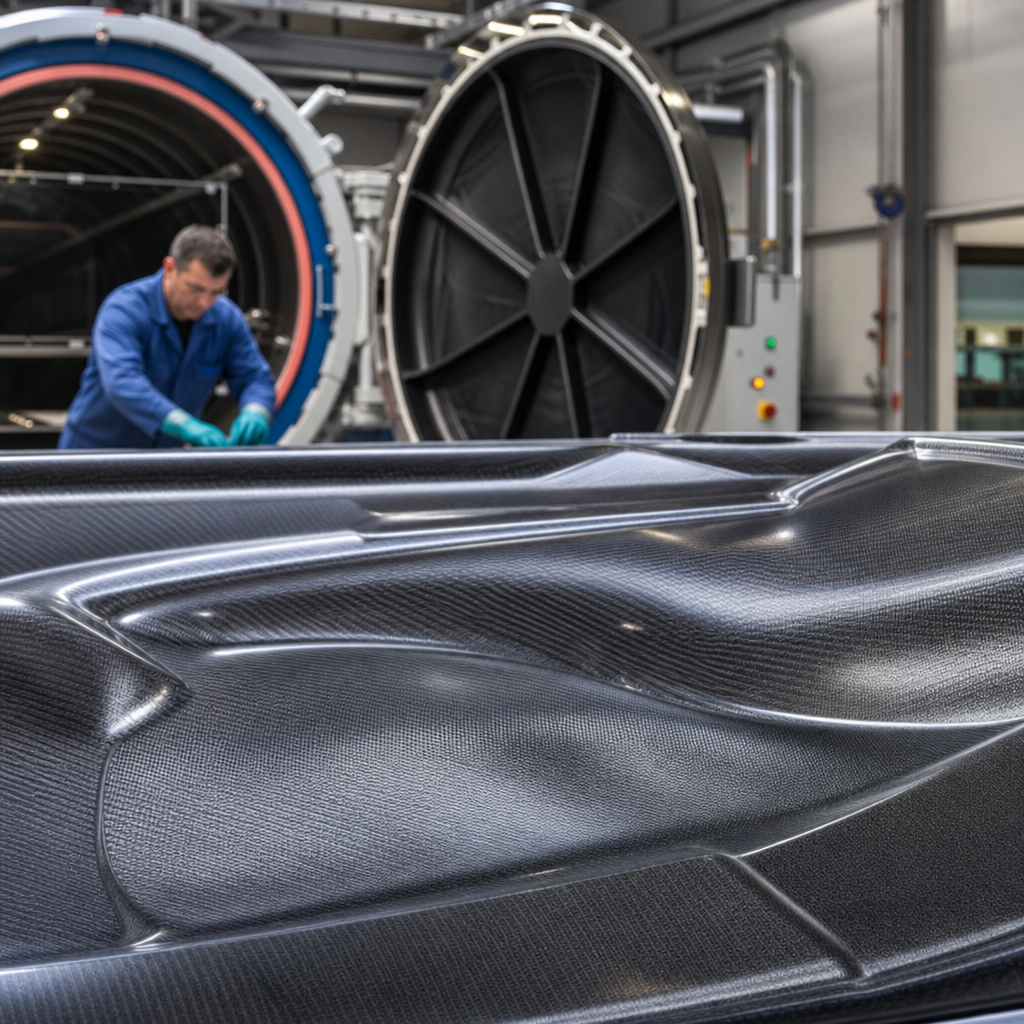
Composites will also expand. Continuous-fiber thermoplastics offer fast cycle times compared with many thermoset composites, making them more relevant for medium-volume structural applications. Hybrid molding, where an organosheet is combined with injection-molded ribs and features, is especially promising for door carriers, seat back structures, and underbody components. Additive manufacturing will play a supporting role in tooling, prototyping, and selected low-volume end-use parts using high-temperature polymers.
For automotive design teams, the main opportunity is strategic integration. High-performance polymers should be considered at the architecture stage, not after metal designs are frozen. When materials experts, CAE analysts, toolmakers, and manufacturing engineers collaborate early, polymers can deliver lighter vehicles, safer electrical systems, fewer parts, and more efficient production. That is why this subtopic sits at the center of innovative products and solutions. It connects material science directly to vehicle performance, cost, and manufacturability. If you are building a roadmap for future mobility, start by reviewing where high-performance polymers can create measurable design value in your next platform.
Frequently Asked Questions
What are high-performance polymers in automotive design?
High-performance polymers are advanced engineered plastics designed to maintain their strength, shape, and functionality in demanding automotive environments. Unlike standard plastics, these materials are built to perform under sustained heat, vibration, chemical exposure, mechanical load, and electrical stress. In practical terms, they are used in places where automakers need a material that is lighter than metal but still reliable enough for under-the-hood components, electrical systems, fluid-handling parts, and structural assemblies. Common examples include polyamide, PEEK, and PPS, each chosen for specific combinations of thermal stability, chemical resistance, wear performance, and dimensional control.
What makes these materials so important is that they give automotive engineers more design freedom. They can mold complex geometries, integrate multiple functions into a single component, and reduce the need for secondary machining or assembly steps. That means a part can often be lighter, more compact, and easier to manufacture while still meeting strict durability targets. As vehicle platforms become more electrified, connected, and efficiency-focused, high-performance polymers are increasingly valued not just as metal replacements, but as enabling materials that support entirely new approaches to automotive design.
How do high-performance polymers help reduce vehicle weight without sacrificing durability?
One of the biggest advantages of high-performance polymers is their ability to deliver meaningful weight reduction while still holding up under real-world operating conditions. Automotive engineers have always pursued lower mass because reducing weight improves fuel economy, extends electric vehicle range, enhances handling, and can even reduce wear on other systems such as brakes and suspension. High-performance polymers support this goal because they are significantly lighter than metals like steel and aluminum, yet many grades still offer excellent mechanical strength, stiffness, fatigue resistance, and impact performance when properly specified.
The key is not simply replacing metal with plastic on a one-to-one basis. Engineers redesign the component around the polymer’s strengths. Because these materials can be injection molded into highly optimized shapes, designers can add ribs, gussets, snap fits, and integrated mounting features exactly where they are needed. This often allows thinner walls in some areas and reinforced structures in others, creating a part that uses material more efficiently. In many cases, a polymer component can also combine what used to be several separate metal pieces into one consolidated assembly, which eliminates fasteners, brackets, welds, and overlapping material. The result is not just a lighter part, but often a more efficient and durable design overall.
Durability is preserved through material selection and engineering validation. High-performance polymers are available in reinforced formulations, including glass-filled and carbon-filled grades, that improve stiffness, dimensional stability, and creep resistance. When matched correctly to the application’s temperature range, load profile, and chemical environment, these materials can perform exceptionally well over long service lives. That is why they are now used in demanding automotive components ranging from housings and connectors to pump parts, thermal management systems, and structural-adjacent assemblies.
Why are heat resistance and chemical resistance so important in modern vehicles?
Modern vehicles expose materials to a wider range of thermal and chemical stresses than ever before, which is why heat resistance and chemical resistance are central to automotive material selection. Under the hood, components may sit near engines, turbochargers, batteries, power electronics, or cooling systems where temperatures can rise quickly and remain elevated for long periods. At the same time, those parts may be exposed to oils, fuels, transmission fluids, coolants, brake fluids, road salts, cleaning agents, and other aggressive substances. If a material softens, warps, cracks, swells, or degrades in these conditions, the result can be reduced performance, leaks, electrical failures, or premature part replacement.
High-performance polymers are specifically engineered to maintain dimensional stability and mechanical integrity under these kinds of stresses. Materials such as PPS and PEEK are valued because they can tolerate high temperatures while also resisting chemical attack. Polyamides, especially in specialty grades, are also widely used where a balance of toughness, heat resistance, and processability is needed. This combination of properties is especially important in today’s vehicles because automotive systems are becoming denser and more complex. There is less room for heat buildup, tighter packaging around fluid and electrical systems, and greater demand for long-term reliability in compact spaces.
This is even more relevant in electric and hybrid vehicles. Battery systems, charging hardware, inverters, and power electronics create new thermal management and insulation challenges. Components must not only withstand heat, but also support electrical performance and safety. High-performance polymers help engineers meet those demands by offering stable performance across varied environments, making them essential in both conventional and next-generation vehicle architectures.
How are high-performance polymers changing the way automotive parts are designed and manufactured?
High-performance polymers are changing automotive design by enabling part consolidation, greater geometric complexity, and more efficient manufacturing. In traditional metal-based design, engineers often had to create assemblies from multiple stamped, machined, or welded components because of manufacturing limitations. With advanced polymers, many of those separate functions can be built into a single molded part. Mounting points, channels, clips, seals, electrical routing features, and structural reinforcements can be integrated directly into the component during molding. This reduces part count, simplifies assembly, lowers the chance of tolerance stack-up, and can improve overall quality consistency.
From a manufacturing perspective, this shift can also reduce processing steps and production costs. Injection molding and other polymer processing methods make it possible to produce high volumes of complex parts with repeatable precision. In many cases, less finishing is required compared with metal components that need cutting, drilling, deburring, corrosion protection, or joining operations. Engineers and manufacturers benefit from shorter assembly chains, fewer individual suppliers for subcomponents, and greater flexibility in refining part geometry for performance and packaging.
Just as important, these materials allow designers to think differently about how a component should function inside the vehicle. Instead of asking how to replicate a metal part, they can ask how to improve the system using a material with different capabilities. That can lead to more compact cooling modules, lighter electrical housings, quieter interior mechanisms, and smarter packaging around increasingly crowded engine bays and battery enclosures. In that sense, high-performance polymers are not only changing what parts are made from, but also how those parts are conceived from the start.
What automotive applications use high-performance polymers most often?
High-performance polymers are used across a wide range of automotive systems, especially where weight, heat, chemical exposure, and long-term reliability all matter at the same time. Under the hood, they are commonly found in air intake systems, thermostat housings, coolant components, pump parts, sensor housings, electrical connectors, ignition-related components, and fluid-handling assemblies. Their resistance to temperature and chemicals makes them well suited for these environments, while their moldability allows engineers to create compact, multi-functional parts that fit within increasingly tight packaging constraints.
They are also heavily used in electrical and electronic applications. As vehicles rely more on sensors, control units, high-voltage systems, and advanced driver assistance technologies, the need for materials with strong insulating properties and dimensional stability continues to grow. High-performance polymers can support connector reliability, protect sensitive electronics, and maintain performance under thermal cycling and vibration. In electric vehicles, they are especially valuable in battery-related systems, charging interfaces, busbar supports, and thermal management assemblies, where safety and consistent performance are critical.
Beyond powertrain and electronics, these materials appear in interior, exterior, and chassis-adjacent components as well. They can be used in wear parts, clips and fasteners, seating mechanisms, lightweight brackets, and specialized housings where corrosion resistance and reduced noise are beneficial. The exact application depends on the performance profile of the polymer grade, but the broader trend is clear: as vehicles become lighter, more electrified, and more integrated, high-performance polymers are becoming a core material choice in automotive design rather than a niche alternative.