High-performance polymers are reshaping aerospace because they deliver low weight, thermal stability, chemical resistance, and mechanical strength in places where metals once dominated. In aerospace, the term usually refers to advanced thermoplastics and thermosets engineered to retain properties under extreme heat, pressure, vibration, radiation, fuel exposure, and long service intervals. The latest in high-performance polymers for aerospace includes materials such as PEEK, PEKK, PPS, PEI, polyimides, LCPs, fluoropolymers, and specialty blends reinforced with carbon fiber, glass fiber, or nanoscale additives. These materials matter because every kilogram removed from an aircraft or spacecraft can improve payload, range, fuel burn, emissions, and design flexibility.
In recent programs I have seen polymer selection move from a secondary materials decision to an early architecture choice. Engineers no longer ask only whether a polymer can replace aluminum in brackets or interior panels. They ask whether a polymer system can survive ducting temperatures near engines, reduce fastener count through weldable thermoplastics, simplify electrical insulation in eVTOL platforms, or improve manufacturability for satellite structures. That shift is driven by more demanding aircraft efficiency targets, higher build rates, the rise of urban air mobility, and stricter flame, smoke, and toxicity requirements for cabin applications.
For readers evaluating this category, a useful definition is simple: a high-performance polymer is a polymer with elevated thermal capability, reliable structural or functional performance, and durability in aggressive aerospace environments. Unlike commodity plastics, these materials maintain dimensional stability and strength at temperatures that would soften standard polymers. Many also offer low outgassing, low moisture uptake, and compatibility with precision processing methods including injection molding, compression molding, automated tape placement, thermoforming, additive manufacturing, and filament winding. As a hub article, this guide explains the main material families, the performance criteria aerospace teams use, the newest technology directions, and the practical tradeoffs that determine successful adoption.
What makes a polymer aerospace grade
Aerospace-grade polymers are defined less by marketing labels than by verified performance against specific standards. Structural and semi-structural applications require measurable tensile strength, modulus, creep resistance, fatigue behavior, impact performance, and retention of properties across a wide temperature range. Interior parts must meet flame, smoke, and toxicity requirements, commonly aligned with FAR 25.853. Space applications often require low outgassing performance consistent with NASA database screening, where total mass loss and collected volatile condensable materials are tightly controlled. Electrical systems introduce dielectric strength, arc tracking resistance, and insulation reliability as key selection factors.
Temperature capability is usually the first filter. Continuous use temperature, glass transition temperature, melt temperature, and heat deflection temperature all matter, but they matter differently depending on the part. A clip in a cabin sidewall may be selected around compliance and toughness, while an under-hood air management component in an aircraft engine nacelle may be limited by long-term heat aging and fluid exposure. In practice, engineers also examine coefficient of thermal expansion, dimensional tolerance after moisture conditioning, galvanic interaction with carbon composites, and resistance to aviation fluids including Skydrol, jet fuel, lubricants, and deicing chemicals.
Certification and repeatability are equally important. A polymer that performs well in lab coupons can still fail as a program material if it lacks pedigree data, process control, and lot-to-lot consistency. That is why established suppliers such as Victrex, Solvay, Evonik, Arkema, SABIC, DuPont, Celanese, and Syensqo continue to shape the market. Their materials are backed by data packages, regulatory familiarity, and processing guidance. In aerospace, the winning material is rarely the one with the highest single property value. It is the one with the best verified balance of performance, manufacturability, cost, supply assurance, and certification readiness.
Leading high-performance polymer families in current aerospace use
PEEK and PEKK remain central to discussions about lightweight structural thermoplastics. Both belong to the polyaryletherketone family, offering high mechanical performance, broad chemical resistance, and excellent wear properties. PEEK has a long record in clips, brackets, cable supports, seals, bearings, and composite matrices. PEKK often gains attention for aerospace composites because its crystallization behavior can support wider processing windows and improved weldability in some applications. I have seen PEKK favored for thermoformed aircraft parts where processing flexibility and flame performance needed to work together without sacrificing structural potential.
PPS is another major workhorse, especially where chemical resistance, dimensional stability, and cost position matter. It is widely used in electrical connectors, pump components, housings, and parts exposed to aggressive fluids. PEI, often recognized through Ultem grades, is common in aircraft interiors because it combines heat resistance with strong flame, smoke, and toxicity performance. Polyimides serve even harsher thermal environments, including films for electrical insulation and specialty components near high temperatures. Fluoropolymers such as PTFE, PFA, and ETFE remain essential for wire insulation, seals, tubing, and chemically resistant liners.
The newest momentum comes from reinforced systems and hybrid formats. Continuous carbon fiber reinforced thermoplastic laminates allow high specific stiffness with short cycle times compared with some thermoset processes. LCPs are valued for precision electronic components because of excellent flow, low warpage, and stable dielectric behavior. PAEK variants beyond standard PEEK and PEKK are being tailored for additive manufacturing and automated production. The table below summarizes how teams typically position key polymer families during concept selection.
| Polymer family | Typical aerospace uses | Key strengths | Main limitation |
|---|---|---|---|
| PEEK | Brackets, bearings, cable supports, composite matrices | High strength, wear resistance, chemical durability | High raw material cost |
| PEKK | Thermoformed structures, clips, composite laminates | Strong heat performance, useful processing flexibility | Qualification data may be narrower than legacy materials |
| PPS | Connectors, housings, fluid-handling components | Chemical resistance, dimensional stability, value | Lower toughness than premium ketones |
| PEI | Cabin interiors, ducts, electronic housings | Excellent flame, smoke, and toxicity profile | Less chemical resistance than PEEK or PPS |
| Polyimide | Insulation films, high-heat specialty parts | Very high temperature capability | Processing complexity |
| Fluoropolymers | Wire coatings, seals, tubing | Low friction, chemical inertness, dielectric performance | Structural strength is limited |
Where the latest innovation is happening
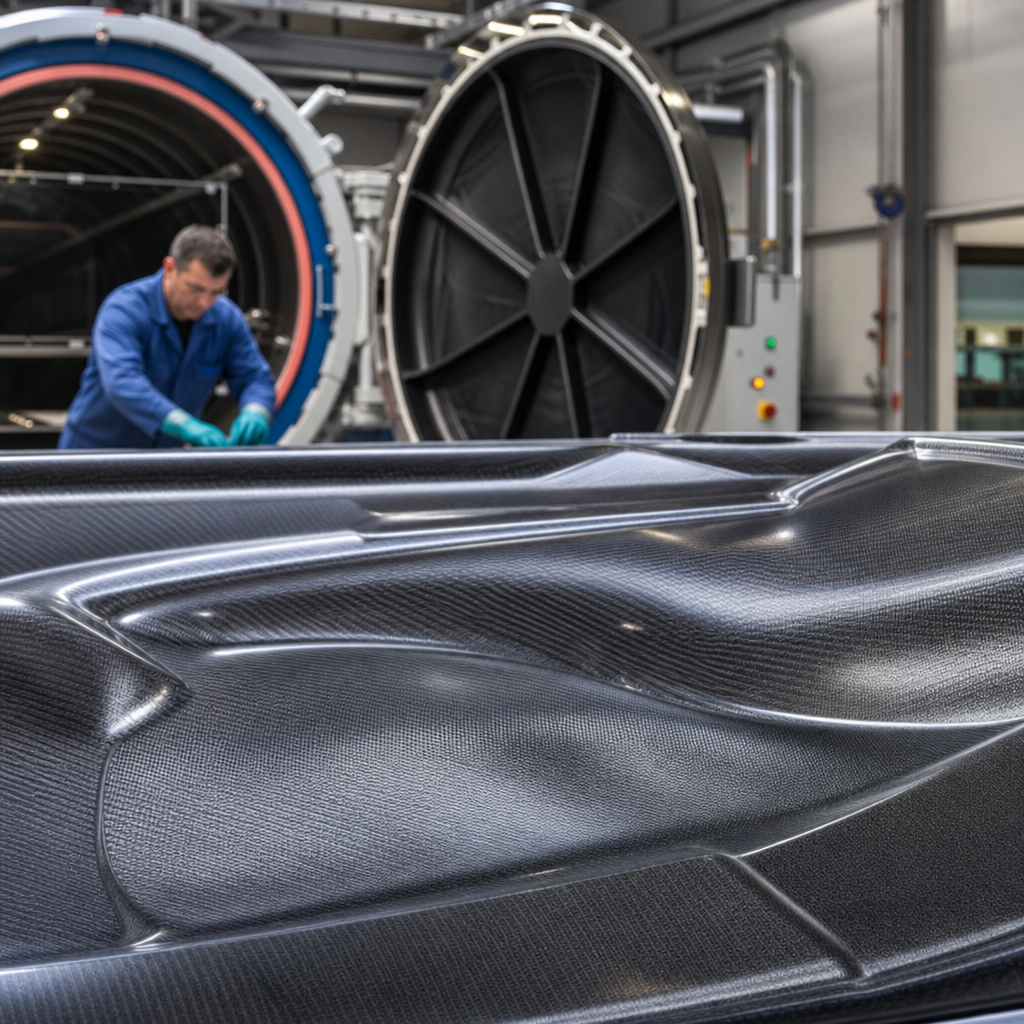
The most important innovation area is thermoplastic composites. Aerospace manufacturers want the toughness, weldability, reparability, and storage advantages of thermoplastics combined with carbon fiber performance. Unlike many thermoset systems, thermoplastics do not require freezer storage and can support faster forming cycles. Programs involving clips, seat structures, access panels, brackets, and secondary structures are proving that automated layup plus consolidation can reduce part count and labor. Airbus and Boeing have both evaluated and deployed thermoplastic composite components, while space companies are adopting them for lightweight panels and support structures.
Additive manufacturing is another major shift. High-temperature polymers including PEEK, PEKK, PEI, and ULTEM-class materials are now used in qualified tooling, ducts, housings, and low-volume flight parts where geometry complexity offsets material cost. The real advance is not merely printing the polymer; it is achieving repeatable crystallinity, void control, interlayer adhesion, and inspection methods suitable for aerospace quality systems. Machine makers such as Stratasys, EOS, 3D Systems, Roboze, and INTAMSYS have expanded capability, but success still depends on process qualification, post-processing discipline, and design rules tailored to anisotropic printed parts.
A third innovation front is multifunctionality. Polymer developers are working on materials that do more than carry load or insulate wires. Conductive and dissipative formulations help manage static charge and electromagnetic shielding. Self-lubricating compounds reduce maintenance in moving assemblies. Nanofillers, including carbon nanotubes and graphene derivatives, are being studied to improve conductivity, barrier performance, and mechanical retention, though broad qualification remains gradual. In satellites and defense electronics, low dielectric loss polymers are increasingly valuable because signal integrity, miniaturization, and thermal cycling reliability now drive system architecture.
High-performance polymers in aircraft, space, and advanced air mobility
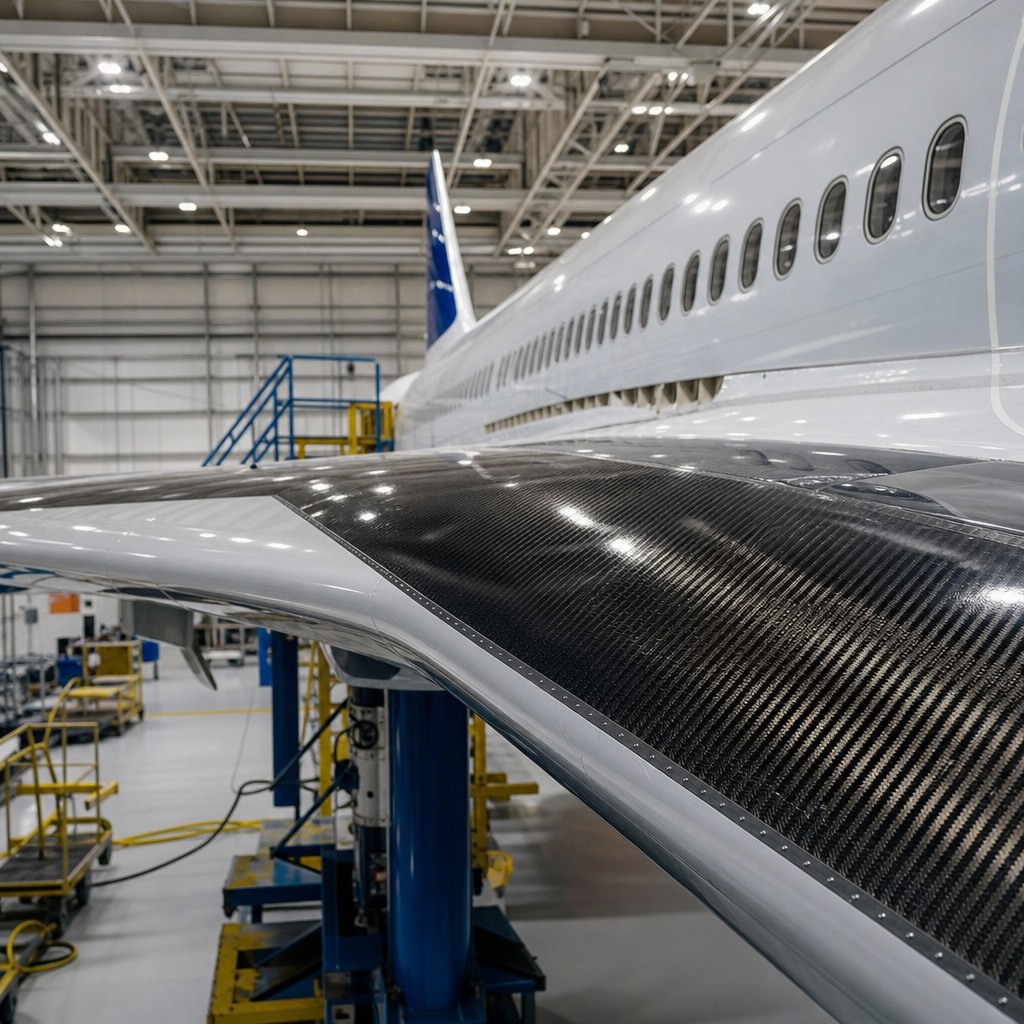
Commercial aircraft use these polymers across interiors, structures, propulsion-adjacent systems, and electronics. Cabin wall panels, seat components, latches, cable management hardware, ducts, and air distribution parts often rely on PEI, PPS, or reinforced thermoplastics because they meet weight and fire performance targets. Under the skin, high-performance polymers appear in bushings, bearings, wear pads, and fluid system components where corrosion resistance and reduced lubrication are valuable. Replacing machined metal with molded or thermoformed polymer can also cut assembly steps, especially when fasteners are consolidated into integrated features.
Spacecraft and satellites impose a different set of demands. Low outgassing, radiation tolerance, vacuum stability, and thermal cycling become decisive. Polyimide films have long been used in insulation systems because they perform reliably across extreme temperature swings. PEEK and PEKK composites are increasingly considered for brackets, panel stiffeners, and support members where mass reduction directly improves launch economics. In one satellite materials review I supported, a small reduction in harness support weight created enough margin to simplify another subsystem. That is typical in space: small polymer decisions can unlock broader architectural benefits.
Advanced air mobility and eVTOL platforms may become the fastest-growing application area. These aircraft emphasize battery efficiency, distributed propulsion, compact packaging, and high electrical content. That combination favors polymers with strong dielectric properties, flame compliance, and lightweight structural potential. Designers are using high-performance polymers for battery enclosures, busbar supports, connector systems, ducting, cooling components, and interior modules. Because many eVTOL companies are building certification paths while refining manufacturing strategy, they often prefer materials that can scale from prototype to production using the same geometry family, making thermoplastics particularly attractive.
Selection criteria, tradeoffs, and qualification strategy
The best material choice starts with the operating environment, not the datasheet headline. Engineers should define continuous and peak temperature, exposure time, fluids, stress state, expected life, maintenance interval, electrical demands, fire requirements, and manufacturing volume before narrowing the polymer family. For example, PEEK may look superior on pure performance, but PPS may be the better answer for a chemically aggressive connector housing if cost, molding efficiency, and dimensional stability dominate. Likewise, PEI may outperform alternatives for a visible cabin component where flame, smoke, and toxicity performance plus surface finish are central.
Qualification must address process sensitivity. Fiber orientation, crystallinity, porosity, moisture conditioning, annealing history, and welding parameters can all change final properties. I advise teams to treat process windows as part of the material definition. A coupon generated on one machine with one drying protocol does not automatically represent production output on another line. Aerospace quality systems typically require traceable raw material control, documented process specifications, first article inspection, and a test pyramid that moves from coupons to elements to full assemblies. Skipping those steps often creates delays later during airworthiness review.
Cost discussions should also be realistic. High-performance polymers usually cost more per kilogram than aluminum or standard engineering plastics, but total system cost can still fall when machining time, corrosion protection, inventory burden, and assembly labor are reduced. The biggest mistake is comparing only raw material price. A welded thermoplastic assembly may eliminate fasteners, sealants, and multiple bonded joints. An injection-molded connector body may remove secondary finishing entirely. The right decision balances acquisition cost, recurring production economics, certification effort, durability, and end-of-life considerations such as repairability or recycling pathways.
What to watch next in the high-performance polymer market
Over the next several years, expect broader use of welded thermoplastic assemblies, more certified additive applications, and stronger integration between material suppliers, machine builders, and OEM qualification teams. Sustainable manufacturing will also become more visible. Aerospace will not compromise performance, but it is increasingly interested in lower scrap rates, reprocessable offcuts, and production methods with better energy efficiency. Digital materials data, simulation-led selection, and tighter traceability will improve adoption because they reduce uncertainty early in design. If you are building an internal roadmap for innovative products and solutions, high-performance polymers deserve hub-level attention because they influence structures, interiors, electronics, propulsion support systems, and future aircraft architectures at the same time.
The central takeaway is clear: the latest in high-performance polymers for aerospace is not one miracle material but a maturing toolkit of specialized polymers, reinforcements, and processes matched to exact mission requirements. PEEK, PEKK, PPS, PEI, polyimides, and fluoropolymers each solve different problems, and the best results come from disciplined selection and qualification rather than substitution by trend. Teams that understand temperature limits, compliance demands, processing behavior, and lifecycle economics can reduce weight, simplify manufacturing, and improve reliability without sacrificing safety. Use this hub as your starting point, then map each application to the right polymer family and qualification path before the next design review.
Frequently Asked Questions
1. What are high-performance polymers, and why are they becoming so important in aerospace?
High-performance polymers are advanced engineered materials designed to maintain their mechanical, thermal, and chemical properties in operating conditions that would quickly degrade conventional plastics. In aerospace, that matters because components are routinely exposed to extreme heat, rapid temperature cycling, pressure changes, vibration, hydraulic fluids, aviation fuels, de-icing chemicals, UV exposure, and long service lives with minimal tolerance for failure. Unlike commodity polymers, aerospace-grade materials such as PEEK, PEKK, PPS, PEI, and high-end thermoset composites are developed specifically to perform under these demanding environments while still offering excellent dimensional stability, flame resistance, and low outgassing where required.
The reason they are becoming so important is simple: they help solve multiple engineering challenges at once. Weight reduction is one of the biggest drivers, because every kilogram removed from an aircraft can contribute to lower fuel consumption, increased payload flexibility, and improved operating efficiency. At the same time, these polymers can deliver strong mechanical performance, corrosion resistance, and design flexibility that metals often cannot match in complex geometries. They also support modern manufacturing methods, including additive manufacturing, automated tape placement, compression molding, and precision injection molding, which can reduce part counts and streamline production. As aerospace design continues to prioritize efficiency, electrification, thermal management, and sustainability, high-performance polymers are moving from niche applications into a much broader structural, semi-structural, electrical, and interior component role.
2. Which high-performance polymers are leading the latest aerospace developments?
Several polymer families are at the center of current aerospace innovation, each with a distinct balance of properties. PEEK, or polyether ether ketone, remains one of the most recognized materials because it combines excellent mechanical strength, wear resistance, chemical resistance, and high-temperature capability. It is widely used in brackets, seals, electrical components, bearings, and composite matrices. PEKK, a related member of the polyaryletherketone family, is gaining momentum because it offers similarly strong thermal and mechanical performance while often providing more favorable processing windows and excellent flame, smoke, and toxicity characteristics, which are especially valuable in aircraft interiors and advanced composite structures.
PPS, or polyphenylene sulfide, is another important aerospace material thanks to its strong chemical resistance, inherent flame retardancy, and stable performance at elevated temperatures. It is often selected for electrical housings, pump components, insulation systems, and fluid-handling parts. PEI, commonly known by trade names such as Ultem, is also widely used for aerospace interior components because of its combination of strength, dimensional stability, flame resistance, and processability. Beyond these, advanced polyimides, fluoropolymers, and specialty thermoset systems continue to play critical roles in high-heat zones, wire and cable insulation, radomes, adhesives, and composite airframe structures. The latest developments are not just about discovering entirely new materials, but also about refining polymer formulations, fiber reinforcements, and processing methods to make these materials lighter, tougher, more manufacturable, and more certifiable for demanding flight applications.
3. How do high-performance polymers compare with metals in aerospace applications?
High-performance polymers do not replace metals in every application, but in the right use cases they offer compelling advantages. The most obvious benefit is lower weight. Many of these polymers have far lower density than aluminum, titanium, or steel, which makes them attractive for components where mass reduction has a direct impact on fuel efficiency and system performance. They also resist corrosion far better than many metals, which can simplify maintenance in environments exposed to moisture, salt, chemicals, and aggressive fluids. In addition, polymers can often be molded or formed into complex shapes that would require multiple machined metal parts, allowing engineers to consolidate assemblies, reduce fasteners, and simplify installation.
That said, the comparison is application-specific. Metals still dominate in areas requiring the highest absolute load-bearing capacity, conductivity, impact resistance under certain conditions, or extreme heat tolerance well beyond polymer limits. High-performance polymers can also present challenges related to creep, moisture absorption in some grades, anisotropic behavior in reinforced forms, and more complex long-term performance modeling. In aerospace, engineers typically evaluate a combination of factors: temperature envelope, load profile, flammability requirements, certification pathway, environmental exposure, wear behavior, manufacturability, and lifecycle cost. The latest trend is not a simple polymer-versus-metal substitution story. Instead, it is a strategic materials selection approach where high-performance polymers are increasingly used in brackets, ducts, connectors, insulation, clips, bearings, interior panels, composite structures, and under-the-hood components where they provide the best balance of weight, durability, and performance.
4. What recent innovations are improving the performance and adoption of aerospace polymers?
Some of the most significant innovations are happening at the intersection of material science and manufacturing technology. One major development is the rise of carbon-fiber- and glass-fiber-reinforced high-performance thermoplastics, which combine the lightweight nature of polymers with much higher stiffness and strength. These reinforced systems are making it possible to use thermoplastic composites in applications that demand more structural capability while also offering advantages such as weldability, reparability, and shorter processing cycles compared with many thermoset systems. There is also growing interest in tailored polymer formulations that improve toughness, crystallization behavior, flame performance, electromagnetic compatibility, and resistance to aviation fluids and harsh thermal cycling.
Additive manufacturing is another area driving adoption. Aerospace companies are using high-performance polymers such as PEEK and PEKK in 3D printing for lightweight ducting, brackets, cabin components, tooling, and low-volume replacement parts. This approach can reduce waste, accelerate prototyping, and support on-demand production for complex geometries that are difficult to machine. At the same time, improvements in automated processing, simulation, and quality assurance are making it easier to produce repeatable, certifiable parts at scale. Researchers are also advancing recyclable thermoplastic composites, nano-enhanced materials, and multifunctional polymers that can help with thermal management, anti-static performance, or sensor integration. These innovations matter because aerospace adoption depends not only on impressive lab properties, but on reliable production, certification readiness, long-term durability, and clear economic value across the life of the aircraft or spacecraft.
5. What should aerospace engineers and buyers consider when selecting a high-performance polymer?
Material selection in aerospace should always begin with the actual service environment, not just a headline property like tensile strength or temperature rating. Engineers need to understand the full operating profile: continuous and peak temperatures, mechanical loads, fatigue conditions, vibration, radiation exposure, contact with fuels or hydraulic fluids, electrical requirements, flammability standards, and expected service life. A polymer that performs exceptionally well in a lab may still be a poor fit if it cannot withstand repeated thermal cycling, maintain dimensional accuracy, or satisfy flame, smoke, and toxicity regulations. Designers also need to consider whether the part will be injection molded, machined, thermoformed, laminated, or 3D printed, because processing method can significantly influence final performance.
Beyond technical fit, buyers should look closely at certification history, supply chain stability, traceability, and total cost of ownership. Aerospace programs require consistency over long timelines, so material availability, lot-to-lot repeatability, and regulatory documentation are just as important as raw performance data. It is also wise to evaluate whether a material supports part consolidation, maintenance reduction, corrosion elimination, or faster assembly, since those downstream benefits often justify a premium upfront material cost. The best decisions usually come from collaboration among design engineers, materials specialists, manufacturing teams, and certification experts. When that process is done well, high-performance polymers can deliver not only lighter parts, but also more reliable systems, lower maintenance burdens, and better long-term value for both aircraft manufacturers and operators.