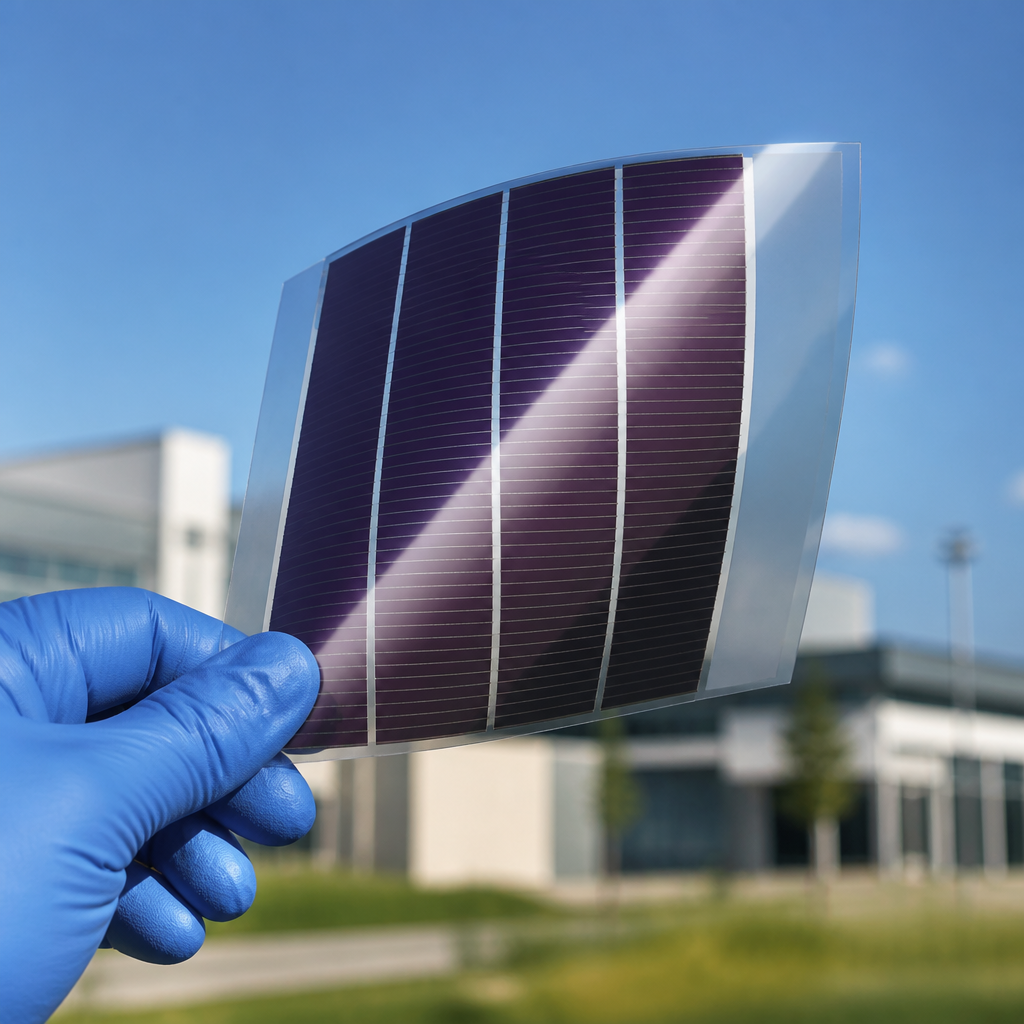
Innovations in polymer-based solar cells are reshaping how the energy industry thinks about lightweight power generation, flexible electronics, and low-cost manufacturing at scale. Polymer-based solar cells, often grouped under organic photovoltaics, use semiconducting polymers or polymer-rich blends to convert sunlight into electricity through thin, printable layers rather than rigid crystalline wafers. As a hub topic within innovations in polymer solutions, this field matters because it connects materials science, product design, advanced manufacturing, and sustainability in one fast-moving category. I have worked with polymer material selection and thin-film product development long enough to see a clear pattern: when polymer chemistry improves, entire application classes suddenly become practical. That is exactly what is happening here.
The basic value proposition is straightforward. Polymer-based solar cells can be deposited on plastic films, metal foils, textiles, or other lightweight substrates using techniques such as slot-die coating, gravure printing, inkjet printing, and roll-to-roll processing. That enables products conventional silicon struggles to serve, including curved building surfaces, portable chargers, smart packaging, agricultural covers, connected wearables, and autonomous sensors for logistics or infrastructure monitoring. Key terms are worth defining early. The donor material is the light-absorbing polymer that releases an excited electron; the acceptor material receives that electron, helping create separated charges. The active layer is the blended semiconductor film where this conversion happens. Encapsulation protects the device against oxygen, moisture, ultraviolet exposure, and mechanical fatigue, all of which strongly affect lifetime.
Why should business leaders, engineers, and product teams pay attention now? Because the technology has progressed from academic promise to targeted commercial relevance. Power conversion efficiencies for leading lab-scale organic solar cells have climbed dramatically over the past decade, largely due to better molecular design and non-fullerene acceptors. At the same time, manufacturers have become more capable of producing uniform multilayer films across wide webs with in-line quality control. These advances mean polymer-based solar cells are no longer just an alternative to silicon. In many use cases, they are the better polymer solution because they add functionality where weight, flexibility, transparency, form factor, and low-light performance matter more than peak efficiency alone.
This hub article explains the major innovations driving the field, the manufacturing methods that make the technology scalable, the practical applications gaining traction, and the limitations that still shape procurement and design choices. It is intended to serve as a central reference for the broader innovations in polymer solutions topic, linking material science with product strategy in plain terms.
Materials innovation is driving the modern performance leap
The single biggest change in polymer-based solar cells has been the shift from older fullerene acceptors to non-fullerene acceptors paired with finely tuned donor polymers. In earlier device generations, fullerene derivatives such as PCBM offered good electron transport but absorbed light poorly and gave formulators limited control over energy levels and morphology. Newer non-fullerene systems, including families derived from fused-ring electron acceptors, opened a much wider design window. Researchers could tune absorption spectra, molecular packing, frontier orbital energies, and phase separation behavior with far greater precision. In practice, that means stronger light harvesting, higher open-circuit voltage, and more efficient charge transport.
Donor polymer design has advanced in parallel. Chemists now engineer backbone planarity, side-chain branching, fluorination, and molecular weight distribution to improve solubility, film formation, and crystallinity without sacrificing processability. Materials such as PM6 and related high-performance donors became widely studied because they combine strong absorption with favorable blend morphology when paired with leading acceptors. The result is a more stable nanoscale interpenetrating network in the active layer, which is essential for exciton dissociation and charge collection. In my experience, morphology control is where promising lab chemistry either becomes a manufacturable product or fails. A formulation that performs beautifully on a spin-coated coupon can collapse during scale-up if drying kinetics and phase separation are not tightly managed.
Interfacial layers have also improved. Electron transport materials such as zinc oxide and hole transport materials such as PEDOT:PSS, molybdenum oxide, or nickel oxide are selected not just for conductivity, but for energy alignment, process compatibility, and lifetime. Many teams now reduce acidic or hygroscopic components where possible because those materials can accelerate electrode corrosion and environmental degradation. Electrode innovation matters too. Silver remains common, but transparent conductive alternatives, including conductive polymers, metal meshes, and hybrid oxide systems, are gaining attention for flexible products where crack resistance matters.
Another important direction is semi-transparent and color-tunable polymer photovoltaics. By tailoring bandgaps and optical interference through layer thickness, developers can create modules that transmit selected wavelengths while still generating power. That opens opportunities in greenhouse glazing, façade integration, and design-led consumer products. The point is not to replace every rooftop panel. It is to convert previously unusable surface area into energy-generating polymer solutions.
Manufacturing innovation is turning research devices into products
Polymer-based solar cells attract commercial interest because they can be manufactured with methods closer to high-volume coating and printing than to traditional wafer processing. Roll-to-roll production is the benchmark model. A flexible substrate moves continuously through coating, drying, patterning, lamination, and encapsulation stages, enabling high throughput on comparatively low-temperature equipment. Compared with batch wafer lines, this approach can reduce capital intensity for suitable products and supports wide-format modules, custom dimensions, and integration into composite structures.
However, scalable manufacturing is not simple. The challenge is translating a delicate multilayer optoelectronic stack into a robust process window. Wet film thickness, solvent evaporation rate, web tension, annealing temperature, coating bead stability, and registration accuracy all affect yield. I have seen small changes in solvent blend or drying profile shift device performance by double-digit percentages because the active layer morphology froze differently across the web. That is why process analytical tools are increasingly important. Manufacturers use in-line optical inspection, sheet resistance mapping, machine vision, and spectral monitoring to catch defects such as pinholes, coating streaks, dewetting, or incomplete electrode coverage before scrap rates escalate.
Printing methods are selected based on product goals. Slot-die coating is favored for precise, scalable layer deposition with low material waste. Gravure printing suits patterned coatings at speed. Inkjet printing supports digital customization and prototyping, especially for segmented devices or small electronics. Screen printing can be useful for electrodes and busbars. The right choice depends on viscosity, solids loading, surface energy, and feature resolution. No single method wins every case.
| Manufacturing method | Best use | Main advantage | Main limitation |
|---|---|---|---|
| Slot-die coating | Uniform active and transport layers | Scalable, low waste, good thickness control | Requires tight rheology and drying control |
| Gravure printing | High-speed patterned deposition | Fast web processing | Cylinder setup cost and pattern constraints |
| Inkjet printing | Customized layouts and prototyping | Digital patterning without masks | Lower throughput and nozzle reliability issues |
| Lamination encapsulation | Barrier protection for finished modules | Improves lifetime and handling durability | Adds cost and can trap defects if poorly controlled |
Encapsulation is often underestimated by non-specialists, yet it determines whether a promising device survives field use. Organic semiconductors are vulnerable to oxygen and water vapor, and flexible substrates usually offer weaker intrinsic barriers than glass. Advanced barrier films use multilayer polymer and inorganic architectures to suppress permeation while preserving bendability. Adhesive chemistry, edge sealing, and thermal expansion matching all matter. In commercial development, the module is only as good as its weakest ingress path.
Application innovation is expanding where solar can realistically go
The most compelling case for polymer-based solar cells is not head-to-head competition with commodity silicon on utility farms. It is solving power problems in places where conventional modules are too rigid, too heavy, too opaque, or too expensive to integrate. Indoor and low-light energy harvesting is a good example. Organic photovoltaic materials can be tuned to perform efficiently under LED and fluorescent spectra, making them suitable for wireless sensors, electronic shelf labels, remote controls, and low-power Internet of Things devices. In warehouses or offices, replacing disposable batteries with printed indoor solar can significantly reduce maintenance and waste across large sensor fleets.
Wearables and portable electronics form another active area. A polymer solar layer laminated onto fabric, backpack material, or a curved accessory shell adds charging capability without the brittleness of glass-fronted cells. Product teams still need to manage washability, abrasion, and power management, but the design freedom is real. Building-integrated photovoltaics are also benefiting. Semi-transparent modules can be incorporated into windows, skylights, shading elements, or façades where aesthetics and weight load are critical. Greenhouse applications are particularly interesting because selective transmission can preserve photosynthetically useful light while harvesting other wavelengths for on-site power.
Transportation and logistics present additional openings. Flexible modules can power telematics, condition monitoring sensors, or auxiliary systems on trailers, shipping containers, and rail assets without frequent battery service. Disaster response and defense users value rollable solar mats because they are easy to deploy and carry. Consumer packaging and smart labels remain emerging rather than mainstream, yet the economics improve when the photovoltaic layer is paired with printed electronics, e-paper, or low-power sensing. Across all these categories, polymer solutions create value by integrating energy generation directly into the product rather than treating solar as a separate add-on.
Durability, sustainability, and commercialization challenges still define success
The main question buyers ask is simple: how long will polymer-based solar cells last in real conditions? That is the right question. While laboratory efficiency has improved quickly, operational stability remains the deciding factor for many markets. Degradation can come from photo-oxidation, thermal stress, morphological drift in the active layer, electrode diffusion, mechanical cracking, and barrier failure. Standards-based testing is therefore essential. Developers commonly use accelerated protocols involving damp heat, thermal cycling, ultraviolet exposure, and mechanical bending, often borrowing validation logic from broader photovoltaic and flexible electronics qualification practices.
Commercialization depends on honest fit-for-purpose positioning. For a five-year indoor sensor deployment, a flexible organic module may already be the best option. For a twenty-five-year rooftop asset in harsh outdoor conditions, silicon usually remains superior. The smartest companies do not ignore this tradeoff; they build product lines around it. They specify expected irradiance, bending radius, duty cycle, encapsulation rating, and service life clearly so integrators can design responsibly.
Sustainability is another nuanced issue. Polymer-based solar cells can reduce material use, lower shipping weight, and enable energy harvesting in products that would otherwise rely on disposable batteries. Some formulations also avoid the high-temperature processing associated with conventional photovoltaics. At the same time, solvent selection, fluorinated components, metal electrodes, and end-of-life separation remain important concerns. The next wave of innovation is focusing on greener solvents, recyclable substrates, and module architectures that simplify disassembly. Circular design will matter more as volumes scale.
For teams building a roadmap under the broader innovations in polymer solutions theme, the practical lesson is clear. Start with the application constraint, not the material hype. If your product needs flexibility, low-light performance, light weight, semi-transparency, or printable form factors, polymer-based solar cells deserve serious evaluation. Review donor-acceptor chemistry, coating method, barrier strategy, and qualification data together, because one weak link can erase the advantage of the others. The field is advancing quickly, but success still comes from disciplined engineering and realistic market matching.
Innovations in polymer-based solar cells now represent one of the clearest examples of polymers enabling entirely new energy products rather than merely substituting for older materials. Better donor polymers, non-fullerene acceptors, improved interfaces, and stronger barrier films have moved the technology from laboratory curiosity to commercially credible solution in targeted markets. Equally important, scalable coating and printing methods are giving manufacturers a path to customized, lightweight, flexible modules that fit surfaces silicon cannot.
The central takeaway for readers exploring innovations in polymer solutions is that these solar cells should be judged by application fit. They excel in indoor energy harvesting, wearables, smart infrastructure, building integration, portable power, and connected products where low mass, mechanical flexibility, or optical tuning matter. They are less compelling where very long outdoor lifetime and maximum efficiency per square meter are the only goals. Knowing that difference helps companies invest wisely.
If you are mapping future product opportunities, use this hub as the starting point. Identify the surfaces in your portfolio that are currently passive, examine whether flexible photovoltaic integration could make them productive, and compare materials, manufacturing routes, and lifetime requirements with discipline. The companies that win with polymer-based solar cells will be the ones that match chemistry, process, and end use with precision.
Frequently Asked Questions
What are polymer-based solar cells, and how do they differ from traditional silicon solar panels?
Polymer-based solar cells are a type of solar technology that uses semiconducting polymers or polymer-rich organic blends to absorb sunlight and generate electricity. Unlike conventional silicon panels, which rely on rigid crystalline wafers, polymer-based devices are built from ultra-thin active layers that can be deposited through solution-based processes such as coating, printing, or roll-to-roll manufacturing. This gives them a very different design profile: they are typically lighter, more flexible, and easier to integrate into surfaces where rigid glass-backed panels are impractical.
The biggest distinction is not just the material itself, but the manufacturing philosophy behind it. Silicon solar cells generally require high-temperature processing, energy-intensive purification, and mechanically rigid module construction. Polymer-based solar cells can be produced at lower temperatures on flexible substrates, opening the door to lightweight power sources for wearables, portable electronics, curved surfaces, building facades, and smart packaging. While silicon still leads in peak efficiency and long-term commercial maturity, polymer solar technology stands out for its tunable chemistry, low-material usage, and potential for high-throughput, lower-cost production at scale.
What recent innovations are improving the performance of polymer-based solar cells?
Recent advances in polymer-based solar cells are being driven by breakthroughs in materials design, device architecture, and processing control. One major innovation is the development of new donor-acceptor polymer systems and non-fullerene acceptors that dramatically improve light absorption, charge separation, and charge transport. Researchers are designing polymers with carefully tuned bandgaps, molecular packing behavior, and energy levels so the active layer can capture more of the solar spectrum while minimizing electrical losses.
Another important innovation involves morphology control inside the active layer. In polymer solar cells, nanoscale organization matters enormously because electricity generation depends on how efficiently excitons split and charges move to the electrodes. New solvent systems, additives, annealing methods, and interfacial layers are helping scientists create more stable and better-organized internal structures. There have also been improvements in tandem cell designs, where multiple photoactive layers are stacked to harvest different wavelengths of light more effectively. Together, these innovations are pushing polymer-based solar cells closer to stronger real-world performance, better reproducibility, and broader commercial relevance.
Why are polymer-based solar cells considered promising for flexible electronics and lightweight energy applications?
Polymer-based solar cells are especially promising in these areas because their physical properties align well with the demands of next-generation product design. Since they can be fabricated on thin plastic films or other lightweight substrates, they add far less bulk and weight than traditional panel technologies. That makes them attractive for portable charging systems, wearable sensors, connected textiles, unmanned vehicles, foldable devices, and integrated building materials where conventional glass-and-metal panels would be too heavy, rigid, or fragile.
Flexibility is another major advantage. These solar cells can often bend, conform, or laminate onto irregular surfaces, which expands how and where solar harvesting can be embedded. Instead of thinking only in terms of rooftop panels, manufacturers can explore energy-generating windows, curved infrastructure surfaces, transportation interiors, and consumer electronics housings. In many of these use cases, the goal is not to replace utility-scale silicon arrays, but to provide distributed, embedded, and design-friendly power generation. That shift is one reason polymer-based solar cells are attracting attention as part of the broader movement toward lighter, smarter, and more adaptable polymer solutions.
What are the main challenges limiting widespread adoption of polymer-based solar cells?
Despite strong progress, several technical and commercial hurdles still need to be addressed before polymer-based solar cells achieve broad market penetration. One of the biggest challenges is long-term stability. Organic and polymer-based materials can be sensitive to oxygen, moisture, ultraviolet light, and thermal stress, all of which can degrade performance over time. Encapsulation technologies are improving, but maintaining efficiency over extended operating lifetimes remains a central issue, especially for demanding outdoor conditions.
Efficiency and scale-up consistency also remain important concerns. Although laboratory results have improved substantially, translating high-performance small-area devices into large-area modules with uniform quality is complex. Minor variations in coating thickness, phase separation, drying behavior, or interface quality can affect output significantly. On top of that, manufacturers must prove reliable supply chains, repeatable production economics, and a clear value proposition compared with mature silicon technologies. In practical terms, polymer-based solar cells do not need to outperform silicon in every category to succeed, but they do need to deliver compelling advantages in niche and emerging applications where flexibility, weight, appearance, or manufacturing style matter more than maximum efficiency alone.
Where are polymer-based solar cells most likely to be used in the near future?
In the near term, polymer-based solar cells are most likely to gain traction in specialized applications where their unique properties solve design problems that conventional solar technologies cannot address easily. This includes wearable electronics, low-power Internet of Things devices, indoor energy harvesting, smart labels, portable charging accessories, and flexible components integrated into consumer products. Their ability to perform well under diffuse or lower-light conditions can be especially valuable for indoor or semi-indoor environments, where powering sensors and connected devices without frequent battery replacement is a growing priority.
They are also strong candidates for building-integrated photovoltaics, transportation surfaces, and temporary or mobile power systems. Because polymer-based solar cells can potentially be made semi-transparent, colored, ultrathin, and visually adaptable, they offer designers more freedom in architectural and product integration. Over time, as durability and manufacturing scale continue to improve, their role could expand from niche electronics into broader distributed energy applications. The most realistic near-future outlook is not a direct replacement of all conventional panels, but a complementary technology platform that enables solar power in places where rigid, heavy modules have never been an ideal fit.