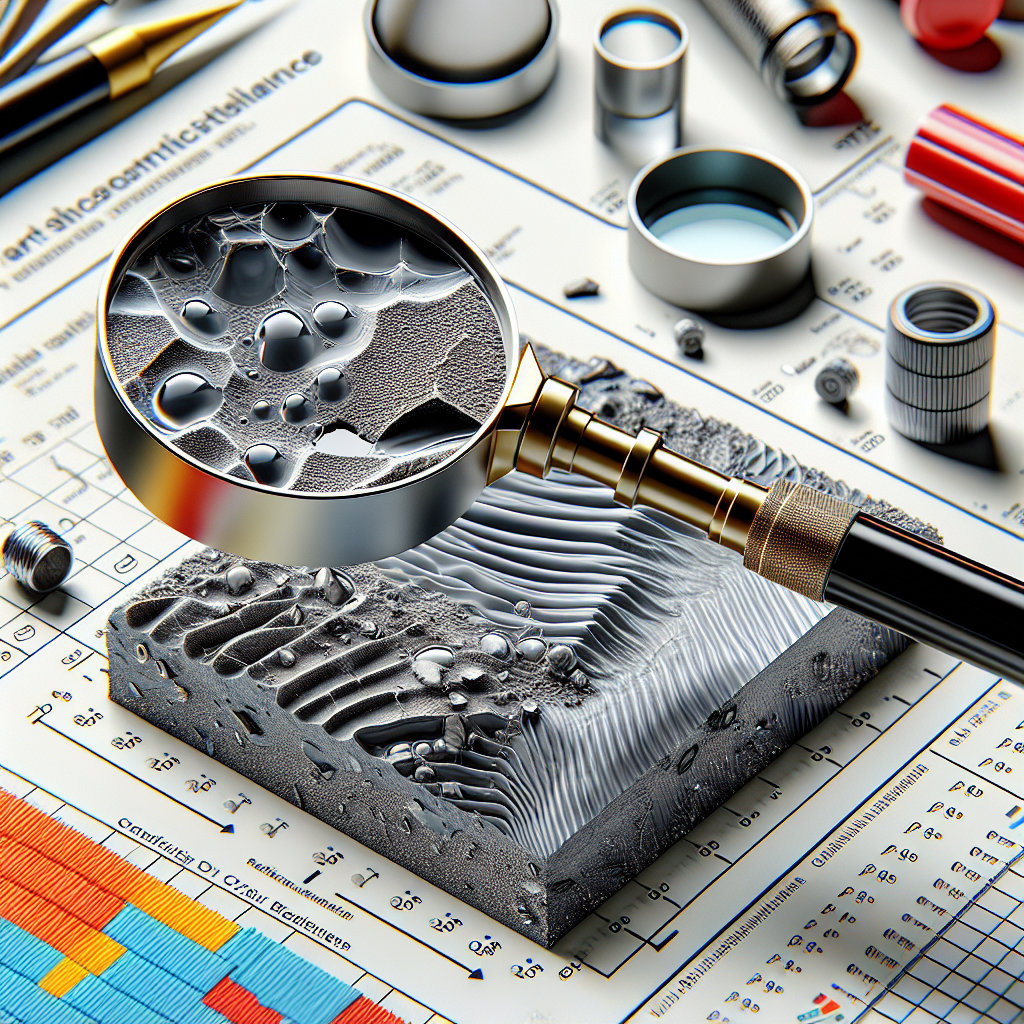
Mechanical testing methods for polymers provide the evidence engineers need to choose, qualify, and improve plastic materials for real products. In day-to-day materials work, I have seen design teams assume a polymer is “strong enough” based on a single tensile value, only to discover later that impact failures, creep deformation, or environmental stress cracking were the real risks. Mechanical testing is the structured measurement of how a polymer responds to forces such as tension, compression, bending, shear, impact, and repeated loading. For polymers, those responses are especially sensitive to temperature, strain rate, moisture, crystallinity, molecular weight, fillers, processing history, and specimen geometry. That is why a proper overview of mechanical testing methods must do more than list test names; it must explain what each method measures, how the data are generated, and where the results are useful or misleading.
In practical terms, mechanical testing of polymers translates material behavior into design inputs. Common outputs include tensile modulus, yield strength, elongation at break, flexural modulus, compressive strength, hardness, impact resistance, fracture toughness, fatigue life, and creep compliance. Standards organizations such as ASTM and ISO define the specimen dimensions, conditioning requirements, loading rates, and reporting formats that make these measurements comparable across labs. Widely used standards include ASTM D638 for tensile properties, ASTM D790 for flexural properties, ASTM D256 and ISO 179 for impact, ASTM D695 for compression, ASTM D2240 for durometer hardness, and ASTM D2990 for creep. These methods matter because polymers are viscoelastic materials: unlike metals, their mechanical response depends strongly on time and temperature. A nylon gear, polypropylene hinge, polycarbonate housing, or PEEK medical component can all pass one test condition and fail another. This hub article explains the major mechanical testing methods for polymers, what questions each method answers, and how to use the results intelligently across material selection, product development, troubleshooting, and quality control.
Tensile testing: the baseline method for polymer strength and stiffness
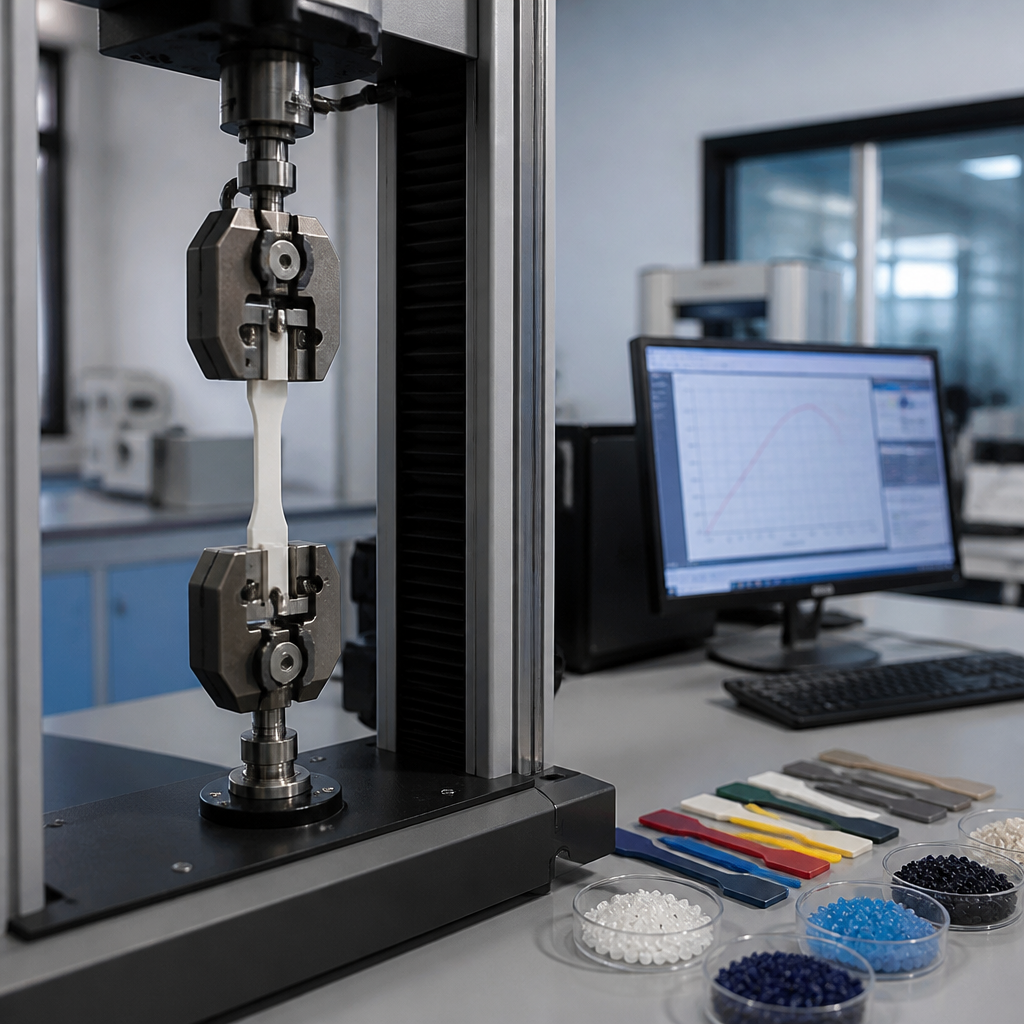
Tensile testing is the most common starting point because it directly measures how a polymer behaves when pulled apart. In a universal testing machine, a dog-bone specimen is gripped and elongated at a controlled rate while force and extension are recorded. The resulting stress-strain curve provides modulus, yield stress, ultimate tensile strength where applicable, elongation at yield, elongation at break, and toughness. For many thermoplastics, ASTM D638 and ISO 527 are the primary standards. These tests are essential for comparing grades, validating incoming material, and generating finite element analysis inputs. When I review data sheets, tensile modulus is usually the first indicator of stiffness, but the shape of the entire curve often reveals more about design risk than a single number.
Several nuances make tensile testing of polymers different from tensile testing of metals. Many plastics do not exhibit a clean linear elastic region over a wide strain range, so modulus determination may depend on secant or chord definitions in the standard. Yield may be obvious in ductile materials such as polyethylene, while brittle materials such as polystyrene may fracture before clear yielding. Test speed changes the answer significantly because polymers are strain-rate sensitive; a faster pull rate usually raises apparent strength and lowers elongation. Conditioning also matters. Nylon can lose stiffness after moisture uptake, while amorphous materials tested near their glass transition temperature can soften dramatically. Results are therefore meaningful only when specimen molding history, orientation, conditioning time, and temperature are controlled and reported.
Compression, flexural, and shear testing for real loading conditions
Not all polymer parts are pulled in service. Many are squeezed, bent, or loaded in combined stress states, so compression and flexural testing are critical complements to tensile data. Compression testing, commonly performed under ASTM D695, measures compressive modulus, compressive strength, and deformation behavior under crushing loads. This matters for structural foams, bearing materials, seals, spacers, and load blocks. Some filled thermoplastics show higher compressive than tensile strength, while cellular materials may display plateau behavior tied to progressive collapse. For elastomers and foams, compressive set and recovery can be more important than ultimate strength because permanent deformation determines sealing performance and long-term fit.
Flexural testing, often using ASTM D790 or ISO 178, places a rectangular bar in three-point or four-point bending. It is widely used because specimen preparation is simple and the method captures both tensile and compressive stresses across the thickness. Flexural modulus is especially useful for comparing stiffness in housings, panels, and snap-fit components. However, flexural strength is not a pure material constant, since it depends on specimen geometry and surface condition, and brittle materials may fail from the tension side well before the compression side is highly stressed. Shear properties are less often quoted on commodity plastic data sheets, yet they matter in adhesive joints, laminated composites, and torsional loading. Methods such as short-beam shear for reinforced polymers or torsion testing can reveal failure modes that tensile and flexural tests miss.
| Test method | What it measures | Common standard | Typical polymer application |
|---|---|---|---|
| Tensile | Modulus, yield strength, elongation, break behavior | ASTM D638 / ISO 527 | Material selection for molded parts and structural comparisons |
| Compression | Compressive modulus and strength | ASTM D695 | Spacers, foams, seals, load-bearing blocks |
| Flexural | Bending modulus and flexural strength | ASTM D790 / ISO 178 | Panels, housings, consumer enclosures |
| Impact | Energy absorbed during sudden fracture | ASTM D256 / ISO 179 | Protective covers, tools, automotive trim |
| Hardness | Resistance to indentation | ASTM D2240 | Elastomers, soft-touch parts, quick QC checks |
| Creep | Time-dependent deformation under constant load | ASTM D2990 | Fastened joints, clips, piping, elevated-temperature service |
Impact and fracture testing: measuring resistance to sudden failure
Impact testing answers a different question from tensile or flexural testing: how much energy can a polymer absorb during a rapid event before it fractures? The best-known methods are Izod and Charpy impact, standardized in ASTM D256 and ISO 179 or ISO 180 depending on the configuration. A notched or unnotched specimen is struck by a pendulum, and the absorbed energy is calculated from the swing loss. The notch acts as a controlled stress concentrator, making the test sensitive to crack initiation and propagation. This is valuable because many real parts fail at knit lines, sharp corners, weld lines, gate regions, or molded-in defects rather than in smooth, idealized sections.
Impact values are useful, but they are also among the most misunderstood polymer properties. A “high impact” number does not guarantee that a finished part will survive a drop test, because part thickness, molding orientation, notch radius, service temperature, and impact speed all influence outcome. Polycarbonate is a classic example: it performs extremely well in impact testing at room temperature, yet can show reduced toughness after chemical exposure or at low temperatures. ABS often balances toughness and processability for consumer housings, while acetal may be stronger but notch-sensitive in some designs. For more advanced crack resistance evaluation, fracture mechanics methods such as essential work of fracture, plane-strain fracture toughness where applicable, or instrumented impact testing give deeper insight into crack growth behavior, although these are more specialized than routine quality tests.
Hardness, abrasion, and surface-related mechanical tests
Hardness testing is often treated as a quick screening tool, and that is exactly where it is valuable. For polymers, durometer methods under ASTM D2240 use scales such as Shore A for softer elastomers and Shore D for harder plastics. Rockwell hardness methods are also used for rigid plastics. Hardness does not equal strength, but it correlates reasonably well with feel, indentation resistance, and process consistency. In manufacturing, I have used Shore hardness checks to detect off-ratio thermoset mixing and incomplete cure long before a full tensile program was finished. Because the method is fast and inexpensive, it is common in production inspection, incoming quality control, and troubleshooting.
Surface durability often requires additional tests beyond hardness. Abrasion resistance may be measured with Taber abrasion, where rotating abrasive wheels wear the specimen and mass loss or haze increase is tracked. This is important for lenses, flooring, appliance surfaces, and automotive interiors. Scratch testing evaluates mar resistance and visible damage under defined stylus loads, which matters for glossy consumer products and coated polymer components. Tear resistance, especially for films and elastomers, is another key mechanical property because propagation of a cut or slit can control real-world failure. These tests remind engineers that many polymer failures begin at the surface, where friction, contact pressure, and small defects concentrate damage even when bulk strength appears adequate.
Viscoelastic testing: creep, stress relaxation, fatigue, and dynamic behavior
The defining feature of polymers is viscoelasticity, so long-term and cyclic tests are indispensable. Creep testing holds a constant load or stress and measures strain over time. Stress relaxation does the reverse by imposing constant strain and monitoring stress decay. Fatigue testing applies repeated loading until failure or a target cycle count. Dynamic mechanical analysis, or DMA, measures storage modulus, loss modulus, and damping as functions of temperature, frequency, or time. Together, these methods explain why a plastic part that looks safe in a short tensile test may still sag on a shelf, loosen around a fastener, or crack after vibration. ASTM D2990 is commonly used for creep, while DMA procedures vary by instrument and geometry.
Real products make these effects impossible to ignore. A polypropylene living hinge survives because the material can flex repeatedly without rapid crack growth, but its performance depends on hinge thickness, molecular orientation, and cycle amplitude. A glass-filled nylon bracket may carry a static load initially, then lose clamp force over months because creep reduces contact pressure. PVC pipe ratings are derived from long-term hydrostatic strength concepts, not just short-term burst tests. DMA is particularly powerful for identifying transitions such as the glass transition temperature, where stiffness can drop by orders of magnitude. When comparing materials for elevated-temperature service, I rely more on creep modulus curves and DMA traces than on room-temperature tensile strength, because those methods capture the time-temperature dependence that drives actual field performance.
Environmental and specimen variables that control polymer test results
Mechanical testing data are only as reliable as the test conditions behind them. Temperature is the most obvious variable. A polymer tested below its glass transition behaves stiffer and often more brittle; above that transition it may become rubbery or lose load-bearing capability. Moisture can plasticize some polymers, especially polyamides, and solvents can trigger environmental stress cracking in materials such as polycarbonate, SAN, or polyethylene under load. Ultraviolet exposure degrades many plastics by chain scission or oxidation, reducing elongation and impact resistance. Chemical aging, sterilization, and thermal oxidation can all change results enough to reverse a material ranking.
Specimen preparation is equally important. Injection-molded bars often contain orientation gradients, residual stress, and weld lines that machined specimens from extruded sheet may not represent. Fiber-filled compounds are anisotropic, so gate location and flow path influence strength and warpage. Crystallinity varies with cooling rate; a slower-cooled semi-crystalline polymer may be stiffer but less transparent and sometimes less impact resistant. Even the grip pressure in a tensile test can matter for softer materials if slippage or local crushing occurs. Good labs document conditioning per ASTM or ISO requirements, use calibrated extensometers or strain measurement systems, and report enough detail for another engineer to reproduce the work. Without that discipline, mechanical property numbers are easy to quote and hard to trust.
How to use mechanical testing methods in polymer material selection
The best mechanical testing strategy starts with the failure mode, not the instrument. If a part must resist a sustained clamp load at 80°C, creep and stress relaxation data are more important than a headline tensile strength. If a device may be dropped, instrumented impact or product-level drop testing should accompany standard Izod values. If a snap fit must deflect during assembly and recover without whitening, tensile strain at yield, flexural modulus, and fatigue behavior all deserve attention. For tribological parts, compression, wear, and coefficient of friction may outrank classic tensile metrics. This is why hub pages on mechanical testing methods are useful: no single test describes polymer performance completely, and each method answers a distinct engineering question.
A sound workflow combines standardized screening with application-specific validation. Start with data sheet review and comparable ASTM or ISO results to narrow candidates. Then test molded specimens from the intended process, because processing often shifts properties more than grade-to-grade differences suggest. Next, add environmental conditioning that matches real use: heat, humidity, fluids, UV, sterilization, or aging. Finally, confirm behavior on part geometry through prototype or subcomponent testing, especially where stress concentrations, weld lines, inserts, and fasteners are present. Mechanical testing methods for polymers are most powerful when interpreted as a connected system rather than isolated numbers. Use this overview as the hub for deeper study into tensile, compression, flexural, impact, hardness, creep, fatigue, and DMA methods, and apply the right test to the right failure mode before finalizing a material choice.
Frequently Asked Questions
What are the main mechanical testing methods used for polymers, and why are multiple tests necessary?
Mechanical testing methods for polymers typically include tensile testing, compression testing, flexural testing, impact testing, hardness testing, creep testing, fatigue testing, and fracture-related evaluations. Each method measures a different aspect of how a plastic material behaves under force. Tensile testing is often the starting point because it provides familiar properties such as tensile strength, modulus, elongation at break, and yield behavior. However, polymers are not simple materials, and their real-world performance cannot be captured by a single number. A material that performs well in tension may still fail in impact, deform under long-term load, crack in a chemical environment, or become brittle at low temperature.
That is why multiple tests are necessary. Polymers are highly sensitive to loading rate, temperature, moisture, specimen geometry, and processing history. Their mechanical response can change dramatically depending on whether the load is short-term or long-term, static or dynamic, room temperature or elevated temperature. For example, a housing part may never see high tensile stress in service, but it could still fail from repeated flexing, sudden drops, or creep around a fastener boss. In practical engineering work, the correct test program should reflect the actual service conditions the material will encounter. The best material selection decisions come from combining several mechanical tests into a complete performance profile rather than relying only on one property from a datasheet.
Why is tensile testing alone not enough to determine whether a polymer is suitable for an application?
Tensile testing is valuable, but it is only one piece of the mechanical performance picture. It tells engineers how a polymer behaves when pulled in a controlled, standardized way, and it generates widely used metrics such as tensile strength, elastic modulus, yield stress, and elongation. Those values are important for comparing materials and for understanding stiffness and strength under uniaxial loading. The problem is that many plastic parts do not fail under neat, slow, laboratory-style tensile loading. Real components are more likely to experience impact, sustained stress, cyclic loading, multiaxial stress states, stress concentrations, or exposure to heat, chemicals, and moisture.
In practice, this means a polymer that looks excellent on a tensile data sheet can still perform poorly in the field. A material with high tensile strength may have low notch sensitivity resistance and crack when dropped. Another may show acceptable short-term strength but slowly deform under load through creep, causing dimensional problems over time. Some materials are also vulnerable to environmental stress cracking, where the combined effect of stress and a chemical exposure causes premature failure even though the base tensile properties appear strong. Tensile testing should therefore be treated as a foundation, not a final answer. Engineers need to pair it with impact, creep, fatigue, and application-specific testing to make decisions that are reliable in real service conditions.
How do impact, creep, and fatigue tests help predict real-world polymer performance?
Impact, creep, and fatigue tests are especially important because they address failure modes that are common in plastic products but often missed by basic strength measurements. Impact testing evaluates how a polymer responds to sudden loading, such as being dropped, struck, or assembled forcefully. Tests such as Izod or Charpy impact can help identify whether a material is tough or brittle, and whether notches or stress concentrators make the part much more vulnerable. This matters because many molded components contain knit lines, sharp corners, holes, or snap-fit features that amplify local stress and can trigger breakage under rapid loading.
Creep testing measures how a polymer deforms over time while under a constant load or stress. This is critical for plastics because they are viscoelastic materials, meaning they do not behave like metals under long-term loading. A polymer may seem stable initially, then gradually stretch, bow, relax, or lose clamping force over weeks, months, or years. Creep performance is particularly important in structural supports, clips, fastened joints, seals, and load-bearing housings. Fatigue testing adds another dimension by showing how the material behaves when stress is repeated many times. Even if each individual load is well below the material’s ultimate strength, repeated cycles can initiate cracks and eventually lead to failure. Together, impact, creep, and fatigue testing provide a more realistic view of durability and help engineers avoid surprises that would never be predicted from a single short-term tensile result.
What factors can influence polymer mechanical test results, and how should engineers interpret the data?
Polymer mechanical test results are influenced by many variables, and understanding those variables is essential for using the data correctly. Temperature is one of the most important factors because polymers often become softer at elevated temperatures and more brittle at low temperatures. Strain rate or test speed also matters: a polymer may appear stronger and stiffer when loaded quickly, yet more ductile or compliant when loaded slowly. Moisture absorption, conditioning history, and chemical exposure can all alter properties significantly, especially for hygroscopic materials. In addition, specimen preparation matters. Molded versus machined specimens, flow orientation, residual stress, weld lines, and degree of crystallinity can all change the measured behavior.
Engineers should also pay close attention to the test standard being used, such as ASTM or ISO methods, because different specimen geometries and procedures can produce different numerical values for the same material. Data should never be interpreted in isolation. Instead, it should be reviewed in the context of part design, expected service environment, loading mode, and manufacturing process. A datasheet value is best understood as a controlled reference point, not a guarantee of performance in every design. The most reliable interpretation comes from combining standardized material data with part-level testing, prototype evaluation, and a clear understanding of the failure risks that matter most for the application.
How should mechanical testing be used during polymer material selection and product development?
Mechanical testing should be integrated throughout the material selection and product development process, not treated as a final box to check. Early in a project, basic tests such as tensile, flexural, hardness, and impact can be used to screen candidate materials and eliminate options that are clearly mismatched to the design requirements. As the application becomes better defined, engineers should build a test plan around the specific loads and environments the part will face. That may include creep testing for sustained loads, fatigue testing for repeated use, compression testing for seals or pads, or environmental stress cracking evaluations if contact with cleaners, fuels, or oils is expected.
As development moves forward, testing should shift from generic material characterization to application-relevant validation. That means looking beyond plaque data and testing molded parts, representative geometries, and assemblies when possible. Mechanical performance in a real component can differ from handbook values because of wall thickness, fiber orientation in filled materials, gate location, notches, weld lines, and assembly stresses. The most effective development teams use mechanical testing to reduce uncertainty at each stage: selecting materials, refining geometry, confirming process robustness, and validating long-term durability. When done well, testing becomes a decision-making tool that improves design confidence, prevents late-stage failures, and leads to polymer products that perform as intended in actual service.