Flexural testing measures how a polymer responds when a controlled load bends it, and that single test reveals stiffness, strength, strain behavior, and failure patterns that tensile data alone often misses. In plastics development, quality assurance, and product design, flexural testing is one of the most practical mechanical testing methods because many polymer parts in service experience bending rather than pure tension or compression. Housings, clips, trays, pipe sections, medical components, appliance panels, and automotive trim all deflect under load, so engineers need a reliable way to predict whether a material will hold shape, crack, creep, or snap. This article serves as a hub for mechanical testing methods within materials and properties, with flexural testing as the anchor topic and direct context for how it relates to tensile, impact, hardness, fatigue, and creep evaluation.
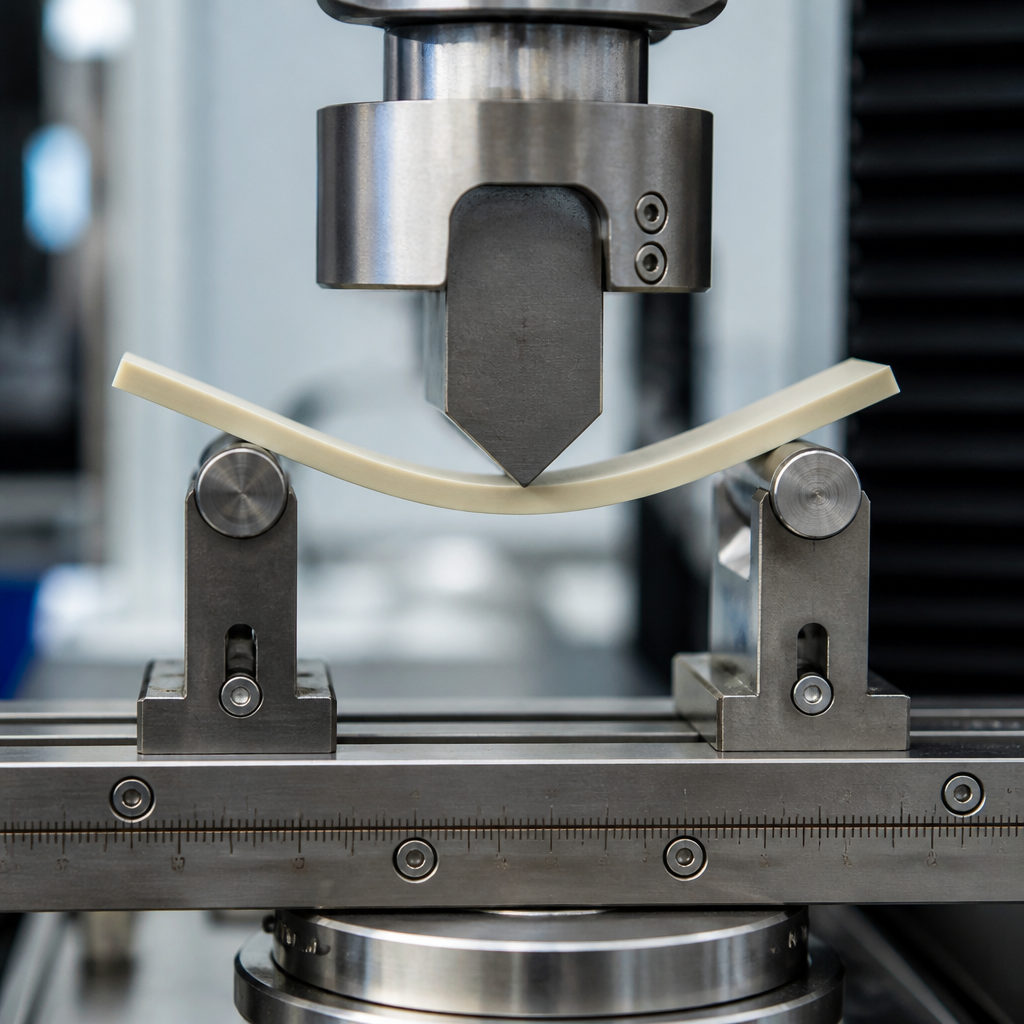
At its core, a flexural test places a specimen on supports and applies force at a defined rate until a target strain or failure occurs. The most common setup is three-point bending, where load is applied at the center, and the standard outputs are flexural modulus, flexural strength, and flexural strain at maximum stress. Four-point bending is also used when a broader constant-moment region is needed. In lab practice, I rely on standards such as ASTM D790 and ISO 178 because fixture span, specimen dimensions, loading nose geometry, and test speed have a direct effect on results. Without those controls, comparisons between grades, batches, or suppliers become unreliable.
Why does this matter? Polymer flexibility is not simply “soft versus rigid.” A polypropylene living hinge can be highly flexible yet fatigue resistant. A glass-filled nylon may post a high flexural modulus but fail abruptly once overloaded. A transparent polycarbonate sheet may appear tough in impact yet still show measurable creep under sustained bending. Flexural testing translates those real behaviors into quantifiable numbers that design teams can use for material selection, simulation inputs, and pass-fail specifications. It also exposes anisotropy from molding, sensitivity to moisture, and the effect of fillers, plasticizers, crystallinity, and temperature. For any company building a materials and properties knowledge base, understanding mechanical testing methods starts here, because bending performance sits at the intersection of stiffness, deformation, and durability.
What Flexural Testing Measures and How the Test Works
Flexural testing measures a polymer’s resistance to deformation under bending load. The specimen, typically a rectangular bar, rests on two supports separated by a span. A loading nose pushes downward at a controlled crosshead speed. The machine records force and deflection, and software converts those values into stress and strain using beam equations defined by the chosen standard. In three-point bending, the maximum stress occurs beneath the loading nose on the outer surface opposite the applied force. That outer fiber is where brittle polymers often initiate cracking.
The most cited result is flexural modulus, the slope of the initial stress-strain curve in bending. It indicates how stiff the polymer is during small deflections. Flexural strength is the stress at the outer surface at the moment of maximum load, yielding, or break, depending on the material response. Flexural strain describes how far the specimen deforms relative to its thickness and span. Together, these values answer practical questions: Will the part feel rigid? Will it recover after a load is removed? Will it yield gradually or fracture suddenly? When I review supplier data sheets, flexural modulus is often a better predictor of perceived part rigidity than tensile modulus for snap-fit housings, covers, and unsupported panels because those features bend in service.
Three-point bending is common because it is simple, fast, and economical. Four-point bending distributes the load through two upper noses, creating a larger constant bending moment zone and reducing the local stress concentration beneath a single center nose. That makes four-point bending useful for some composites and structural applications, though three-point remains dominant for routine polymer characterization. Test span-to-depth ratio matters greatly. If the span is too short, shear deformation can distort the results, especially for lower-modulus materials. If the specimen is too thin or misaligned, data scatter increases.
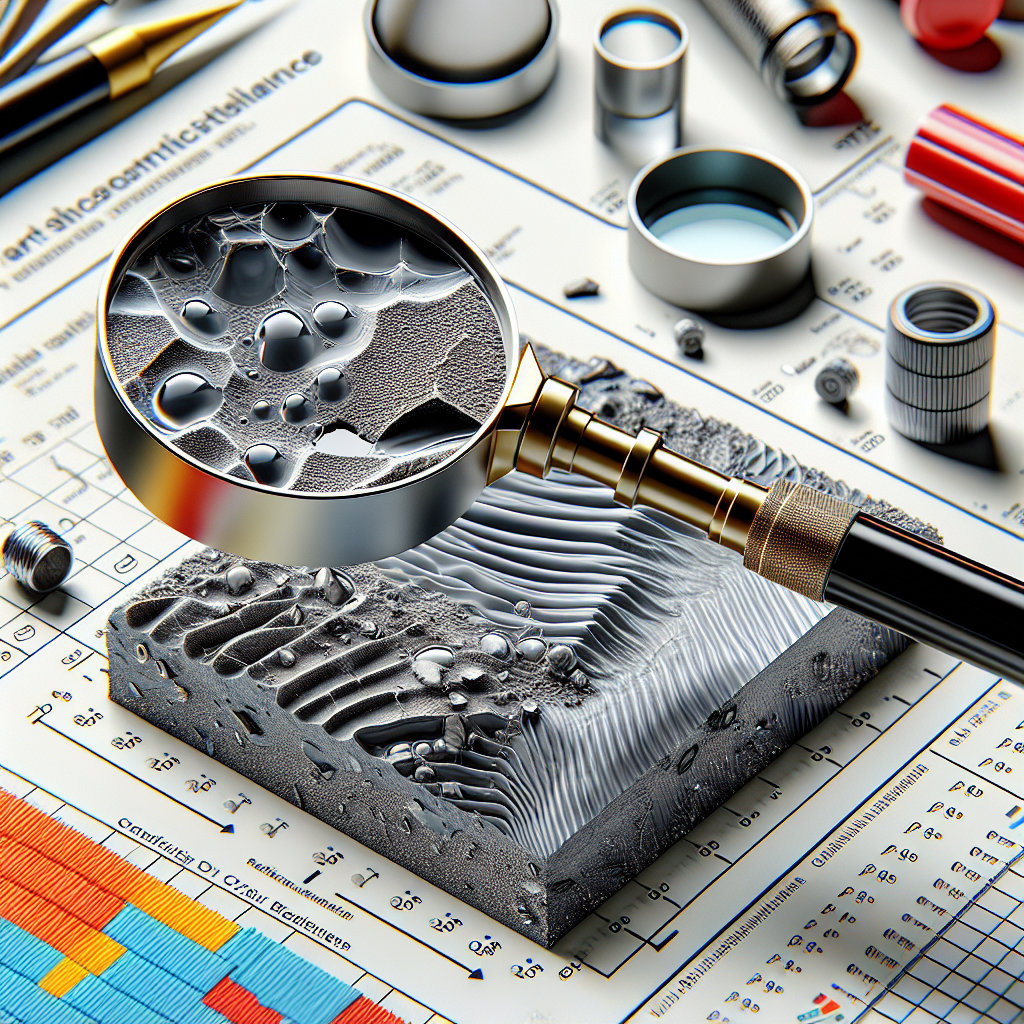
Results are only as good as specimen preparation. Injection-molded bars can contain orientation gradients, residual stress, knit lines, voids, or differential crystallinity. Machined samples can introduce surface flaws. Conditioned moisture content changes nylon behavior dramatically; dried nylon and humid nylon can appear like two different materials in flexural testing. Temperature control also matters because many polymers transition from glassy to leathery behavior over a relatively narrow range. For that reason, a complete mechanical testing methods program should document conditioning protocol, test environment, and specimen history alongside every flexural result.
Key Standards, Equipment, and Variables That Control Accuracy
The two principal standards for polymer flexural testing are ASTM D790 and ISO 178. Both define specimen geometry, support span, loading rate, and calculation methods, but they are not identical, so values from one standard should not be treated as directly interchangeable with the other. ASTM D790 commonly uses rectangular specimens and determines speed based on specimen thickness and target outer fiber strain rate. ISO 178 similarly standardizes bending measurements but differs in details such as strain determination and reporting conventions. In technical reviews, I always verify the standard before comparing grades from different suppliers because unnoticed standard mismatch is one of the most common causes of misleading benchmarking.
The test system typically includes a universal testing machine, a calibrated load cell, a flexural fixture with supports and loading noses, and displacement or strain measurement instrumentation. Reputable labs use Instron, ZwickRoell, MTS, or Shimadzu platforms, though the brand matters less than calibration quality and operator discipline. Fixture alignment is critical. If supports are not parallel or the nose is offset, the specimen can twist, producing false stiffness values or premature failure. For lower-stiffness polymers, deflection correction may be needed to separate machine compliance from actual sample response.
Several variables strongly influence results: specimen dimensions, span length, surface finish, molding direction, loading rate, and environmental conditioning. Even the radius of the loading nose can change local contact stress and therefore failure mode. In filled polymers, fiber orientation can cause the same resin to test differently depending on whether the bar is cut parallel or transverse to flow. That is why good lab reports include dimensions measured on each specimen, not just nominal values.
| Variable | Why It Matters | Typical Effect on Result |
|---|---|---|
| Span-to-depth ratio | Controls balance between bending and shear deformation | Short spans can lower apparent modulus accuracy |
| Test speed | Polymers are viscoelastic and rate sensitive | Higher speed often raises apparent strength and stiffness |
| Temperature | Changes mobility of polymer chains | Higher temperature usually reduces modulus |
| Moisture content | Especially important for hygroscopic resins like nylon | Conditioned samples often become more ductile, less stiff |
| Filler orientation | Glass or mineral alignment creates anisotropy | Flow-direction bars may test much stiffer |
Accuracy also depends on knowing the limitations of the method. Flexural equations assume beam behavior and small-strain conditions in the linear region. Very soft elastomeric materials can be difficult to evaluate accurately by standard flexural methods because large deflections, contact effects, and nonlinear geometry complicate calculations. In those cases, other mechanical testing methods, such as compression set, dynamic mechanical analysis, or specialized bending fixtures, may be more informative. Flexural testing is powerful, but it is not universal.
How Polymer Structure Changes Flexural Performance
Polymer flexibility in bending is governed by molecular architecture and formulation. Chain stiffness, molecular weight, crystallinity, crosslink density, filler loading, and plasticizer content all affect the stress-deflection curve. Semi-crystalline polymers such as polypropylene, polyethylene, POM, and nylon often show a clear relationship between crystallinity and modulus: higher crystallinity usually increases flexural stiffness but can reduce impact tolerance if the formulation becomes too brittle. Amorphous polymers such as polystyrene and acrylic may provide good rigidity and dimensional stability, yet they can fail with limited strain in bending if notch sensitivity is high.
Fillers create some of the biggest shifts. Add 30% glass fiber to nylon 6, and flexural modulus can rise several-fold compared with the unfilled resin. That benefit is why under-hood brackets and electronic housings often move to reinforced grades. The tradeoff is lower allowable strain and stronger anisotropy. In practical testing, I routinely see flow-direction specimens deliver much higher flexural values than cross-flow specimens from the same molded plaque because the fibers align with melt flow. Mineral fillers like talc also raise stiffness, though usually less dramatically than glass, while sometimes improving heat deflection performance and dimensional control.
Plasticizers push properties in the opposite direction. In flexible PVC, for example, increasing plasticizer level lowers flexural modulus and increases the material’s ability to bend without cracking. Thermoplastic elastomers may show low modulus and very high strain, but standard flexural strength values become less meaningful if the specimen does not fail cleanly or if deflection exceeds the assumptions built into the calculation method. Crosslinked systems, including thermosets, often maintain higher stiffness at elevated temperature, but once damage initiates they may fail more abruptly than ductile thermoplastics.
Processing history matters as much as chemistry. Rapid cooling can suppress crystallization and lower stiffness in semi-crystalline polymers. Annealing can raise modulus and dimensional stability by allowing more ordered structure to form. Weld lines from injection molding can become weak zones in bending, especially where stress peaks at the outer fiber. Regrind content, contamination, and thermal degradation can all reduce flexural strength. For product teams, this is the key lesson: a polymer grade does not have one fixed flexibility value. Flexural performance is the outcome of resin selection, additive package, moisture state, and process conditions acting together.
Reading Flexural Data in Real Product Development
Flexural data becomes useful when it is tied to application geometry and service conditions. If a laptop housing must feel rigid during handling, designers look first at section thickness and flexural modulus. A small increase in rib height may improve bending stiffness more cost-effectively than switching to a more expensive resin. If a medical tray must flex slightly without stress whitening, the team focuses not only on modulus but also on strain at maximum stress and visual damage after repeated bending. If an automotive trim component sits in a hot cabin, room-temperature values alone are insufficient; testing at elevated temperature or using dynamic mechanical analysis is necessary to understand in-use stiffness.
In failure analysis, flexural testing often confirms whether field cracks came from embrittlement, moisture loss, overfilling with glass, or incorrect regrind use. I have seen a polypropylene enclosure pass impact requirements but fail in assembly because the snap arms were too stiff and concentrated strain at the base. A flexural comparison between the approved grade and a substituted higher-flow grade immediately showed the modulus increase that caused the problem. In another case, conditioned nylon clips performed well, but dried incoming inspection samples looked alarmingly brittle until humidity conditioning restored expected ductility. The test was not wrong; the sample state was different.
Mechanical testing methods work best as a connected system, not isolated numbers on a data sheet. Flexural testing should be read alongside tensile testing for axial behavior, impact testing for sudden-load resistance, hardness for surface response, creep testing for long-term deflection, and fatigue testing for cyclic durability. A polymer with high flexural modulus may still be a poor choice for a living hinge if fatigue resistance is weak. A material with moderate stiffness but excellent creep resistance may outperform a stiffer option in shelves or clips that carry constant load over time.
For this reason, strong materials programs build internal links between methods and use each test for the question it answers best. Flexural testing answers: How much will this polymer resist bending, and how does it fail when bent? That directness is why it remains a hub topic within mechanical testing methods and one of the first datasets engineers request during material screening.
Best Practices, Common Mistakes, and When to Use Other Mechanical Tests
The best flexural programs start with disciplined sample preparation and clear acceptance criteria. Use the correct standard, machine calibration schedule, fixture dimensions, and conditioning protocol. Report whether results represent break, yield, or stress at a specified strain when samples do not fracture. Test enough replicates to capture variation, especially for reinforced polymers where fiber distribution increases scatter. For design validation, test production-like molded parts or plaques cut from representative locations rather than relying only on generic laboratory bars.
Common mistakes are predictable. Teams compare ASTM and ISO values without noting the difference. They quote supplier data generated on dry-as-molded nylon when the actual part equilibrates at ambient humidity. They ignore orientation effects in glass-filled materials. They treat flexural strength as a universal design limit instead of a controlled laboratory benchmark. They also overinterpret a single room-temperature result for products that face cold starts, sterilization cycles, or outdoor heat. Polymers are viscoelastic, so time and temperature are inseparable from stiffness.
There are also cases where another method should lead. Use tensile testing when the part experiences direct pulling loads or when elongation and yield behavior in uniaxial stress are primary concerns. Use impact methods such as Izod or Charpy when sudden fracture risk dominates. Use creep or stress relaxation testing for shelves, clips, and seals under sustained load. Use fatigue testing for repeated deflection, especially hinges and spring features. Use DMA to map stiffness over temperature and frequency. Flexural testing remains essential, but the most reliable material decisions come from combining methods around the actual load case.
Flexural testing gives engineers a clear, standardized way to measure polymer flexibility in the form that many products actually experience: bending. By converting load and deflection into flexural modulus, strength, and strain, the test helps teams compare materials, diagnose failures, tune formulations, and design parts that balance stiffness with durability. It is also the most useful entry point into mechanical testing methods because it connects naturally to tensile, impact, creep, fatigue, and hardness data rather than competing with them.
The central lesson is simple. A polymer’s bending behavior depends on more than the resin name on a data sheet. Standards, specimen preparation, moisture, temperature, fillers, crystallinity, and processing history all shape the result. When those factors are controlled, flexural testing becomes a dependable basis for material selection and quality control. When they are ignored, the numbers can look precise but lead to bad decisions.
For teams building a stronger materials and properties workflow, make flexural testing part of an integrated mechanical testing methods strategy. Use it early in screening, again in design validation, and whenever a field failure suggests unexpected brittleness or loss of stiffness. Done well, it turns polymer flexibility from a vague impression into engineering evidence. Review your current test standards, compare them with real service conditions, and use that gap analysis to improve your next material choice.
Frequently Asked Questions
What is flexural testing, and why is it so important for evaluating polymer flexibility?
Flexural testing is a mechanical test that measures how a polymer behaves when a controlled force bends it. Instead of pulling a material apart as in tensile testing, flexural testing places the specimen under a bending load, typically using a three-point or four-point fixture, to evaluate how it resists deformation and how it performs as the load increases. This is especially important for polymers because many real-world plastic parts are exposed to bending in service. Housings, clips, trays, pipe sections, appliance parts, consumer product components, and many medical devices rarely experience idealized pure tension alone. They are more often flexed, deflected, or loaded across a span.
What makes flexural testing so valuable is that one test can reveal several critical performance characteristics at once. It helps measure flexural modulus, which reflects stiffness during bending; flexural strength, which shows how much stress the material can withstand before yielding or breaking; and strain behavior, which helps engineers understand how far the material can bend before permanent deformation or failure occurs. The test can also highlight failure patterns such as cracking, brittle fracture, yielding, or delamination in reinforced or layered materials. In practical terms, flexural testing gives designers and quality teams a more application-relevant view of how a polymer will behave in actual use conditions.
For product development and quality assurance, this matters because a polymer that looks acceptable in tensile data may still perform poorly in bending. A part may have adequate tensile strength yet feel too flexible, too brittle, or too prone to cracking when installed or repeatedly loaded. Flexural testing helps close that gap between lab numbers and real performance, which is why it remains one of the most practical and widely used testing methods in polymer evaluation.
What properties does flexural testing measure in polymers?
Flexural testing is used to measure multiple mechanical properties that describe how a polymer responds to bending. The most commonly reported property is flexural modulus, which indicates the material’s stiffness in a bending configuration. A higher flexural modulus generally means the polymer resists deflection more strongly, which can be important for structural housings, trays, panels, and load-bearing plastic parts that must hold their shape under service loads.
Another key property is flexural strength. This value represents the stress a material can withstand in bending before it yields, fractures, or reaches a specified limit. For many applications, flexural strength is a practical design metric because it indicates how much load a part can tolerate before its performance becomes unacceptable. Engineers often compare this property when selecting between resin grades, filler systems, or processing conditions.
Flexural testing also provides insight into strain behavior, meaning how much the specimen deforms as the load increases. This is particularly useful for distinguishing between ductile and brittle performance. Some polymers bend significantly before failure, while others crack suddenly with little warning. The shape of the stress-strain curve in flexure can reveal whether the material distributes stress gradually, yields under load, or fails abruptly. In reinforced plastics or filled compounds, the test may also expose effects such as fiber orientation sensitivity, surface cracking, layer separation, or stress concentration behavior.
Because these properties are measured together in a controlled bending setup, flexural testing offers a more complete picture than a single stiffness or strength number alone. It helps material developers, manufacturers, and designers understand not just whether a polymer is strong, but whether it is stiff enough, tough enough, and stable enough for the way the part will actually be used.
How is a typical flexural test performed on a polymer specimen?
A typical flexural test is performed by placing a polymer specimen on two supports and applying force from above at a controlled rate until a target strain, yield point, or failure condition is reached. In the most common three-point bending setup, the specimen is supported at both ends and loaded at the center. In a four-point bending setup, the load is distributed across two upper contact points, which can provide a broader constant-moment region and may be preferred for certain materials or applications. The exact method depends on the material, specimen geometry, and the testing standard being followed, such as ASTM or ISO procedures.
During the test, the machine records load and deflection continuously. From these values, the software calculates flexural stress, flexural strain, and flexural modulus. The specimen dimensions are critical because thickness, width, and support span all affect the resulting calculations. Testing laboratories carefully control these variables to ensure the data are repeatable and comparable across batches, formulations, or suppliers. Environmental factors such as temperature and humidity can also be important, since many polymers are sensitive to conditioning and may behave differently in dry, humid, room-temperature, or elevated-temperature states.
As the load increases, the top surface of the specimen is placed in compression while the bottom surface is placed in tension. This mixed stress condition is one reason flexural testing is so informative. It shows how the material behaves when both compressive and tensile stresses are present simultaneously, which is often the case in real components. Observing the mode of failure is also important. A specimen may show smooth elastic bending, yielding, whitening, crack initiation, sudden fracture, or no complete break at all within the test limits. Those outcomes help engineers understand whether the polymer is likely to remain serviceable, deform permanently, or fail under bending loads in end-use conditions.
How does flexural testing differ from tensile testing, and why can it reveal information tensile data misses?
Tensile testing and flexural testing are both valuable, but they answer different questions. Tensile testing measures how a material behaves when it is pulled in a straight line, while flexural testing measures how it behaves when bent. For polymers, that distinction is significant because many plastic parts in service are not loaded in pure tension. They are clipped into place, pressed, leaned on, deflected, or supported across gaps where bending becomes the dominant mechanical condition. As a result, tensile data alone may not fully predict real-world part performance.
One major difference is the stress distribution within the specimen. In a tensile test, the stress is more uniformly applied across the gauge section. In a flexural test, the stress varies through the thickness of the specimen: one side experiences compression, the opposite side experiences tension, and the center region experiences lower stress. This gradient can expose material responses that tensile testing may not highlight, including surface cracking, compression-sensitive behavior, asymmetrical deformation, and failure initiation at highly stressed outer fibers.
Flexural testing can also be more sensitive to stiffness perception in actual parts. A polymer may have acceptable tensile strength yet still feel too flexible for a housing, tray, or panel application. Conversely, a material may be strong in tension but fail prematurely in bending because of brittleness, poor notch tolerance, filler effects, or internal molding stresses. This is why product designers often rely on flexural results when comparing candidate materials for components that must hold shape, snap into place, or survive repeated deflection without cracking.
In short, tensile testing is essential, but flexural testing often provides a more realistic measure of service behavior for many polymer products. Using both together gives a stronger engineering basis for material selection, failure analysis, and quality control.
Which industries and polymer products benefit most from flexural testing?
Flexural testing is especially useful in industries where polymer parts must maintain shape, resist sagging, survive handling loads, or tolerate repeated bending in service. In consumer products and electronics, it helps evaluate housings, covers, snap-fit features, battery compartments, and structural plastic frames. In packaging and industrial materials, it is important for trays, containers, panels, and sheet-based components that must resist deflection without cracking. In plumbing and infrastructure applications, pipe sections and fittings benefit from flexural data because installation and service conditions can introduce bending stresses that tensile values alone may not capture well.
The medical sector also benefits significantly from flexural testing. Many medical polymer components, such as device housings, disposable supports, trays, and semi-rigid structural parts, need a reliable balance of stiffness and toughness. A component may need to stay dimensionally stable during use while still tolerating handling, sterilization effects, and occasional deflection. Flexural testing helps verify whether those materials meet performance expectations consistently and safely.
Automotive and appliance manufacturers also rely on flexural data when selecting polymers for interior trim, brackets, covers, under-hood components, and exterior support parts. In these applications, parts may be exposed to repeated loading, temperature variation, and long-term creep concerns, all of which make bending behavior highly relevant. Material developers use flexural testing during formulation work to compare resin types, glass-filled grades, impact-modified compounds, recycled blends, and processing changes. Quality assurance teams use it to detect lot-to-lot variation and confirm that molded parts meet specification after production.
Ultimately, any industry that uses plastic components exposed to real bending loads can benefit from flexural testing. It is popular not because it is theoretical, but because it closely reflects how many polymer products actually function in the field. That practical relevance is what makes it such a trusted tool in development, design validation, and ongoing quality control.