Polymers have become central to environmental remediation because their chemical properties can be tuned to capture contaminants, separate mixtures, support catalysts, and survive harsh treatment conditions that destroy less adaptable materials. In this context, environmental remediation means the removal, immobilization, or transformation of pollutants in water, soil, air, and industrial waste streams. Polymers are large molecules built from repeating units, but in practice the term covers a wide family of materials, from commodity plastics and ion-exchange resins to hydrogels, membranes, dendrimers, and conductive polymers. When remediation specialists discuss chemical properties, they focus on features such as functional groups, charge density, polarity, hydrophilicity, crosslinking, redox activity, chelation strength, and resistance to oxidation, acids, bases, solvents, temperature, and biofouling.
Those properties matter because pollution is chemically diverse. Heavy metals behave differently from chlorinated solvents, dyes, pharmaceuticals, nutrients, hydrocarbons, and per- and polyfluoroalkyl substances. A material that removes lead efficiently may fail against nitrate, and a membrane that performs well in neutral water may degrade quickly in oxidizing brines. In field work, I have seen the difference that polymer chemistry makes: changing a membrane surface from hydrophobic to hydrophilic reduced fouling dramatically, while adding amine groups to an adsorbent shifted it from weak uptake to strong affinity for anionic species. The chemistry governs selectivity, capacity, regeneration, lifetime, and cost, which is why this topic functions as a hub within materials and properties. Understanding how polymers interact with contaminants is the foundation for choosing the right remediation technology and for linking to deeper studies on adsorption, membranes, catalysis, composites, and degradation pathways.
Why Chemical Properties Control Remediation Performance
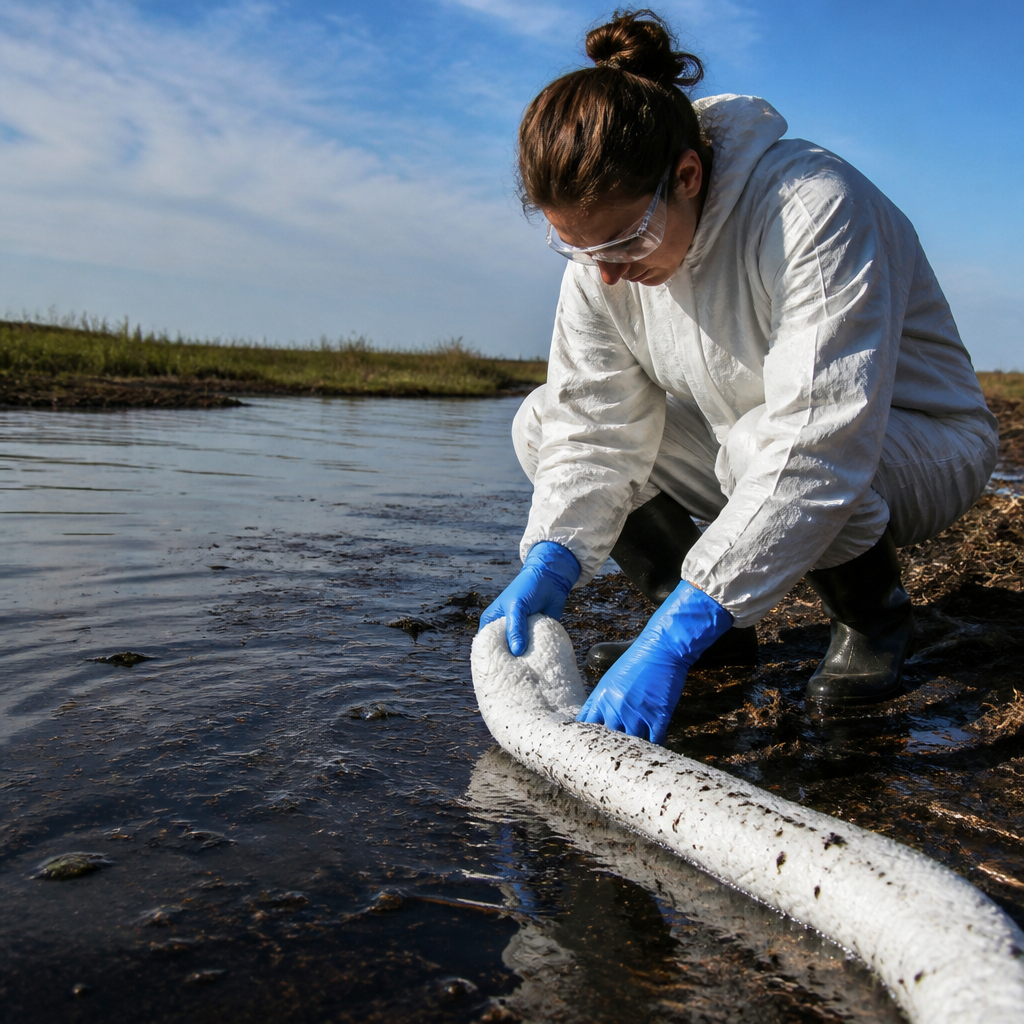
The most important principle is simple: pollutants are removed when polymer surfaces or networks create favorable chemical interactions. These interactions include electrostatic attraction, ion exchange, hydrogen bonding, hydrophobic partitioning, coordination to metal-binding ligands, size exclusion, and reactive transformation. A cationic polymer can bind negatively charged species such as chromate or some dye molecules. A sulfonated resin exchanges sodium or hydrogen ions for calcium, magnesium, or ammonium. A polymer bearing carboxyl, amine, thiol, phosphonate, amidoxime, or imidazole groups can form stable complexes with copper, lead, uranium, arsenic, or rare earth ions. In oil spill sorbents, nonpolar chains and porous structures favor uptake of hydrocarbons while repelling water.
Chemical stability is equally decisive. Environmental systems expose polymers to ultraviolet light, dissolved oxygen, chlorine, ozone, pH swings, salinity, microbes, and abrasive particles. If the backbone hydrolyzes, swells excessively, oxidizes, or loses functional groups, removal efficiency declines and secondary contamination can follow. That is why engineers often choose backbone chemistries such as polystyrene-divinylbenzene for ion exchange resins, polyamide or polysulfone for membranes, chitosan for biodegradable sorbents, and polyethylene glycol derivatives for hydrophilic surface modification. The tradeoff is that highly reactive polymers may capture contaminants well but age faster, whereas highly inert polymers last longer but need surface treatment to become selective. Selecting the right balance between reactivity and durability is the central design problem in polymer-based remediation.
Key Polymer Chemical Properties and Their Practical Effects
Functional groups determine what a polymer can bind. Carboxyl groups deprotonate at moderate pH and attract metal cations. Primary, secondary, and tertiary amines can protonate and capture anions, while also coordinating some metals. Thiol groups show strong affinity for soft metal ions such as mercury, silver, and cadmium. Sulfonic acid groups deliver strong-acid ion exchange over broad pH ranges, making them standard in water softening and demineralization systems. Phosphonic and amidoxime groups are especially important where high metal affinity is needed in saline or competitive environments.
Charge density affects both kinetics and selectivity. High charge density can increase contaminant uptake, but it can also intensify swelling, osmotic stress, and fouling. Crosslink density controls pore accessibility and mechanical strength. A lightly crosslinked hydrogel may sorb pollutants rapidly because water penetrates easily, yet the same openness can reduce mechanical integrity. Heavily crosslinked networks are tougher and regenerate better, but diffusion slows and capacity can drop. Hydrophilicity influences wettability and biofouling. More hydrophilic surfaces generally resist protein and microbial adhesion better than hydrophobic ones, which is why membrane manufacturers often graft polyethylene glycol, zwitterions, or other hydrophilic moieties onto filtration media. Redox activity opens another route: conductive polymers such as polyaniline and polypyrrole can reduce or oxidize target species directly or shuttle electrons to catalytic sites.
| Property | What it controls | Typical polymer example | Remediation use |
|---|---|---|---|
| Amine functionality | Anion binding, metal coordination | Polyethyleneimine | Chromate, dyes, carbon dioxide, metal ions |
| Carboxyl functionality | Cation exchange | Polyacrylic acid | Lead, copper, hardness ions |
| Thiol functionality | Soft metal chelation | Thiolated chitosan | Mercury and cadmium removal |
| Sulfonic acid groups | Strong-acid ion exchange | Sulfonated polystyrene resin | Water softening and deionization |
| Hydrophilic surface chemistry | Wettability, fouling resistance | PEG-grafted polysulfone | Wastewater membrane treatment |
| Redox-active backbone | Electron transfer | Polyaniline | Chromium reduction and catalytic support |
Major Polymer Classes Used in Environmental Remediation
Ion-exchange resins are the most established polymer remediation materials. Typically based on crosslinked polystyrene or acrylic matrices, they remove dissolved ions through reversible exchange reactions. Strong-acid cation resins with sulfonic groups are used in municipal and industrial water treatment, while strong-base anion resins with quaternary ammonium groups target nitrate, sulfate, and other anions. Chelating resins go further by incorporating ligands such as iminodiacetate, aminophosphonic acid, or thiourea, giving them higher selectivity for trace metals in mixed solutions.
Hydrogels form three-dimensional polymer networks that swell in water and hold contaminants inside accessible pores. Polyacrylamide, polyacrylic acid, alginate, chitosan, and cellulose-derived hydrogels are widely studied because they combine high surface accessibility with tunable chemistry. Chitosan is especially useful because its amine groups bind metal ions and many organic pollutants, and it can be chemically modified by grafting, crosslinking, or blending. In pilot settings, chitosan beads and composites have been used for arsenic, chromium, textile dyes, and phosphate removal. Their limitation is stability: uncrosslinked or weakly crosslinked forms can dissolve or lose integrity in acidic media.
Polymeric membranes dominate pressure-driven separations such as microfiltration, ultrafiltration, nanofiltration, reverse osmosis, pervaporation, and membrane bioreactors. Polyvinylidene fluoride, polysulfone, polyethersulfone, polyamide, cellulose acetate, and polypropylene are standard membrane materials. The key chemical challenge is balancing permeability, selectivity, and fouling resistance. Thin-film composite polyamide membranes deliver high salt rejection, but free chlorine can attack amide linkages. Polysulfone supports are mechanically robust, yet hydrophobicity can encourage fouling unless modified. Surface oxidation, plasma treatment, interfacial polymerization, and nanoparticle incorporation are common methods used to tune chemistry for wastewater, desalination brines, and trace organic contaminant control.
Target Contaminants and Matching Polymer Chemistries
Heavy metals are among the clearest examples of chemistry-driven design. Lead, cadmium, mercury, copper, nickel, and chromium species require polymers with donor atoms that form stable complexes. Amines, carboxylates, thiols, amidoximes, and phosphonates are standard choices. Mercury removal often favors sulfur-containing ligands because soft-soft interactions are stronger under hard-soft acid-base theory. Hexavalent chromium, present as oxyanions, is better captured by protonated amines or reduced to the less mobile trivalent form using redox-active polymers or polymer-supported iron particles.
Organic contaminants present a broader challenge. Dyes from textile wastewater can be cationic, anionic, or nonionic, so polymer charge must match the target. Hydrophobic organics such as petroleum hydrocarbons, pesticides, and some pharmaceuticals partition well into nonpolar polymers or porous organic networks. Phenols and antibiotics may be removed by combinations of hydrogen bonding, pi-pi interactions, and electrostatic effects. PFAS treatment has pushed polymer chemistry further because these molecules are persistent, mobile, and structurally varied. Conventional granular activated carbon struggles with short-chain PFAS, whereas tailored ion-exchange resins and fluorophilic or cationic polymer systems often perform better, especially when quaternary ammonium sites and hydrophobic domains are combined.
Nutrients and emerging contaminants also demand specificity. Nitrate-selective resins compete against sulfate, chloride, and bicarbonate, so ligand architecture matters. Phosphate can be captured by metal-loaded polymer beads or cationic hydrogels. For endocrine disruptors and trace pharmaceuticals, researchers often use molecularly imprinted polymers, which create binding cavities shaped for a target compound. These materials can be highly selective, but manufacturing complexity and slow binding kinetics still limit broad deployment. In practice, the best systems often combine adsorption, membrane separation, and advanced oxidation rather than relying on one polymer function alone.
Polymer Composites, Catalytic Supports, and Smart Materials
Many of the strongest remediation materials are not pure polymers but polymer composites. A polymer matrix can immobilize activated carbon, zeolites, metal oxides, biochar, magnetic nanoparticles, titanium dioxide, or zero-valent iron, giving the final material both processability and chemical function. For example, iron-loaded chitosan beads can adsorb arsenate through ligand exchange and then be separated easily. Polymer-supported nanoscale zero-valent iron improves handling and reduces particle aggregation during chlorinated solvent treatment. Membranes containing titanium dioxide or silver nanoparticles can add photocatalytic or antimicrobial behavior, though leaching risk must be managed carefully.
Conductive and stimuli-responsive polymers are opening more advanced pathways. Polyaniline and polypyrrole can capture metals, mediate electron transfer, and support electrochemical regeneration. Temperature-responsive and pH-responsive hydrogels can release or capture pollutants selectively during regeneration cycles, reducing chemical demand. Magnetic polymer composites simplify recovery from slurry systems. From my experience evaluating pilot data, these smart systems can outperform conventional media in controlled settings, but scale-up often exposes issues with synthesis cost, long-term stability, and quality control. A material that works in a clean laboratory solution may foul, fragment, or lose selectivity in real leachate or industrial wastewater loaded with competing ions and natural organic matter.
Selection Criteria, Standards, and Real-World Limitations
The right polymer for remediation is chosen by matching chemistry to water or soil conditions, not by chasing the highest laboratory adsorption capacity. Capacity values reported in milligrams per gram are useful, but they can be misleading if they come from single-solute tests at unrealistic concentrations. Field-relevant selection requires pH, ionic strength, redox conditions, suspended solids, natural organic matter, temperature, contact time, pressure drop, regeneration chemistry, and disposal route. ASTM methods, ISO water testing standards, EPA analytical methods, and breakthrough curve analysis provide the framework for comparing materials under credible conditions. For membranes, flux recovery ratio, zeta potential, contact angle, and chlorine tolerance are more informative than headline rejection values alone.
Sustainability and end-of-life management matter as much as removal efficiency. A polymer that captures metals but cannot be regenerated or safely disposed of may simply transfer contamination from water to solid waste. Biobased polymers such as cellulose, alginate, starch derivatives, and chitosan offer advantages in renewability and lower toxicity, yet they may need crosslinkers or additives that complicate biodegradability. Synthetic polymers often deliver better durability and tighter process control but can raise concerns about microplastic release or difficult disposal. The best remediation designs account for the full life cycle: raw material sourcing, manufacturing energy, operational lifetime, regeneration chemicals, contaminant recovery, and final destruction or recycling.
Polymers matter in environmental remediation because chemistry can be engineered with unusual precision. Functional groups, charge, crosslinking, hydrophilicity, porosity, and redox behavior determine whether a material captures a pollutant selectively, resists fouling, survives regeneration, and performs economically at scale. Ion-exchange resins, hydrogels, membranes, conductive polymers, and polymer composites each solve different problems, and the strongest results usually come from matching polymer chemistry to a specific contaminant class and operating environment rather than searching for a universal material.
As a hub within chemical properties, this topic points to the deeper questions that guide material selection: which ligands bind which metals, how membrane surface chemistry affects fouling, when biodegradable sorbents make sense, and where composites outperform single-phase polymers. If you are building a materials strategy, start by mapping contaminants, pH, salinity, oxidants, and regeneration needs, then choose polymer chemistries that fit those realities. That approach produces better treatment performance, longer service life, and fewer surprises during scale-up.
Frequently Asked Questions
What role do polymers play in environmental remediation?
Polymers play a highly versatile role in environmental remediation because they can be engineered to remove, immobilize, or transform pollutants across water, soil, air, and industrial waste streams. In practical terms, polymers are used as adsorbents to capture contaminants such as heavy metals, dyes, oils, and persistent organic compounds; as membranes for filtration and separation; as supports for catalysts that break down harmful chemicals; and as binders or stabilizers that help contain pollutants in place. Their value comes from the fact that their structure and surface chemistry can be tailored very precisely. Scientists can introduce charged groups, porous architectures, hydrophilic or hydrophobic regions, and reactive sites that selectively interact with specific contaminants. This tunability makes polymers far more adaptable than many conventional materials.
Another major advantage is durability under demanding treatment conditions. Many remediation systems must operate in acidic or basic environments, under variable temperatures, or in the presence of complex contaminant mixtures. Polymers can be designed to remain stable in these settings while still delivering high performance. They can also be processed into beads, fibers, foams, films, coatings, gels, and composites, which means they fit into many different treatment technologies. Whether the goal is to clean wastewater, recover valuable metals, prevent pollutant spread in soil, or improve air purification, polymers often serve as the functional backbone of the remediation process.
How do polymers help remove contaminants from water and wastewater?
Polymers are especially important in water and wastewater treatment because they can be designed to target a wide range of dissolved and suspended pollutants. One of the most common approaches involves polymer-based adsorbents, which bind contaminants onto their surfaces or within internal pores. These materials can capture heavy metals such as lead, cadmium, and mercury, as well as nutrients, dyes, pharmaceuticals, pesticides, and industrial chemicals. Functional groups built into the polymer, such as amines, carboxyls, sulfonates, or thiols, can be selected based on the chemistry of the pollutant. This makes polymer systems highly effective for selective capture, even when contaminants are present at low concentrations.
Polymers are also central to membrane technologies such as ultrafiltration, nanofiltration, reverse osmosis, and membrane bioreactors. In these systems, polymer membranes act as selective barriers that separate contaminants from water based on size, charge, or chemical affinity. They can remove particulates, microorganisms, salts, and organic molecules while allowing clean water to pass through. In addition, water treatment often uses polymer flocculants and coagulant aids to gather fine suspended particles into larger aggregates that are easier to separate. This improves clarification and reduces turbidity. Because polymer materials can combine separation, adsorption, and even catalytic activity in one platform, they are widely used in modern wastewater treatment systems that need to be efficient, scalable, and adaptable to changing water quality conditions.
Why are polymers considered better than some traditional materials for remediation applications?
Polymers are often favored over more traditional remediation materials because they offer a rare combination of tunability, processability, and performance. Many conventional adsorbents or filtration materials work well only within a narrow set of conditions or for a limited class of pollutants. By contrast, polymers can be customized at the molecular level to improve selectivity, capacity, stability, and regeneration. Researchers can alter the polymer backbone, side groups, crosslinking density, pore structure, and surface charge to match the demands of a specific cleanup challenge. This ability to fine-tune properties gives polymers a strong advantage in complex environmental systems where pollutants vary widely in composition and concentration.
Polymers also offer important engineering benefits. They are often lightweight, relatively easy to manufacture, and compatible with a broad range of fabrication methods, including spinning, casting, molding, coating, and 3D structuring. That makes it possible to produce polymer remediation materials in forms suited to real-world deployment, from membrane modules and absorbent pads to ion-exchange resins and reactive barriers. In many cases, polymers can also be combined with activated carbon, nanoparticles, metal oxides, or biological agents to create hybrid materials with enhanced performance. While they are not automatically superior in every setting, their flexibility makes them exceptionally valuable when a treatment system must balance cost, durability, selectivity, and operational efficiency.
Can polymers do more than just capture pollutants?
Yes, and that is one of the most exciting aspects of polymer-based remediation. While simple pollutant capture is important, many advanced polymer systems are designed to go further by transforming contaminants into less harmful substances or by enabling their recovery for reuse. For example, polymers can serve as supports for catalytic metals, enzymes, or photocatalytic particles that break down toxic organic compounds into smaller, safer molecules. In these systems, the polymer does not merely hold the contaminant; it helps create a controlled environment where chemical reactions can occur efficiently. This is particularly useful for treating difficult pollutants such as chlorinated solvents, pharmaceutical residues, dyes, and other persistent organic contaminants.
Polymers can also immobilize pollutants to prevent them from spreading through the environment. In soil and sediment remediation, polymer-based amendments may bind metals or organic pollutants strongly enough to reduce their mobility and bioavailability. That lowers ecological and human exposure risks even when complete removal is not immediately practical. In other cases, polymers support resource recovery by selectively binding valuable substances such as rare earth elements or industrial metals from waste streams. This shifts remediation toward a more circular model, where contamination control and material recovery happen together. So, rather than acting only as passive sponges, polymers increasingly function as active, multifunctional tools in environmental cleanup.
What are the main challenges and future trends for polymers in environmental remediation?
Despite their advantages, polymer-based remediation technologies also come with important challenges. One major concern is sustainability. Some high-performance polymers are derived from petrochemical feedstocks and may create disposal or end-of-life issues if not carefully managed. There is also growing scrutiny around polymer degradation, especially if a material sheds microplastic fragments or releases additives during long-term use. Another challenge is fouling, particularly in membrane systems, where contaminants and biological growth can clog surfaces and reduce efficiency. Cost, regeneration performance, chemical stability over repeated cycles, and scale-up from laboratory studies to field deployment are also common hurdles. In short, a polymer may perform exceptionally well in controlled experiments but still face practical limitations in full-scale environmental applications.
Looking ahead, the field is moving toward smarter, greener, and more integrated polymer systems. Researchers are developing biodegradable and bio-based polymers, stimuli-responsive materials that change behavior in response to pH, temperature, or light, and highly selective polymers tailored for emerging contaminants such as PFAS, pharmaceutical residues, and complex industrial mixtures. There is also strong interest in hybrid materials that combine polymers with nanomaterials, catalysts, or biological components to improve removal efficiency and durability. At the system level, future remediation technologies are likely to emphasize regeneration, reuse, lower energy demand, and reduced secondary waste generation. The long-term goal is not just to clean pollution effectively, but to do so in a way that is more sustainable, economically realistic, and compatible with circular environmental management strategies.