Polymers are central to modern chemical separation processes because their molecular structure, surface chemistry, and transport behavior can be tuned to discriminate between gases, liquids, ions, and suspended solids with remarkable precision. In materials science, a polymer is a macromolecule built from repeating units, while a chemical separation process is any operation that isolates one component from another based on differences in size, solubility, charge, affinity, volatility, or permeability. I have worked with polymer membranes, ion-exchange resins, and adsorbent coatings in process development, and the same lesson appears repeatedly: the chemical properties of the polymer usually determine whether a separation is selective, stable, and commercially viable.
As a hub topic within materials and properties, chemical properties matter because they connect molecular design to plant performance. A polymer may look inert in bulk form, yet its polarity, functional groups, crosslink density, free volume, and resistance to solvents decide how it behaves in a membrane skid, chromatography column, extraction contactor, or water treatment unit. Engineers do not choose a polymer simply because it is cheap or easy to mold. They choose it because the material interacts with target molecules in controlled ways. Those interactions influence flux, selectivity, fouling tendency, chemical durability, regeneration, and service life.
This matters across industries. Refineries use polymeric membranes for hydrogen recovery and dehydration. Pharmaceutical manufacturers rely on polymer resins and membranes for purification of active ingredients and biologics. Municipal plants use ion-exchange polymers to remove hardness, nitrate, and per- and polyfluoroalkyl substances precursors. Food processors use polymer filtration media to clarify beverages, concentrate proteins, and recover valuable ingredients. In each case, the polymer is not passive infrastructure. It is the active separation medium.
Understanding the use of polymers in chemical separation processes starts with a simple idea: separations happen when certain molecules move through, bind to, or are excluded by a material more readily than others. The most important chemical properties behind that behavior include hydrophilicity versus hydrophobicity, acid-base character, ionic functionality, redox stability, solvent compatibility, and the ability to form specific interactions such as hydrogen bonding, dipole interactions, or coordination with metal ions. Once those properties are understood, it becomes much easier to explain why one polymer excels in reverse osmosis, another in gas permeation, and another in chromatographic purification.
Chemical properties that make polymers effective separation materials
The chemical properties of a polymer control two linked outcomes: selectivity and stability. Selectivity describes how well the material distinguishes one species from another. Stability describes whether that performance survives real operating conditions such as pressure, temperature, pH swings, oxidants, and cleaning cycles. In practice, I evaluate five properties first. The first is functional chemistry, including groups such as sulfonic acid, quaternary ammonium, amide, hydroxyl, ether, or fluorinated segments. These groups define charge and affinity. The second is crosslinking, which affects swelling and solvent resistance. The third is free volume, which influences diffusion through dense membranes. The fourth is crystallinity, which changes transport pathways and mechanical integrity. The fifth is resistance to hydrolysis, oxidation, and plasticization.
For example, polyamide reverse osmosis membranes reject salts effectively because their thin selective layers contain polar amide groups and a highly crosslinked structure. Water can sorb and diffuse through the layer, but hydrated ions face a much higher energetic barrier. By contrast, polydimethylsiloxane, or PDMS, is rubbery and highly permeable to many organic vapors because its flexible siloxane backbone creates high free volume and weak cohesive energy density. That makes PDMS valuable in pervaporation and vapor separation, but not ideal where aggressive swelling would destroy selectivity.
Ion-exchange resins show the same chemistry-performance relationship in an even more direct way. Sulfonated polystyrene-divinylbenzene resins act as cation exchangers because fixed sulfonate sites attract positively charged ions such as calcium, magnesium, or ammonium. Strong-base anion resins use quaternary ammonium groups to capture nitrate, sulfate, or organic acids. The resin matrix, degree of crosslinking, and water uptake determine how quickly ions move through the bead and how easily the resin regenerates. A resin with high capacity but poor oxidative stability may fail early in chlorinated water, so chemical durability is never separate from separation efficiency.
How polymers are used in major chemical separation processes
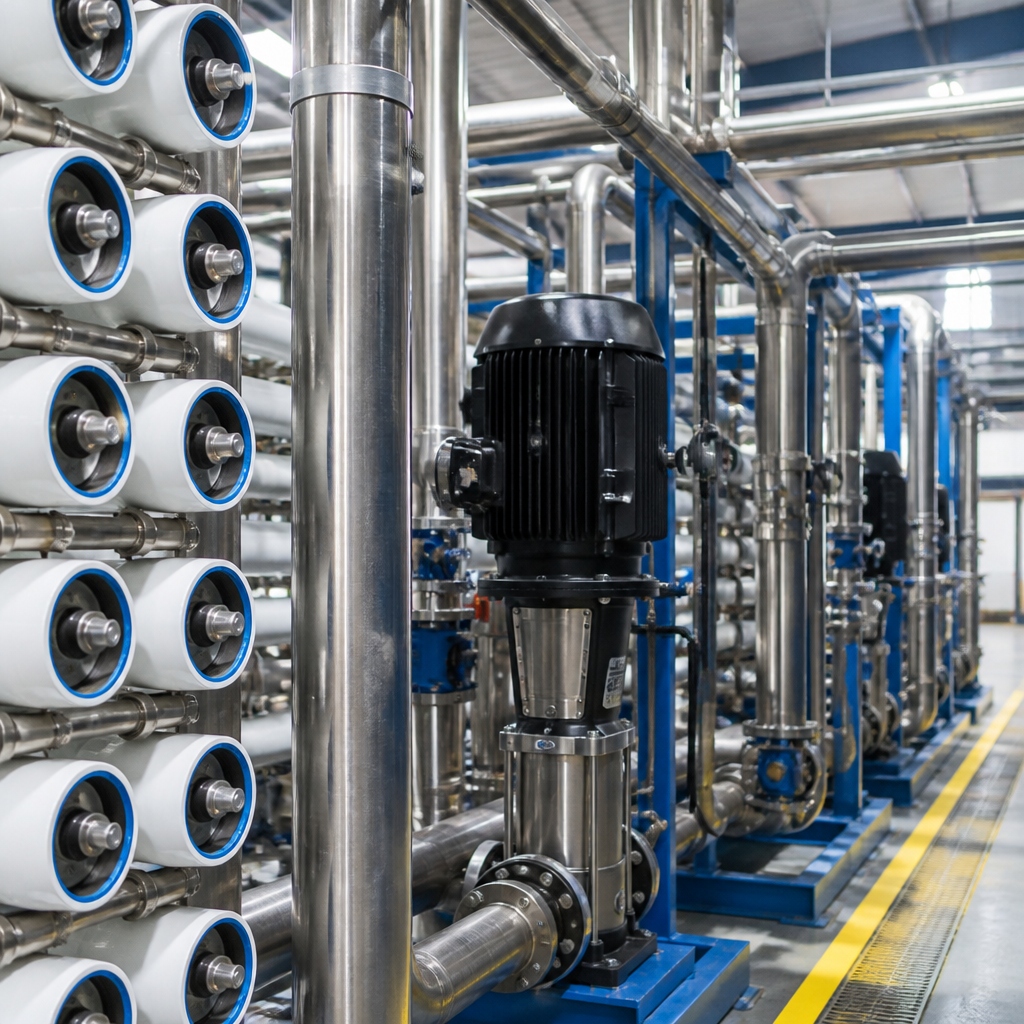
Polymers support several major separation mechanisms: sieving, solution-diffusion, adsorption, ion exchange, affinity binding, and phase-selective transport. Membrane filtration illustrates the range. In microfiltration and ultrafiltration, polymer pores physically retain particles, bacteria, emulsified oil, or macromolecules. Common materials include polyethersulfone, polysulfone, polyvinylidene fluoride, polypropylene, and cellulose acetate. In nanofiltration and reverse osmosis, the separation shifts from open-pore screening toward dense-layer transport, where solubility and diffusion dominate. Polyamide thin-film composite membranes are the industry standard because they combine high salt rejection with practical water flux.
Gas separation uses polymers differently. Rather than relying on visible pores, dense polymer films separate gases because each gas dissolves into the polymer and diffuses at a different rate. Cellulose acetate has long been used for carbon dioxide removal from natural gas. Polyimides are common for hydrogen recovery and nitrogen generation because they offer attractive permeability-selectivity tradeoffs. In real plants, engineers also account for carbon dioxide plasticization, hydrocarbon condensation, and membrane aging, all of which are rooted in polymer chemistry.
Adsorptive and chromatographic separations often use polymer beads, monoliths, or grafted surfaces. In bioprocessing, polymethacrylate and agarose-based media can be functionalized with ion-exchange or affinity ligands to purify proteins and antibodies. In hydrometallurgy, chelating resins with iminodiacetate or aminophosphonic groups selectively bind copper, nickel, uranium, or rare earth elements. Solvent extraction also benefits from polymers when extractants are immobilized in polymer inclusion membranes, reducing solvent loss and improving handling.
| Process | Common polymer | Key chemical property | Typical application |
|---|---|---|---|
| Reverse osmosis | Crosslinked polyamide | Polar amide groups and dense network | Desalination and ultrapure water |
| Gas separation | Polyimide | Controlled free volume and thermal stability | Hydrogen recovery and nitrogen production |
| Ion exchange | Sulfonated polystyrene-DVB | Fixed ionic sites | Water softening and demineralization |
| Ultrafiltration | Polyethersulfone | Chemical resistance and film-forming ability | Protein concentration and wastewater treatment |
| Pervaporation | PDMS | Organophilic sorption and high chain mobility | Organic solvent recovery |
Membrane separations: why polymer chemistry controls flux and selectivity
Membranes are the clearest example of polymers acting as engineered chemical separation materials. Their performance is usually described by permeability, permeance, rejection, and selectivity, but those metrics emerge from chemistry at the nanometer scale. In aqueous systems, hydrophilic surface modification can reduce protein adsorption and biofouling by increasing bound water at the interface. That is why polyethylene glycol grafts, zwitterionic coatings, and hydrophilic copolymers are widely studied for filtration membranes. A hydrophobic membrane may deliver excellent initial flux, then lose productivity quickly if foulants anchor to the surface.
Phase inversion is a common manufacturing method for polymer membranes made from polysulfone, polyethersulfone, polyvinylidene fluoride, and related materials. The polymer is dissolved in a solvent, cast as a film, and immersed in a nonsolvent bath. The exchange rate between solvent and nonsolvent controls pore morphology. Small changes in polymer concentration, additive chemistry, humidity, and bath composition can alter pore size distribution and skin density enough to change performance dramatically. That processing sensitivity is why membrane design always links chemistry with morphology.
Thin-film composite membranes add another layer of control. In desalination, a porous support provides mechanical strength while an ultrathin polyamide layer supplies selectivity. Interfacial polymerization, usually between m-phenylenediamine and trimesoyl chloride, forms that active layer in seconds. The resulting chemistry is highly efficient, yet vulnerable to chlorine attack because amide-linked aromatic structures can be oxidatively damaged. Plants compensate with dechlorination steps upstream. This is a practical example of a broader rule: the best separating polymer is not always the most chemically robust, so systems must be designed around material limits.
Ion-exchange and adsorptive polymers in water, mining, and pharmaceuticals
Ion-exchange polymers are among the oldest and most reliable separation materials in industry because they combine predictable stoichiometry with regenerable performance. In water softening, sodium-form cation exchange resins replace calcium and magnesium, preventing scale in boilers and domestic systems. In demineralization, cation and anion beds remove dissolved ions to produce high-purity water for power generation, microelectronics, and laboratories. Weak-acid and weak-base resins offer higher efficiency in selected pH windows, while mixed-bed systems polish water to very low conductivity.
Mining and metal recovery use more specialized chemistries. Chelating resins can distinguish between ions that have the same charge but different coordination behavior. For instance, iminodiacetate functionality has strong affinity for transition metals, making it useful for copper polishing from dilute streams. In uranium recovery, amidoxime-functionalized polymers have received attention for selectively binding uranyl species from seawater and process solutions, although economics remain challenging. These examples show that polymer separations can be designed around coordination chemistry, not only size or charge.
In pharmaceuticals and biotechnology, polymer adsorbents and chromatographic supports must balance capacity with biocompatibility and cleanability. Protein A resins, often built on agarose or synthetic polymer matrices, capture monoclonal antibodies with high specificity. Ion-exchange chromatography then separates charge variants, host cell proteins, and DNA. Here, the chemical property that matters most is often ligand presentation under buffered conditions rather than raw mechanical strength. Still, caustic stability, low nonspecific binding, and controlled pore architecture decide whether a resin survives repeated cleaning in place and maintains consistent batch performance.
Limits, tradeoffs, and how to choose the right polymer
No polymer is ideal for every chemical separation process. A highly selective membrane may have low flux. A resin with strong binding may be difficult to regenerate. A hydrophilic coating that resists fouling may delaminate in aggressive solvents. Material choice therefore starts with the feed composition, separation target, operating envelope, and cleaning protocol. I usually map the problem by asking four direct questions: What species must pass, what species must be rejected, what chemicals will contact the polymer over time, and how will the material be restored after fouling or saturation.
Several failure modes deserve explicit attention. Swelling can enlarge free volume and reduce selectivity in solvent-rich streams. Hydrolysis can break ester or amide linkages under extreme pH. Oxidation from chlorine, peroxide, ozone, or radicals can embrittle chains or destroy functional groups. Plasticization can increase gas permeability while lowering selectivity, a known issue in some glassy gas separation polymers exposed to high carbon dioxide pressure. Fouling, meanwhile, is both a surface chemistry problem and an operating problem; pretreatment, crossflow velocity, and cleaning chemistry matter as much as base material selection.
The best decisions use both laboratory data and application context. Solubility parameters, water uptake, ion-exchange capacity, zeta potential, and contact angle measurements help predict behavior, but pilot testing remains essential. Standards and common methods from ASTM, ISO, and membrane industry protocols provide structure for comparing candidates. The payoff is substantial: when polymer chemistry is matched correctly to the separation duty, plants reduce energy consumption, lower solvent use, recover valuable products, and improve consistency without relying solely on thermal processes such as distillation.
The use of polymers in chemical separation processes is best understood through chemical properties, because those properties govern selectivity, transport, fouling behavior, regeneration, and long-term durability. Functional groups create affinity and charge. Crosslinking and crystallinity control swelling and stability. Free volume shapes diffusion. Surface chemistry affects wetting and adsorption. Together, these features explain why polyamide dominates reverse osmosis, why ion-exchange resins remain essential in water treatment, and why specialized polymer adsorbents continue to expand in pharmaceuticals, mining, and resource recovery.
As the hub page for chemical properties within materials and properties, this topic links directly to deeper discussions on membrane materials, ion-exchange mechanisms, polymer degradation, adsorption science, and solvent compatibility. The main benefit of understanding these relationships is practical: better material choices lead to cleaner separations, lower operating cost, and longer equipment life. If you are evaluating a separation problem, start by mapping the chemistry of the feed and the chemistry of the polymer. That single step usually reveals the most promising path to performance.
Frequently Asked Questions
1. Why are polymers so important in chemical separation processes?
Polymers are important in chemical separation processes because they can be engineered at the molecular level to selectively allow some substances to pass while blocking, capturing, or slowing others. That tunability makes them extremely useful in separations involving gases, liquids, dissolved salts, organic compounds, and suspended particles. By adjusting properties such as pore size, chain mobility, crosslink density, hydrophilicity, surface charge, and chemical functionality, scientists can design polymer-based materials that target very specific separation challenges. This is a major advantage over more rigid materials, because polymer systems can often be optimized for selectivity, throughput, durability, and cost at the same time.
In practical terms, polymers appear in membranes, ion-exchange resins, adsorbents, flocculants, coatings, and affinity media. In each case, the separation happens because the polymer interacts differently with different species. One molecule may diffuse quickly through the material, while another is rejected due to size exclusion, low solubility, electrostatic repulsion, or weak affinity. That combination of structural control and functional versatility is why polymers are central to water treatment, gas purification, pharmaceutical processing, food production, biotechnology, and petrochemical operations. They help make separations more energy-efficient, more scalable, and more precise than many traditional thermal or mechanical methods.
2. How do polymer membranes separate gases, liquids, and dissolved substances?
Polymer membranes separate materials primarily through differences in transport behavior. Depending on the membrane type and the process conditions, separation may be driven by pressure, concentration gradients, electrical potential, or chemical affinity. In dense polymer membranes used for gas separation, the most common mechanism is often described as solution-diffusion. A gas first dissolves into the polymer matrix, then diffuses through it, and finally desorbs on the other side. Because different gases have different solubilities and diffusion rates in the polymer, the membrane can enrich one component over another. For example, carbon dioxide may permeate faster than methane because it is more soluble in certain polymers.
In liquid-phase systems, the mechanism depends on the membrane structure. Porous polymer membranes used in microfiltration and ultrafiltration typically separate suspended solids, droplets, macromolecules, or colloids by size exclusion. Nanofiltration and reverse osmosis membranes combine size-based effects with charge interactions and solubility differences, allowing them to reject salts, organics, or multivalent ions. Some specialized polymer membranes also exploit selective sorption, meaning one compound preferentially partitions into the membrane material and moves across it more readily than others. This is useful in solvent dehydration, pervaporation, and organic separations.
The effectiveness of a polymer membrane depends on balancing permeability and selectivity. High permeability improves throughput, while high selectivity improves purity. Material scientists work to optimize both by controlling polymer chemistry, morphology, free volume, and surface properties. In modern applications, composite and thin-film membranes are especially valuable because they combine a very thin selective polymer layer with a mechanically strong support, which helps maintain performance under industrial conditions.
3. What types of polymer-based separation materials are commonly used in industry?
Several major classes of polymer-based materials are widely used across industrial separation processes. Membranes are among the most visible examples. These include polymeric membranes for reverse osmosis, ultrafiltration, nanofiltration, gas separation, dialysis, pervaporation, and membrane contactors. Common membrane polymers include polyamide, polysulfone, polyethersulfone, cellulose acetate, polyimide, polyvinylidene fluoride, and polyethylene-based materials. Each offers a different balance of chemical resistance, mechanical strength, thermal stability, permeability, and fouling behavior.
Ion-exchange resins are another key category. These are crosslinked polymers with fixed charged groups that selectively bind oppositely charged ions from a solution. They are extensively used in water softening, demineralization, metal recovery, and purification of chemicals and pharmaceuticals. Adsorbent polymers also play a major role. These materials are designed with functional groups or porous structures that preferentially capture target molecules such as organics, dyes, proteins, or trace contaminants. In biotechnology and analytical chemistry, affinity polymers are used to isolate highly specific compounds based on molecular recognition.
Polymers are also used as flocculants and coagulant aids in solid-liquid separations. In those applications, long polymer chains help aggregate fine suspended particles into larger flocs that settle or filter more easily. This approach is widely used in wastewater treatment, mineral processing, and paper manufacturing. Additionally, polymer coatings and surface-modified media are used to improve selectivity, reduce fouling, or enhance compatibility with harsh process streams. Taken together, these examples show that polymers are not limited to one separation method; they form a broad platform of materials that can be tailored to very different industrial objectives.
4. What are the main advantages and limitations of using polymers for separation?
One of the biggest advantages of polymers is tunability. Their chemical composition, architecture, and morphology can be adjusted to create materials with highly specific transport and binding behavior. This gives engineers substantial control over selectivity, flux, and process compatibility. Polymer-based separations also tend to be more energy-efficient than methods based on repeated heating, cooling, or phase changes. Membrane systems, for example, often operate continuously and compactly, making them attractive for large-scale water treatment, gas upgrading, and solvent recovery. Polymers are also generally easier and less expensive to process into fibers, films, beads, or coatings than many inorganic alternatives.
Another advantage is functional diversity. Some polymers are designed for chemical resistance, others for charge-based separations, and still others for biocompatibility or specific molecular recognition. This flexibility supports applications ranging from desalination and carbon capture to protein purification and selective ion recovery. In many industries, polymer systems can be integrated into modular equipment, which simplifies scaling, maintenance, and process intensification.
That said, polymer-based materials also have limitations. Many polymers are vulnerable to fouling, swelling, plasticization, oxidation, hydrolysis, or thermal degradation, depending on the operating environment. Fouling is especially important in membrane processes because accumulated contaminants on the surface or within pores can reduce flux and alter selectivity over time. Some polymers also face an inherent trade-off between permeability and selectivity, meaning improvements in one area may reduce performance in the other. Chemical compatibility can be another issue in aggressive solvents, extreme pH conditions, or high-temperature systems.
To address these challenges, researchers use crosslinking, copolymer design, surface modification, filler incorporation, and hybrid material strategies. In practice, the success of a polymer separation material depends not just on laboratory performance but on long-term stability, cleanability, manufacturing consistency, and total lifecycle cost. So while polymers offer exceptional versatility, material selection must be closely matched to the process conditions and separation goals.
5. How is polymer science advancing the future of chemical separation technology?
Polymer science is pushing chemical separation technology toward higher selectivity, lower energy consumption, and smarter process integration. One major area of progress is the design of advanced membrane materials with finely controlled free volume, chain packing, and functional groups. These features can improve discrimination between molecules that are difficult to separate by conventional means, such as similar-sized gases, organic solvent mixtures, or specific ions in complex brines. Researchers are also developing mixed-matrix membranes, where polymers are combined with porous fillers, nanoparticles, or framework materials to enhance transport and selectivity without sacrificing manufacturability.
Another important trend is the creation of responsive or stimuli-sensitive polymers. These materials can change permeability, conformation, or binding behavior in response to temperature, pH, light, ionic strength, or electrical input. That opens the door to adaptive separation systems that can be tuned during operation. Polymer functionalization is also improving affinity-based separations by introducing highly selective binding sites for biomolecules, metals, or trace contaminants. In circular economy applications, polymers are being tailored for the recovery of valuable resources from waste streams, including critical minerals, nutrients, solvents, and carbon-containing compounds.
Equally significant are advances in antifouling surfaces, greener fabrication methods, and more robust materials for demanding industrial settings. Better control over polymer synthesis and processing allows manufacturers to produce thinner selective layers, more uniform pore structures, and more durable interfaces in composite systems. As sustainability becomes more important, there is growing interest in recyclable polymers, bio-based feedstocks, and lower-impact solvent systems for membrane fabrication. Overall, the future of polymer-based separation lies in combining molecular-level design with process engineering so that separations become more precise, less energy-intensive, and more economically and environmentally sustainable.