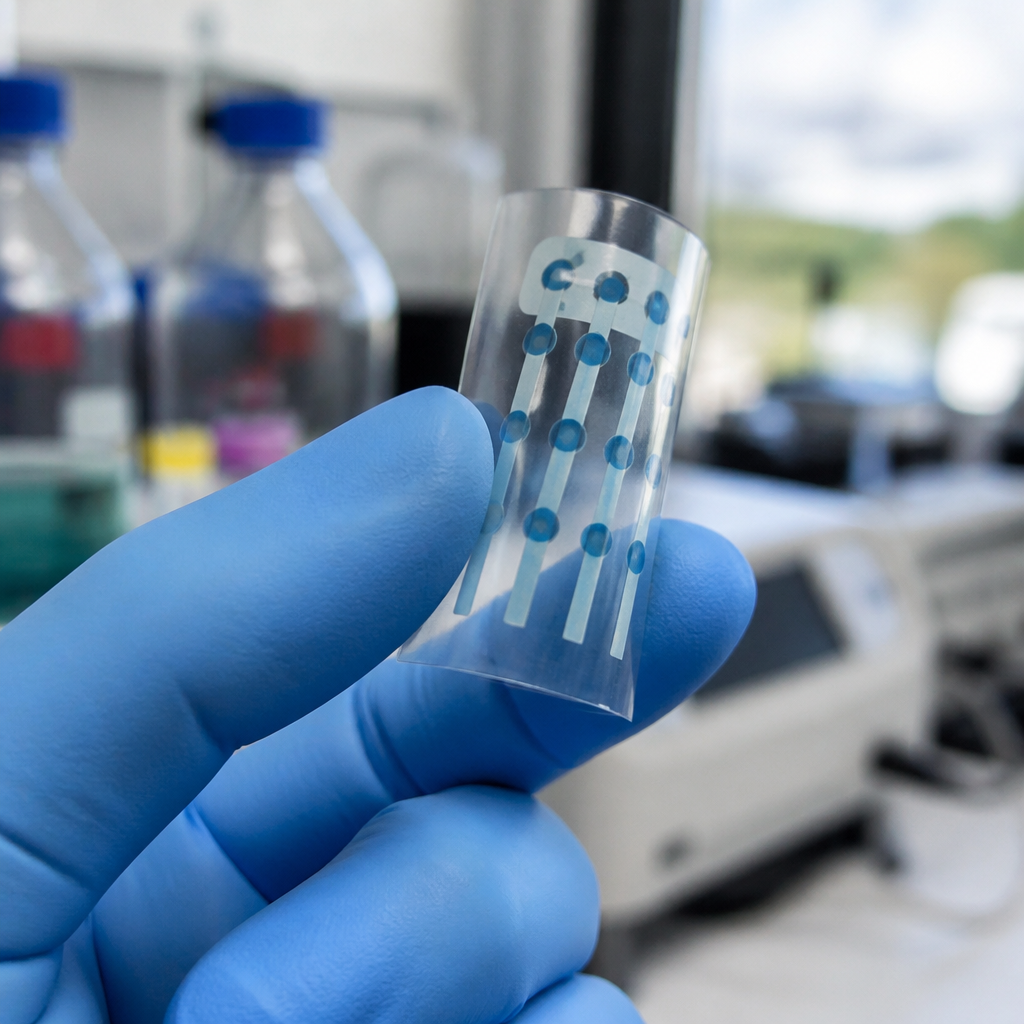
Polymers are central to modern chemical sensing because their structures can be engineered to recognize, absorb, transport, and signal the presence of target molecules with remarkable precision. In materials science, a polymer is a large molecule built from repeating units, while chemical sensing is the detection and measurement of chemical species such as gases, ions, solvents, biomolecules, or contaminants through a measurable response. When these ideas combine, polymers become active sensing materials rather than passive packaging or structural components. I have worked with polymer-coated electrodes, hydrogel biosensors, and conductive films in laboratory settings, and the same principle appears again and again: the chemistry of the polymer determines what enters the material, how strongly it binds, and how that interaction is converted into optical, electrical, or mechanical output.
This topic matters because chemical sensing underpins air quality monitoring, medical diagnostics, food safety, industrial process control, environmental remediation, and wearable health technology. A gas detector in a factory, a glucose test strip, and a smart wound dressing all rely on materials that interact selectively with chemicals in complex conditions. Polymers are especially valuable because they are tunable at the molecular level, lightweight, low cost, compatible with printing and coating, and often flexible enough for disposable or wearable devices. Their chemical properties, including polarity, hydrophobicity, ionic charge, redox activity, free volume, and crosslink density, directly shape sensor performance. As a hub within materials and properties, this article explains how those chemical properties make polymers useful in sensing, what sensing mechanisms dominate in practice, and which polymer families appear most often across real devices.
Why polymer chemistry matters in sensing
The essential reason polymers work in chemical sensing is that their chemical functionality can be designed to interact with target analytes in predictable ways. Functional groups such as carboxyl, amine, hydroxyl, sulfonate, thiol, and fluorinated moieties alter adsorption, swelling, conductivity, and molecular recognition. For example, a hydrophilic hydrogel containing acrylic acid will absorb water and respond strongly to pH or ionic strength because protonation changes the charge distribution inside the network. By contrast, a fluorinated polymer may selectively concentrate nonpolar volatile organic compounds because of its low surface energy and affinity profile. In practical sensor development, selecting the right polymer is rarely about one property alone. We usually balance selectivity, response time, reversibility, operating temperature, and long-term stability.
Several chemical properties are particularly important. Polarity governs which analytes partition into the polymer phase. Free volume influences diffusion rate and therefore response speed. Crosslink density controls swelling and mechanical integrity. Ionic charge affects electrostatic capture of ions or biomolecules. Redox-active backbones allow direct electrical transduction. Chemical stability determines whether the sensor survives oxidants, solvents, humidity, or repeated regeneration cycles. These are not abstract textbook concerns. In one conductive polymer gas sensor project, a film with excellent initial sensitivity failed after repeated exposure to ammonia because irreversible doping changes drifted the baseline. A less sensitive but chemically more stable formulation delivered better field performance. That tradeoff is common in chemical sensing and explains why polymer chemistry, not only device electronics, decides whether a sensor becomes commercially useful.
Core sensing mechanisms enabled by polymers
Polymers support nearly every major sensing mechanism used in analytical devices. In chemiresistive sensors, analyte uptake changes electrical resistance. Conductive polymers such as polyaniline, polypyrrole, and poly(3,4-ethylenedioxythiophene), commonly called PEDOT, are classic examples because protonation, doping level, or charge transport shifts when they encounter gases like ammonia, nitrogen dioxide, or volatile amines. In capacitive sensors, dielectric changes caused by sorption alter capacitance; hygroscopic polymers are widely used for humidity sensing. In optical sensors, the polymer either contains a dye, changes refractive index, or shifts fluorescence upon binding. Hydrogel matrices loaded with pH indicators, for instance, provide simple colorimetric readouts. In gravimetric devices such as quartz crystal microbalances, a polymer coating captures analytes and increases mass, producing a frequency shift that can be quantified.
Electrochemical sensors rely heavily on polymers as ion-selective membranes, immobilization matrices, or antifouling layers. Polyvinyl chloride membranes plasticized and doped with ionophores remain standard in ion-selective electrodes for potassium, calcium, and nitrate. Molecularly imprinted polymers create recognition sites complementary to a target molecule, giving synthetic receptors for pesticides, drugs, or endocrine disruptors. Stimuli-responsive polymers can also act as actuators, swelling or shrinking when exposed to pH, glucose, or carbon dioxide, which can then be measured mechanically or optically. The common thread is transduction: polymers do not just contact the analyte; they convert chemical interaction into a measurable signal. That capability makes them indispensable across low-cost strips, lab-on-chip systems, and advanced wearable platforms.
Key polymer families used in chemical sensing
Different polymer families dominate different sensing tasks because their chemistries solve different problems. Conductive polymers are chosen when direct electronic response is needed. Polyaniline is useful for acid-base-sensitive gas detection and can operate near room temperature, unlike many metal oxide sensors that require heating. PEDOT:PSS is widely used in printed electronics and biosensing because it combines conductivity with water processability and biocompatibility. Hydrogels, including polyacrylamide, polyethylene glycol, and poly(N-isopropylacrylamide), excel when water compatibility and volume change are important. They are common in biosensors, wound monitoring patches, and microfluidic devices because they can host enzymes, antibodies, or aptamers without severe denaturation.
Membrane-forming polymers such as polyvinyl chloride, polyurethane, and cellulose derivatives are often selected for ion-selective and optical sensors. Fluoropolymers including PTFE and related copolymers provide chemical resistance and low nonspecific adsorption, useful in aggressive chemical environments. Molecularly imprinted polymers, often based on methacrylates or styrenic monomers, are synthesized in the presence of a template to create binding cavities after template removal. Biopolymers such as chitosan, alginate, cellulose, and silk fibroin are increasingly important because they offer biocompatibility, biodegradability, and abundant functional groups for immobilization chemistry. In wearable sweat sensors, I have seen chitosan and polyurethane blended to balance adhesion, breathability, and analyte transport. No single family is best overall; the right choice depends on the analyte, sample matrix, and signal method.
| Polymer type | Main chemical property | Common sensing use | Representative example |
|---|---|---|---|
| Conductive polymers | Redox activity and charge transport | Chemiresistive gas and biosensors | Polyaniline for ammonia detection |
| Hydrogels | Water uptake and swelling response | pH, glucose, and wound sensing | Polyacrylamide hydrogel patches |
| PVC-based membranes | Ion partitioning with ionophores | Ion-selective electrodes | Potassium-selective membrane sensors |
| Molecularly imprinted polymers | Shape-selective binding cavities | Small-molecule recognition | Bisphenol A sensor coatings |
| Biopolymers | Biocompatibility and reactive groups | Enzyme and wearable sensors | Chitosan films for biosensing |
Polymer chemical properties that control performance
Selectivity in polymer sensors begins with molecular interactions. Hydrogen bonding can improve capture of alcohols, amines, and carboxylic acids. Acid-base interactions are central in polyaniline and other proton-sensitive systems. Ionic exchange drives uptake of charged species in polyelectrolytes. Host-guest chemistry, including cyclodextrin-functionalized polymers, enables selective inclusion of aromatic molecules and odorants. Hydrophobic interactions matter in vapor sensing, where partition coefficients between air and polymer often determine signal strength before any electronic effect occurs. The Hildebrand and Hansen solubility parameter frameworks are useful for estimating compatibility between analytes and polymer coatings, and they frequently predict why one coating enriches ketones while another responds more strongly to aromatics.
Sensitivity and stability depend on morphology as much as composition. A nanofibrous polymer mat produced by electrospinning exposes more surface area and shortens diffusion paths, often yielding faster response than a dense cast film. Crosslinking can suppress dissolution and drift but may also reduce swelling and lower sensitivity. Plasticizers improve ion mobility in membrane sensors yet can leach over time, changing calibration. Humidity is a persistent challenge because many polymers absorb water, and water can either aid sensing or mask the target response. Good sensor design therefore includes baseline compensation, barrier layers, or reference channels. Reversibility is equally important. Some analytes only physisorb and desorb quickly, while others react irreversibly or cause polymer aging. A sensor that is highly sensitive but cannot recover is often better classified as a dosimeter than a reusable monitor.
Applications across healthcare, environment, and industry
In healthcare, polymers enable disposable diagnostics and continuous monitoring. Glucose sensors use polymer layers to immobilize glucose oxidase, regulate diffusion, and block interfering species such as ascorbic acid. Contact lenses and skin patches now incorporate hydrogel matrices that sample tears or sweat for electrolytes, lactate, pH, and inflammatory markers. In wound care, pH-sensitive polymer films can indicate infection risk because chronic wounds often become more alkaline. Environmental monitoring uses polymer sensors for nitrogen oxides, ammonia, pesticides, heavy metals, and volatile organic compounds. A simple example is a portable badge with a color-changing polymer indicator for solvent vapor exposure. More advanced systems combine polymer-coated quartz crystal microbalances in arrays, producing response patterns that classify odor or pollution mixtures like an electronic nose.
Industrial process control relies on polymers where robustness, selectivity, and cost matter more than laboratory-grade complexity. Food packaging can include polymer indicators that respond to amines generated during fish or meat spoilage. Breweries and pharmaceutical plants use humidity and solvent sensors with polymer dielectric layers because they are compact and responsive at room temperature. Water treatment facilities deploy ion-selective electrodes with polymer membranes to track nitrate, ammonium, or chloride. In agriculture, polymer-based soil nutrient sensors support precision fertilization. Real-world success usually comes from integration rather than material choice alone. A strong sensing polymer still needs stable electrodes, low-noise electronics, calibration protocols, and packaging that controls exposure. Yet without the polymer’s chemical recognition function, many of these devices would lose the combination of portability, affordability, and application-specific selectivity that makes them practical.
Design challenges and where the field is going
The biggest challenge in polymer chemical sensing is achieving high selectivity in complex, changing environments. Real samples contain interferents, fluctuating humidity, temperature swings, fouling agents, and mechanical stress. Drift remains a major issue, especially in conductive polymer sensors where oxidation state, morphology, or residual solvent changes over time. Standard validation therefore matters. Developers should test repeatability, response and recovery time, hysteresis, limit of detection, and storage stability under protocols aligned with the target use case. For biosensors, ISO 10993 biocompatibility considerations may apply in skin-contact devices, while electrochemical platforms often rely on calibration and interference studies consistent with established analytical chemistry practice. The field is moving toward composite materials that combine polymers with graphene, carbon nanotubes, metal-organic frameworks, or metal nanoparticles to improve signal strength and selectivity.
Another clear direction is data-enhanced sensing. Because polymer arrays often produce partially selective rather than perfectly selective responses, pattern recognition methods such as principal component analysis and supervised machine learning can extract useful identification from overlapping signals. Printed electronics are also accelerating adoption by enabling low-cost polymer sensors on flexible substrates through inkjet, screen, and aerosol jet printing. Sustainability is becoming more important as well. Researchers are replacing solvent-intensive fabrication routes, developing biodegradable substrates, and using biobased polymers for disposable devices. The practical lesson is straightforward: polymers are not merely convenient sensor coatings; they are chemically programmable materials platforms. If you are building or selecting a chemical sensor, start with the polymer’s chemical properties, map them to the analyte and environment, and then evaluate transduction and stability. That approach consistently leads to better sensing performance and smarter materials decisions.
Polymers are used in chemical sensing because they combine tunable chemistry with manufacturable form, allowing sensors to detect gases, ions, biomolecules, and contaminants through electrical, optical, gravimetric, and mechanical signals. The most important insight is that chemical properties drive function. Polarity controls analyte uptake, charge governs ionic interactions, redox behavior enables electronic response, and network structure sets diffusion, swelling, and stability. Conductive polymers, hydrogels, membrane polymers, imprinted polymers, and biopolymers each occupy distinct roles because they solve different sensing problems. Across healthcare, environmental monitoring, food safety, and industrial control, the best devices match polymer chemistry to the target analyte, sample matrix, and operating conditions rather than chasing sensitivity alone.
As the hub for chemical properties within materials and properties, this page should anchor deeper exploration into conductivity, permeability, sorption, biocompatibility, degradation, and surface functionalization. Those subtopics explain why one polymer excels in a sweat patch while another belongs in an ion-selective electrode or vapor monitor. The broad takeaway is practical: better chemical sensors start with better material selection. When you understand how polymer chemistry shapes selectivity, signal generation, and durability, you can evaluate sensor claims more critically and design more reliable systems. Use this article as your foundation, then continue into the related subtopic pages to compare polymer classes, sensing mechanisms, and property-specific design strategies in greater detail.
Frequently Asked Questions
1. Why are polymers so important in chemical sensing?
Polymers are important in chemical sensing because they offer an unusual combination of tunability, functionality, and processability that few other material classes can match. At the most basic level, a polymer is made of repeating molecular units, and by changing those units, chemists can design materials with highly specific chemical and physical behaviors. In sensing applications, that means a polymer can be engineered to selectively interact with a target gas, ion, solvent, biomolecule, or contaminant, and then convert that interaction into a measurable signal such as a change in color, fluorescence, electrical resistance, mass, or swelling. This level of design freedom is one of the main reasons polymers are central to modern sensor technology.
Another major advantage is that polymers can serve multiple roles within the same sensing platform. Some polymers act as the recognition layer that binds or absorbs the analyte of interest. Others function as transport media that allow target molecules to diffuse through the sensor efficiently. Conductive and semiconductive polymers can also serve as signal-transduction materials, meaning they directly translate a chemical interaction into an electrical output. In many advanced systems, a single polymeric material performs several of these jobs at once, which helps make sensors more compact, lightweight, and easier to manufacture.
Polymers are also valuable because they can be processed into many useful forms, including thin films, fibers, membranes, hydrogels, nanoparticles, and coatings. This versatility allows them to be integrated into wearable devices, lab-on-a-chip systems, gas detectors, water-quality monitors, medical diagnostics, and industrial process controls. Their compatibility with low-cost fabrication techniques, such as printing, spin-coating, casting, and electrospinning, further supports large-scale sensor production. In short, polymers matter in chemical sensing because they are not just passive materials; they are highly adaptable molecular platforms that can be tailored to recognize, amplify, and report chemical information with impressive precision.
2. How do polymers actually detect chemicals and turn that detection into a signal?
Polymers detect chemicals through interactions that occur at the molecular level. When a target analyte comes into contact with a polymer sensor, it may bind to specific functional groups, diffuse into the polymer matrix, change the polymer’s charge distribution, alter its conformation, or trigger a chemical reaction. These interactions are often driven by hydrogen bonding, electrostatic attraction, hydrophobic effects, coordination to metal centers, acid-base chemistry, or shape-selective recognition. The polymer is designed so that this interaction is not random, but instead produces a consistent and measurable change that can be linked to the presence or concentration of the target substance.
The measurable response depends on the type of sensor. In optical sensors, the polymer may contain dyes, fluorophores, or conjugated segments that shift in color or fluorescence when the analyte is present. For example, exposure to certain vapors or ions can change the local environment around a chromophore, causing a visible or instrument-detectable optical response. In electrical sensors, conductive or semiconductive polymers may show changes in conductivity, impedance, capacitance, or current because the analyte alters charge transport within the material. This is especially common in gas sensing and biosensing, where adsorption or binding events modify the electronic properties of the polymer layer.
Polymers can also be used in mass-sensitive and mechanical sensing systems. If a polymer coating absorbs a chemical species, its mass may increase, which can be measured using devices such as quartz crystal microbalances. In other cases, the polymer may swell, shrink, or change stiffness upon analyte exposure, producing a mechanical response that can be read by pressure, strain, or resonance-based systems. The core principle is the same across formats: the polymer is designed to interact with a chemical target in a predictable way, and that interaction is converted into a readable output. This makes polymer-based sensing powerful because the chemistry of recognition and the physics of signal generation can be tailored together.
3. What types of polymers are commonly used in chemical sensors?
A wide range of polymers are used in chemical sensors, and the best choice depends on the analyte, sensing environment, and desired detection method. Conductive polymers such as polyaniline, polypyrrole, and polythiophene derivatives are widely used in electrical and electrochemical sensors because their electronic properties respond strongly to chemical changes. These materials are especially useful for detecting gases, volatile organic compounds, pH changes, and biomolecules. Their conductivity can shift when they are oxidized, reduced, protonated, or exposed to species that affect charge movement through the polymer backbone.
Non-conductive functional polymers are also extremely important. These include polymers that carry specific binding groups for ions, small molecules, or biological targets. Hydrogels, for instance, can absorb large amounts of water and respond dramatically to pH, ionic strength, glucose, enzymes, or other biochemical signals. Because they resemble soft biological environments, hydrogels are often used in biosensors and wearable chemical sensing devices. Molecularly imprinted polymers are another major class. These are synthetic polymers formed in the presence of a template molecule, leaving behind recognition cavities that match the size, shape, and chemical functionality of the target. They are often described as artificial receptors and are widely explored for selective sensing of drugs, pollutants, pesticides, and biomarkers.
Membrane polymers and composite polymers are equally significant. Materials such as polyvinyl chloride, polyethylene oxide, polymethyl methacrylate, and fluorinated polymers are frequently used in ion-selective electrodes, vapor sensors, and separation-based sensor architectures. Meanwhile, polymer composites that include nanoparticles, carbon nanotubes, graphene, metal-organic components, or fluorescent probes can deliver improved sensitivity, selectivity, and durability. These hybrid systems combine the adaptable chemistry of polymers with the strong electrical, catalytic, or optical behavior of inorganic or carbon-based materials. In practice, the field does not rely on a single “best” polymer; instead, it uses a broad toolbox of polymer classes chosen and modified to fit the sensing challenge.
4. What are the main advantages and challenges of using polymers in chemical sensing?
Polymers offer several major advantages in chemical sensing. One of the most important is selectivity through chemical design. By incorporating particular functional groups, receptors, or imprinted sites, researchers can create sensing materials that preferentially interact with specific targets even in complex mixtures. Polymers are also highly versatile in form and function, making them suitable for rigid sensors, flexible electronics, implantable systems, disposable test strips, and miniaturized analytical devices. Their low density, mechanical flexibility, and compatibility with scalable fabrication methods make them especially attractive for portable and wearable sensing technologies.
Sensitivity is another key benefit. Many polymers can amplify small chemical interactions into larger optical, electrical, or mechanical responses, allowing detection of trace-level analytes. In addition, polymers can be combined with nanomaterials, enzymes, antibodies, aptamers, and catalysts to further improve performance. This adaptability supports the development of sensors for environmental monitoring, food safety, healthcare diagnostics, industrial emissions control, and homeland security. Cost is also a practical advantage. Compared with some traditional sensing materials, polymers can often be synthesized and processed more economically, which matters for mass deployment and single-use applications.
That said, polymer-based sensing does come with challenges. Selectivity can be difficult to maintain when chemically similar species are present, especially in real-world samples that contain humidity, interferents, and fluctuating temperatures. Long-term stability is another issue. Some polymers may age, foul, drift, leach additives, or lose sensitivity over time, particularly under harsh chemical or thermal conditions. Response and recovery times can vary depending on how quickly analytes diffuse through the material. Reproducibility in large-scale manufacturing can also be demanding when sensor performance depends on subtle differences in morphology, thickness, or molecular organization. As a result, successful polymer sensor development requires balancing sensitivity, specificity, durability, and manufacturability. The field continues to advance by improving polymer chemistry, device engineering, and data analysis to overcome these limitations.
5. Where are polymer-based chemical sensors used in the real world?
Polymer-based chemical sensors are used across an impressive range of real-world applications because they can be tailored to detect so many different kinds of substances. In environmental monitoring, they are used to detect pollutants in air and water, including toxic gases, heavy metals, pesticides, and organic contaminants. Polymer coatings and membranes can selectively absorb or interact with these species, enabling portable devices that monitor air quality, industrial emissions, groundwater contamination, and wastewater treatment processes. Their lightweight and low-power characteristics make them especially useful in distributed sensing networks and field-deployable systems.
In healthcare and biomedical settings, polymers play a major role in biosensors and diagnostic platforms. They are found in glucose sensors, wearable sweat-analysis devices, point-of-care diagnostic strips, drug-monitoring systems, and implantable or skin-mounted sensing technologies. Hydrogels and biocompatible polymer films are particularly valuable because they can interface gently with biological fluids and tissues. Polymers can also immobilize enzymes, antibodies, nucleic acids, or other recognition elements, helping sensors detect biomarkers related to disease, metabolism, infection, or therapeutic response. This has made polymer-based sensing highly relevant to personalized medicine and continuous health monitoring.
Industrial and consumer applications are equally important. In manufacturing and chemical processing, polymer sensors