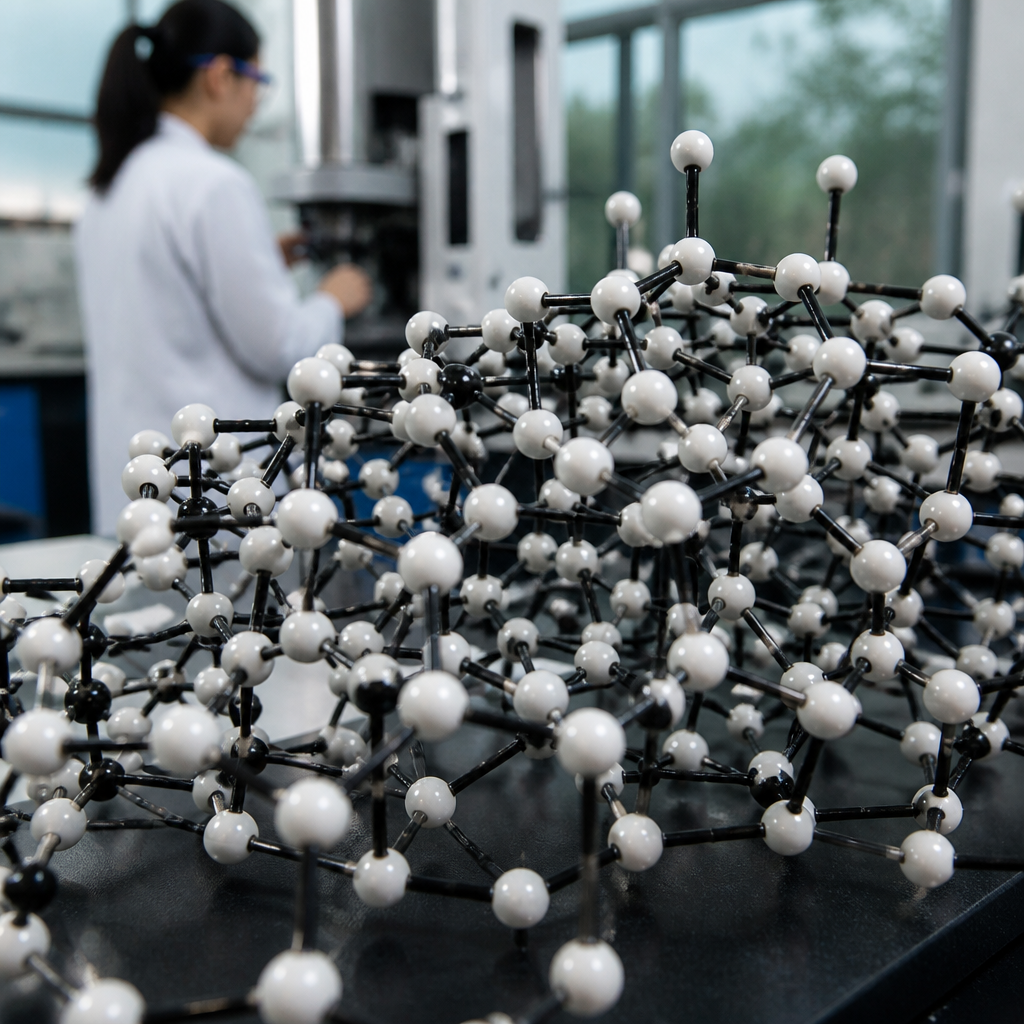
Polymer nanocomposites have moved from a specialist research topic to a practical materials platform because they let engineers alter chemical properties with a precision that conventional fillers rarely achieve. In simple terms, a polymer nanocomposite is a polymer matrix combined with nanoscale reinforcements such as layered silicates, metal oxides, carbon nanotubes, graphene, nanocellulose, or polyhedral oligomeric silsesquioxane. The defining feature is not just small particle size; it is the enormous interfacial area created between matrix and nanofiller, which changes how molecules diffuse, react, degrade, and bond. When I evaluate these systems in development work, the first questions are always chemical: How stable is the matrix in oxygen, moisture, solvents, acids, bases, and heat? Does the nanofiller catalyze degradation, suppress it, or introduce new reaction pathways?
That focus on chemical properties matters because modern applications expose polymers to increasingly aggressive service conditions. Food packaging demands low oxygen transmission and controlled moisture uptake. Electric vehicle battery modules require flame resistance, electrolyte compatibility, and long-term oxidation stability. Biomedical devices need sterilization resistance and carefully managed surface chemistry. Aerospace and electronics sectors demand low outgassing, resistance to ultraviolet attack, and retention of dielectric performance after thermal aging. Advances in polymer nanocomposites are therefore not only about higher strength or lighter weight; they are about controlling chemistry at interfaces so the material survives longer, processes better, and performs more predictably.
As a hub article within materials and properties, this page covers the chemical properties of polymer nanocomposites comprehensively and connects the core ideas that underpin barrier performance, thermal oxidation resistance, flame retardancy, solvent resistance, surface reactivity, electrical and ionic behavior, and long-term durability. The field has matured because researchers now understand that dispersion quality, interphase formation, filler functionalization, and polymer architecture are inseparable. A nanoclay in polyamide behaves differently than the same nanoclay in polypropylene because polarity, crystallization behavior, and compatibilizer chemistry govern whether the interface becomes protective or defective. The same principle applies across graphene, silica, metal oxide, and bio-based nanofillers. To use polymer nanocomposites well, chemical structure must drive material selection.
Interfacial Chemistry: the Foundation of Nanocomposite Performance
The most important advance in polymer nanocomposites has been the shift from treating fillers as inert additives to engineering the interphase as a functional chemical region. In many commercial systems, this is accomplished through surface modification. Organically modified montmorillonite uses quaternary ammonium surfactants to expand clay galleries and improve compatibility with nonpolar or moderately polar matrices. Silica nanoparticles are often treated with silane coupling agents such as aminopropyltriethoxysilane or glycidoxypropyltrimethoxysilane to create covalent or hydrogen-bonding interactions with epoxy, polyester, or polyurethane systems. Carbon nanotubes and graphene oxide can be oxidized, amidated, or grafted with polymers to improve wetting and dispersion.
These treatments do more than improve mechanical load transfer. They reshape chemical properties by changing local free volume, chain mobility, acid-base behavior, and reaction kinetics. In epoxy nanocomposites, well-chosen silica or layered silicate surfaces can increase crosslink density in the interphase, reducing solvent swelling and slowing oxygen diffusion. In polypropylene, maleic anhydride grafted compatibilizers can anchor polar nanofillers, suppress agglomeration, and improve resistance to environmental stress cracking. In polyamide-clay systems, the amide groups can interact strongly with silicate surfaces, producing exfoliated morphologies that dramatically improve gas barrier behavior.
Poor interfacial chemistry causes the opposite effect. Residual catalyst species, acidic surface groups, or poorly bound modifiers may accelerate hydrolysis or thermal degradation. I have seen nanofilled formulations that looked excellent in tensile testing but failed aging studies because the surfactant on the filler decomposed during melt processing and initiated oxidation. This is why chemical characterization matters as much as microscopy. Fourier transform infrared spectroscopy, X-ray photoelectron spectroscopy, thermogravimetric analysis, differential scanning calorimetry, and dynamic mechanical analysis together reveal whether the interface is stable, reactive, or vulnerable under service conditions.
Barrier Properties and Controlled Molecular Transport
One of the clearest chemical benefits of polymer nanocomposites is improved barrier performance. Gas and vapor barrier behavior depends on solubility and diffusivity. Nanofillers reduce permeation primarily by creating a tortuous pathway that forces oxygen, carbon dioxide, water vapor, or organic molecules to travel longer distances through the material. Platelet-shaped fillers are especially effective because high aspect ratio structures create substantial path elongation at relatively low loading. This is why exfoliated clay and graphene derivatives have attracted sustained attention in packaging, fuel systems, and protective coatings.
In practice, barrier improvement is never explained by geometry alone. The interface changes polymer packing and segmental mobility. A stiff interphase may reduce local diffusion, while defects or voids around aggregates can create leak paths that erase theoretical gains. For example, polyamide 6 with well-dispersed montmorillonite often shows major reductions in oxygen permeability because the clay aligns during film processing and interacts favorably with the matrix. By contrast, polyethylene filled with inadequately compatibilized clay may show only modest improvement or even deterioration if aggregates create stress concentrators and microvoids.
High-barrier food packaging illustrates the value of tuning chemistry and morphology together. Ethylene vinyl alcohol already has excellent oxygen barrier properties but loses performance at high humidity. Hybrid nanocomposite strategies using clay, silica, or graphene derivatives can reduce moisture sensitivity by limiting swelling and modifying water transport pathways. In multilayer structures, nanocomposite tie layers and coatings also improve adhesion and chemical resistance, extending shelf life for oxygen-sensitive foods, pharmaceuticals, and industrial chemicals.
| Chemical property goal | Common nanofillers | Typical mechanism | Representative application |
|---|---|---|---|
| Lower gas permeability | Montmorillonite, graphene oxide, nanocellulose | Tortuous diffusion path and reduced chain mobility | Food and pharmaceutical packaging |
| Better thermal oxidation resistance | Nanosilica, layered silicates, POSS | Barrier to oxygen and stabilization of interphase | Automotive under-hood parts |
| Higher flame resistance | Nanoclay, layered double hydroxides, metal oxides | Char promotion and heat shielding | Battery housings and cable insulation |
| Improved solvent resistance | Silica, graphene, organoclay | Higher crosslink density and reduced swelling | Coatings, tanks, chemical liners |
| Tailored electrical or ionic behavior | Carbon nanotubes, graphene, TiO2, Al2O3 | Percolation networks or ion transport control | Sensors, antistatic parts, membranes |
Thermal Stability, Oxidation, and Flame Retardant Chemistry
Thermal degradation in polymers usually proceeds through chain scission, depolymerization, dehydrohalogenation, oxidation, or hydrolysis, depending on the matrix. Nanocomposites can slow these pathways, but only when filler chemistry is aligned with degradation mechanisms. Layered silicates and silica often improve thermal stability by restricting mass transport of volatile decomposition products and oxygen. In many thermogravimetric studies, this appears as a shift of onset degradation temperature to higher values and increased char yield. Polyhedral oligomeric silsesquioxane can also enhance thermal behavior by forming silica-like protective structures during decomposition.
Flame retardant performance is a related but distinct chemical property. Nanoclays, layered double hydroxides, boehmite, magnesium hydroxide, and nano-sized metal oxides rarely act as complete flame retardants on their own at low loading, but they are powerful synergists. They strengthen char, reduce dripping, and slow heat release. In intumescent polypropylene, for instance, nanoclay can improve the integrity of the swollen char layer, while metal phosphinates or ammonium polyphosphate supply the main flame-retardant chemistry. In epoxy resins used for electronics, nanosilica and phosphorus-containing nanostructures can help reduce flammability while preserving processability and dielectric stability better than high mineral loadings.
There are limits. Certain metal oxides can catalyze decomposition if surface acidity is not controlled. Some organoclay modifiers degrade at processing temperatures used for engineering thermoplastics, generating volatile compounds and discoloration. Flame retardancy must therefore be validated with limiting oxygen index, UL 94 behavior, cone calorimetry, smoke evolution, and post-aging testing rather than assumed from a single thermal result. Real progress in polymer nanocomposites has come from replacing one-variable claims with integrated chemical testing that reflects the end-use environment.
Solvent Resistance, Corrosion Protection, and Chemical Durability
Resistance to fuels, oils, cleaning agents, acids, alkalis, and salt environments is a major reason companies adopt polymer nanocomposites in coatings, pipes, tanks, and transportation parts. The mechanism is usually a combination of lower permeation, reduced swelling, and a more stable crosslinked or semicrystalline structure near the filler surface. In epoxy barrier coatings, exfoliated nanoclay and surface-treated nanosilica can significantly lengthen the diffusion path for water and chloride ions, delaying corrosion at the metal substrate. This matters in marine coatings, pipelines, and bridges where a small delay in water ingress translates into years of service life.
Fuel system components provide another practical example. Polyamide nanocomposites have been used to reduce hydrocarbon permeation in automotive applications, helping manufacturers meet evaporative emissions requirements. Fluoropolymer and polyethylene nanocomposite liners are also studied for aggressive chemical storage because nanoplatelets and functionalized carbon nanomaterials can lower permeation without the brittleness associated with heavy mineral filling. In coil coatings and can coatings, nanoparticle reinforcement can improve scratch resistance and solvent resistance simultaneously, provided the formulation maintains cure quality.
Chemical durability must still be tested against the exact media involved. A nanocomposite that resists aliphatic hydrocarbons may perform poorly in polar solvents. Water can hydrolyze ester linkages, plasticize polyamides, or destabilize interfacial hydrogen bonding. Acidic or basic environments may attack coupling agents before the bulk polymer fails. For that reason, gravimetric uptake testing, electrochemical impedance spectroscopy, salt spray exposure, immersion studies, and microscopy after aging remain standard decision tools in product development.
Surface Reactivity, Functionalization, and Active Interfaces
Another major advance is the use of nanocomposites as chemically active surfaces rather than passive structural materials. By controlling surface energy, charge, and functional groups, developers can design adhesion, printability, antimicrobial behavior, catalytic activity, or biomolecular interaction directly into the polymer. Titanium dioxide and zinc oxide nanoparticles are widely studied for photocatalytic and antimicrobial effects, though their use demands caution because photoactivity can also accelerate polymer degradation if the particles are not coated or embedded appropriately.
Graphene oxide, nanocellulose, and silica offer rich surface chemistry for further modification. Carboxyl, hydroxyl, epoxide, and amine functionalities allow grafting of polymers, immobilization of enzymes, or attachment of corrosion inhibitors. In biomedical nanocomposites, surface-functional nanohydroxyapatite in biodegradable polymers can improve cell attachment while also influencing degradation chemistry. In pressure-sensitive adhesives and sealants, nanoscale surface modifiers tune tack and wetting by changing the acid-base balance at the interface. These are not cosmetic adjustments. Surface chemistry determines whether a coating bonds to aluminum, whether an implant integrates with tissue, and whether a sensor responds selectively to humidity or gases.
In my experience, the most successful functional surfaces are built with restraint. High reactivity can produce excellent lab data and poor field reliability. For example, strongly photoactive TiO2 may destroy organic contaminants on contact, but it can also embrittle the surrounding matrix under ultraviolet exposure. The better route is often moderated activity through coatings, dopants, or multilayer architectures that preserve the desired chemical function without sacrificing durability.
Electrical, Ionic, and Emerging Chemical Functions
Chemical properties in polymer nanocomposites now extend well beyond stability and resistance. Conductive and semiconductive nanofillers create materials for electrostatic discharge control, electromagnetic shielding, sensing, and energy storage. Carbon nanotubes and graphene form percolation networks at lower loading than conventional carbon black, which helps preserve toughness and processability. The chemical challenge is maintaining a stable conductive network under thermal cycling, oxidation, and mechanical strain. Functionalization improves dispersion, but excessive grafting can disrupt conjugation and reduce conductivity, so the formulation window is narrow.
For membranes and electrochemical devices, inorganic nanoparticles such as silica, alumina, titania, zirconia, and layered materials influence ion transport, water management, and oxidative stability. In proton exchange membranes, carefully selected nanofillers can retain water and suppress fuel crossover. In lithium battery separators and solid polymer electrolytes, ceramic nanoparticles improve thermal shutdown resistance and interfacial compatibility. These applications show how advances in polymer nanocomposites increasingly rely on designing chemical pathways, not just bulk structure.
Looking ahead, the most important developments are likely to come from bio-based nanofillers, recyclable matrices, and data-driven formulation. Nanocellulose and chitin bring renewable surface chemistry but require moisture management and compatibilization. Dynamic covalent polymers and vitrimer matrices open the possibility of repairable nanocomposites with retained barrier or flame performance. Machine learning is beginning to link filler surface treatment, aspect ratio, loading, and processing history with permeability, degradation, and dielectric outcomes, accelerating formulation screening. For teams building a materials knowledge base under chemical properties, the lesson is clear: evaluate polymer nanocomposites through the interphase, test them under realistic chemical exposures, and select nanofillers by mechanism rather than trend. That approach consistently leads to safer scaling, longer service life, and better-performing products.
Advances in polymer nanocomposites have fundamentally changed how chemical properties are engineered in modern materials. The central insight is that nanoscale fillers work because they create interphases that alter diffusion, reaction rates, degradation pathways, and surface behavior across the polymer, not merely at isolated particles. When dispersion is controlled and surface chemistry is chosen correctly, nanocomposites can reduce gas permeation, improve solvent resistance, strengthen char formation, stabilize polymers against oxidation, and deliver targeted electrical or bioactive functions. When those same variables are neglected, the material may age faster, absorb more moisture, or become harder to process consistently.
For a hub page on chemical properties, the practical framework is straightforward. Start with the service environment: oxygen, water, heat, flame, solvents, ions, ultraviolet light, or sterilization. Then match the matrix, nanofiller, and compatibilizer to the governing chemical mechanism. Confirm assumptions with analytical methods and aging data, not only initial performance tests. Packaging, coatings, transportation, electronics, energy storage, and biomedical products all show the same pattern: successful polymer nanocomposites are designed around chemistry first and morphology second.
If you are planning material selection, formulation work, or deeper topic pages under materials and properties, use this article as the starting map. Build outward into barrier behavior, degradation science, flame retardant systems, surface functionalization, and electrochemical stability with application-specific testing at each step.
Frequently Asked Questions
What are polymer nanocomposites, and how are they different from traditional polymer composites?
Polymer nanocomposites are materials made by combining a polymer matrix with nanoscale reinforcements, typically particles, platelets, tubes, or fibers that have at least one dimension in the nanometer range. Common examples of these reinforcements include layered silicates, metal oxides, carbon nanotubes, graphene, nanocellulose, and polyhedral oligomeric silsesquioxane. What makes these materials so important is that their behavior is not defined only by the fact that the fillers are extremely small. The real distinction lies in the enormous interfacial area created between the polymer and the nanofiller. That interface can strongly influence stiffness, strength, thermal stability, gas barrier performance, electrical conductivity, flame resistance, and even optical or chemical properties.
Traditional polymer composites usually rely on larger fillers such as glass fibers, carbon fibers, talc, or mineral particles. Those materials certainly improve performance, but they often require higher loading levels and may add substantial weight, reduce transparency, or limit processing flexibility. In polymer nanocomposites, much lower filler concentrations can produce meaningful property changes because the nanoscale dispersion creates more efficient stress transfer and more opportunities to alter molecular motion inside the polymer. In practical terms, this means engineers can fine-tune material performance with greater precision than is typically possible with conventional fillers. As a result, polymer nanocomposites have become a powerful platform for designing lightweight, multifunctional materials for packaging, electronics, automotive systems, aerospace components, coatings, and biomedical devices.
Why have advances in polymer nanocomposites become so significant in modern materials engineering?
The recent importance of polymer nanocomposites comes from their ability to solve multiple engineering problems at the same time. Modern industries increasingly want materials that are lighter, stronger, more durable, thermally stable, and sometimes electrically or chemically functional as well. Traditional material choices often force trade-offs. For example, increasing mechanical strength may raise weight, or improving barrier performance may make a polymer harder to process. Polymer nanocomposites help reduce those compromises because nanoscale reinforcements can influence several properties simultaneously, often at relatively low loading levels.
Another major reason for their significance is the level of control they provide over chemical and physical behavior. By changing nanofiller type, size, aspect ratio, surface chemistry, orientation, and dispersion quality, engineers can target very specific outcomes. A layered silicate may improve gas barrier performance, graphene or carbon nanotubes may create conductive pathways, metal oxides may enhance thermal stability or UV resistance, and nanocellulose may provide renewable reinforcement with excellent stiffness-to-weight advantages. This level of tunability makes polymer nanocomposites attractive not just for research, but for practical manufacturing.
Advances in processing and surface modification have also accelerated adoption. Early nanocomposite development often struggled with agglomeration, inconsistent dispersion, and weak compatibility between the polymer and nanofiller. Today, better compatibilizers, functionalization strategies, melt compounding methods, solvent-assisted routes, in situ polymerization techniques, and characterization tools have made it easier to produce more reliable structures. Because of that progress, polymer nanocomposites are moving beyond the laboratory into scalable, application-driven production. Their significance today is not just scientific novelty; it is their ability to deliver tailored performance in real products.
What properties can polymer nanocomposites improve, and what factors determine the final performance?
Polymer nanocomposites can improve a remarkably broad range of properties, which is one of the key reasons they are so widely studied and increasingly commercialized. On the mechanical side, they may increase tensile strength, elastic modulus, scratch resistance, wear resistance, and impact behavior, depending on the matrix and reinforcement system. Thermally, they can raise heat distortion temperature, improve dimensional stability, enhance thermal conductivity in selected systems, and slow thermal degradation. For barrier-sensitive applications such as food packaging or protective films, nanofillers can reduce permeability to gases, moisture, or solvents by creating a more tortuous path for molecular diffusion. In electrical applications, conductive nanofillers such as carbon nanotubes or graphene can impart antistatic behavior, electromagnetic interference shielding, or full electrical conductivity. Some nanocomposites are also engineered for flame retardancy, UV shielding, antimicrobial activity, or sensing performance.
Final performance depends on much more than simply adding a nanofiller to a polymer. Dispersion quality is one of the most critical variables. If the nanoscale reinforcement clusters into agglomerates, the expected gains may be reduced or even reversed. Interfacial adhesion is equally important because the polymer-filler interface governs load transfer, chain mobility, and many transport properties. Surface treatment or chemical functionalization is often used to improve compatibility between hydrophobic polymers and polar nanofillers, or to enable stronger bonding at the interface.
Other important factors include filler shape, aspect ratio, orientation, concentration, and distribution throughout the matrix. High-aspect-ratio materials such as nanotubes, platelet clays, and graphene often provide stronger effects at lower concentrations, but they can also be harder to disperse uniformly. Processing conditions matter as well. Shear history, temperature, residence time, and mixing sequence can influence whether the filler remains exfoliated, aligned, networked, or damaged. The polymer itself also plays a major role because crystallinity, viscosity, polarity, and molecular architecture affect how the reinforcement interacts with the matrix. In short, polymer nanocomposite performance is the result of a carefully engineered structure, not just an ingredient list.
What are the biggest challenges in developing and manufacturing polymer nanocomposites?
Despite major progress, polymer nanocomposites still present several important development and manufacturing challenges. One of the most persistent is achieving uniform dispersion. Nanoparticles tend to attract one another because of strong surface forces, which can lead to agglomeration. Once agglomerates form, they can act like defects rather than reinforcements, reducing mechanical performance, creating weak points, or interfering with optical and electrical behavior. Preventing that requires well-designed mixing strategies, surface modification, and careful process control.
Interfacial compatibility is another major issue. Many high-value nanofillers have chemistries that do not naturally match the polymer matrix. For instance, a hydrophilic nanofiller may disperse poorly in a nonpolar thermoplastic unless a compatibilizer or functionalization treatment is used. Without good interfacial adhesion, the material may show poor stress transfer, reduced durability, or unstable long-term performance. Engineers therefore spend considerable effort designing coupling agents, grafted polymers, or reactive processing approaches that improve interface quality.
Scalability and cost remain practical concerns as well. A nanocomposite that performs well in a laboratory batch may be difficult to reproduce economically at industrial volumes. Some nanofillers are expensive, and their benefits must justify the added material and processing complexity. Manufacturers also need consistent raw material quality, safe powder handling, predictable rheology during extrusion or molding, and quality assurance methods that can verify dispersion and property targets in production environments.
There are also regulatory, environmental, and health considerations. Because nanomaterials can behave differently from larger particles, companies must evaluate safe handling, exposure risks, end-of-life management, and compliance with evolving standards. In some sectors, long-term reliability is especially important, so aging behavior under heat, humidity, UV exposure, mechanical stress, or chemical contact must be fully understood. These challenges do not diminish the value of polymer nanocomposites, but they do explain why successful commercialization depends on both materials science and process engineering expertise.
What are the most promising applications and future trends in polymer nanocomposites?
The application landscape for polymer nanocomposites is expanding rapidly because these materials can be tailored for specific combinations of lightweight structure and advanced functionality. In packaging, nanocomposites are being used to improve oxygen and moisture barrier performance, extend shelf life, and enhance mechanical durability without greatly increasing thickness or weight. In the automotive and aerospace industries, they support efforts to reduce mass while maintaining strength, thermal resistance, and dimensional stability. In electronics, conductive or thermally managed nanocomposites are being developed for housings, flexible circuits, sensors, electromagnetic shielding, and battery-related components. In coatings, they can improve scratch resistance, corrosion protection, UV stability, and self-cleaning or antimicrobial behavior.
Biomedical and sustainability-driven applications are especially promising. Nanocellulose-reinforced systems, bio-based polymers, and multifunctional nanocomposites are receiving attention for medical devices, tissue engineering scaffolds, smart drug delivery systems, and environmentally conscious packaging solutions. There is also growing interest in nanocomposites for water purification membranes, energy storage devices, soft robotics, and structural health monitoring. These emerging uses reflect a broader shift from viewing nanocomposites as simple reinforcement systems to seeing them as intelligent materials platforms.
Looking ahead, several trends are likely to define the next generation of advances in polymer nanocomposites. One is the move toward smarter interface engineering, where surface chemistry is designed at the molecular level to maximize compatibility and multifunctionality. Another is the integration of machine learning and high-throughput materials discovery to identify optimal polymer-filler combinations more efficiently. Sustainable processing, recyclable matrices, and bio-derived nanofillers will also become more important as environmental expectations rise. Finally, the field is moving toward