Evaluating the life cycle of polymer materials is essential for understanding how plastics and elastomers affect resources, emissions, waste systems, and long-term environmental performance. In materials engineering, a life cycle review tracks a polymer from raw material extraction through production, conversion, use, reuse, and end-of-life management. Environmental impact includes energy demand, greenhouse gas emissions, water consumption, toxicity, litter potential, and effects on land and ecosystems. I have worked on material selection projects where a resin that looked efficient on price performed poorly once transport distances, scrap rates, and disposal constraints were measured. That experience is common in manufacturing: the true footprint of a polymer rarely sits in a single stage.
This matters because polymer materials are everywhere, from packaging films and automotive interiors to medical tubing, insulation, textiles, and electronics housings. Global plastics production exceeds 400 million metric tons annually, according to UNEP and OECD reporting, so even small improvements in design or recovery scale into meaningful environmental gains. Evaluating the life cycle of polymer materials helps engineers avoid narrow decisions, such as choosing a lighter polymer without checking recyclability, or specifying recycled content without verifying contamination risk and processing stability. A proper review asks direct questions: What feedstock is used? How much energy does polymerization require? Can the product be repaired, mechanically recycled, or chemically recycled? What happens if it leaks into the environment? This hub article covers the environmental impact of polymer materials comprehensively and provides the foundation for deeper study across the broader Materials and Properties topic.
What life cycle assessment means for polymer materials
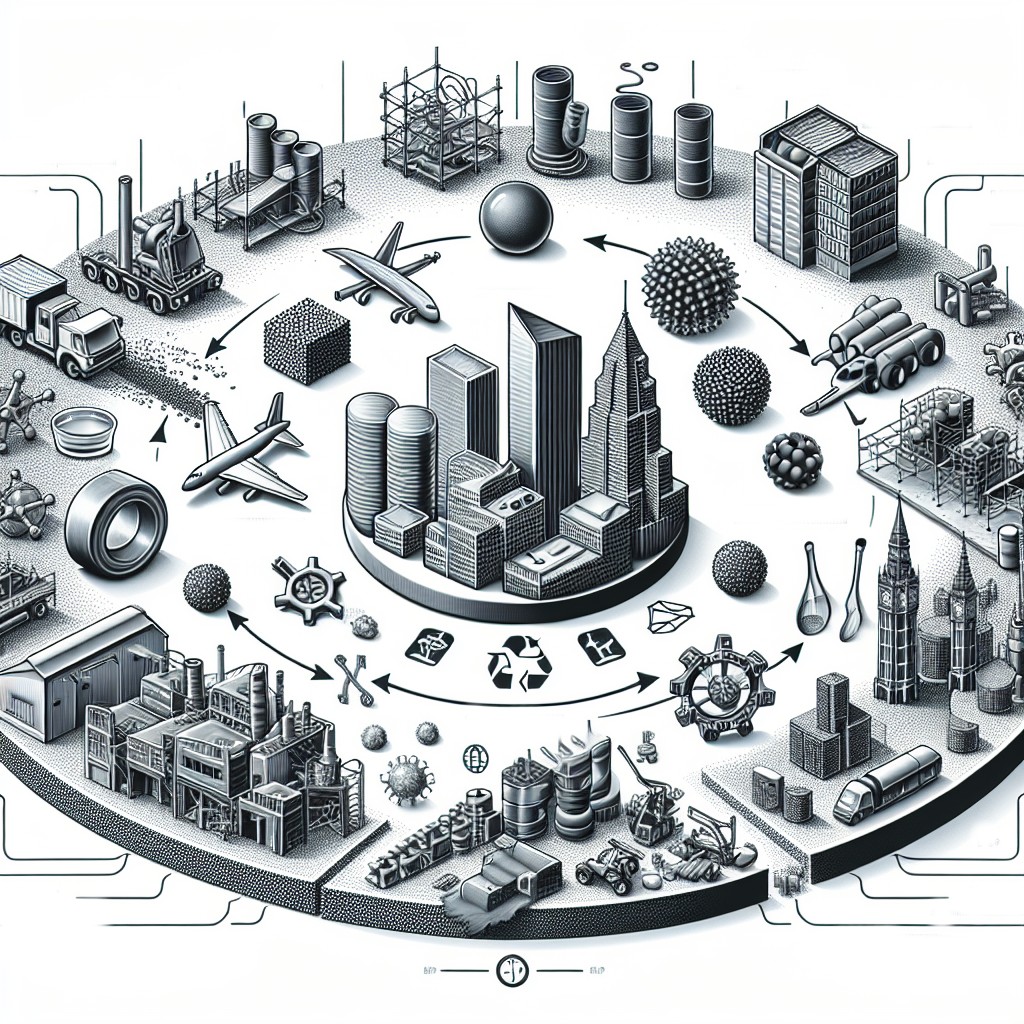
Life cycle assessment, often abbreviated LCA, is the standard method used to quantify environmental impacts across a product system. The framework most commonly applied in industry follows ISO 14040 and ISO 14044. For polymer materials, an LCA typically defines a functional unit such as one kilogram of resin, one thousand bottles, or one square meter of flooring over a service life. It then sets system boundaries. Cradle-to-gate covers extraction through resin manufacture. Cradle-to-grave includes use and disposal. Cradle-to-cradle adds closed-loop recovery and remanufacture. Those boundary decisions change conclusions, which is why good studies state them clearly.
In practice, polymer LCAs depend on primary manufacturing data, supplier disclosures, and databases such as ecoinvent, GaBi, and Sphera. Impact categories usually include global warming potential, cumulative energy demand, acidification, eutrophication, photochemical ozone formation, human toxicity, freshwater ecotoxicity, and water scarcity. Carbon footprint gets the most attention, but it should not be the only metric. I have seen nylon components outperform metal parts on energy use during transport because they reduce vehicle mass, yet create tradeoffs in eutrophication due to upstream chemistry. A robust life cycle assessment of polymer materials makes those tradeoffs visible instead of hiding them behind a single headline number.
Raw materials and feedstocks: where polymer impact begins
The environmental impact of polymer materials starts with feedstocks. Most conventional polymers are derived from fossil hydrocarbons, primarily oil and natural gas. Ethylene becomes polyethylene, propylene becomes polypropylene, styrene supports polystyrene, and aromatic intermediates contribute to PET, polycarbonate, and many engineering plastics. Feedstock extraction carries impacts from drilling, methane leakage, flaring, land disturbance, and transport. Natural gas liquids used in steam cracking can have lower direct processing emissions than heavier naphtha routes, but that advantage can be reduced or erased if upstream methane losses are high. This is why feedstock assumptions must be explicit in any serious evaluation.
Bio-based polymers complicate the picture rather than automatically improving it. Polylactic acid, bio-based polyethylene, polyhydroxyalkanoates, and starch blends may reduce fossil resource use, yet they can shift burdens to agriculture through fertilizer demand, irrigation, land occupation, and pesticide exposure. A sugarcane-derived polyethylene can show lower fossil carbon intensity than fossil PE while still raising concerns about land-use change if agricultural expansion displaces food production or sensitive ecosystems. Recycled feedstocks, whether mechanical regrind or depolymerized monomers, often deliver strong reductions in energy and emissions, but quality control matters. If recycled resin causes higher reject rates or shorter service life, part of the environmental benefit is lost.
Manufacturing, processing, and conversion impacts
After feedstock production, polymerization and conversion drive a large share of environmental impact. Steam cracking, purification, polymerization reactors, drying, compounding, pelletizing, and transportation all consume energy. Then processors add another layer through injection molding, extrusion, blow molding, thermoforming, rotational molding, film casting, fiber spinning, or additive manufacturing. In plants I have assessed, drying hygroscopic resins such as PET, nylon, and polycarbonate often contributes more energy use than purchasing teams expect. Cycle time, melt temperature, scrap rate, and tool efficiency can change the footprint of the same polymer significantly.
Additives also matter. Plasticizers, stabilizers, flame retardants, pigments, fillers, and reinforcement alter both performance and environmental profile. Glass-filled polypropylene may reduce material use by increasing stiffness, yet the filler raises abrasion in processing equipment and can complicate recycling streams. Brominated flame retardants have historically improved fire safety in electronics but triggered scrutiny because of persistence and toxicological concerns. PFAS-based processing aids have also received intense regulatory attention. Environmental impact cannot be separated from formulation. Two products marketed under the same base polymer family can perform very differently across emissions, worker exposure, recyclability, and long-term waste handling depending on additives and compounding choices.
Use phase, durability, and the value of lightweight design
The use phase is where polymer materials frequently justify their selection. Their low density, corrosion resistance, electrical insulation, chemical resistance, flexibility, and design freedom can reduce environmental burdens in service. In automotive engineering, substituting polymer composites or polypropylene interior parts for heavier materials can lower fuel use or extend electric vehicle range. In building applications, polymer foam insulation can reduce operational heating and cooling demand over decades, often outweighing the emissions from manufacture. Medical polymers enable sterile single-use devices that reduce infection risk, though that benefit must be balanced against waste generation.
Durability is the key variable. A long-lasting polymer product usually performs better environmentally than a short-lived one, even if the durable option uses more material upfront. High-density polyethylene piping is a good example. Properly installed HDPE pipe can resist corrosion for many decades, reducing replacement frequency and leakage losses compared with some legacy materials. On the other hand, very low-cost plastic items with short service lives create high throughput waste and weak recovery economics. The best environmental outcome is often not “use less polymer” in absolute terms. It is “use the right polymer for the longest useful life with the simplest recovery path.” That principle guides responsible material selection.
End-of-life pathways: reuse, recycling, energy recovery, and disposal
End-of-life management often determines whether a polymer system remains linear or becomes circular. The preferred hierarchy is generally prevention, reuse, mechanical recycling, chemical recycling where justified, energy recovery in constrained cases, and landfill as the least desirable outcome for recoverable material. Mechanical recycling is usually the lowest-energy route when a clean, sorted stream exists. PET beverage bottles and HDPE containers are established examples because collection, sorting, washing, and remelting can be done at scale. Even then, polymer chains degrade through heat history, contamination, and mixed colors, so closed-loop performance is not guaranteed without careful control.
Chemical recycling includes depolymerization, solvolysis, pyrolysis, and gasification. It can help with mixed or contaminated streams that mechanical systems cannot handle, especially for PET, polyamides, polyurethane precursors, or polyolefin-rich waste destined for feedstock recovery. However, claims around chemical recycling require scrutiny because yields, energy intensity, and product purity vary widely. Incineration with energy recovery reduces landfill volume and can offset some fossil fuel use, but it still emits carbon dioxide and may discourage higher-value recovery if overused. Landfill remains common in many regions, creating long-term resource loss and leakage risk. Good life cycle evaluation compares realistic local waste infrastructure, not idealized assumptions.
| End-of-life route | Best fit polymers or products | Main environmental advantage | Key limitation |
|---|---|---|---|
| Reuse | Durable crates, pallets, refillable packaging | Avoids new material production across multiple cycles | Requires reverse logistics and cleaning |
| Mechanical recycling | PET bottles, HDPE jugs, some PP containers | Usually lowest energy recovery option | Sensitive to contamination and sorting quality |
| Chemical recycling | Mixed plastics, difficult multilayer waste, selected PET or nylon streams | Can recover feedstock from complex waste | Higher energy use and variable economics |
| Energy recovery | Nonrecyclable residual waste | Reduces landfill volume and captures some energy | Creates emissions and loses material value |
| Landfill | Contaminated or unmanaged waste | Low immediate processing requirement | Locks away resources and increases leakage risk |
Pollution, microplastics, and leakage into nature
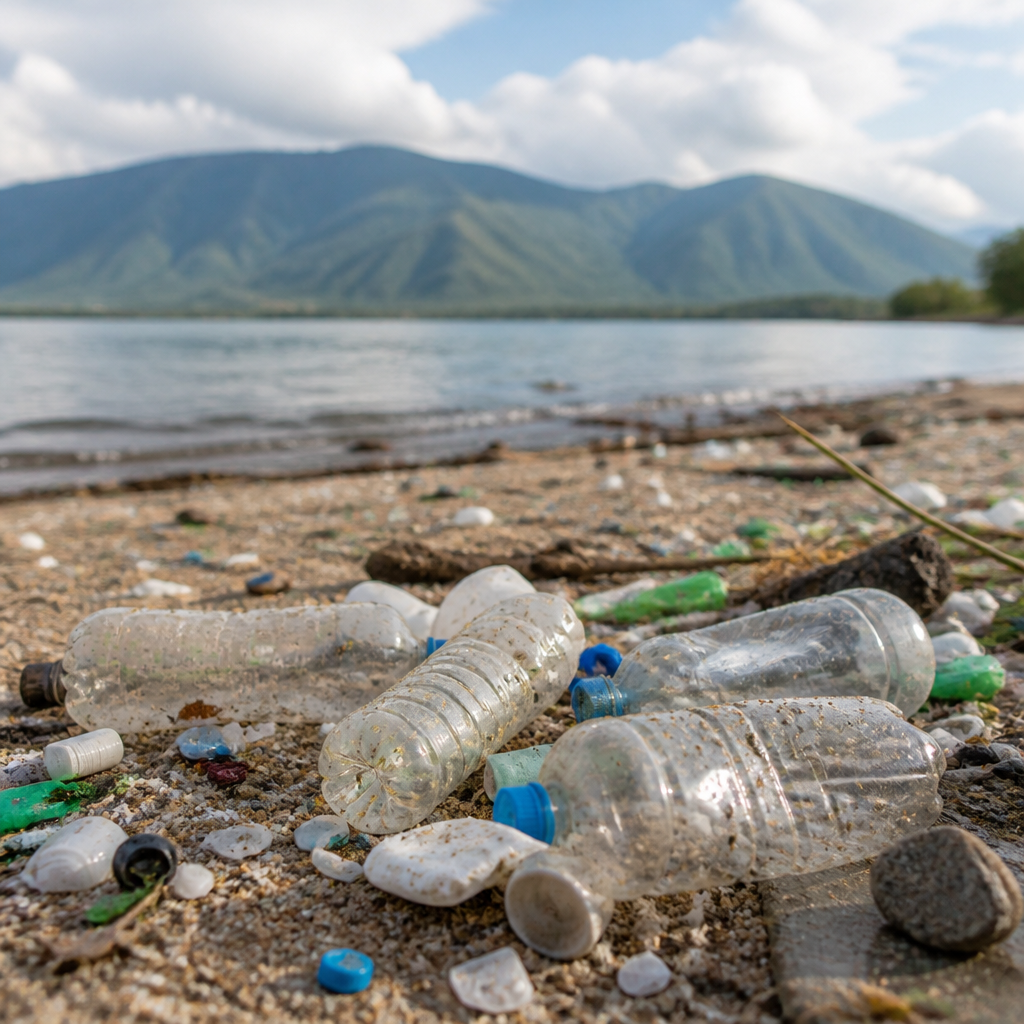
Environmental impact is not limited to climate metrics. Polymer leakage into rivers, oceans, soils, and air creates persistent pollution with visible and invisible forms. Macroplastic debris harms wildlife through entanglement and ingestion. Over time, sunlight, abrasion, heat, and oxidation break larger items into microplastics, generally defined as particles smaller than five millimeters. Sources include packaging litter, tire wear particles, synthetic textile shedding, paint fragments, agricultural films, and pellet loss during transport and conversion. Programs such as Operation Clean Sweep were created specifically to reduce resin pellet escape from industrial facilities because prevention is far more effective than cleanup.
Microplastics present a difficult assessment problem. Hazard depends on particle size, shape, polymer type, additive package, and the surrounding environment. Fibers and fragments can move through wastewater systems, settle in sediments, or enter agricultural soils through sludge application. Research has detected microplastics in marine organisms, drinking water, indoor dust, and human tissues, but exposure pathways and health outcomes are still being refined. That uncertainty does not justify delay on control measures. Better filtration in washing machines, improved stormwater capture, reduced textile shedding, stronger pellet containment, and product redesign all lower leakage. A credible life cycle view of polymer materials includes accidental release and fragmentation, not just formal disposal.
How engineers and buyers reduce the environmental impact of polymer materials
The most effective reductions come from design decisions made early. Start with the functional requirement, not the default resin. If a mono-material structure can replace a multilayer laminate, recycling improves immediately. If a part can be snapped together instead of bonded with incompatible adhesives, disassembly becomes practical. If black carbon pigments are replaced with detectable color systems in packaging, optical sorting rates improve. Recycled content targets should be paired with specifications for melt flow index, odor, contaminant thresholds, and mechanical property retention so sustainability goals do not create manufacturing instability.
Procurement teams should ask suppliers for product carbon footprint data, recycled content certification, additive disclosures where possible, and evidence of compliance with regulations such as REACH, RoHS, and food-contact standards. Designers should use streamlined LCA during concept selection, then validate with deeper study before launch. Tools such as openLCA, SimaPro, and GaBi make this manageable when data quality is strong. The strongest results usually come from combining strategies: lightweighting without under-design, extending service life, increasing post-consumer recycled content, reducing scrap, improving logistics density, and specifying end-of-life routes that match local infrastructure. Evaluate the life cycle of polymer materials systematically, and better environmental outcomes follow.
As a hub within Materials and Properties, this page establishes the core environmental questions that every polymer decision should answer. Feedstock choice, processing energy, additive chemistry, durability, recyclability, and leakage risk all shape impact, and no single metric can represent the whole picture. The best evaluations use clear functional units, transparent boundaries, and realistic local assumptions. They compare alternatives across climate, resource use, toxicity, and waste outcomes instead of relying on marketing labels such as biodegradable or eco-friendly. That disciplined approach produces decisions that hold up technically, commercially, and environmentally.
The main benefit of life cycle thinking is practical clarity. It helps engineers choose materials that meet performance requirements while reducing hidden environmental costs over time. It helps buyers separate meaningful recycled or bio-based improvements from weak claims. It helps manufacturers identify where energy, scrap, and packaging losses actually occur. Most importantly, it turns environmental impact from an abstract concern into a measurable design parameter. Use this article as your starting point for the Environmental Impact subtopic, then map each polymer application against the full life cycle before the next material selection decision.
Frequently Asked Questions
What does it mean to evaluate the life cycle of polymer materials?
Evaluating the life cycle of polymer materials means examining the full chain of impacts associated with a plastic or elastomer, starting with raw material extraction and continuing through polymer production, product manufacturing, transportation, use, potential reuse, and end-of-life treatment. In practice, this is often done through a life cycle assessment, or LCA, which is a structured method used in materials engineering to measure environmental burdens across each stage of a material’s existence. Rather than looking at only one issue, such as recyclability or carbon footprint, a life cycle review considers multiple categories of impact, including energy demand, greenhouse gas emissions, water use, toxicity concerns, waste generation, litter potential, and effects on land and ecosystems.
This broader perspective is important because polymers can perform very differently depending on how they are sourced, processed, and managed after use. For example, a polymer with high production impacts may still be favorable in some applications if it significantly reduces product weight, extends service life, or lowers energy use during operation. Conversely, a material marketed as sustainable may not deliver overall benefits if it requires intensive processing, has poor durability, or lacks realistic recovery options. Life cycle evaluation helps engineers, manufacturers, policymakers, and buyers make decisions based on total system performance rather than assumptions or single-issue claims.
Why is a life cycle perspective important when comparing different polymers?
A life cycle perspective is essential because polymers should not be judged only by their composition or by what happens at disposal. Different materials can appear better or worse depending on which stage is being emphasized. For instance, one polymer may require less energy to manufacture, while another may be more durable, lighter, easier to process, or more compatible with reuse and recycling systems. If the comparison focuses on only one phase, such as production emissions or landfill outcomes, the result may be incomplete or misleading. A full life cycle review allows a more balanced comparison by accounting for trade-offs across the entire value chain.
This matters especially in engineering applications where performance strongly influences environmental outcomes. A high-strength polymer that reduces product mass can lower transportation fuel use. A barrier polymer that extends food shelf life can reduce food waste, which may have a larger environmental benefit than the packaging impact alone. Similarly, an elastomer with a longer service life may reduce replacement frequency and maintenance burdens. By using a life cycle perspective, decision-makers can compare polymers on a functional basis, meaning they assess which material best delivers the required job with the lowest total environmental burden, rather than simply asking which material sounds greener in theory.
What environmental factors are typically included in the life cycle assessment of plastics and elastomers?
The environmental factors included in a polymer life cycle assessment usually cover a wide set of indicators so that the evaluation reflects real-world complexity. Common categories include cumulative energy demand, greenhouse gas emissions, water consumption, air and water pollution, human and ecological toxicity, resource depletion, land use, and waste generation. For plastics and elastomers, analysts also pay close attention to issues such as pellet loss, litter potential, persistence in the environment, and the likelihood of release into terrestrial or aquatic ecosystems. Depending on the application, the assessment may also examine transportation impacts, additives, processing aids, and emissions from conversion steps such as extrusion, molding, curing, or compounding.
End-of-life behavior is another major factor. A polymer’s environmental profile can change significantly depending on whether it is mechanically recycled, chemically recycled, incinerated with energy recovery, landfilled, composted under controlled conditions, or leaked into the environment. Reuse systems and collection infrastructure also affect outcomes. Just as important, the use phase may dominate impacts in some products, especially when the polymer influences insulation performance, fuel efficiency, product lifetime, or maintenance requirements. Because no single metric tells the whole story, robust life cycle studies use multiple indicators and clearly define assumptions so that environmental performance is not oversimplified.
How do recycling, reuse, and end-of-life options affect the life cycle performance of polymer materials?
Recycling, reuse, and end-of-life pathways can substantially influence the total life cycle performance of polymer materials, but their benefits depend on system design and practical execution. Reuse often delivers the greatest advantage when a polymer product can complete many service cycles without excessive cleaning, transport, or damage, because the original manufacturing impact is spread over more uses. Recycling can reduce demand for virgin feedstocks and lower overall emissions when the recovered material displaces new resin effectively. Mechanical recycling is commonly preferred where quality can be maintained, while chemical recycling may be useful for mixed or contaminated streams, though it can involve higher energy demand. In all cases, collection rates, sorting quality, contamination levels, and actual market demand for recycled output are critical.
End-of-life options should never be evaluated in isolation from the rest of the system. A theoretically recyclable polymer may perform poorly if local infrastructure cannot capture or process it. Likewise, compostable polymers may offer limited environmental value if they enter waste systems that do not support industrial composting. Incineration with energy recovery may reduce landfill volume and recover some energy, but it also generates emissions and does not preserve material value. Landfilling may have lower immediate processing needs, yet it can contribute to long-term resource loss and potential environmental burdens. The most accurate life cycle evaluations therefore model realistic recovery and disposal scenarios rather than idealized ones, helping organizations choose polymer systems that align with actual waste management conditions.
What are the biggest challenges in accurately assessing the life cycle of polymer materials?
One of the biggest challenges is data quality. Polymer supply chains can be complex, global, and highly variable, with differences in feedstock source, manufacturing technology, electricity mix, transportation distances, additives, and conversion methods. Even polymers with the same general name can have very different environmental profiles depending on how they are produced and used. Another challenge is defining the correct functional unit, which is the basis for comparison in an LCA. Comparing one kilogram of two polymers may not be meaningful if they do not provide the same strength, flexibility, barrier performance, durability, or service life. To generate useful results, assessments must compare materials based on the actual function they deliver in the intended application.
There are also methodological challenges related to system boundaries, allocation rules, treatment of recycled content, and assumptions about future end-of-life pathways. Small changes in assumptions can produce noticeably different results, especially for products with multiple possible recovery routes. Emerging concerns such as microplastic release, environmental persistence, and ecosystem effects can be difficult to quantify consistently in standard life cycle models, yet they are highly relevant to polymer sustainability. For that reason, the strongest evaluations combine rigorous life cycle assessment with engineering judgment, transparent reporting, and sensitivity analysis. This approach helps stakeholders understand not only the headline result, but also the uncertainties and trade-offs behind it.