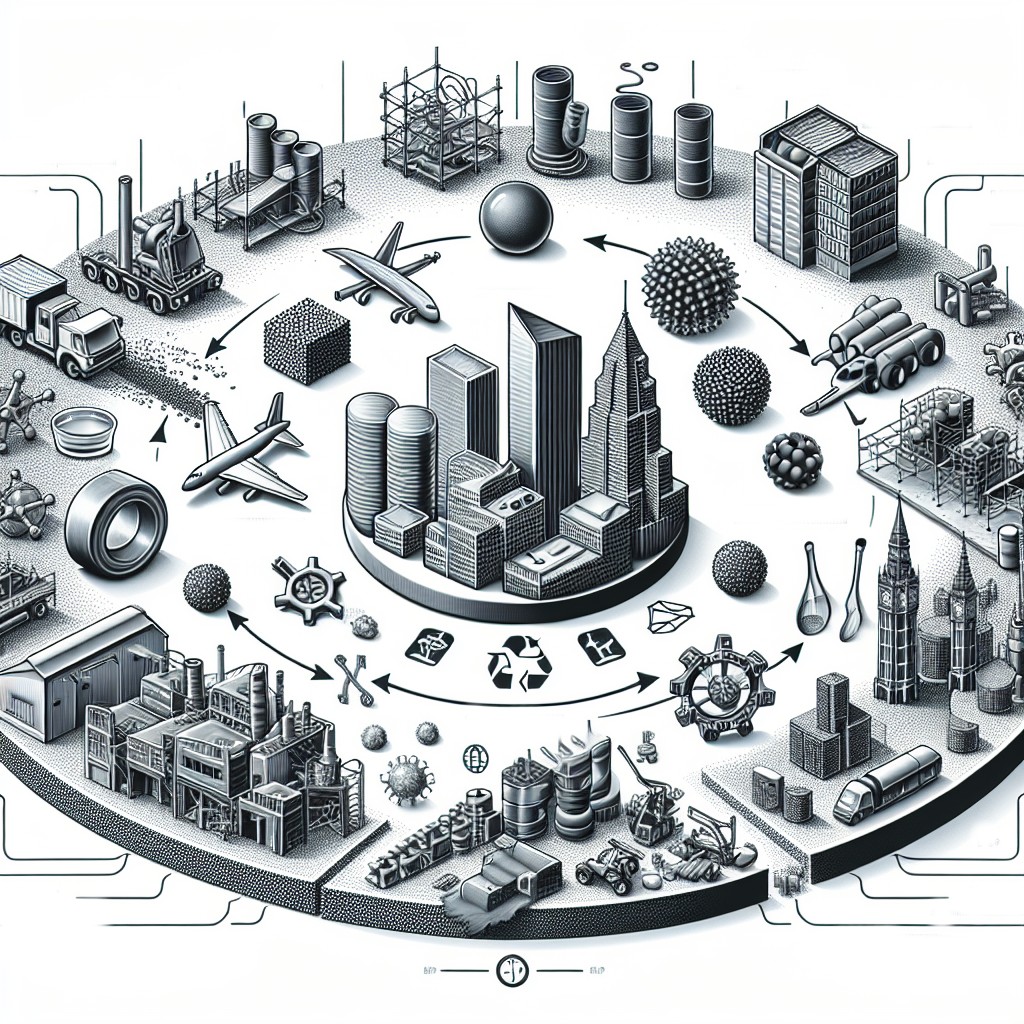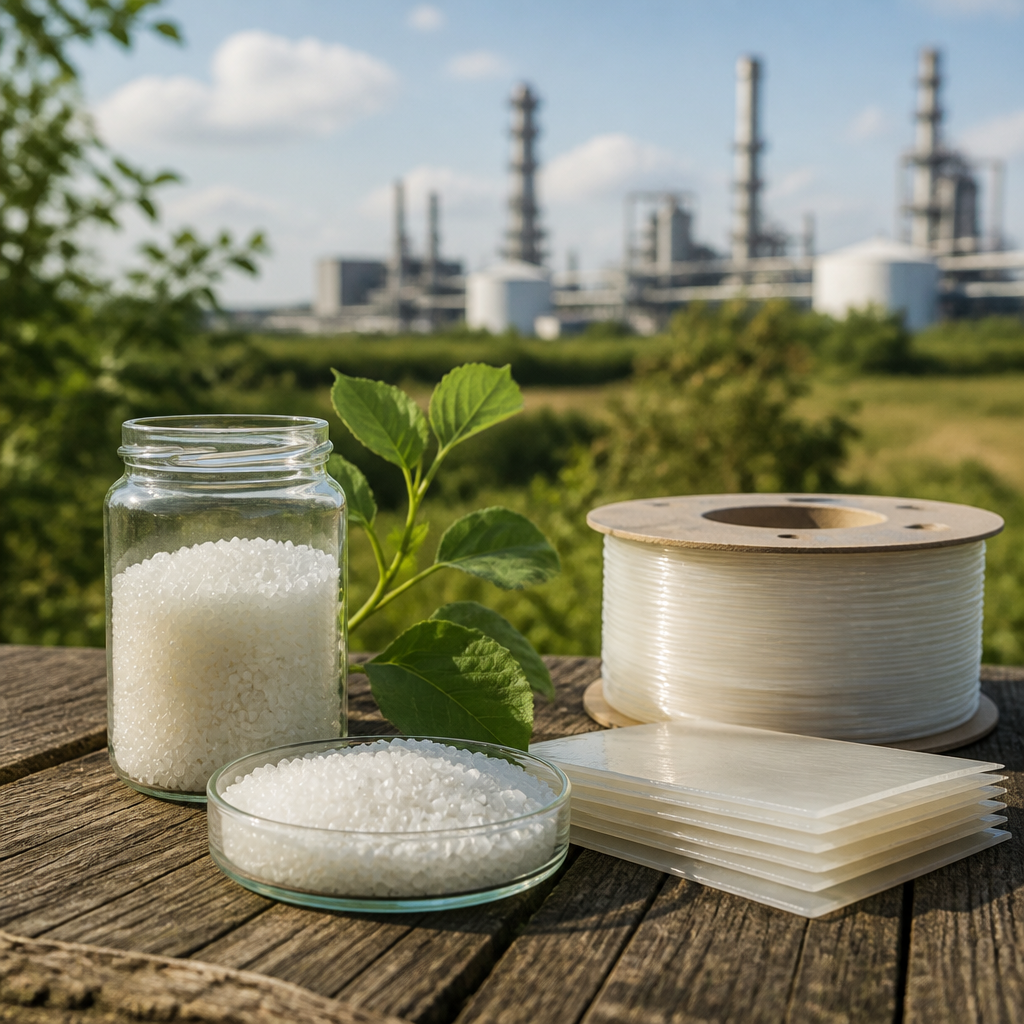
Innovations in low-carbon footprint polymers are reshaping how the materials industry measures performance, cost, and environmental impact at the same time. In practice, low-carbon footprint polymers are plastics, elastomers, fibers, or resin systems designed to reduce greenhouse gas emissions across raw material extraction, production, use, and end-of-life management. That reduction can come from bio-based feedstocks, electrified manufacturing, mechanical or chemical recycling, mass-balance accounting, lightweighting, longer service life, or formulations that enable reuse. I have worked with procurement teams and materials engineers comparing resin options, and the core lesson is consistent: carbon is now a design variable, not just a reporting metric. This matters because polymers account for a meaningful share of industrial emissions while appearing in packaging, construction, automotive systems, electronics, textiles, and medical devices. Environmental impact in this context includes not only carbon dioxide equivalent emissions, but also energy demand, land use, water intensity, toxicity, microplastic leakage, and waste generation. A polymer can lower fossil carbon yet perform poorly on recyclability or biodiversity, so credible decisions require a full life-cycle view. As regulations tighten, brand owners set decarbonization targets, and buyers ask for product carbon footprints, innovations in low-carbon footprint polymers are moving from niche to mainstream materials strategy.
What makes a polymer low carbon in environmental terms
A polymer becomes low carbon when its life-cycle emissions are demonstrably lower than a conventional benchmark while still meeting application requirements. The benchmark is usually virgin fossil-based polyethylene, polypropylene, PET, PVC, polyurethane, epoxy, nylon, or ABS made through established petrochemical routes. The standard way to compare options is life cycle assessment, typically aligned with ISO 14040 and ISO 14044, and product carbon footprint methods such as ISO 14067 or the Greenhouse Gas Protocol Product Standard. In real sourcing work, I look first at system boundaries. Cradle-to-gate data covers feedstock extraction through resin production, while cradle-to-grave adds use and end of life. That distinction changes conclusions. A lightweight polyamide part in a vehicle may have higher production emissions than steel per kilogram, yet lower total emissions by cutting fuel use or battery load over years of operation. Environmental impact therefore cannot be reduced to a single feedstock label. The decisive question is whether the material lowers total emissions, avoids burden shifting, and fits collection and recovery systems already operating in the target market.
Several innovation pathways drive those reductions. Bio-based polymers replace fossil carbon with carbon recently captured by plants, although agricultural inputs and land-use change must be assessed carefully. Recycled-content polymers avoid the emissions associated with virgin monomer production and often provide the fastest reduction when contamination is controlled. Electrified crackers, renewable power for polymerization, and process heat integration cut manufacturing emissions at the plant level. Designers also reduce embodied carbon by downgauging films, foaming structures, replacing multi-material assemblies with mono-material systems, or extending product life through better toughness and chemical resistance. A resin with ten percent lower density and equal stiffness can reduce total material use immediately. These are practical levers, not abstract promises.
Feedstock innovation: bio-based, recycled, and carbon-capture routes
Feedstock choice is where many low-carbon footprint polymer strategies begin, because upstream emissions dominate numerous resin categories. Bio-based polyethylene made from sugarcane ethanol is a well-known example. Its molecular structure matches fossil polyethylene, so converters can run it on existing lines and recyclers can treat it like standard PE. That drop-in compatibility is valuable because it lowers transition risk. PLA, PHA, and bio-based PBS take a different route, offering partially or fully bio-derived polymers with distinct processing windows and end-of-life considerations. PLA can perform well in rigid packaging and fibers, but heat resistance and composting conditions must be managed carefully. PHA offers biodegradation advantages in selected environments, yet scale and cost remain constraints. The environmental impact of bio-based options depends heavily on farming practices, fertilizer use, transport distances, and whether feedstocks compete with food production. Certified sourcing matters.
Recycled feedstocks are equally important. Mechanical recycling usually delivers the lowest emissions reduction cost because it preserves polymer chains rather than breaking them back to monomers or fuels. Recycled PET in beverage bottles, HDPE in detergent containers, and polypropylene in durable goods are now common where sorting infrastructure is mature. Chemical recycling, including depolymerization for PET and polyamides, pyrolysis for mixed polyolefins, and solvent-based purification for difficult streams, can recover value from waste that mechanical systems cannot handle well. However, these technologies vary widely in yield, energy demand, and product quality. Mass-balance accounting is frequently used when recycled or bio-based feedstocks enter integrated petrochemical systems and are allocated to specific products. This approach can be legitimate when chain-of-custody rules are audited, but buyers should ask whether claims are based on physical segregation or attributed content. Newer routes using captured carbon dioxide to make polyols, polycarbonates, or intermediates are technically significant because they substitute part of the fossil feedstock while creating markets for waste carbon streams.
Manufacturing advances that cut emissions at the plant level
Even with the same feedstock, polymer manufacturing can have very different carbon footprints depending on energy source, process efficiency, and plant design. Steam cracking, polymerization, compounding, drying, and pelletizing all consume significant energy. The fastest emissions reductions I have seen in supplier data come from renewable electricity procurement, waste heat recovery, and process controls that reduce off-spec output. Sensors, advanced analytics, and digital twins help operators tighten reaction conditions, lower scrap, and reduce solvent or steam demand. For engineering plastics, drying optimization alone can trim energy consumption noticeably because over-drying is common in real production environments.
Electrification is a major shift. Traditional crackers rely on fossil-fired furnaces, while emerging electric cracker concepts aim to replace combustion with powered heating. If the electricity mix is low carbon, the emissions benefit can be substantial. Compounding lines are also improving through better screw design, lower melt temperatures, and higher throughput per kilowatt-hour. Catalysts matter as well. Single-site catalysts in polyolefins can improve molecular weight control and reduce unwanted byproducts, which lowers waste and can simplify downstream processing. Solvent recovery systems, closed-loop water systems, and modular plant upgrades further reduce environmental impact without changing polymer chemistry. These are not always visible to end users, but they influence the product carbon footprint reported on environmental product declarations and supplier scorecards.
Performance-led design: using less material and making products last longer
Some of the most effective low-carbon footprint polymer innovations do not start in chemistry labs; they start in product design. If a package uses fifteen percent less resin through downgauging while maintaining seal integrity and puncture resistance, the carbon reduction is immediate and measurable. If a glass-filled polypropylene automotive bracket replaces a heavier metal assembly with fewer parts and less fastener hardware, manufacturing emissions, transport weight, and assembly time can all fall together. In construction, high-durability pipe materials such as PE100 and PP-R can deliver long service life with low leakage rates, which changes the environmental calculation over decades rather than months.
Durability is often underrated in environmental impact discussions. A polymer with slightly higher embodied carbon can still be the lower-impact choice if it doubles service life or avoids maintenance-intensive coatings. Thermoplastic composites illustrate this tradeoff. Their production can be energy intensive, but they offer repairability, recyclability potential, and weight savings in transportation applications. Barrier materials present another example. A carefully engineered multilayer film may use more complex structures, yet if it extends food shelf life and prevents spoilage, total emissions can decrease because food waste often carries a larger footprint than the package itself. Good materials strategy therefore weighs embodied carbon against function, longevity, and system-wide effects.
Comparing major low-carbon polymer pathways
The most useful way to evaluate low-carbon footprint polymers is to compare pathways by emissions logic, operational fit, and end-of-life implications rather than by marketing labels alone. The table below summarizes the approaches I most often discuss with converters and brand owners when building a practical materials roadmap.
| Pathway | Main carbon reduction mechanism | Typical advantages | Key limitations | Example applications |
|---|---|---|---|---|
| Mechanically recycled polymers | Avoids virgin resin production and preserves existing polymer value | Often lowest near-term emissions, established for PET, HDPE, PP | Contamination, odor, color, property variability | Bottles, nonfood packaging, housewares, transport packaging |
| Bio-based drop-in polymers | Substitutes fossil feedstock with renewable carbon | Compatible with existing converting and recycling systems | Feedstock certification, land-use impacts, premium pricing | PE films, PET bottles, personal care packaging |
| Depolymerized or chemically recycled resins | Recovers monomers or feedstock from hard-to-recycle waste | Can reach high purity and food-contact potential | Energy intensity, scale, yield, accounting complexity | rPET, polyamide textiles, mixed flexible waste streams |
| Lightweight high-performance polymers | Reduces total material mass and use-phase energy demand | Strong system-level benefits in transport and durable goods | Higher resin cost, design validation needed | Automotive parts, electronics housings, pressure pipes |
| CO2-derived intermediates and polyols | Replaces part of fossil carbon with captured carbon | Useful in polyurethane systems and specialty chemistries | Limited substitution rates and supply availability | Foams, coatings, elastomers |
End-of-life systems, circularity, and environmental tradeoffs
No discussion of environmental impact is complete without end-of-life performance. A polymer cannot be considered low carbon in a durable way if it repeatedly escapes into the environment or fails within local waste systems. Recyclability depends on collection, sorting, reprocessing economics, and product design. Black carbon pigments can disrupt near-infrared sorting. Full-body shrink sleeves can interfere with bottle recovery. Adhesives, fillers, and incompatible multilayers can reduce yield or mechanical properties. Design for recycling guidelines from organizations such as the Association of Plastic Recyclers and RecyClass are now influential because they translate recyclability into specific packaging rules. Following these guidelines is one of the most practical environmental improvements a product team can make.
Compostability and biodegradability require equal caution. These properties are useful in narrow cases, such as food-contaminated serviceware or agricultural applications, but they are not universal solutions. Industrial composting standards like EN 13432 and ASTM D6400 define conditions under which materials disintegrate and biodegrade; most home, soil, freshwater, and marine environments are very different. When products are marketed loosely as biodegradable, contamination of recycling streams can increase and actual recovery can worsen. Chemical recycling can improve circularity for difficult streams, but only if mass yields, emissions, and residue management are transparent. The right end-of-life strategy is always context specific. In my experience, the best outcomes come from matching polymer choice to the collection and processing infrastructure that already exists where the product will be sold.
How companies should evaluate low-carbon polymers
Companies choosing low-carbon footprint polymers should use a disciplined screening process that integrates materials science, carbon accounting, and supply chain risk. Start with the functional requirement: stiffness, barrier, heat deflection, impact strength, regulatory compliance, and expected service life. Then compare candidate materials using verified cradle-to-gate or cradle-to-grave data, not generic sustainability claims. Supplier-specific primary data is far more useful than broad industry averages when setting procurement strategy. Ask for third-party reviewed life-cycle assessments, product carbon footprints, recycled-content documentation, and chain-of-custody certifications such as ISCC PLUS where attributed feedstocks are involved.
Next, test processing behavior and quality consistency. A recycled polypropylene with excellent emissions performance is still the wrong choice if odor, warpage, or melt flow variability causes excessive scrap. Finally, map policy exposure. Extended producer responsibility fees, recycled-content mandates, carbon border adjustments, and disclosure rules are rapidly changing the economics of materials selection. Europe is pushing harder on packaging design and reporting, while North America and Asia show strong movement through brand commitments and sector-specific regulation. The companies that succeed treat environmental impact as a measurable engineering parameter tied to cost, compliance, and resilience. The benefit is clear: lower-carbon polymers can reduce emissions today while creating products that are easier to justify to customers, regulators, and investors. Review your highest-volume resin applications first, benchmark them against verified alternatives, and build a roadmap that pairs carbon reduction with functional performance.
Frequently Asked Questions
What are low-carbon footprint polymers, and how are they different from conventional polymers?
Low-carbon footprint polymers are plastic, elastomer, fiber, and resin materials engineered to reduce greenhouse gas emissions across their full life cycle. That includes emissions tied to feedstock extraction, monomer and polymer production, compounding, conversion, product use, and end-of-life treatment. Unlike conventional polymers, which have traditionally been optimized mostly for cost, processability, and mechanical performance, low-carbon alternatives are developed with carbon intensity as a core design parameter. In practical terms, that can mean using bio-based or waste-derived feedstocks, increasing recycled content, electrifying production processes, improving energy efficiency, or designing materials that are easier to recover and reuse after service.
The key point is that “low-carbon” does not automatically mean “biodegradable” or even “bio-based.” A polymer can have a lower carbon footprint because it contains mechanically recycled resin, because its manufacturing plant runs on renewable electricity, or because it is produced through a mass-balance system that allocates lower-emission feedstocks into the supply chain. Some low-carbon polymers are chemically identical to incumbent materials such as polyethylene, polypropylene, PET, or polyamides, which makes them especially attractive because they can often run on existing equipment and fit into current specifications. Others are entirely new formulations created to deliver both reduced emissions and application-specific performance.
What makes this category important is that it expands the definition of material performance. Buyers are no longer asking only whether a polymer is strong, lightweight, heat resistant, or affordable. They also want to know its verified carbon footprint, recycled or renewable content, and compatibility with circular economy goals. As a result, innovation in this space is not just about inventing new chemistry. It is about integrating environmental metrics into product development, procurement, and manufacturing decisions without sacrificing quality or scalability.
What technologies are driving innovation in low-carbon footprint polymers today?
Several major technology pathways are pushing the field forward, and the most impactful solutions often combine more than one approach. One of the biggest is the use of alternative feedstocks. Bio-based inputs such as plant-derived sugars, vegetable oils, lignocellulosic biomass, or industrial byproducts can replace part of the fossil carbon traditionally used to make polymers. At the same time, waste-based feedstocks, including post-consumer plastics and industrial scrap, are becoming more valuable through mechanical recycling and advanced chemical recycling processes that convert waste streams back into usable raw materials.
Manufacturing innovation is another major driver. Polymer producers are adopting electrified process heating, renewable power sourcing, catalyst improvements, process intensification, and digital process controls to lower emissions per ton of output. These upgrades can significantly reduce the carbon intensity of established polymer families without changing the end material’s chemistry. That matters because many end users want decarbonization solutions that do not require expensive redesigns or requalification of products.
Mass-balance accounting is also playing a central role, especially in chemically recycled and bio-attributed polymers. In these systems, lower-carbon feedstocks are introduced into existing production networks and allocated through certified accounting methods to final products. This approach helps scale low-carbon material supply faster by using current infrastructure rather than waiting for entirely separate production lines. In parallel, material scientists are improving polymer formulations for durability, lightweighting, lower processing temperatures, and enhanced recyclability. Even relatively small gains in processing efficiency or product longevity can translate into meaningful emissions reductions when multiplied across high-volume applications like packaging, automotive components, electronics, textiles, and construction materials.
How is the carbon footprint of a polymer measured and verified?
The carbon footprint of a polymer is typically measured through life cycle assessment, often abbreviated as LCA. This method evaluates greenhouse gas emissions across defined stages of a product’s life, such as raw material extraction, transport, manufacturing, use, and end-of-life management. Depending on the goal, an assessment may focus on cradle-to-gate emissions, which stop at the factory exit, or cradle-to-grave emissions, which include use and disposal. For polymers, cradle-to-gate figures are common in procurement and supplier comparisons because they provide a standardized view of production-related emissions before the material enters downstream conversion processes.
Reliable verification depends on clear system boundaries, high-quality primary data, and recognized standards. Companies often use frameworks such as ISO life cycle assessment standards, product carbon footprint methodologies, and third-party certification schemes to substantiate carbon claims. If a polymer includes recycled or bio-attributed content through a mass-balance model, certification becomes especially important because customers need assurance that the allocation method is transparent and independently audited. Without rigorous verification, terms like “low-carbon,” “sustainable,” or “reduced emissions” can become vague or misleading.
It is also important to understand that carbon footprint is not a single, fixed property. Results can vary depending on electricity mix, plant efficiency, transportation assumptions, recovery scenarios, and whether biogenic carbon storage is included. That is why sophisticated buyers look beyond marketing language and ask for environmental product declarations, supplier-specific data, and methodology details. A strong low-carbon polymer offering is not just one with a favorable number. It is one backed by robust measurement, credible documentation, and enough transparency for engineers, procurement teams, and sustainability professionals to make informed comparisons.
Do low-carbon footprint polymers perform as well as traditional materials in real-world applications?
In many cases, yes, but performance depends on the material family, formulation, and application requirements. Some low-carbon polymers are drop-in equivalents to conventional resins, meaning they offer essentially the same mechanical, thermal, and processing characteristics while reducing emissions through lower-carbon feedstocks or cleaner production methods. These materials are especially useful in packaging, consumer goods, automotive parts, and fibers because they can often be adopted with minimal disruption to tooling, manufacturing setups, and compliance pathways.
Other low-carbon options require more nuanced evaluation. Recycled-content polymers, for example, may show variation in color, odor, melt flow, or contamination levels depending on feedstock quality and sorting technology. Bio-based polymers may offer excellent sustainability benefits but can differ in moisture sensitivity, barrier properties, impact strength, or temperature resistance. That does not make them inferior. It simply means material selection has to be application-driven. Engineers must balance carbon reduction targets with requirements such as toughness, dimensional stability, regulatory compliance, chemical resistance, service life, and end-of-life compatibility.
The market is improving quickly because suppliers are investing in compounding technologies, additive packages, purification methods, and quality control systems that make low-carbon materials more consistent and more competitive. In fact, some innovations create performance advantages alongside emissions reductions. Lightweight polymer designs can reduce fuel or energy consumption in transport applications. Improved recyclability can simplify material recovery. Lower-temperature processing grades can reduce manufacturing energy use. So the better question is often not whether low-carbon polymers can match traditional materials in every case, but where they can deliver the best combined value across performance, economics, and environmental outcomes.
What challenges still limit wider adoption of low-carbon footprint polymers?
The biggest challenges are scale, cost, data quality, and systems integration. Supply is still uneven across polymer types and regions, especially for materials with high recycled content, certified bio-based inputs, or advanced chemical recycling origins. Many companies want lower-carbon options, but consistent volumes and long-term availability remain concerns. Cost is another barrier. Low-carbon polymers can carry premiums due to feedstock constraints, certification costs, new processing technologies, or limited production scale. While those premiums may narrow over time, buyers still need a clear business case tied to regulatory readiness, brand value, customer demand, or total life cycle benefit.
Another issue is infrastructure. Recycling systems, waste collection, sorting technologies, renewable power access, and carbon-accounting capabilities are developing at different speeds across markets. A polymer designed for circularity may still struggle to deliver its full environmental promise if local collection and recovery systems are weak. In addition, companies often face confusion around claims and terminology. Distinctions between recyclable, recycled, bio-based, biodegradable, compostable, and low-carbon are not always well understood, which can complicate purchasing decisions and public communication.
Despite these obstacles, adoption is advancing because regulation, investor pressure, and customer expectations are pushing carbon performance into mainstream materials strategy. The most successful organizations are taking a portfolio approach. They are not relying on one “perfect” polymer solution. Instead, they are combining lower-emission virgin materials, recycled content, process improvements, design-for-recycling principles, and verified carbon data to reduce impact across product lines. That is ultimately what makes innovation in low-carbon footprint polymers so significant: it is not a niche materials trend, but a broader shift in how the industry defines value, competitiveness, and long-term resilience.