Polymer testing is entering a new phase, and mechanical testing methods now sit at the center of materials development, qualification, and failure prevention. In the labs where I have evaluated plastics, elastomers, films, and composites, the biggest shift has not been toward a single new instrument, but toward a more connected testing strategy that links force, deformation, temperature, time, and structure. For companies working across packaging, automotive, medical devices, electronics, aerospace, and consumer products, understanding mechanical behavior is no longer optional. It determines whether a polymer part survives assembly, keeps shape under load, resists cracking in storage, or fails unexpectedly after months in service.
Mechanical testing methods are the procedures used to measure how a material responds when stress, strain, impact, pressure, flexing, or repeated loading is applied. In plain terms, these tests answer practical questions: How strong is it? How stiff is it? How far can it stretch? How much energy can it absorb before breaking? How does it behave when used again and again? For polymers, these questions are more complicated than they are for many metals because polymers are viscoelastic. Their response changes with temperature, strain rate, humidity, processing history, crystallinity, filler content, and even specimen orientation. A polypropylene injection molding tested at room temperature may look tough and stable, then become brittle in a cold warehouse. A flexible adhesive may perform well in a short pull test but creep badly under sustained load.
This article serves as a hub for mechanical testing methods within the broader materials and properties landscape. It explains the core tests, the standards behind them, the interpretation of key data, and the emerging frontiers reshaping polymer characterization. Standards organizations such as ASTM and ISO provide the framework for consistent testing, with common methods including ASTM D638 for tensile properties of plastics, ASTM D790 for flexural properties, ASTM D256 and ISO 180 for impact resistance, and ASTM D695 for compressive properties. Yet standards alone do not guarantee meaningful results. Good polymer testing depends on specimen preparation, conditioning, instrument calibration, test speed selection, and a realistic link between lab conditions and real-world use. When done well, mechanical testing turns raw numbers into reliable engineering decisions.
Why mechanical testing is the foundation of polymer performance
Mechanical testing matters because most polymer failures begin as mechanical problems, even when the root cause appears chemical or environmental. A detergent bottle panel that caves in may have insufficient stiffness. A snap-fit housing that cracks during assembly may have poor impact resistance or weld-line weakness. A medical tube that slowly elongates under load may be experiencing creep. In development work, I have often seen teams focus first on chemistry, additives, or color when the immediate answer was already visible in stress-strain behavior. Mechanical data gives designers the first realistic picture of whether a polymer can carry load, tolerate deformation, and maintain integrity across its service life.
The most valuable feature of mechanical testing is that it translates polymer structure into functional performance. Molecular weight affects toughness and melt strength. Crystallinity influences stiffness and dimensional stability. Plasticizers can increase elongation while reducing modulus. Glass fiber reinforcement may improve tensile and flexural strength, but also introduce anisotropy and notch sensitivity. Because processing changes orientation and residual stress, the same nominal resin can produce very different outcomes in extruded film, blow-molded bottle walls, and injection-molded structural ribs. Mechanical testing captures those differences directly, which is why it is the anchor for specification, quality control, supplier approval, and product validation.
Core mechanical testing methods every polymer team should understand
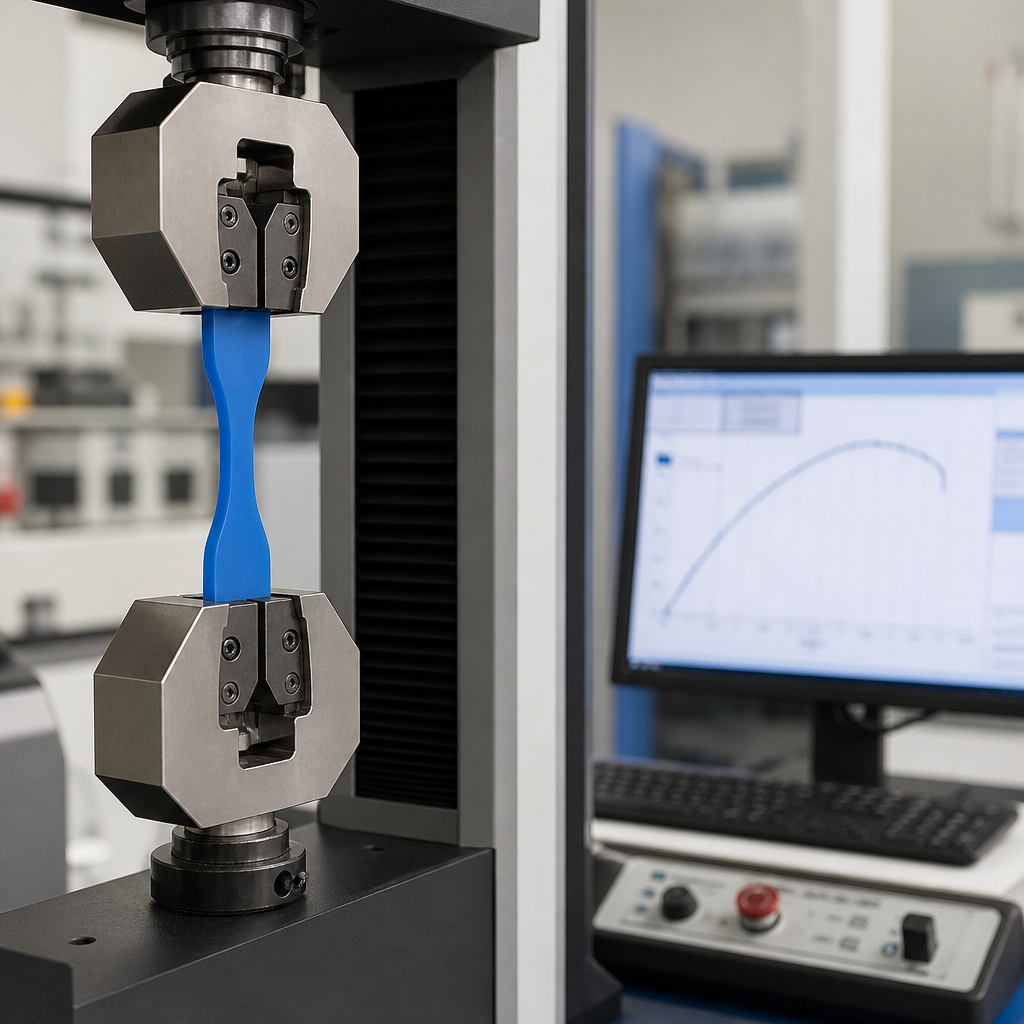
Tensile testing is usually the starting point because it provides a broad mechanical profile from a single experiment. A standardized dog-bone specimen is pulled at a defined rate while force and extension are recorded. The resulting stress-strain curve yields tensile strength, modulus, elongation at break, yield stress, and yield strain. For rigid materials such as polystyrene or unfilled nylon, the curve may show a clear yield point and limited elongation. For elastomeric materials, the curve may extend to several hundred percent strain with nonlinear behavior from the beginning. Tensile data helps compare grades, validate processing changes, and estimate whether a part can survive assembly loads or in-service tension.
Flexural testing measures behavior in bending, commonly through three-point loading. This method is useful for polymers used in housings, panels, clips, and structural components where stiffness under deflection matters more than pure tensile loading. Flexural modulus often gives designers a better sense of perceived rigidity in real parts than tensile modulus alone. Compression testing is essential for foams, seals, load-bearing spacers, and cellular plastics. It reveals compressive strength, modulus, and deformation under squashing loads. Impact testing, including Izod and Charpy methods, evaluates how a notched or unnotched sample responds to sudden loading. These tests are especially important for brittle polymers, cold-temperature applications, and safety-related components.
Hardness testing, using scales such as Shore A, Shore D, or Rockwell, offers a quick comparative measure of surface resistance to indentation. It is widely used in quality control for elastomers and semi-rigid plastics, though hardness alone should never be treated as a full mechanical description. Fatigue testing examines how a polymer performs under repeated cyclic loading, which is critical for living hinges, gears, medical components, and under-hood automotive parts. Creep and stress relaxation testing explore time-dependent behavior. In creep, constant load is applied and strain increases over time. In stress relaxation, strain is held constant while stress declines. For viscoelastic materials, these tests often predict field performance more accurately than a short tensile run.
| Method | Primary property measured | Common standard examples | Typical use case |
|---|---|---|---|
| Tensile | Strength, modulus, elongation, yield | ASTM D638, ISO 527 | Material selection, specification, comparison of grades |
| Flexural | Bending strength and modulus | ASTM D790, ISO 178 | Housings, panels, structural stiffness evaluation |
| Compression | Compressive strength and deformation | ASTM D695, ISO 604 | Foams, seals, spacers, load-bearing pads |
| Impact | Energy absorbed during fracture | ASTM D256, ISO 180 | Brittleness screening, cold-use performance |
| DMA | Storage modulus, loss modulus, damping | ASTM D4065, ASTM D7028 | Temperature-dependent viscoelastic behavior |
| Creep/Fatigue | Time and cycle dependent durability | ASTM D2990, application-specific methods | Long-life components, sustained or repeated loading |
How to interpret polymer mechanical data without making bad decisions
The biggest mistake in polymer testing is reading a single number without context. Tensile strength by itself does not tell you whether a material is tough or brittle. Elongation at break can be misleading if necking, grip slippage, or specimen defects affect the result. Modulus depends strongly on temperature and strain rate. Impact values can vary with notch geometry, specimen thickness, and molding orientation. In practical evaluation, I rely on the full stress-strain curve and the test conditions before I trust any headline property. For example, two polycarbonate blends may show similar tensile strength, yet one may have much higher strain at yield and better impact retention after aging, making it the safer choice for a snap-fit enclosure.
Conditioning and environment matter just as much as instrument settings. Hygroscopic polymers such as nylon can test very differently in dry-as-molded and equilibrated states. A dry nylon specimen often looks stiffer and stronger but also more brittle. At elevated temperature, even engineering plastics can lose a large portion of their modulus. Time scale matters too. A one-minute tensile test does not capture what happens during six months under static load. This is why mechanical testing programs should include short-term strength metrics and long-term durability metrics. The data becomes far more useful when paired with microscopy, density, differential scanning calorimetry, or rheology to explain why a material behaved as it did.
Advanced methods expanding the frontier of polymer characterization
Dynamic mechanical analysis, often called DMA, is one of the most important advanced tools in modern polymer testing. Unlike a simple tensile test, DMA applies a small oscillating deformation and measures how the material stores and dissipates energy across temperature or frequency. The outputs, storage modulus, loss modulus, and tan delta, reveal transitions that are central to performance, especially glass transition behavior. In development projects involving thermoplastic elastomers and adhesive films, DMA frequently exposed service limits that room-temperature tensile data completely missed. A material that looked acceptable in static testing could lose stiffness rapidly near its transition region, explaining field complaints such as seal leakage or rattling interior parts.
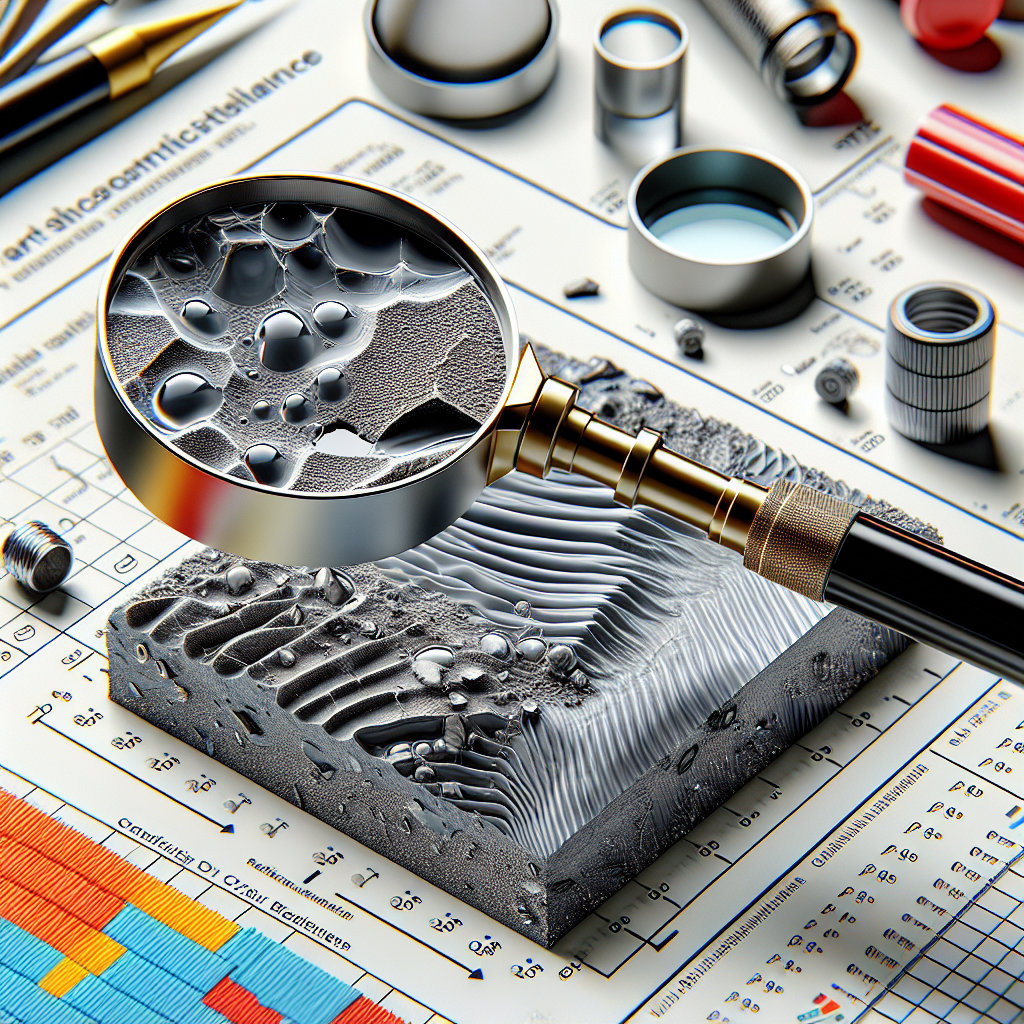
Instrumented impact testing adds another layer of insight by recording force-time or energy-time curves during fracture. Instead of a single pass-fail value, teams can see crack initiation and crack propagation behavior. Fracture mechanics methods, though more specialized, are increasingly relevant for high-performance polymers and composite systems. Essential work of fracture, crack tip opening displacement, and linear elastic fracture mechanics approaches help engineers assess notch sensitivity and damage tolerance in more realistic terms. Nanoindentation is also gaining traction for coatings, thin films, and micro-scale features, where conventional bulk methods are too blunt. It can map local modulus and hardness variations caused by phase separation, curing gradients, or surface treatments.
Full-field strain measurement is another frontier with practical value. Digital image correlation, or DIC, uses high-resolution cameras and tracking software to measure strain across the specimen surface during loading. This approach identifies localization, necking, anisotropy, and premature edge failure that extensometers may miss. It is especially useful for filled polymers, fiber-reinforced systems, and 3D-printed specimens with directional behavior. Combined with finite element analysis, DIC improves model calibration and helps connect coupon tests to part performance. In my experience, it often resolves disputes between design teams and test labs by showing exactly where deformation began and how processing defects influenced the response.
Mechanical testing for emerging materials and manufacturing methods
New frontiers in polymer testing are being driven by new material classes and new manufacturing routes. Recycled polymers are the clearest example. Post-consumer and post-industrial streams can vary in molecular weight, contamination level, additive package, and prior thermal history. Mechanical testing is essential for sorting what is usable, how much regrind can be tolerated, and where downcycling begins. A recycled polyethylene may still meet tensile requirements for noncritical packaging, yet show reduced environmental stress crack resistance or lower impact consistency. Without a tailored mechanical test plan, sustainability goals can quietly create reliability problems.
Bio-based and biodegradable polymers present a different challenge. Materials such as polylactic acid can deliver useful stiffness but may be sensitive to heat, humidity, and impact conditions. Medical and packaging applications often require testing before and after sterilization, aging, or composting exposure. Additive manufacturing introduces even more complexity because mechanical properties depend heavily on layer adhesion, raster angle, bead geometry, porosity, and print orientation. A printed polyamide coupon loaded parallel to the bead path may perform well, while the same design loaded through the layers fails early. Standard methods remain useful, but specimen orientation, build layout, and post-processing must be controlled and reported with unusual rigor.
Building a reliable mechanical testing program
A strong testing program starts with the end use, not the instrument menu. The first step is defining the failure modes that matter: yielding, brittle fracture, excessive deflection, creep, fatigue, seal compression loss, or low-temperature impact breakage. From there, select methods that reflect those risks and align them with recognized standards. Universal testing machines from suppliers such as Instron, ZwickRoell, and MTS can cover much of the core work when equipped with the right grips, extensometers, environmental chambers, and software. Calibration traceable to recognized metrology practices is nonnegotiable. So is specimen preparation. Poorly machined edges, inconsistent molding, or bad conditioning can create more variation than the resin change being studied.
Data quality improves further when labs define acceptance criteria before testing begins. That includes sample size, outlier rules, conditioning time, strain measurement method, and reporting format. Replication matters because polymers often show scatter, especially in impact and fatigue work. Cross-functional review is equally important. Design engineers, processing specialists, quality teams, and suppliers should all understand how a result was generated and what it means for the product. As this hub expands into deeper articles on tensile testing, impact testing, flexural testing, DMA, creep, fatigue, and fracture analysis, the central principle remains constant: the best mechanical testing methods do more than generate numbers. They explain performance, reduce risk, and guide smarter material decisions. Review your current test matrix, close the gaps between lab data and service conditions, and build polymer confidence from evidence.
Frequently Asked Questions
What does “new frontiers” in polymer testing really mean today?
Today, new frontiers in polymer testing are less about one breakthrough machine and more about a smarter, more integrated way of understanding material behavior. In practical terms, polymer testing has moved beyond isolated pass-or-fail measurements and into connected workflows that evaluate how a material responds to force, deformation, temperature, time, and environmental exposure all at once. This is especially important for plastics, elastomers, films, and composites, because these materials rarely fail for a single reason. Their real-world performance depends on a combination of stiffness, strength, creep resistance, impact behavior, thermal stability, and structural consistency.
What makes this shift significant is that testing is now being used earlier and more strategically across materials development, qualification, and failure prevention. Instead of waiting until a product is nearly finished, companies can use mechanical testing data to compare formulations, optimize processing conditions, and predict long-term performance. For example, a packaging film may need tensile and puncture data, but it also benefits from environmental conditioning and time-dependent analysis to understand how it behaves on a filling line or in storage. The same principle applies in automotive, medical device, electronics, and aerospace applications, where a polymer may experience repeated loading, heat, moisture, sterilization, or vibration during service.
In that sense, the frontier is not just more data—it is more meaningful data. Laboratories are increasingly combining traditional mechanical tests with thermal analysis, microscopy, rheology, and digital data management to create a fuller picture of how a polymer is built, how it processes, and how it performs over time. That connected strategy allows engineers and scientists to make better decisions faster, reduce development risk, and catch failure mechanisms before they become field problems.
Why are mechanical testing methods so central to modern polymer development and qualification?
Mechanical testing sits at the center of modern polymer development because it translates material science into real performance. A polymer can have an attractive datasheet, a promising chemical structure, or excellent processing behavior, but if it cannot withstand the loads, deformation, stress concentrations, or service conditions of the final application, it will not succeed. Mechanical tests provide the direct evidence needed to understand whether a material is truly fit for purpose.
This is especially important because polymers are highly sensitive to variables that metals and ceramics often tolerate differently. Processing history, molecular orientation, fillers, additives, strain rate, specimen geometry, and temperature can all change the measured response. A tensile test, for example, may reveal modulus, yield, elongation, and break behavior, but those values become far more powerful when interpreted alongside compression, flexural, peel, tear, puncture, fatigue, or dynamic mechanical results. Together, they help define not just how strong a material is, but how it behaves under realistic service conditions.
For qualification work, mechanical testing also creates a defensible basis for decisions. In regulated or safety-critical sectors such as medical devices, automotive systems, electronics, and aerospace components, teams need repeatable data that can support design choices, supplier approvals, and quality requirements. Mechanical results help establish acceptance criteria, compare incoming material lots, detect process drift, and validate product changes. They are also central to failure analysis, because changes in toughness, ductility, or relaxation behavior often reveal why a part cracked, deformed, or lost function in the field.
Ultimately, mechanical testing matters so much because it connects lab measurements to product reliability. It shows how a polymer responds when the design meets reality, and that makes it indispensable in both innovation and risk reduction.
How do force, deformation, temperature, time, and structure work together in a connected polymer testing strategy?
A connected polymer testing strategy recognizes that polymer behavior is inherently multidimensional. Force tells you how much load a material can carry. Deformation shows how it stretches, compresses, bends, or permanently changes shape under that load. Temperature affects mobility at the molecular level, often shifting a polymer from brittle to ductile behavior or from stable to soft and highly viscoelastic. Time adds another layer, because many polymers creep, relax, age, or fatigue even when the applied stress remains well below short-term failure limits. Structure ties all of this together by explaining why the material behaves as it does, whether because of crystallinity, orientation, filler dispersion, porosity, phase separation, or processing-induced defects.
When these factors are evaluated together, testing becomes far more predictive. A standard tensile result at room temperature may look acceptable, yet the same material could perform poorly after thermal cycling, under constant load, or after prolonged humidity exposure. By pairing mechanical tests with thermal analysis and structural characterization, laboratories can identify those risks earlier. Dynamic mechanical analysis can reveal transitions and damping behavior, microscopy can expose fracture surfaces or interfacial weaknesses, and time-dependent testing can uncover creep or stress relaxation that would never appear in a short test.
This integrated approach is valuable because it mirrors actual service environments. Consider an automotive under-hood polymer, a flexible medical tubing material, or an electronics housing. None of these components experiences only one condition at a time. They see mechanical stress while also encountering heat, repeated loading, chemical contact, and aging. A connected testing strategy recreates that complexity in a controlled way, allowing teams to move beyond isolated numbers and toward a deeper understanding of performance limits, durability, and failure modes.
In practice, this means the best polymer testing programs do not ask only, “What is the tensile strength?” They ask, “What is the tensile strength after conditioning, at use temperature, over time, and in relation to the internal structure of the material?” That is where modern testing delivers its greatest value.
Which industries benefit most from advanced polymer testing, and what are they looking for in the data?
Advanced polymer testing is valuable across nearly every industry that depends on material consistency, durability, and safety, but the specific priorities vary by application. In packaging, teams often focus on film strength, seal integrity, puncture resistance, tear behavior, and environmental durability. They want to know whether a package can survive converting, filling, shipping, and storage without failure, while still meeting sustainability, downgauging, or barrier performance goals.
In automotive, the emphasis frequently shifts to long-term durability, impact resistance, dimensional stability, and behavior across broad temperature ranges. Components may be exposed to vibration, repeated loading, fluids, UV exposure, and thermal cycling, so test data must help predict performance over the entire service life. For medical devices, the standards are even more demanding in some cases, because materials may need to retain their mechanical integrity after sterilization, maintain flexibility without cracking, and demonstrate lot-to-lot consistency under tightly controlled conditions.
Electronics manufacturers often care about how polymers perform in compact, heat-generating assemblies where creep, warpage, and thermal aging can affect reliability. Aerospace applications tend to require especially rigorous qualification because weight, safety margins, environmental exposure, and traceability are all critical. In composite-rich systems, understanding directional properties, damage tolerance, and interfacial performance becomes particularly important.
What all of these industries have in common is the need for data that is not only accurate, but actionable. They are not looking for mechanical numbers in isolation. They want data that supports material selection, process optimization, supplier validation, root-cause investigation, regulatory compliance, and product life prediction. The most useful testing programs provide context: how the material behaves before and after aging, at different strain rates, under realistic temperatures, and in relation to observed structural features. That level of insight helps organizations reduce development time, prevent costly failures, and build greater confidence into every stage of the product lifecycle.
How can better polymer testing help prevent failures and improve product reliability?
Better polymer testing improves reliability by revealing weaknesses before they become expensive field failures. Many polymer-related failures are not caused by a complete lack of testing, but by testing that is too narrow, too late, or too disconnected from actual use conditions. A material may pass a standard tensile test and still crack in service because of stress concentration, repeated loading, environmental exposure, or time-dependent deformation. When testing expands to reflect those realities, the chances of catching risk early increase dramatically.
One of the biggest advantages of a stronger testing strategy is that it helps identify failure mechanisms, not just failure outcomes. For instance, creep testing may show that a plastic bracket slowly deforms under sustained load. Fatigue testing may reveal that an elastomer component loses performance after repeated cycling. Fracture and microscopy work may uncover poor filler dispersion, voids, weld-line weakness, or brittle fracture behavior linked to processing conditions. Thermal-mechanical studies may show that a component performs well at room temperature but becomes too soft or too brittle in its actual operating range. These are the kinds of insights that enable corrective action before a product reaches the customer.
Improved testing also strengthens material and process control. By building a reliable baseline for mechanical and related properties, manufacturers can detect changes in raw material lots, formulation adjustments, compounding quality, molding conditions, and post-processing steps. That is essential for quality assurance, especially in industries where consistency is closely tied to safety, compliance, or brand reputation. It also supports faster troubleshooting when something changes unexpectedly in production or in the field.
Perhaps most importantly, better polymer testing creates a more predictive development culture.