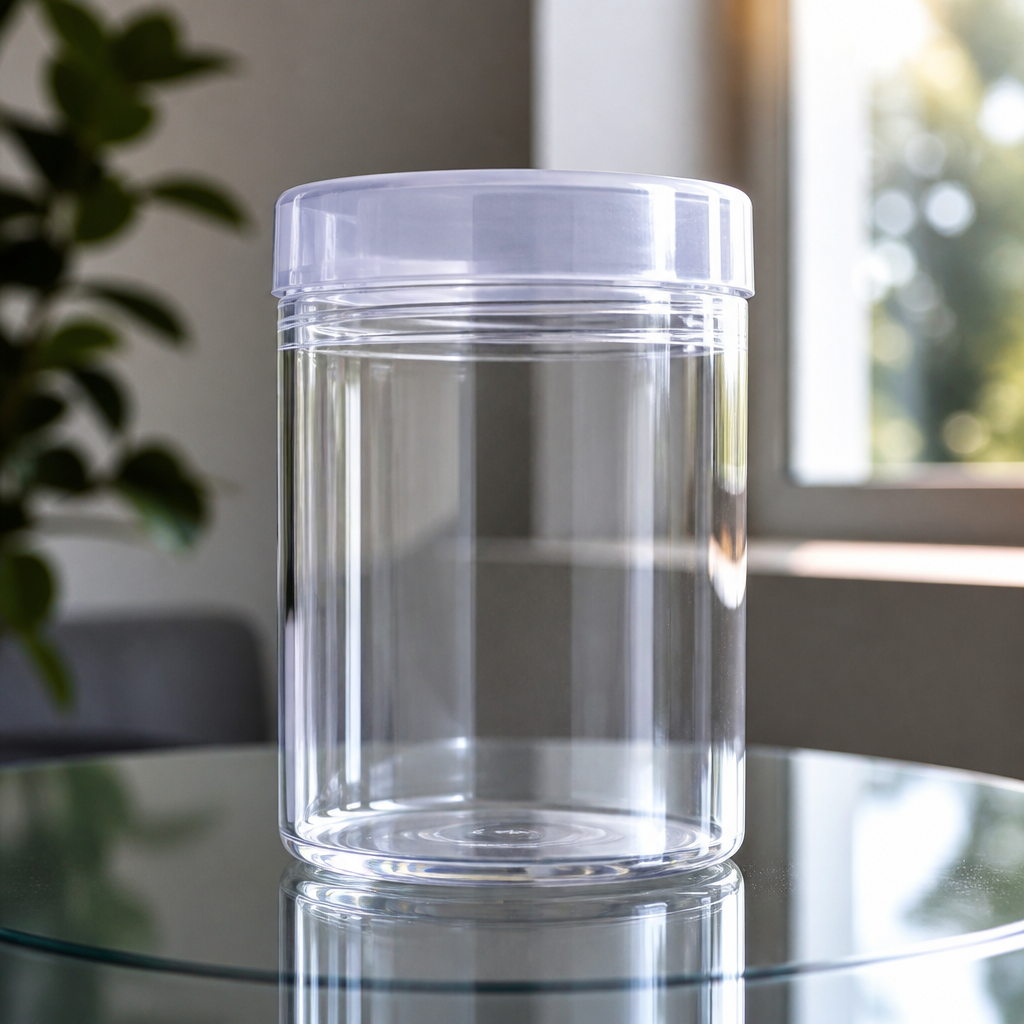
Visual clarity is one of the most commercially important optical properties in modern products, and polymers play a central role in achieving it. From protective eyewear and food packaging to medical housings, automotive lenses, appliance windows, retail displays, and smartphone components, manufacturers rely on carefully selected plastics to transmit light, reduce haze, maintain color neutrality, and survive real-world use. When buyers describe a product as clear, clean, glossy, transparent, or easy to see through, they are reacting to measurable material behavior. In practice, visual clarity depends on how a polymer interacts with visible light, how it is processed, and how it performs over time under heat, moisture, chemicals, impact, and ultraviolet exposure.
In materials engineering, optical properties usually include light transmission, haze, refractive index, gloss, birefringence, yellowness, and surface quality. Transparent polymers allow a high percentage of visible light to pass through. Translucent polymers scatter some of that light, creating a frosted effect. Haze measures wide-angle scattering that makes objects behind a material look cloudy, while clarity reflects how sharply details can be seen through it. Refractive index affects how much light bends at the surface and matters in lenses, light guides, and multilayer parts. Birefringence, often created by internal stress or molecular orientation, can distort images and create rainbow patterns. These terms matter because a polymer can have high transmission yet still look poor if haze, stress, scratches, or yellowing are not controlled.
I have seen teams choose a resin based only on initial transparency, then lose product performance after molding because drying, gate design, or tool polish were neglected. Optical success is never just about the base polymer. It is about the full system: resin chemistry, additives, moisture control, mold temperature, cooling rate, wall thickness, post-processing, coatings, and end-use environment. This hub article explains how polymers improve visual clarity, what optical properties matter most, how major clear plastics compare, where each performs best, and what design and manufacturing choices preserve transparency from factory floor to customer use.
What visual clarity means in polymer products
Visual clarity in products means more than being able to see through a part. In engineering terms, it means transmitting useful light while minimizing defects that interfere with perception. Three product examples show the difference. A clear food container needs high transparency and low haze so contents look fresh on a shelf. A medical viewing window needs transparency plus resistance to sterilization chemicals and repeated cleaning. An automotive headlamp lens needs transmission, weatherability, impact resistance, dimensional stability, and surface retention over years outdoors. In each case, the requirement is visibility under actual service conditions, not just a nice-looking lab sample.
The most common laboratory standards are ASTM D1003 for haze and luminous transmittance, ASTM D2457 for specular gloss, and ASTM E313 for yellowness index. These tests help convert subjective appearance into quality targets. A packaging engineer may specify haze below a few percent for premium display packaging. A lens designer may focus on birefringence and refractive index uniformity. A consumer electronics team may emphasize scratch resistance, low warpage, and color neutrality under LED lighting. When specifications are written well, visual clarity becomes controllable rather than opinion based.
Clarity also includes consistency. Consumers notice batch-to-batch color shift, sink marks near ribs, weld lines, flow streaks, and environmental cracking around fasteners. Many of these are not purely optical failures; they are design or process failures that appear optically. That is why optical properties sit at the center of broader decisions involving moldability, toughness, durability, and cost.
How polymers interact with light
Polymers improve visual clarity when their internal structure allows visible wavelengths to pass with minimal absorption and scattering. Amorphous polymers such as polycarbonate, acrylic, and polystyrene are often clearer than highly crystalline polymers because crystals and spherulites scatter light. The closer a material is to optical homogeneity, the clearer it appears. Additives, fillers, pigments, moisture bubbles, contamination, and imperfect surface replication all increase scattering and reduce sharpness.
Surface behavior matters just as much as bulk chemistry. Even when a resin has excellent inherent transparency, a rough mold cavity, poor polish, or micro-scratched coating can create diffuse reflection and haze. The interface between air and polymer also determines how much light reflects away before entering the part. Fresnel reflection rises with refractive index, which is one reason anti-reflective coatings are useful on display covers and optical lenses. In light-management products, engineers may deliberately texture or diffuse a surface, but in clear windows and covers they work to minimize that scattering.
Stress is another major factor. During injection molding, rapid filling and uneven cooling orient polymer chains. That orientation can create birefringence, especially in parts that need image fidelity. I have seen transparent housings pass transmission tests yet fail visual inspection under polarized light because residual stress near gates created distortion. Better gating, higher mold temperatures, balanced cooling, and proper annealing often solve the issue more effectively than switching resin.
Which clear polymers are used most often
No single transparent polymer is best for every application. The right choice depends on optical performance, impact strength, scratch resistance, chemical resistance, ultraviolet stability, heat resistance, and processing method. The materials below are the ones I most often evaluate when clarity is a primary requirement.
| Polymer | Main optical strengths | Typical limitations | Common products |
|---|---|---|---|
| PMMA acrylic | Excellent transparency, low haze, strong surface gloss, good outdoor clarity | Lower impact resistance than polycarbonate, can craze with some chemicals | Signs, skylights, display panels, lenses, aquariums |
| Polycarbonate | High transparency with exceptional impact strength and heat resistance | Scratches easily without coating, can yellow without UV protection | Safety shields, machine guards, headlamp lenses, medical housings |
| PET and PETG | Good transparency, good thermoformability, strong shelf appeal | Heat limits, scratch sensitivity, moisture-sensitive processing | Blister packs, bottles, trays, display packaging |
| Polystyrene | Very clear and easy to process at low cost | Brittle, poor impact resistance, limited durability | Disposable labware, CD cases, retail packaging |
| COP and COC | Excellent optical purity, low moisture uptake, low birefringence | Higher cost, narrower processing windows in some grades | Diagnostics, syringes, microfluidics, premium optics |
Acrylic is often the first choice when maximum visual clarity and outdoor appearance matter. It transmits visible light very efficiently and resists yellowing better than many alternatives. Polycarbonate is preferred when impact resistance is critical, such as protective barriers or vehicle lighting, but it usually needs hard coating for scratch protection. PETG dominates many thermoformed clear packages because it forms well and looks good on shelves. COP and COC are especially valuable in medical and analytical devices because they combine optical performance with low extractables and low water absorption.
How processing determines optical performance
Manufacturing conditions can improve or destroy the visual clarity of polymers. Drying is the first checkpoint. Hygroscopic resins such as polycarbonate and PET absorb moisture from the air, and if that moisture remains during molding, hydrolysis, splay, bubbles, and loss of properties can follow. Resin suppliers publish drying temperatures and residence limits for a reason. Ignoring them is one of the fastest ways to create cloudy parts.
Mold design is equally important. Uniform wall thickness minimizes sink and distortion. Gates should promote balanced flow and avoid visible vestiges in critical viewing zones. Highly polished cavities replicate smooth surfaces that preserve clarity and gloss. Cooling circuits must limit temperature gradients that lock in stress. For thick optical parts, slower, controlled cooling can reduce internal stress and refractive inconsistencies, although cycle time increases. That tradeoff is often worth it when the product is a lens, cover window, or premium display component.
Secondary operations also matter. Laser marking, ultrasonic welding, solvent cleaning, and aggressive adhesive selection can all damage appearance. I have had better results when teams validate inks, tapes, cleaners, and sealants early rather than after line launch. A polymer may be optically excellent but still fail if the assembly process introduces whitening, stress cracking, or residue.
How polymers retain clarity during use
Initial transparency is only half the story; long-term visual clarity is what customers pay for. Outdoor products face UV radiation, heat cycling, humidity, air pollution, and abrasion. Indoors, products face cleaners, skin oils, repeated touching, and LED-rich lighting that makes color shifts obvious. The best clear polymer for an application is the one that keeps acceptable appearance after realistic exposure.
UV stability is a major differentiator. Acrylic generally has strong natural weatherability and is widely used in signs and glazing. Polycarbonate, while tougher, often requires UV absorbers, protective cap layers, or coatings to prevent yellowing and surface degradation. In automotive headlamps, hard-coated polycarbonate became standard because it delivers impact strength and design freedom, but only when paired with weathering protection. Medical devices pose a different challenge: repeated disinfection can cause stress cracking, haze, or extractable concerns, so resin and cleaner compatibility must be tested together.
Scratch resistance often determines whether a clear part still looks clear after months of use. Uncoated polycarbonate can become visibly marred in high-contact applications, reducing transparency through surface scatter. Hard coats, plasma treatments, or film laminates can dramatically improve appearance retention. For packaging, anti-fog additives may be more important than scratch resistance because condensed droplets quickly destroy visibility of the contents. In refrigerated produce packs and deli lids, anti-fog technology directly improves shelf presentation and reduces perceived spoilage.
Where optical properties drive product design decisions
Different industries prioritize different aspects of visual clarity. In packaging, clarity supports merchandising, trust, and product identification. Shoppers often equate visible freshness with quality, which is why thermoformed PET and PETG trays remain common for salads, bakery items, and consumer goods. In healthcare, clinicians need to see fluid levels, sample movement, and device status quickly, so low haze and chemical compatibility are essential. COP and COC have gained share in diagnostic cartridges because they support precision optical reading and maintain dimensional stability.
In transportation, polymers allow aerodynamic, lightweight, and impact-tolerant transparent components. Aircraft interiors use clear plastics for light covers and windows where flame, smoke, and toxicity rules also matter. In cars, panoramic roofs, instrument clusters, and exterior lighting all rely on controlled optical behavior. Consumer electronics adds another layer: users expect black-mask cosmetics, display readability, and touch-friendly surfaces, so engineers often combine a transparent polymer substrate with optical adhesives and hard-coated films.
This is why optical properties function as a hub topic within materials selection. They connect directly to surface properties, durability, additives, color, barrier performance, processability, and regulatory compliance. A team evaluating “clear plastic” is usually making a broader decision about user experience, manufacturing yield, and product life.
How to choose the right polymer for maximum clarity
The best selection process starts with end-use questions, not resin names. What must the user see through the part? Under what lighting? For how long? At what temperature? With what cleaners, impacts, or sterilization cycles? Is the part injection molded, extruded, blow molded, cast, or thermoformed? Once those answers are clear, material screening becomes far more accurate.
For high image quality and outdoor stability, acrylic is often the benchmark. For transparent toughness, polycarbonate leads. For cost-sensitive, short-life clear packaging, polystyrene or PET-family materials may be sufficient. For analytical, microfluidic, or pharmaceutical applications, COP and COC are often worth the premium. Then validate the choice with data: transmission, haze, yellowness after aging, Taber abrasion, chemical exposure, and dimensional checks after processing. Use polarized-light inspection when stress matters.
The practical lesson is simple: polymers improve visual clarity when chemistry, design, processing, and protection are engineered together. If you are building a materials strategy under the broader Materials and Properties category, treat optical properties as a decision hub, then connect outward to weatherability, scratch resistance, additives, molding conditions, and compliance testing. That approach prevents costly surprises and produces clearer, longer-lasting products. Review your current clear parts against real use conditions, tighten the test plan, and choose polymers based on retained clarity rather than first impressions alone.
Frequently Asked Questions
1. How do polymers improve visual clarity in products?
Polymers improve visual clarity by giving manufacturers precise control over how light moves through a product. In clear applications, the goal is usually high light transmission, low haze, minimal distortion, and stable color. Many engineered plastics are designed to let visible light pass through efficiently while limiting internal scattering that can make a part look cloudy, frosted, or uneven. This is especially important in products like safety eyewear, packaging, appliance windows, medical housings, and consumer electronics, where people immediately notice whether a surface looks clean, bright, and transparent.
Clarity is not determined by a material alone. It also depends on polymer purity, molecular structure, additives, processing conditions, mold design, cooling rates, and final surface quality. A highly transparent resin can still produce a hazy or distorted product if it is processed incorrectly or if the part design creates internal stress. Conversely, a well-selected and properly molded polymer can deliver excellent optical performance while also providing impact resistance, light weight, chemical resistance, and design flexibility that glass often cannot match. That combination is why polymers are so widely used in modern clear products.
2. Which polymers are most commonly used when high transparency is required?
Several polymers are known for strong optical performance, but the right choice depends on the end use. Acrylic, often referred to as PMMA, is widely valued for its excellent transparency, surface gloss, and weather resistance. It is commonly used in displays, lighting covers, panels, and clear barriers because it offers a very bright, glass-like appearance. Polycarbonate is another major material for transparent products. It combines good clarity with outstanding impact resistance, which makes it popular for protective shields, safety goggles, automotive components, and durable consumer products.
Other clear polymers include PET and PETG for packaging and display applications, polystyrene in certain rigid transparent products, and specialized cyclic olefin polymers or copolymers in medical and high-performance optical uses. Each material comes with tradeoffs. Acrylic may offer better surface appearance and scratch resistance than some alternatives, while polycarbonate may be selected when toughness matters most. In food packaging, processors may prioritize clarity along with barrier performance and cost efficiency. In medical housings, chemical resistance, sterilization compatibility, and dimensional stability may matter just as much as transparency. Choosing the best polymer means balancing optical quality with mechanical, regulatory, and manufacturing demands.
3. What causes haze, cloudiness, or distortion in clear plastic products?
Haze and distortion usually come from light scattering or uneven light transmission. That can happen for several reasons. One common cause is poor material handling, such as moisture contamination in hygroscopic polymers. If a resin is not dried correctly before processing, it can degrade during molding and create optical defects. Another issue is internal stress introduced during injection molding, extrusion, or thermoforming. Stress can change how light passes through the plastic and may produce visible waves, birefringence, or localized distortion.
Surface quality also plays a major role. Even if the polymer itself is optically clear, scratches, flow marks, weld lines, rough tooling, and inconsistent wall thickness can reduce the clean appearance of the final part. Additives, fillers, colorants, or recycled content may affect clarity if they are not selected carefully. Crystallinity matters too: some polymers become less transparent when their internal structure promotes more scattering. In short, visual clarity is the result of both smart material selection and disciplined processing. Manufacturers that want consistently clear parts must control resin quality, drying, melt temperature, mold conditions, cooling, and finishing with great precision.
4. Why are polymers often chosen over glass for clear products?
Glass remains an excellent transparent material, but polymers offer a broader performance package in many commercial applications. One of the biggest advantages is weight reduction. Clear plastics are generally much lighter than glass, which can lower shipping costs, improve ergonomics, and support better energy efficiency in transportation products. Polymers also offer greater design freedom. They can be molded into complex geometries, integrated with clips or hinges, made thinner in some applications, and produced at high volume with consistent repeatability.
Another major benefit is impact performance. In products such as protective eyewear, machine guards, automotive lenses, and portable electronics, shatter resistance can be more important than maximum hardness. Many clear polymers can absorb impact far better than glass, improving safety and durability in demanding environments. Manufacturers also value the ability to tune polymers for UV resistance, scratch resistance through coatings, anti-fog behavior, chemical compatibility, and cosmetic appearance. While glass may outperform some plastics in scratch resistance or long-term surface stability, polymers often win when the product needs transparency plus toughness, lower weight, manufacturability, and cost-effective scaling.
5. How do manufacturers maintain visual clarity over time in real-world use?
Maintaining clarity over time requires more than starting with a transparent material. Manufacturers must consider how the product will be exposed to sunlight, heat, humidity, chemicals, abrasion, cleaning agents, and repeated handling. Some polymers can yellow, craze, or lose gloss if they are not stabilized properly for the environment. To prevent that, formulators may use UV stabilizers, carefully chosen additives, and protective coatings that preserve appearance and reduce degradation. In outdoor or high-light applications, color neutrality and resistance to yellowing are especially important because even small visual changes can make a product look old or low quality.
Surface engineering is also critical. Hard coatings can improve scratch resistance on materials such as polycarbonate, helping lenses, covers, and windows stay clearer for longer. Anti-fog and anti-smudge treatments can maintain visibility in humid or high-contact settings. Good product design matters as well: smooth surfaces that are easy to clean, edges that reduce stress concentration, and wall thicknesses that avoid warping all help preserve a clear, premium appearance. In the best-performing products, visual clarity is treated as a lifecycle property, not just an at-the-factory feature. That means the polymer, the process, the coating system, and the use environment are all considered together to make sure the product still looks clear, glossy, and trustworthy after months or years of service.