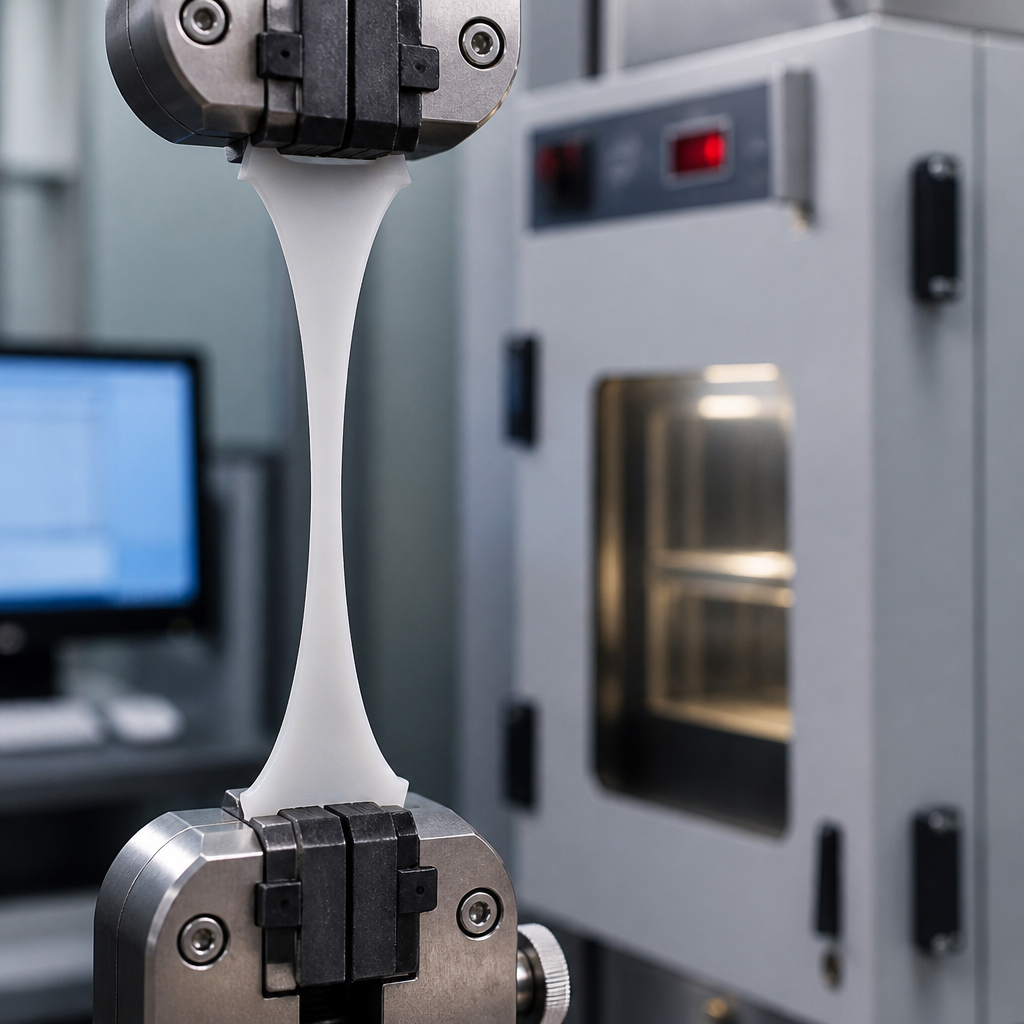
Mechanical testing methods reveal how polymers behave under load, but the numbers only mean something when the testing conditions are defined, controlled, and interpreted correctly. In polymer engineering, testing conditions include temperature, humidity, strain rate, specimen geometry, surface condition, conditioning time, and the exact standard used to run the test. These variables matter because polymers are viscoelastic materials: their stiffness, strength, elongation, creep resistance, impact behavior, and failure mode shift dramatically when the environment or loading method changes. I have seen the same resin pass one qualification program and fail another simply because one lab tested dry-as-molded bars at room temperature while the other used moisture-conditioned specimens at elevated temperature and a faster crosshead speed.
This is why a hub page on mechanical testing methods must start with conditions, not just test names. Tensile, flexural, compressive, impact, hardness, fatigue, and creep data are not universal constants in the way density or elemental composition might appear to be. They are measured responses produced by a specific setup. ASTM and ISO standards recognize this reality by prescribing specimen dimensions, conditioning requirements, test speeds, support spans, and reporting rules. For design engineers, buyers, and quality teams, understanding those details prevents common mistakes such as comparing ASTM D638 tensile strength to ISO 527 values without noting specimen type, or assuming an impact number from a notched Izod test predicts performance in a thick molded housing.
Mechanical testing methods are central to material selection because polymers occupy an unusually broad performance range. A flexible thermoplastic elastomer, a glass-filled nylon, an unfilled polycarbonate, and a high-performance PEEK each respond differently to identical loading. Add heat, absorbed moisture, UV exposure, weld lines, or anisotropy from molding flow, and the gap widens further. The practical question is never just “What is the tensile strength of this polymer?” It is “What is the tensile strength under the conditions my part will actually see, and how was that value measured?” Answering that question is the foundation of reliable product development, specification writing, and failure analysis.
Because this page serves as a hub within Materials and Properties, it covers the full landscape of mechanical testing methods and shows how testing conditions alter results. It explains what each major test measures, which variables most strongly influence the outcome, where standards differ, and how to interpret data sheets without overconfidence. Used well, these methods let teams predict service behavior, validate suppliers, compare grades, and troubleshoot field failures. Used poorly, they create false certainty. The goal is not more test data; it is test data that matches reality closely enough to support sound engineering decisions.
Tensile and flexural testing: why speed, temperature, and specimen design change the answer
Tensile testing is usually the first mechanical screen for polymers because it yields modulus, yield strength, tensile strength, and elongation at break from one controlled pulling experiment. Common standards include ASTM D638 and ISO 527. Flexural testing, often ASTM D790 or ISO 178, measures behavior in bending and is especially useful for rigid plastics, filled compounds, and semi-crystalline materials used in housings, brackets, and structural shapes. Both tests look straightforward, but in practice they are highly condition-sensitive. For viscoelastic materials, increasing strain rate generally raises apparent modulus and strength while reducing elongation. Lowering temperature often does the same. Raising temperature moves the polymer toward a softer, more ductile response, particularly as it approaches glass transition.
Specimen geometry has a direct effect on measured performance. Dog-bone tensile bars concentrate strain in the gauge section, while dumbbell dimensions, thickness tolerances, and molded gate location can influence break location and elongation. In flexural testing, support span-to-depth ratio matters because too short a span introduces shear effects and distorts modulus calculations. I have repeatedly seen teams compare supplier data generated from injection-molded Type I tensile bars against internal data machined from extruded sheet, then wonder why elongation and strength do not align. Processing history changes molecular orientation, residual stress, and crystallinity, so the specimen is not merely a container for the polymer; it is part of the result.
Conditioning before the test is equally important. Hygroscopic polymers such as nylon can absorb significant moisture from the atmosphere, and that absorbed water acts as a plasticizer. The material becomes less stiff, often tougher, and usually less strong in tensile and flexural loading. A dry nylon 6/6 specimen may show a much higher modulus than the same grade after conditioning to equilibrium moisture. Polycarbonate and ABS are less moisture-sensitive in service modulus terms, but they can still show property variation with environmental conditioning and test temperature. If a data sheet does not specify dry-as-molded, conditioned, or equilibrium state, the value has limited decision-making power.
Impact, hardness, and compression testing: understanding short-duration and localized loading
Impact testing answers a different question from tensile testing: not how a polymer behaves under slow, controlled loading, but how it resists sudden fracture. The common methods are Izod and Charpy impact, with notched and unnotched configurations, plus instrumented falling dart methods for films and sheets. Notch sensitivity is a central concept. A sharp notch forces stress concentration and reveals how readily a crack initiates and propagates. This is why polycarbonate often excels in unnotched impact, while filled or highly crystalline materials may lose performance sharply when notched or tested cold. The result is also thickness-dependent, since thicker sections can shift the failure mode and energy absorption path.
Temperature is especially decisive in impact testing. Many polymers exhibit a ductile-to-brittle transition over a practical temperature range. At room temperature, an ABS enclosure may survive a drop; at subzero conditions, the same part can crack at a screw boss or knit line. That is why real qualification plans often include impact tests at -20°C, 23°C, and elevated temperatures rather than relying on one nominal value. Surface defects, gate blush, molding-induced orientation, and weld lines also influence impact results far more than many non-specialists expect. Mechanical testing methods that involve crack initiation are unforgiving to local defects.
Hardness tests such as Shore A, Shore D, and Rockwell plastics scales provide quick comparative data, but hardness is often overinterpreted. It measures resistance to localized indentation, not overall structural performance. A harder polymer may still be less wear-resistant, less impact-resistant, or more brittle in service. Compression testing, covered by standards such as ASTM D695, becomes important for foams, bearing pads, electrical components, and structural parts loaded in bearing or stacking conditions. For semi-crystalline polymers, compressive response can differ substantially from tensile response because yielding, barreling, friction at platens, and thermal softening shape the stress field.
| Test method | What it measures | Conditions with strongest influence | Typical use |
|---|---|---|---|
| Tensile | Modulus, yield, strength, elongation | Strain rate, temperature, moisture, specimen geometry | Material selection, grade comparison, design allowables |
| Flexural | Bending modulus and strength | Span-to-depth ratio, loading rate, temperature | Rigid parts, filled plastics, housing stiffness |
| Impact | Energy absorbed during fracture | Notch, thickness, temperature, weld lines | Drop resistance, brittle failure screening |
| Compression | Compressive strength and modulus | Platen friction, strain rate, temperature | Bearing loads, foams, stacked components |
| Hardness | Indentation resistance | Scale used, dwell time, surface condition | Quick quality checks, relative stiffness cues |
| Creep/Fatigue | Time-dependent deformation or cyclic durability | Stress level, frequency, mean load, environment | Long-life structural and sealing applications |
Creep, stress relaxation, and fatigue: the long-term tests that often matter most
Short-term strength data can be useful, but many polymer parts fail through deformation rather than immediate fracture. Creep is the gradual increase in strain under constant load, while stress relaxation is the drop in stress under constant strain. Both are fundamental to viscoelastic materials. A clip, seal, snap fit, medical tubing clamp, or cable tie may pass tensile testing easily and still fail in service because retained force decays over time. ASTM D2990 and related long-term loading approaches are used to characterize these behaviors. The key variables are stress level, temperature, humidity, and test duration. Even a modest temperature increase can accelerate creep dramatically.
Designers often underestimate how nonlinear long-term response can be. A polypropylene bracket carrying a steady load in a warm appliance compartment may sag over months. A glass-filled nylon under bolt compression may relax enough to reduce clamp force and compromise sealing. Conversely, reinforced or high-glass-transition polymers can maintain load-bearing performance much better, but only if moisture and heat remain within the validated range. Time-temperature superposition is frequently used to estimate long-term behavior from shorter tests, but it requires care because not all polymers behave as thermorheologically simple materials across broad ranges.
Fatigue testing adds another layer of complexity because cyclic loading causes crack growth at stress levels below static strength. Mechanical testing methods for fatigue may use tension-tension, tension-compression, bending, or rotating beam setups. Frequency matters because polymers self-heat under cyclic deformation; if the test runs too fast, the specimen temperature rises and the data reflect both mechanical fatigue and thermal softening. Mean stress matters too. A living hinge in polypropylene experiences a very different damage pattern from a structural bracket in glass-filled PBT under vibration. Good fatigue data include stress ratio, frequency, waveform, temperature control, and runout definition, not just cycles to failure.
Environmental and processing effects: why lab numbers diverge from molded-part performance
The largest gap in polymer testing often lies between neat laboratory specimens and real molded parts. Injection molding creates orientation, residual stress, gate effects, weld lines, and sometimes voids or sink-related density variation. Extrusion introduces its own orientation profile. Additive manufacturing creates anisotropy between layers. Any of these can shift tensile, impact, and fatigue behavior. That is why part-level testing, when feasible, is more predictive than relying only on standard bars. In failure investigations, I routinely compare both: standardized specimens to benchmark the material and cut-from-part specimens to capture process effects.
Environmental exposure compounds the issue. Heat aging can embrittle some polymers through oxidation, while hydrolysis can reduce molecular weight in susceptible materials such as polyesters under hot, wet conditions. Solvents may cause environmental stress cracking, particularly in amorphous polymers under sustained stress. UV radiation can degrade surface layers and lower impact resistance. These effects are often invisible in a room-temperature tensile value taken on fresh specimens. The better approach is to test after relevant exposure: conditioned humidity, thermal aging, fluid immersion, or UV weathering according to the service environment. Mechanical testing methods become truly useful only when paired with realistic conditioning protocols.
Standards provide structure, but engineering judgment remains essential. ASTM and ISO methods are not interchangeable by default, and supplier data should not be treated as guaranteed design allowables. Lot variation, pigment package, regrind content, filler distribution, and molding conditions all influence results. The strongest testing program uses a hierarchy: standardized material screening, conditioned testing for expected environments, part-level validation, and failure-mode-specific methods such as instrumented impact or fracture mechanics when risk is high. That layered approach gives procurement, design, and quality teams a shared basis for decisions.
How to choose the right mechanical testing methods for specification and design
The right mechanical testing methods depend on the failure you need to prevent. If the part must carry load without stretching, start with tensile modulus and creep. If it must resist bending, flexural modulus and heat-conditioned stiffness matter. If drop survival is critical, use impact methods that match thickness, notch condition, and temperature range. If a latch must keep force over time, stress relaxation is more informative than ultimate strength. For vibration-prone assemblies, ask for fatigue data under realistic mean load and frequency. In every case, specify conditioning, temperature, humidity, speed, and standard directly in the requirement.
Good specifications avoid vague language such as “high strength” or “good impact resistance.” Instead, they state measurable criteria: for example, tensile modulus per ISO 527 at 23°C dry-as-molded, notched Charpy impact at -30°C after humidity conditioning, or compressive strength per ASTM D695 after 1,000 hours of thermal aging. They also define acceptance logic. Is the value minimum, typical, or average of five specimens? Are machine-direction and transverse-direction values both required for extruded sheet? Is gate location controlled for molded bars? These details reduce disputes and make supplier qualification faster.
For a sub-pillar hub under Materials and Properties, the central lesson is simple: polymer performance cannot be separated from testing conditions. Mechanical testing methods are powerful only when the setup reflects actual use and the data are read with context. Build your comparisons on matched standards, matched conditioning, and part-relevant loading modes. When those pieces align, test results become decision-grade evidence rather than catalog trivia. Use this hub as the starting point for deeper pages on tensile testing, impact testing, creep, fatigue, hardness, and environmental conditioning, then turn those insights into more reliable material selection and product performance.
Frequently Asked Questions
Why do testing conditions matter so much when evaluating polymer performance?
Testing conditions matter because polymers do not respond like perfectly rigid, time-independent materials. They are viscoelastic, which means their mechanical behavior changes with temperature, moisture exposure, loading speed, and even how long they have been sitting before the test begins. A tensile strength value, flexural modulus, elongation at break, or impact result only has real meaning when it is tied to the exact conditions under which it was measured. If those conditions shift, the number can shift with them—sometimes slightly, and sometimes dramatically.
In practice, this means two test reports for the same polymer can appear to disagree even when both are technically correct. One laboratory may test at a higher temperature, another may use a different crosshead speed, and a third may condition samples at a different humidity level before testing. Each of those choices can alter stiffness, ductility, toughness, creep behavior, and failure mode. For example, a polymer tested near its glass transition temperature may look much softer and less dimensionally stable than it would at room temperature. Likewise, a dry sample and a moisture-conditioned sample may produce noticeably different results if the material absorbs water.
The key point is that polymer test data should never be treated as universal constants. They are condition-dependent measurements. For engineering decisions, the most useful data come from tests that reflect the real service environment and that clearly document all relevant variables, including specimen geometry, conditioning time, standard method, strain rate, and ambient conditions. Without that context, even accurate test numbers can be misleading.
How does temperature influence the mechanical properties of polymers during testing?
Temperature is one of the most influential testing variables in polymer engineering because it directly affects molecular mobility. As temperature increases, polymer chains gain freedom to move, which usually reduces stiffness and strength while increasing flexibility and elongation—at least until thermal softening or other instability begins to dominate. As temperature decreases, the opposite often happens: the material becomes stiffer and may appear stronger in some tests, but it can also become much more brittle and more prone to sudden fracture.
This effect is especially important around thermal transition regions such as the glass transition temperature. Below that region, many amorphous polymers behave in a hard, glassy manner. Near or above it, the same material may become rubbery, compliant, or significantly less load-bearing. That means a polymer that performs well in a room-temperature tensile test may behave very differently in a hot vehicle interior, a refrigerated environment, or an outdoor winter application. If the test temperature does not match the intended use temperature, the data may not predict real-world performance very well.
Temperature also affects time-dependent properties such as creep, stress relaxation, and fatigue resistance. A polymer under constant load may deform much faster at elevated temperature than it would under standard laboratory conditions. For that reason, meaningful testing often includes not just a single ambient condition, but a temperature profile that reflects expected service conditions. When reviewing results, it is essential to check whether the stated temperature was controlled, how long specimens were equilibrated before testing, and whether the test standard specifies tolerances for thermal conditioning. Those details can determine whether the result is broadly useful or narrowly specific.
What role do humidity and specimen conditioning play in polymer test results?
Humidity and conditioning can have a major impact because many polymers interact with moisture, and even those that do not absorb large amounts of water can still be affected at the surface or in the test environment. Hygroscopic polymers, in particular, may take up moisture from the air and experience changes in stiffness, strength, dimensional stability, impact behavior, and ductility. In some materials, moisture acts as a plasticizer, lowering stiffness and increasing flexibility. In others, it can contribute to swelling, reduced heat resistance, or changes in failure behavior.
Conditioning refers to the process of bringing specimens to a defined state before testing, usually by controlling time, temperature, and relative humidity. This step is critical because two samples made from the same resin may not be in the same physical condition if one was recently molded, one has dried out, and one has absorbed moisture during storage. If those samples are tested without standardized conditioning, the resulting data may reflect environmental history more than intrinsic material behavior.
Proper conditioning improves repeatability and comparability. It allows engineers to distinguish between differences caused by the material itself and differences caused by preparation or storage. It is also essential for compliance with standardized methods, which often specify exact pre-test conditioning requirements. When reading a data sheet or lab report, it is wise to look for details such as conditioning duration, temperature, relative humidity, and whether the sample was tested “as molded,” dried, or equilibrated. Those notes are not minor procedural details—they are often central to understanding why a polymer performed the way it did.
How do strain rate and testing speed change the measured strength, stiffness, and elongation of a polymer?
Strain rate, testing speed, or loading rate can significantly change polymer test results because polymers respond differently depending on how quickly force is applied. When a load is applied rapidly, polymer chains have less time to rearrange and dissipate stress, so the material often appears stiffer and may show higher apparent strength. At slower rates, the material has more time to deform, relax, and redistribute stress, which can reduce measured modulus or strength while increasing elongation in some cases.
This rate dependence is a defining feature of viscoelastic behavior. It helps explain why a polymer can pass a short-term tensile test yet still deform excessively under a long-term load, or why a material that seems tough in one impact scenario may fail differently in a slow loading application. It also explains why comparing results from different standards or different crosshead speeds can be misleading. A “tensile strength” number is not enough on its own; the rate used to produce that number matters.
From an engineering standpoint, the best test rate is the one that matches the real application as closely as possible or follows the specified standard exactly when benchmark comparison is the goal. Fast loading may be relevant for snap-fit assembly or impact-prone environments, while slow loading may be more relevant for structural components under sustained stress. In all cases, the test report should identify the speed or strain rate clearly. Without that information, mechanical property values can be difficult to interpret and risky to apply in design decisions.
Why are specimen geometry, surface condition, and test standard important when comparing polymer data?
Specimen geometry, surface quality, and the exact test standard are critical because they shape how stress is distributed through the sample and how failure initiates. Dimensions such as thickness, width, gauge length, notch radius, and overall shape can all influence measured performance. A thicker specimen may cool differently during molding, retain different residual stresses, or respond differently under load than a thinner one. A notched impact bar and an unnotched sample are not evaluating toughness in the same way, even if they are made from the same polymer.
Surface condition matters because polymers can be sensitive to scratches, gate marks, weld lines, machining damage, and other imperfections that act as stress concentrators. A polished specimen may produce a different result from a rough-cut specimen, especially in tests involving crack initiation, fatigue, or impact loading. If the testing goal is quality control or material comparison, these variables must be tightly controlled. If the goal is application simulation, then representative real-world surface conditions may actually be more useful than idealized lab specimens.
The test standard brings all of these factors together by defining the method, tolerances, sample preparation, conditioning requirements, loading rate, and calculation approach. Results from different standards—such as ISO versus ASTM methods—may not be directly interchangeable, even when the property name sounds the same. Small differences in specimen shape or procedure can create meaningful differences in the numbers. That is why serious comparison requires more than reading a single property value; it requires confirming that the same standard, geometry, and preparation method were used. In polymer testing, consistency is what turns raw measurements into reliable engineering information.