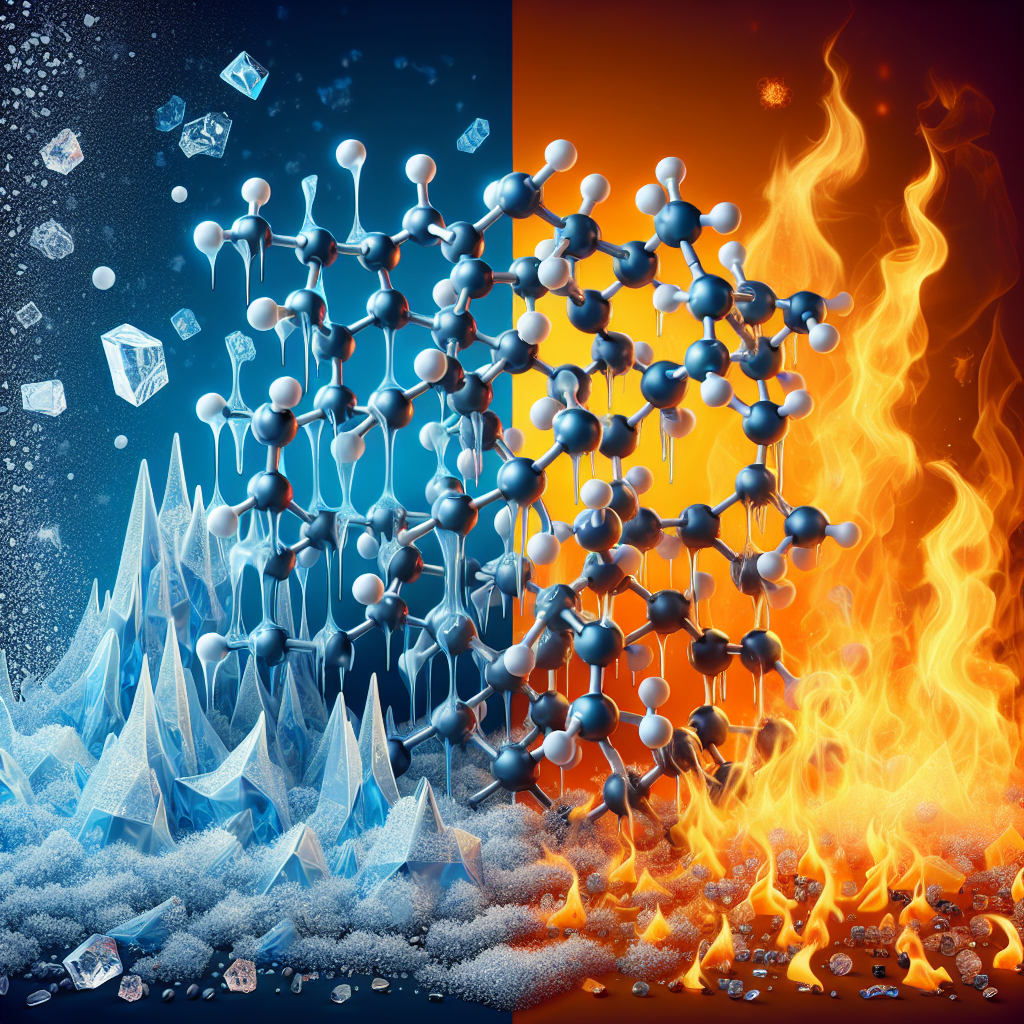
In today’s highly industrialized world, polymers play a pivotal role across numerous sectors, including automotive, aerospace, medical, packaging, and consumer electronics. Each polymer type has unique mechanical properties that make them suitable for specific applications. One of the key properties that determine the material’s suitability is its tensile strength. Tensile strength is the maximum stress that a material can withstand while being stretched or pulled before breaking. This characteristic is crucial for engineers and designers because it significantly influences the performance, reliability, and durability of the end product.
The tensile strength of polymers can be impacted by various factors, such as their molecular weight, degree of crystallinity, and the presence of additives. This article aims to provide a comprehensive comparative study of the tensile strengths of some common polymers, including Polyethylene (PE), Polypropylene (PP), Polyvinyl Chloride (PVC), Polycarbonate (PC), and Polystyrene (PS). We will delve into their mechanical properties, typical values for tensile strength, and discuss the factors influencing these properties. Understanding these aspects can help in selecting the right polymer for specific engineering applications.
Polyethylene (PE) – Characteristics and Tensile Strength
Polyethylene is one of the most widely used polymers in the world. It comes in several forms, such as Low-Density Polyethylene (LDPE) and High-Density Polyethylene (HDPE), each with distinctive properties.
LDPE has a highly branched structure leading to less tightly packed molecules, which makes it less dense and gives it a lower tensile strength in the range of 8-12 MPa. Despite this, LDPE excels in its flexibility, transparency, and resistance to impacts and chemicals, making it the go-to material for plastic bags, containers, and films.
On the other hand, HDPE, with its linear structure, boasts a higher tensile strength typically between 20-37 MPa. Its higher density renders it more rigid and durable compared to LDPE. HDPE is commonly used in products where mechanical stress is a concern, such as pipes, plastic bottles, and geomembranes.
The properties of PE can be influenced by factors like polymerization conditions and the inclusion of fillers or reinforcements. This versatility makes PE a critical material in various industrial applications, where choosing the right grade can optimize performance and longevity.
Polypropylene (PP) – Characteristics and Tensile Strength
Polypropylene (PP), another widely used polymer, is known for its excellent balance of properties, including toughness, elasticity, and resistance to chemical solvents, bases, and acids. Its tensile strength typically ranges from 25-40 MPa, making it stronger and more rigid compared to LDPE and comparable to HDPE.
PP’s semi-crystalline nature contributes to its high tensile strength and impact resistance. This material is commonly used in packaging, automotive parts, textiles, and fibers due to its robustness and ability to withstand repeated bending and flexing without cracking.
Factors such as the polymerization process, molecular weight, and incorporation of additives play significant roles in determining the tensile strength of PP. For instance, the inclusion of glass fibers can significantly enhance its mechanical properties, making it suitable for high-stress applications such as automotive components and industrial fibers.
Additionally, like PE, PP’s mechanical properties can be tailored to suit specific needs by altering its molecular structure or blending it with other polymers, thereby expanding its range of applications.
Polyvinyl Chloride (PVC) – Characteristics and Tensile Strength
Polyvinyl Chloride (PVC) is another versatile polymer known for its durability and easy processability. PVC can be found in two primary forms: rigid (RPVC) and flexible (FPVC), each with unique mechanical properties and applications.
Rigid PVC exhibits a higher tensile strength, typically around 34-58 MPa, making it suitable for construction materials like pipes, window frames, and profiles. Its high tensile strength, coupled with excellent resistance to weathering and chemicals, makes RPVC a reliable choice for building and infrastructure projects.
Conversely, Flexible PVC includes plasticizers that render it more pliable, resulting in a lower tensile strength ranging from 10-25 MPa. This adaptability makes FPVC ideal for applications such as cables, hoses, and flooring.
The tensile strength and other mechanical properties of PVC can be tailored by adjusting the polymer’s formulation, including the type and amount of plasticizers, fillers, and stabilizers used. This versatility allows for a wide range of applications where specific mechanical properties are essential.
Polycarbonate (PC) – Characteristics and Tensile Strength
Polycarbonate (PC) is renowned for its outstanding impact resistance, high transparency, and excellent tensile strength. Typically, PC has a tensile strength in the range of 55-75 MPa, making it one of the strongest common polymers available. This high tensile strength, coupled with its ability to maintain its properties over a wide temperature range, makes PC an ideal material for demanding applications.
PC is widely used in electronic components, optical lenses, and automotive parts. Its high tensile strength and transparency make it a popular choice for protective eyewear, greenhouses, and safety helmets. Additionally, PC can be easily molded and shaped, providing significant design flexibility.
The mechanical properties of PC can be influenced by factors such as the thickness of the material, processing conditions, and the inclusion of additives. For example, introducing glass fibers can further enhance PC’s tensile strength, making it even more suitable for high-stress applications.
Polystyrene (PS) – Characteristics and Tensile Strength
Polystyrene (PS) is a thermoplastic polymer known for its rigidity, ease of processing, and relatively low cost. However, compared to the previously discussed polymers, PS has a lower tensile strength, typically ranging from 30-50 MPa depending on its formulation (general purpose or high-impact).
General-purpose polystyrene (GPPS) exhibits a brittle nature with a tensile strength of around 30-45 MPa, making it suitable for products requiring rigidity and dimensional stability, such as CD cases, disposable cutlery, and model kits. High-impact polystyrene (HIPS), on the other hand, includes rubber additives that enhance its impact resistance, resulting in a tensile strength of approximately 25-40 MPa.
Although PS’s tensile strength is lower compared to more robust polymers like PC or PP, its ease of fabrication, optical clarity, and ability to blend with other materials extend its range of applications. Furthermore, its mechanical properties can be altered to a certain extent by copolymerization or the inclusion of fillers and additives.
Conclusion
In conclusion, understanding the tensile strength of common polymers is crucial for selecting the appropriate material for specific applications. Each polymer—Polyethylene (PE), Polypropylene (PP), Polyvinyl Chloride (PVC), Polycarbonate (PC), and Polystyrene (PS)—exhibits distinct mechanical properties influenced by their molecular structure and formulation.
Polyethylene (PE) offers versatility with its different forms (LDPE and HDPE) and application-specific properties. Polypropylene (PP) stands out for its balance of strength and elasticity, making it a popular choice in packaging and automotive industries. Polyvinyl Chloride (PVC) presents itself as an adaptable material with both rigid and flexible forms suitable for construction and everyday products.
Polycarbonate (PC) shines with its exceptional tensile strength and impact resistance, ideal for high-stress applications. Polystyrene (PS), while having lower tensile strength, provides benefits through ease of processing and acceptable mechanical properties for various consumer goods.
The tensile strength of these polymers can be influenced by factors such as molecular weight, degree of crystallinity, and the inclusion of additives or reinforcements. Understanding these aspects allows engineers and designers to make informed decisions, ensuring the selection of suitable materials for desired applications, ultimately optimizing performance and durability.